

Worldcoin Price Prediction: Is WLD Coin Worth Investing In?
Worldcoin price prediction attracts attention because the project mixes crypto with digital identity. Many beginners want to know if WLD still has growth potential. Today, Worldcoin trades around $0.38, after a volatile month. The token touched a recent low of $0.34 on February 6. Earlier, it reached a local high of $0.63 on January 29. These moves show how quickly sentiment can change.
This article explains everything about Worldcoin. First, you will learn what Worldcoin is and why it exists. Then we will review price history, WLD price predictions, and expert opinions. You will also see technical signals and long-term scenarios. So, let’s get started.
| Current WLD Price | WLD Prediction 2026 | WLD Price Prediction 2030 |
| $0.38 | $3.5 | $12 |
Worldcoin (WLD) Overview
Worldcoin is a global digital identity and cryptocurrency project. It combines finance, biometrics, and cryptography into one ecosystem. The goal is simple but ambitious. The team wants to prove that every account belongs to a real human. This idea becomes more important as AI grows stronger.
The system centers around World ID. World ID acts as a proof-of-personhood protocol. It confirms that a user is a unique human without revealing personal data. The process relies on an Orb device. The Orb scans a user’s iris and converts it into a cryptographic code. The system deletes the image after processing. The network stores only encrypted mathematical data. Later, the user can generate zero-knowledge proofs to show uniqueness without exposing identity.
The ecosystem also includes the WLD token. WLD is an ERC-20 token on Ethereum. The design targets a total supply of 10 billion tokens over 15 years. The token supports governance and ecosystem incentives. Verified users can receive periodic World Grants where regulations allow. Developers can also build services that use WLD for payments and rewards.
World App serves as the main gateway. It is a non-custodial wallet, so users control their private keys. The app supports WLD and other cryptocurrencies. It also manages World ID credentials. Recent versions include Mini Apps that connect DeFi tools and payment services. This design turns the wallet into a lightweight identity platform.
The founders launched the project in 2019. The core figures include Sam Altman, Alex Blania, and Max Novendstern. Tools for Humanity built the early infrastructure and Orb hardware. A foundation now stewards the protocol and treasury. This structure aims to support gradual decentralization.
In 2023, the team released the public network. Millions joined the beta phase across dozens of countries. However, the rollout also triggered regulatory debates. Some governments questioned biometric data handling. These reactions shaped the project’s evolution. By late 2024, the team rebranded to World Network and introduced World Chain, a Layer-2 network built on Ethereum technology.
World Chain prioritizes verified human accounts. It reduces fees and supports large integrations. The broader vision connects identity with finance. The team argues that human verification may support fair digital economies. Some supporters even link the concept to future universal income models in an AI-driven world.
WLD Price Statistics
| Current Price | $0.38 |
| Market Cap | $1,071,803,684 |
| Volume (24h) | $105,518,356 |
| Market Rank | #53 |
| Circulating Supply | 2,822,045,061 WLD |
| Total Supply | 10,000,000,000 WLD |
| 1 Month High / Low | $0.63 / $0.38 |
| All-Time High | $11.74 Mar 10, 2024 |
Worldcoin Price Chart

CoinGecko, February 11, 2026
Worldcoin (WLD) Price History Highlights
2023
Worldcoin entered public markets in July 2023. Major exchanges listed WLD after the official launch. Early trading opened around $2–$2.2. Speculation exploded immediately. The token followed a classic listing pattern. Price surged above $4 and then collapsed near $1 within weeks.
The yearly average stayed close to $1.99. The low reached about $0.98. The high touched roughly $4.7. WLD closed the year near $3.64, above its debut range. This recovery surprised many traders and signaled strong narrative power.
The market focused more on AI hype than on regulation. Sam Altman’s involvement fueled global attention. Media coverage expanded rapidly. Worldcoin became one of the most discussed crypto launches of the year. Meanwhile, European regulators opened early privacy investigations. Most investors ignored those risks. Momentum and storytelling drove demand more than fundamentals.
2024
The year 2024 delivered extreme volatility. WLD produced its strongest rally and deepest correction. The average price reached about $3.58. The yearly high climbed to almost $12 in March, which remains the all-time high. The yearly low fell near $1.29. The token closed 2024 around $2.09.
January opened with profit taking after the late 2023 rally. February created a massive breakout above $7. March triggered a blow-off top near $12. Retail FOMO peaked. Leverage increased sharply. After the peak, momentum reversed.
Spring erased most gains. Token unlock schedules pressured price. Investors began to study supply mechanics more carefully. The team extended vesting timelines, which briefly stabilized sentiment. However, daily emissions still weighed on valuation. Late 2024 saw sharp rebounds and short squeezes, but the broader trend weakened. The year ended almost 80% below the March peak.
2025
WLD entered a prolonged bear market in 2025. The average yearly price dropped near $1.08. The token printed a new historical low around $0.27 during autumn. The yearly high reached only $2.79. WLD finished the year near $0.48.
Continuous unlocks expanded circulating supply. Demand failed to absorb new tokens. Several regulators increased pressure on biometric operations. Colombia and parts of Asia introduced restrictions. Confidence weakened across the ecosystem.
Short rallies appeared, but each bounce faded quickly. Traders treated WLD as a distribution asset instead of a growth story. By year end, the token traded more than 90% below the 2024 peak. Valuation compression defined the entire year.
2026
Early 2026 shows a calmer market structure. WLD now trades as a post-bubble asset. Price ranges mostly between $0.31 and $0.41. The year opened around $0.48 and drifted lower. The current average sits near $0.38–$0.4.
Volatility decreased compared to prior years. Circulating supply expanded dramatically versus 2023 levels. Some regulatory investigations closed with procedural adjustments instead of full bans. This outcome reduced panic but did not restore speculative excitement.
The project now moves through a long consolidation phase. Price action reflects caution, not hype. Investors watch adoption metrics more closely than headlines.
Worldcoin Price Prediction: 2026, 2027, 2030-2050
| Year | Minimum Price | Maximum Price | Average Price | Price Change |
| 2026 | $0.31 | $6.84 | $3.5 | +820% |
| 2027 | $0.005 | $10.23 | $5 | +1,200% |
| 2030 | $0.06 | $25.19 | $12 | +3,050% |
| 2040 | $7.09 | $83.08 | $45 | +11,700% |
| 2050 | $8.23 | $185.26 | $100 | +26,200% |
Worldcoin Price Prediction 2026
DigitalCoinPrice estimates that in 2026, Worldcoin may trade between $0.31 (-20%) at the lower end and $1.42 (+275%) at peak valuation. Their outlook suggests continued volatility, with recovery potential if adoption stabilizes after recent drawdowns.
According to PricePrediction, WLD is expected to trade much higher. Their 2026 model forecasts a minimum price of $1.24 (+225%) and a maximum of $1.60 (+320%), pointing to a strong rebound scenario driven by renewed market confidence.
Telegaon presents an aggressively bullish forecast. Their projections place Worldcoin between $4.11 (+980%) and $6.84 (+1,700%), assuming rapid ecosystem expansion and large-scale global onboarding.
Worldcoin Price Prediction 2027
DigitalCoinPrice expects continued instability in 2027, with prices ranging from $0.00506 (-99%) to $0.18 (-50%), reflecting a highly cautious outlook and the possibility of prolonged market weakness.
PricePrediction remains optimistic by comparison. Their 2027 forecast suggests a floor of $0.5509 (+45%) and a ceiling of $0.7098 (+90%), indicating gradual recovery and consolidation.
Telegaon maintains a strong bullish stance. Their 2027 estimates place WLD between $7.03 (+1,750%) and $10.23 (+2,600%), reflecting confidence in long-term adoption momentum.
Worldcoin (WLD) Price Prediction 2030
By 2030, DigitalCoinPrice analysts believe WLD could trade between $0.0646 (-80%) and $0.35 (-10%), suggesting muted growth and continued uncertainty around long-term valuation.
PricePrediction sees stronger upside. Their projections indicate a minimum of $1.52 (+300%) and a maximum of $2.03 (+435%), assuming Worldcoin matures into a stable global identity infrastructure.
Telegaon’s forecast is dramatically higher. According to their estimates, WLD could range from $20.35 (+5,250%) to $25.19 (+6,550%) by 2030 under a mass adoption scenario.
WLD Price Prediction 2040
DigitalCoinPrice estimates that by 2040, Worldcoin may trade between $30.14 (+7,850%) and $39.96 (+10,400%), reflecting expectations of major long-term expansion.
PricePrediction offers a far more conservative outlook. Their 2040 range spans $7.09 (+1,750%) to $9.59 (+2,400%), accounting for slower but steady ecosystem growth.
Telegaon presents an ultra-bullish projection, with WLD potentially trading between $72.56 (+19,000%) and $83.08 (+21,750%), assuming Worldcoin becomes a dominant global digital identity layer.
WLD Coin Price Prediction 2050
Looking ahead to 2050, DigitalCoinPrice forecasts Worldcoin between $156.75 (+41,100%) and $185.26 (+48,500%), suggesting exponential expansion over multiple adoption cycles.
PricePrediction remains cautious in comparison. Their 2050 model places WLD between $8.23 (+2,050%) and $11.13 (+2,800%), reflecting moderate long-term growth.
Telegaon projects another aggressive scenario, estimating a range from $122.91 (+32,250%) to $151.78 (+39,900%), assuming sustained global usage and institutional integration.
WLD Price Prediction: What Do Experts Say?
In early 2026, analysts shared sharply different views on Worldcoin. Some expect a rebound. Others warn that weakness could continue. Most forecasts come from technical analysis rather than long-term fundamentals. This split shows how uncertain the short-term outlook remains.
Several experts lean bullish. Alvin Lang expressed optimism in early January. He pointed to strengthening momentum and improving chart structure. Lang projected a medium-term move toward $0.73 if WLD breaks resistance near $0.66. His scenario depends on confirmation, not blind speculation. He framed the move as a technical continuation rather than a new macro bull run. Still, the forecast implies meaningful upside from current consolidation.
Joerg Hiller delivered a similar message. He cited a positive MACD shift and breakout behavior. Hiller estimated a 3–4 week target in the $0.58–$0.62 range. According to him, the setup reflects early trend recovery. His argument focuses on momentum signals aligning with support holding. He sees WLD attempting to reverse a prolonged downtrend. However, he notes that failure to hold key levels would invalidate the thesis quickly.
Social media voices amplify the bullish side. Crypto influencer Whale.Guru pushed an extreme scenario. He speculated that integration rumors involving OpenAI could send WLD toward $10. This projection assumes a major adoption catalyst. It represents narrative-driven optimism rather than measured technical modeling. Traders treat such forecasts as high risk and highly conditional.
Other analysts remain cautious. Zach Anderson described market sentiment as guarded. He reported a consensus target between $0.62 and $0.73 for February, but he stressed that bearish momentum still dominates. Neutral RSI readings signal hesitation, not conviction. In his view, upside exists, yet confirmation remains fragile.
Felix Pinkston added nuance to that stance. He agreed with the $0.62–$0.73 scenario but warned that resistance near $0.49–$0.52 controls direction. Without a breakout, the rally cannot start. His message emphasizes structure over emotion.
WLD USDT Price Technical Analysis
Monthly technical data from Investing.com paints a defensive picture for Worldcoin. The platform currently rates WLD as Strong Sell across nearly every major category. Both technical indicators and moving averages align on the bearish side. This consensus matters because long-term frames filter out short-term noise.

Investing, February 11, 2026
According to Investing.com’s mid-February 2026 snapshot, all eight core technical indicators signal sell conditions. RSI sits near 43, which reflects weak momentum rather than panic selling. However, several oscillators already show oversold territory. Stochastic and Williams %R suggest exhaustion after prolonged decline. Oversold signals do not guarantee reversal. They only show that selling pressure stretched far.
MACD remains negative, which confirms a persistent downtrend. ADX near 25 signals an active trend rather than sideways consolidation. ROC and Bull/Bear Power both stay deeply negative. Together, these metrics show sellers still control structure even as volatility decreases. ATR readings confirm lower volatility compared to prior crash phases. This shift often appears during long consolidation periods.
Moving averages strengthen the bearish argument. Eleven out of twelve major averages signal sell. Price trades below nearly every short- and mid-term average. Only the 200-period simple average prints a buy signal. That lone exception reflects long-term compression rather than strength. When price sits under most averages, rallies tend to face heavy resistance.

Pivot levels provide a roadmap for possible reactions. The main pivot zone sits around $0.48. Resistance clusters between $0.59 and $0.77 depending on the model. Support zones stretch far below current price, which highlights asymmetric risk if momentum weakens again.
In summary, the monthly frame shows a market still under pressure. Oversold readings suggest bounce potential, but trend indicators remain bearish. Until structure changes, technical bias favors caution over optimism.
What Does the Worldcoin Price Depend On?
Worldcoin price does not move randomly. Several measurable forces influence WLD valuation. Beginners often focus only on hype. However, price reacts more to structure than headlines. Understanding these drivers helps reduce emotional decisions.
First, token supply dynamics play a central role. WLD continues to release new tokens into circulation. Unlock schedules increase available supply over time. When supply grows faster than demand, price faces pressure. This effect appeared clearly during 2024–2025. Even strong narratives cannot fully offset heavy emissions. Markets always price liquidity.
Second, the regulatory climate affects confidence. Worldcoin operates in a sensitive area: biometric identity. Governments watch the project closely. Investigations in Europe, Asia, and Latin America created uncertainty. Regulatory clarity can either unlock adoption or restrict expansion. Investors react quickly to policy signals.
Third, adoption metrics matter more than marketing. The number of verified users, Orb deployments, and active wallets signals real traction. Sustainable growth requires utility, not speculation. If World ID becomes infrastructure for apps, price gains a fundamental base. Without usage, rallies depend only on trading cycles.
Other forces shape short-term volatility:
- Crypto market cycles and Bitcoin direction.
- Liquidity conditions in altcoin markets.
- Exchange listings and derivatives access.
- Investor sentiment toward AI-linked assets.
Macroeconomic conditions also influence behavior. Risk appetite rises during expansion and contracts during fear. WLD behaves like a high-beta asset. That means it amplifies broader market moves.
Technical structure adds another layer. Support and resistance zones guide trader behavior. When price breaks key levels, algorithms accelerate momentum. These reactions create sharp spikes or drops. Long-term holders must understand this mechanical side of markets.
Finally, narrative strength influences attention. Worldcoin sits at the intersection of AI and identity. This theme attracts speculation. However, narratives rotate quickly in crypto. Only projects with durable utility survive multiple cycles.
WLD Coin Features
Worldcoin combines blockchain infrastructure with biometric identity technology. The design mixes finance, cryptography, and hardware into one system. WLD itself runs as an ERC-20 token on Ethereum. That means settlement inherits Ethereum’s Proof-of-Stake security. Most everyday activity happens on Optimism, an Ethereum Layer-2 rollup. This structure reduces fees and increases speed. A dedicated network called World Chain is also under development. It remains anchored to Ethereum while optimizing performance for identity transactions.
The core innovation is World ID. This credential proves that an account belongs to one unique human. It does not reveal personal identity. Instead, it solves the “Sybil problem,” where bots or duplicate accounts distort systems. Proof-of-personhood enables fair voting, airdrops, and governance. It could also support universal distribution models in the future.
Worldcoin uses custom biometric hardware called the Orb. The device scans a user’s iris and generates a unique mathematical code. The Orb processes images locally. The system stores only derived cryptographic commitments, not raw eye photos. Anti-spoofing sensors and neural networks reduce fake scans. This step attempts to protect integrity at scale.
Privacy architecture relies heavily on modern cryptography:
- Zero-knowledge proofs allow identity verification without revealing identity.
- Secure multi-party computation splits encrypted data across parties.
- Open-source audits increase transparency.
Users can prove they are verified humans without linking their activity across apps. The system organizes privacy around security, anonymity, transparency, and user control.
World ID works across Ethereum-compatible ecosystems. Developers can integrate it into governance apps, games, or DeFi tools. Importantly, they never access biometric data. They only receive proof of uniqueness. This design encourages interoperability while preserving boundaries.
World App acts as the consumer interface. It bundles wallet functions, identity credentials, and payments into a simple mobile experience. Users interact through QR-style flows. Complex cryptography stays invisible behind the interface.
The security model has strengths and trade-offs. Ethereum anchors final settlement. However, Layer-2 sequencers introduce temporary centralization. Orb manufacturing and distribution also remain centralized. Audits improve transparency, but hardware trust remains a key assumption.
WLD Coin Price Prediction: Questions And Answers
Is Worldcoin a Good Investment Now?
Worldcoin sits in a recovery and consolidation phase after a large speculative cycle. That means risk remains high. However, volatility also creates opportunity. Investors who believe in digital identity infrastructure may see long-term potential. Short-term traders must watch support levels carefully. WLD behaves like a high-beta asset, so the price can swing fast in both directions.
Is Worldcoin Expected to Rise?
Some analysts expect a rebound if key resistance levels break. Others warn that supply pressure still weighs on price. Rising adoption and regulatory clarity would support growth. Without those factors, rallies may stay temporary. In simple terms, WLD can rise, but the move depends on market structure and confidence, not guarantees.
Does Worldcoin Have a Future?
Worldcoin focuses on proof-of-personhood, which solves a real digital problem. AI growth increases the need to separate humans from bots. If World ID becomes widely integrated, the ecosystem gains value. However, regulation and privacy debates remain obstacles. The project has a future, but success depends on adoption and trust.
Who Owns Worldcoin?
Worldcoin does not belong to a single owner. The ecosystem includes a foundation, developers, and token holders. Tools for Humanity built early infrastructure, while governance aims to decentralize over time. WLD holders may influence protocol decisions. Like most crypto networks, ownership spreads across stakeholders rather than one company.
What Is Worldcoin Used For?
WLD supports governance, ecosystem incentives, and identity-linked payments. Verified users can receive grants in supported regions. Developers can build applications that require proof of human uniqueness. The token connects finance with identity infrastructure. Its main purpose is to power a network that verifies real humans online.
How Much Is 1 Worldcoin Worth?
Price changes constantly because WLD trades on open markets. Value depends on supply, demand, and sentiment. At the time of writing, WLD trades around the $0.4 range after a long correction. Beginners should always check live exchange data instead of relying on static numbers.
How High Will Worldcoin Go?
No analyst can predict an exact ceiling. Bullish scenarios suggest recovery toward prior resistance zones. Extreme forecasts depend on mass adoption and strong narrative cycles. Crypto history shows that prices can overshoot both up and down. Investors should treat high targets as possibilities, not promises.
Will Worldcoin Reach $1 Again?
A return to $1 is possible if momentum improves and adoption grows. That level represents psychological resistance rather than a fixed barrier. Many altcoins revisit round numbers during recovery phases. Whether WLD holds above $1 would depend on long-term demand, not just speculation.
Can Worldcoin Reach $10?
Reaching $10 would require massive ecosystem expansion and renewed hype. That price implies a valuation shift, not a simple bounce. It would likely need global adoption of World ID and strong investor confidence. Such scenarios are rare but not impossible in crypto cycles.
Can Worldcoin Reach $50?
A $50 price would place Worldcoin among the largest crypto assets in history. That outcome would require extreme adoption, regulatory approval, and sustained demand. While crypto markets can surprise, this scenario represents a highly speculative long-term projection rather than a base case.
Can Worldcoin Reach $100?
A $100 valuation would require historic adoption levels. Worldcoin would need to become a global identity infrastructure, not just a niche crypto project. That implies billions of users and regulatory acceptance worldwide. While crypto markets produce extreme rallies, this target sits in the ultra-speculative zone. Investors should treat it as a theoretical ceiling, not a realistic baseline forecast.
What Is the Future of Worldcoin?
Worldcoin’s future depends on identity adoption, not only token trading. If World ID integrates into social apps, finance, and governance, the ecosystem gains durability. If regulation blocks expansion, growth slows. The project sits at the intersection of AI and privacy debates. That position creates both opportunity and friction. Its future remains open but structurally significant.
What Will Be the Price of Worldcoin in 2026?
Estimates for 2026 span a very wide range. Conservative models place WLD roughly between $0.3 and $1.5, assuming slow recovery and continued supply pressure. More optimistic scenarios expect stabilization above $1 and potential expansion toward $4–$6 if adoption accelerates.
What Is the Price Prediction for WLD in 2027?
Predictions for 2027 become even more polarized. Bearish scenarios suggest WLD could remain below $0.2 if demand fails to absorb growing supply. Neutral recovery models project consolidation around $0.5–$0.7. Strong adoption cases extend targets into the $7–$10 zone.
What Is the Price Prediction of WLD in 2030?
Long-term projections for 2030 range from cautious to extremely bullish. Some models expect WLD to trade under $0.5 if the project struggles to scale. Moderate adoption forecasts place price near $1.5–$2. Aggressive mass adoption scenarios extend targets toward $20–$25.
Where to Buy Worldcoin Coin?
StealthEX is here to help you buy WLD coin if you’re looking for a way to invest in this cryptocurrency. You can buy WLD privately and without the need to sign up for the service. StealthEX crypto collection has more than 2,000 different coins, and you can do wallet-to-wallet transfers instantly and problem-free.
How to Buy WLD Coin: Quick-Step Guide
Just go to StealthEX and follow these easy steps:
- Choose the pair and the amount you want to exchange — for instance, ETH to WLD.
- Press the “Start exchange” button.
- Provide the recipient address to transfer your crypto to.
- Process the transaction.
- Receive your crypto coins.
Follow us on Medium, X, Telegram, YouTube, and Publish0x to stay updated about the latest news on StealthEX.io and the rest of the crypto world.
Don’t forget to do your own research before buying any crypto. The views and opinions expressed in this article are solely those of the author.
crypto price prediction price prediction privacy WLD WorldcoinThe post Worldcoin Price Prediction: Is WLD Coin Worth Investing In? first appeared on StealthEX.


You May Also Like
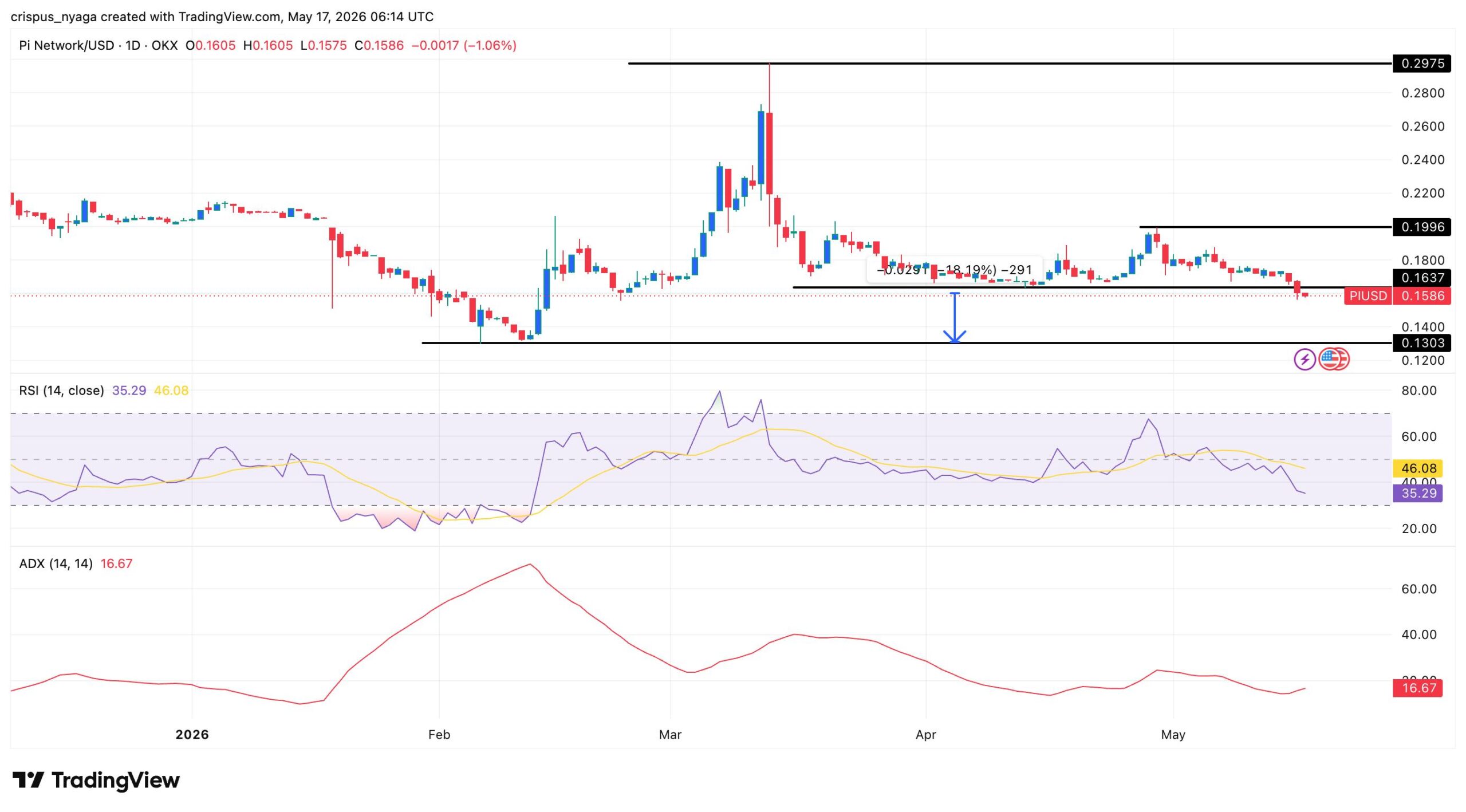
Pi Coin Price Crashes Another 7.5% Before Pi Network Protocol 23 Mainnet Activation

Evercore ISI S&P 500 Forecast 2026: Base Case 7,750, Bull Case 9,000




