Russia Blocks WhatsApp to Push Surveillance App, Company Claims
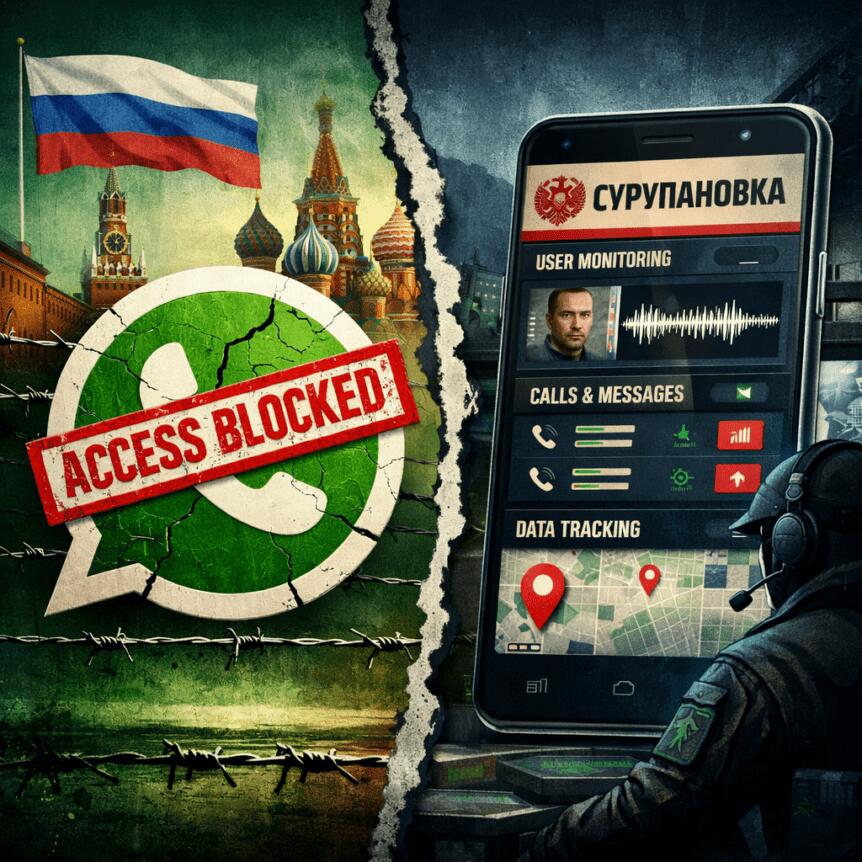
WhatsApp, the messaging app owned by Meta, is at the center of a high-stakes regulatory clash as Moscow pushes a domestic alternative and tightens control over digital communication. In recent days, the company publicly accused the Russian government of attempting to block access for millions of users to steer them toward a state-owned substitute. The dispute unfolds as Russia advances a homegrown platform, Max, developed by VK, and seeks to entrench it as the official backbone for private messaging inside the country. The government’s aim is amplified by directives to pre-install Max on all smartphones sold in Russia, a move scheduled to take effect on Sept. 1, and by a broader push to curb reliance on Western platforms amid ongoing regulatory scrutiny.
Key takeaways
- WhatsApp alleges Russia is attempting to isolate over 100 million users from private and secure communication, describing the move as a setback to digital safety.
- Max, announced by VK and described as a state-backed alternative to WhatsApp and Telegram, began rolling out in March 2025 and is being mandated for pre-installation on new devices starting Sept. 1.
- Backlinko estimates Russia hosts about 72 million active monthly WhatsApp users, placing the country among the top markets for the app outside the usual leaders.
- Russian authorities have signaled that unblocking WhatsApp would require compliance with local laws and a willingness to negotiate, signaling a potential but uncertain path to access restoration.
- Beyond Russia, authorities in other countries have intermittently restricted messaging services during periods of conflict or political upheaval, highlighting a broader trend in digital sovereignty and governance.
Sentiment: Neutral
Market context: The episode sits at the intersection of tech policy and geopolitical risk, illustrating how regulatory actions aimed at domestic control of communications can ripple through the broader digital ecosystem, including networks that crypto services rely on for open, cross-border activity. It underscores a growing attention to data localization, interoperability, and platform sovereignty that could influence global tech and financial ecosystems.
Why it matters
The confrontation between WhatsApp and Russia’s state-backed messaging initiative underscores a fundamental tension between user safety, privacy, and state interests. By introducing Max as a domestically controlled alternative, Moscow is signaling that access to private communication platforms is not simply a consumer choice but a matter of national policy. The move could reshape how Russians communicate, store sensitive information, and interact with businesses, while also raising questions about data localization, resilience, and security in a landscape where private messaging has become a critical utility for personal and professional life.
For international platforms, the Russian example highlights the costs and friction of compliance in a regulated environment that prizes sovereign control over digital infrastructure. The push to pre-install Max on all devices introduces a form of interoperability risk and raises concerns about interoperability with foreign networks, encryption standards, and user consent. Companies that operate across borders must navigate a patchwork of rules, sometimes in real time, which can affect everything from customer support to data flows and incident response protocols. The situation also hints at potential regulatory spillovers to adjacent technologies, including decentralized and cross-border services that crypto projects rely on to maintain open access and censorship resistance.
From a safety and governance perspective, the Russian case illustrates why policymakers abroad are investing in formal mechanisms to manage online communications. The tension between allowing free, secure messaging and enforcing content or data requests from law enforcement creates a persistent policy dilemma. In markets where crypto and blockchain technologies are gaining traction, observers will be watching to see how such regulatory dynamics influence the development of compliant, privacy-preserving communication tools and infrastructure that can withstand political pressure while preserving user trust.
The broader pattern is not limited to Russia. Reports from other countries describe a spectrum of actions—from partial restrictions to complete takedown attempts—that governments have employed during moments of political contention. The dialogue around messaging sovereignty compounds existing concerns about censorship, access to information, and digital rights. For users, this can mean unpredictability in service availability, the need for alternative channels, or the adoption of independent or decentralized messaging solutions as a hedge against outages or coercive controls.
On the technical front, the unfolding dynamic may accelerate innovation in how platforms approach data localization, compliance tooling, and cross-border interoperability. It also raises practical questions for developers, such as how to design communication apps that can operate seamlessly across multiple legal regimes without compromising user safety or security. While the immediate focus is regional, the implications reverberate through any ecosystem that depends on reliable, private messaging as a backbone for collaboration, financial transactions, or sensitive communications—an area where crypto communities have long stressed the importance of resilient, permissionless networks even as regulators seek to impose order and accountability.
What to watch next
- Sept. 1, 2025 — Russia’s mandatory pre-installation of Max on all smartphones takes effect, elevating the platform’s installed base and potentially altering user behavior during the ongoing policy debate.
- End of 2026 — Official signals from Moscow suggest a possible complete blocking of WhatsApp if compliance with national laws does not align with the state’s terms.
- February 2026 — Public commentary and further reporting on whether WhatsApp remains accessible or experiences domain-level restrictions within Russia, including official statements from the presidential administration or regulatory bodies.
- Regulatory actions and negotiations — Any new statements from Russia’s negotiation channels or law-enforcement agencies that clarify the conditions under which foreign messaging services could regain access or be forced to alter operational practices.
- Comparative developments — Monitoring similar moves in other jurisdictions to assess how messaging sovereignty affects global platforms, user experience, and cross-border data flows.
Sources & verification
- Gazeta.ru: Russia reports that WhatsApp’s domain had been blocked and would require VPN or similar workaround to access. https://www.gazeta.ru/tech/news/2026/02/11/27830761.shtml
- TASS: Presidential press secretary Dmitry Peskov commented that unblocking WhatsApp would require the app to follow Russian laws and engage in negotiations. https://www.gazeta.ru/tech/news/2026/02/12/27832279.shtml?utm_source=chatgpt.com&utm_auth=false
- Backlinko: Estimates of Russia’s active WhatsApp user base, highlighting a sizable market. https://backlinko.com/whatsapp-users
- WhatsApp on X: Official status update from the messaging platform regarding Russia’s access measures. https://x.com/WhatsApp/status/2021749165835829485?s=20
- Related coverage and context: Afghanistan internet outage and blockchain decentralization discussion. https://cointelegraph.com/news/afghanistan-internet-outage-blockchain-centralized-web
Digital friction in Russia’s messaging ecosystem: implications for users and global platforms
The dispute over WhatsApp and the push for a state-backed alternative in Russia crystallizes how policy choices can redefine the digital landscape that users rely on every day. The government’s insistence on pre-installation and on maintaining control over messaging channels is rooted in a broader imperative to keep communications within national boundaries, a stance that has long resonated with policymakers across different regions and sectors, including finance and crypto. While the immediate stakes involve access to a popular app and the safety of private conversations, the longer arc concerns how digital infrastructure is governed, who bears responsibility for safeguarding data, and how open networks can survive attempts at centralization.
For users in Russia, the outcome may hinge on a balance between safety assurances and the practicality of maintaining private, secure conversations in a domestic environment. The presence of a government-backed platform could improve certain regulatory alignments but might also introduce new layers of surveillance or compliance expectations. In contrast, WhatsApp’s contention that the move would “isolate over 100 million users” emphasizes concerns about user autonomy and the resilience of cross-border communication in the face of coercive policy changes. The debate has implications that extend beyond messaging to how crypto ecosystems—built on permissionless networks that assume open access—are perceived when governments seek to exert tighter control over digital channels and data flows.
From a business and innovation standpoint, the Max initiative raises questions about interoperability and the economics of protocol choices in a regulatory environment. Domestic platforms can attract usage through convenience and policy compliance, but they may also risk fragmentation, reduced interoperability with global services, and increased costs for developers who must adapt to multiple rule sets. For the broader tech community, the gambit signals a need to design systems and user experiences that maintain robust privacy protections while meeting diverse regulatory requirements. The lessons learned from Russia’s approach could influence the development of new messaging tools, privacy-preserving features, and strategies to ensure user safety without sacrificing openness—an objective that remains central to many crypto advocates who champion secure, censorship-resistant networks.
Ultimately, the case highlights how control over digital communications remains a strategic frontier for governments and tech firms alike. It also serves as a reminder for users and investors to monitor regulatory trajectories and policy signals, as these can have spillover effects on adjacent sectors that depend on stable, accessible online infrastructure. Whether by design or accident, policy choices in one major market can catalyze shifts in how people communicate, how services are delivered, and how new technologies—such as decentralized tools or crypto-enabled platforms—are perceived and adopted in the years ahead.
What to watch next
- Sept. 1, 2025 — Max becomes the default pre-installed option on new smartphones in Russia, solidifying its installed base.
- End-2026 — Official statements or regulatory actions that could signal a complete blocking of WhatsApp if compliance terms are not met.
- February 2026 — Ongoing reporting on access to WhatsApp in Russia, including potential official clarifications or statements from Moscow.
- Regulatory updates — Any new measures that define how foreign messaging platforms must operate within Russia’s legal framework.
This article was originally published as Russia Blocks WhatsApp to Push Surveillance App, Company Claims on Crypto Breaking News – your trusted source for crypto news, Bitcoin news, and blockchain updates.
You May Also Like

New Gold Protocol's NGP token was exploited and attacked, resulting in a loss of approximately $2 million.

Adoption Leads Traders to Snorter Token