There is a point in prolonged financial strain where logic doesn’t disappear, but energy does. People are still capable of reasoning. They understand trade-offsThere is a point in prolonged financial strain where logic doesn’t disappear, but energy does. People are still capable of reasoning. They understand trade-offs

Why Financial Shortcuts Feel Rational When Energy Is Depleted

2026/02/13 00:31
5 min read

There is a point in prolonged financial strain where logic doesn’t disappear, but energy does. People are still capable of reasoning. They understand trade-offs. They know that every decision has consequences. What changes is their capacity to sustain complex thinking over time. When energy is depleted, shortcuts begin to feel rational rather than reckless.

This is how decisions that once would have triggered careful evaluation start to feel acceptable. Not because people suddenly believe they are ideal, but because they feel manageable within the limits of exhaustion.
Why Financial Shortcuts Feel Rational When Energy Is Depleted

Decision Quality Depends on Cognitive Resources

Good decisions require more than information. They require attention, patience, and the ability to hold multiple variables in mind at once. Financial stress steadily drains these cognitive resources.

When someone has been managing pressure for months or years, their mental bandwidth narrows. They are less willing to:

  • Read long explanations.
  • Compare nuanced differences.
  • Simulate long-term outcomes.
  • Question reassuring narratives.

This is not a failure of intelligence. It is a predictable response to sustained demand.

Why “Simple” Starts to Mean “Safe”

Under calm conditions, simplicity is a preference. Under stress, it becomes a requirement. Anything that feels straightforward is perceived as safer, even if it carries hidden complexity beneath the surface.

This is one reason recognizable names like JG Wentworth gain traction during moments of strain. The perceived simplicity of the narrative reduces cognitive load. You don’t have to fully understand every detail to feel like you’ve made a decision.

The brain rewards this feeling of closure, even when the closure is incomplete.

The Emotional Logic Behind Choosing Speed Over Fit

Speed is appealing not because people are impatient, but because waiting feels costly. Every additional day of uncertainty consumes energy. When energy is scarce, speed becomes a form of self-preservation.

This emotional logic explains why people often prioritize:

  • Faster outcomes over better-aligned ones.
  • Immediate certainty over flexible options.
  • Resolution over optimization.

From the inside, these choices feel pragmatic. From the outside, they may look rushed. Both perspectives can be true at the same time.

How Fatigue Reduces Willingness to Explore Alternatives

Exploring alternatives requires imagination. It requires asking “what if” questions and tolerating ambiguity. Fatigue makes ambiguity feel threatening. When tired, people want answers, not possibilities.

As a result, they gravitate toward paths that are already well-defined, even if those paths are narrow. This dynamic often appears in discussions around PDS debt, where people are less interested in broad strategy and more focused on whether a specific option will stop the immediate pressure.

Fatigue compresses curiosity.

The Quiet Shift From Evaluation to Acceptance

In early stages of financial pressure, people evaluate options. They weigh pros and cons. As pressure persists, evaluation slowly gives way to acceptance. People stop asking whether something is ideal and start asking whether it is tolerable.

This shift is rarely acknowledged explicitly. It happens in tone rather than words. “I guess this is what people do.” “It’s not perfect, but it’s something.” These phrases signal resignation rather than conviction.

Acceptance feels calmer than uncertainty, which is why it can be seductive.

Why Regret Often Appears Only After Rest Returns

Regret is not always about bad outcomes. Often, it appears after energy returns. When pressure eases and mental space opens up, people revisit decisions with fresh eyes.

They notice details they overlooked. They question assumptions they accepted. They wonder why they didn’t consider other paths.

This delayed regret does not mean the original decision was foolish. It means it was made under constraint.

Understanding this timing helps separate self-blame from strategic reassessment.

The Difference Between Coping and Choosing

Coping strategies are designed to reduce pain. Choices are designed to shape the future. Under prolonged stress, coping can masquerade as choosing.

People tell themselves they are making decisions, when in reality they are trying to survive. Survival is valid, but it is not the same as design.

Recognizing when you are coping versus when you are choosing is one of the most important distinctions in financial decision-making.

How Systems Benefit From User Fatigue

It’s uncomfortable to admit, but many systems function better when users are tired. Complexity, fine print, and layered processes are easier to accept when energy is low.

This does not imply malicious intent in every case, but it does highlight why fatigue is a risk factor. When people are too tired to question, they are more likely to comply.

This makes rest and reflection strategic assets, not luxuries.

Rebuilding Energy Before Making Structural Decisions

One of the most effective ways to improve decision quality is to restore energy before making major commitments. This might mean creating temporary breathing room, reducing immediate pressure, or simply delaying irreversible steps.

Energy restoration allows people to:

  • Re-evaluate assumptions.
  • Consider alternatives.
  • Ask better questions.
  • Align decisions with long-term goals.

Even small improvements in energy can lead to disproportionate improvements in judgment.

Why Slowing Down Is Often the Hardest Step

Slowing down feels counterintuitive when pressure is high. It can feel irresponsible or indulgent. Yet slowing down is often the most responsible move because it prevents long-term constraints.

The challenge is psychological. People equate action with progress, even when the action is reactive. Learning to pause without panicking is a skill that improves outcomes across the board.

Final Thoughts: Exhaustion Changes What Feels Reasonable

When people are exhausted, their definition of “reasonable” shifts. Shortcuts feel smart. Speed feels safe. Familiarity feels trustworthy. These shifts are human, not flawed.

Understanding how exhaustion shapes decision-making allows people to approach past choices with compassion and future choices with caution. Restoring energy restores perspective. And with perspective, decisions can once again be guided by alignment rather than survival.

Comments
Market Opportunity
Polytrade Logo
Polytrade Price(TRADE)
$0.03559
$0.03559$0.03559
+1.62%
USD
Polytrade (TRADE) Live Price Chart
Disclaimer: The articles reposted on this site are sourced from public platforms and are provided for informational purposes only. They do not necessarily reflect the views of MEXC. All rights remain with the original authors. If you believe any content infringes on third-party rights, please contact service@support.mexc.com for removal. MEXC makes no guarantees regarding the accuracy, completeness, or timeliness of the content and is not responsible for any actions taken based on the information provided. The content does not constitute financial, legal, or other professional advice, nor should it be considered a recommendation or endorsement by MEXC.

You May Also Like

Fan Token Firm Chiliz Acquires 2-Time ‘Dota 2’ Champions, OG Esports

Fan Token Firm Chiliz Acquires 2-Time ‘Dota 2’ Champions, OG Esports

The post Fan Token Firm Chiliz Acquires 2-Time ‘Dota 2’ Champions, OG Esports appeared on BitcoinEthereumNews.com. In brief The Chiliz Group has acquired a controlling stake in OG Esports, a prominent competitive gaming organization. OG Esports unveiled its own fan token on Chiliz’s Socios.com platform back in 2020. It recently hit an all-time high price. Chiliz has teased various future team-related benefits for OG token holders, along with a new Web3-related project. The Chiliz Group, which operates the Socios.com crypto fan token platform, announced Tuesday that it has acquired a 51% controlling stake in OG Esports, the competitive gaming organization founded in 2015 by Dota 2 legends Johan “nOtail” Sundstein and Sébastien “Ceb” Debs. OG made history as the first team to win consecutive titles at The International—the annual, high-profile Dota 2 world championship tournament—in 2018 and 2019, and has since expanded into multiple games including Counter-Strike, Honor of Kings, and Marvel Rivals. The team was also the first esports organization to join the Socios platform with the 2020 debut of its own fan token, which Chiliz said recently became the first esports team token to exceed a $100 million market capitalization. OG was recently priced at $16.88, up nearly 9% on the day following the announcement. The token’s price peaked at a new all-time high of $24.78 last week ahead of The International 2025, where OG did not compete this year. Following the acquisition, Xavier Oswald will assume the CEO role, while the co-founders will turn their attention to “a new strategic project consolidating the team’s competitive foundation [and] driving innovation at the intersection of esports and Web3,” per a press release. No further details were provided regarding that project. “Bringing OG into the Chiliz Group is a major step toward further strengthening fan experiences, one where the community doesn’t just watch from the sidelines but gets to shape the journey,” Chiliz CEO Alex Dreyfus…
Share
BitcoinEthereumNews2025/09/18 09:40
Health Insurers To Cover Covid Vaccines Despite RFK, Jr. Moves

Health Insurers To Cover Covid Vaccines Despite RFK, Jr. Moves

The post Health Insurers To Cover Covid Vaccines Despite RFK, Jr. Moves appeared on BitcoinEthereumNews.com. The nation’s biggest health insurance companies will continue to cover vaccinations – including those against Covid-19 and seasonal flu – previously recommended by a federal advisory committee, America’s Health Insurance Plans said Wednesday, Sept. 17, 2025. In this photo is a free flu and Covid-19 vaccine shots available sign, CVS, Queens, New York. (Photo by: Lindsey Nicholson/Universal Images Group via Getty Images) UCG/Universal Images Group via Getty Images The nation’s biggest health insurance companies will continue to cover vaccinations – including those against Covid-19 and seasonal flu – previously recommended by a federal advisory committee. The announcement by America’s Health Insurance Plans (AHIP), which includes CVS Health’s Aetna, Humana, Cigna, Centene and an array of Blue Cross and Blue Shield plans as members, comes ahead of the first meeting of the reconstituted Advisory Committee on Immunization Practices, which now has new members chosen by U.S. Health and Human Services Secretary Robert F. Kennedy Jr., a vaccine critic. “Health plans are committed to maintaining and ensuring affordable access to vaccines,” AHIP said in a statement Wednesday. “Health plan coverage decisions for immunizations are grounded in each plan’s ongoing, rigorous review of scientific and clinical evidence, and continual evaluation of multiple sources of data.” The move by AHIP is good news for millions of Americans at a time of year when they flock to drugstores, pharmacies, physician’s offices and outpatient clinics to get their seasonal flu and Covid shots. Kennedy’s changes to U.S. vaccine policy have created confusion across the country over whether certain vaccines long covered by insurance would continue to be. AHIP has now provided some clarity for millions of Americans. “Health plans will continue to cover all ACIP-recommended immunizations that were recommended as of September 1, 2025, including updated formulations of the COVID-19 and influenza vaccines, with no cost-sharing…
Share
BitcoinEthereumNews2025/09/18 03:11
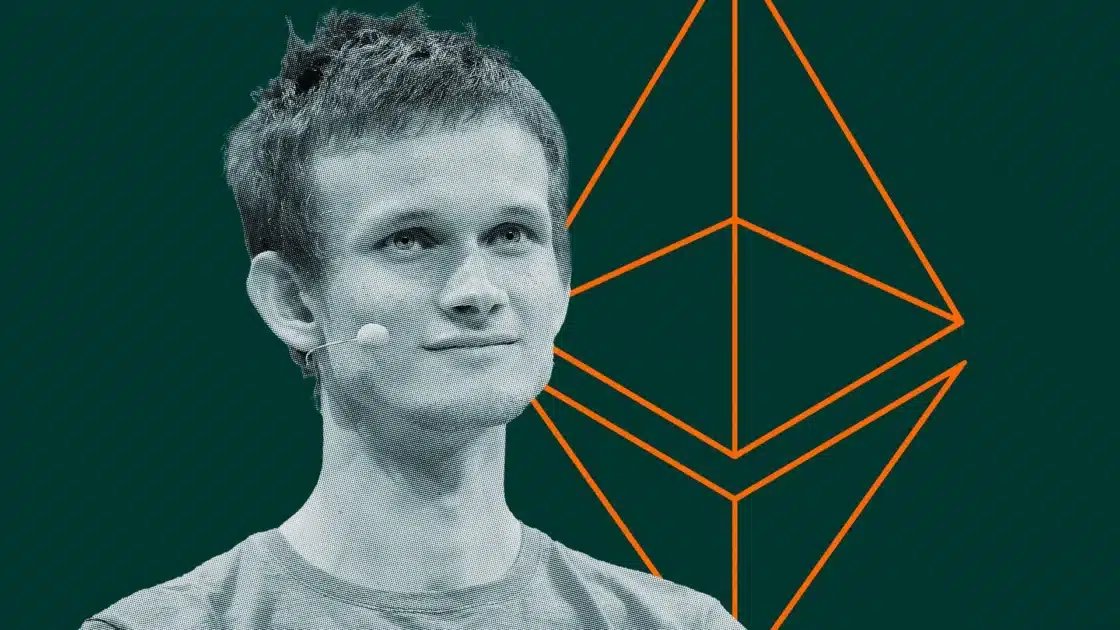
Vitalik Buterin Reveals Ethereum’s Bold Plan to Stay Quantum-Secure and Simple!

Vitalik Buterin Reveals Ethereum’s Bold Plan to Stay Quantum-Secure and Simple!

Buterin unveils Ethereum’s strategy to tackle quantum security challenges ahead. Ethereum focuses on simplifying architecture while boosting security for users. Ethereum’s market stability grows as Buterin’s roadmap gains investor confidence. Ethereum founder Vitalik Buterin has unveiled his long-term vision for the blockchain, focusing on making Ethereum quantum-secure while maintaining its simplicity for users. Buterin presented his roadmap at the Japanese Developer Conference, and splits the future of Ethereum into three phases: short-term, mid-term, and long-term. Buterin’s most ambitious goal for Ethereum is to safeguard the blockchain against the threats posed by quantum computing.  The danger of such future developments is that the future may call into question the cryptographic security of most blockchain systems, and Ethereum will be able to remain ahead thanks to more sophisticated mathematical techniques to ensure the safety and integrity of its protocols. Buterin is committed to ensuring that Ethereum evolves in a way that not only meets today’s security challenges but also prepares for the unknowns of tomorrow. Also Read: Ethereum Giant The Ether Machine Takes Major Step Toward Going Public! However, in spite of such high ambitions, Buterin insisted that Ethereum also needed to simplify its architecture. An important aspect of this vision is to remove unnecessary complexity and make Ethereum more accessible and maintainable without losing its strong security capabilities. Security and simplicity form the core of Buterin’s strategy, as they guarantee that the users of Ethereum experience both security and smooth processes. Focus on Speed and Efficiency in the Short-Term In the short term, Buterin aims to enhance Ethereum’s transaction efficiency, a crucial step toward improving scalability and reducing transaction costs. These advantages are attributed to the fact that, within the mid-term, Ethereum is planning to enhance the speed of transactions in layer-2 networks. According to Butterin, this is part of Ethereum’s expansion, particularly because there is still more need to use blockchain technology to date. The other important aspect of Ethereum’s development is the layer-2 solutions. Buterin supports an approach in which the layer-2 networks are dependent on layer-1 to perform some essential tasks like data security, proof, and censorship resistance. This will enable the layer-2 systems of Ethereum to be concerned with verifying and sequencing transactions, which will improve the overall speed and efficiency of the network. Ethereum’s Market Stability Reflects Confidence in Long-Term Strategy Ethereum’s market performance has remained solid, with the cryptocurrency holding steady above $4,000. Currently priced at $4,492.15, Ethereum has experienced a slight 0.93% increase over the last 24 hours, while its trading volume surged by 8.72%, reaching $34.14 billion. These figures point to growing investor confidence in Ethereum’s long-term vision. The crypto community remains optimistic about Ethereum’s future, with many predicting the price could rise to $5,500 by mid-October. Buterin’s clear, forward-thinking strategy continues to build trust in Ethereum as one of the most secure and scalable blockchain platforms in the market. Also Read: Whales Dump 200 Million XRP in Just 2 Weeks – Is XRP’s Price on the Verge of Collapse? The post Vitalik Buterin Reveals Ethereum’s Bold Plan to Stay Quantum-Secure and Simple! appeared first on 36Crypto.
Share
Coinstats2025/09/18 01:22