Harvard Reduces Bitcoin Exposure While Making Ethereum ETF Bet
Harvard Management Company cut its Bitcoin ETF holdings by more than 20% in the fourth quarter while launching its first ever investment in an Ethereum ETF.
Key Takeaways
- Harvard reduced its BlackRock iShares Bitcoin Trust holdings by 21% in Q4.
- The endowment opened a new $86.8 million position in BlackRock iShares Ethereum Trust.
- Combined crypto ETF exposure stood at $352.6 million as of Dec. 31.
- Despite the reduction, Bitcoin remains Harvard’s largest publicly disclosed equity holding.
What Happened?
Harvard Management Company trimmed its exposure to Bitcoin exchange traded funds during the fourth quarter, according to a recent 13F filing with the US Securities and Exchange Commission. At the same time, it initiated its first publicly disclosed position in an Ethereum ETF, signaling a shift in how the Ivy League endowment is positioning itself in digital assets.
The filing shows that as of Dec. 31, Harvard held a combined $352.6 million in exchange traded funds tied to the two largest cryptocurrencies by market value.
Harvard Trims Bitcoin ETF Position
According to the SEC filing, Harvard held 5.35 million shares of BlackRock’s iShares Bitcoin Trust, valued at $265.8 million at the end of the quarter. This represents a reduction of 1.48 million shares compared with the previous quarter, when the endowment reported 6.81 million shares worth $442.8 million.
The move amounts to a cut of more than 20% in its Bitcoin ETF holdings over the three month period.
Even after the reduction, Bitcoin ETFs remain Harvard’s largest publicly disclosed equity investment. The $265.8 million position exceeds its reported stakes in major technology companies including Alphabet, Microsoft, and Amazon.
First Ever Ethereum ETF Investment
While reducing Bitcoin exposure, Harvard simultaneously built a new position in BlackRock’s iShares Ethereum Trust. The endowment acquired 3.87 million shares valued at $86.8 million.
This marks Harvard’s first publicly disclosed investment in an exchange traded fund tracking Ethereum, the second largest cryptocurrency by market capitalization. The move signals diversification within its digital asset strategy rather than a full retreat from the crypto market.
Market Volatility Played a Role
The portfolio adjustments came during a highly volatile stretch for cryptocurrency markets.
Bitcoin peaked at roughly $126,000 in October 2025 before falling to $88,429 by Dec. 31. Ethereum declined about 28% over the same quarter. More recently, Bitcoin has traded near $68,600, while Ethereum has hovered around $1,900.
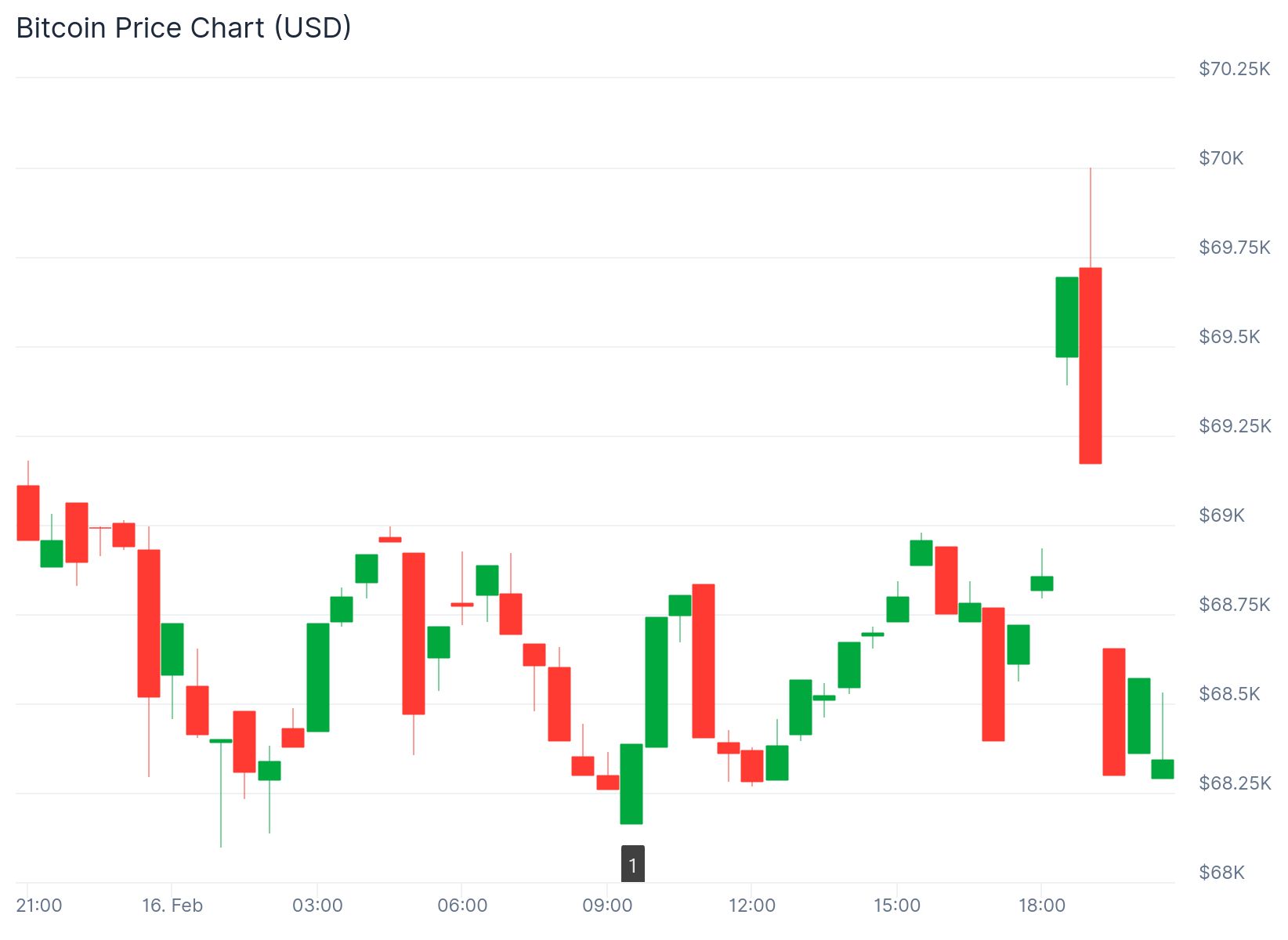 Image Credit – CoinGecko.com
The downturn has drawn scrutiny from some academics. According to reporting by The Harvard Crimson, Andrew F. Siegel, emeritus professor of finance at the University of Washington, described the Bitcoin investment as “risky” and noted it was down 22.8% year to date. Siegel added that the risk of bitcoin is “partly due to its lack of intrinsic value.”
Avanidhar Subrahmanyam, a professor of finance at UCLA, also raised concerns about the endowment’s strategy. He wrote that adding Ethereum amplifies his reservations and described cryptocurrency as an unproven asset class where valuation methodology remains unclear. He added that his earlier skepticism toward Harvard’s Bitcoin investment had been validated by subsequent performance.
A Strategic Rebalance, Not an Exit
Harvard’s combined crypto ETF exposure remains substantial at $352.6 million. The decision to cut Bitcoin while initiating an Ethereum position suggests a rebalancing strategy rather than a withdrawal from digital assets.
The fact that Bitcoin continues to stand as the endowment’s largest publicly disclosed holding underscores that Harvard remains meaningfully exposed to the sector despite market volatility.
CoinLaw’s Takeaway
In my view, this is not a retreat from crypto. It looks more like a calculated portfolio adjustment during a turbulent market cycle. I have seen institutional investors rebalance after sharp price swings, and this move fits that pattern. Harvard is clearly not abandoning digital assets, but it is spreading risk across both Bitcoin and Ethereum.
I believe the bigger story here is institutional comfort with crypto ETFs. Even amid price drops and academic criticism, Harvard still holds hundreds of millions in exposure. That tells me digital assets are becoming a more permanent fixture in large endowment portfolios.
The post Harvard Reduces Bitcoin Exposure While Making Ethereum ETF Bet appeared first on CoinLaw.
You May Also Like

Why Home Energy Bills Are Higher Than Expected in 2026

SoFi and Mastercard Join Forces to Integrate SoFiUSD for Global Settlement