

Ethereum Foundation Unveils Ambitious 2026 Protocol Roadmap: Scaling, Security, and Quantum Readiness
BitcoinWorld
Ethereum Foundation Unveils Ambitious 2026 Protocol Roadmap: Scaling, Security, and Quantum Readiness
ZURICH, SWITZERLAND – December 15, 2024: The Ethereum Foundation has unveiled its comprehensive protocol roadmap for 2026, marking a pivotal moment for the world’s second-largest blockchain ecosystem. This strategic blueprint outlines a multi-year vision centered on three foundational pillars that promise to reshape the network’s capabilities. The announcement comes at a critical juncture in blockchain evolution, as Ethereum continues its transition from proof-of-work to proof-of-stake consensus. Industry analysts immediately recognized the roadmap’s significance for global decentralized applications and financial systems.
Ethereum Foundation 2026 Roadmap: Three Pillars of Evolution
The Ethereum Foundation structured its 2026 protocol roadmap around three interconnected objectives. First, improving user experience addresses persistent challenges with transaction costs and interface complexity. Second, hardening the Layer 1 foundation focuses on security and resilience enhancements. Third, scaling initiatives aim to dramatically increase network throughput and efficiency. These pillars represent a holistic approach to Ethereum’s development, balancing immediate practical needs with long-term technological preparedness. The foundation’s technical teams have already begun preliminary work on several roadmap components.
Historically, Ethereum protocol upgrades followed a methodical, research-driven process. The Merge transition to proof-of-stake in 2022 demonstrated this approach’s effectiveness. Consequently, the 2026 roadmap builds upon previous successes while addressing emerging challenges. Network congestion during peak usage periods highlighted scaling limitations. Meanwhile, increasing regulatory scrutiny globally necessitated enhanced security measures. The foundation’s roadmap directly responds to these real-world pressures with concrete technical solutions.
Gas Limit Expansion and Throughput Enhancement
The Ethereum Foundation proposes a gradual gas limit increase to over 100 million units. This technical adjustment would expand network capacity for transactions and smart contract operations. Currently, Ethereum’s gas limit stands at approximately 30 million units per block. The proposed increase represents a more than threefold expansion potential. However, the foundation emphasizes a cautious, phased implementation approach. Network security and stability remain paramount considerations throughout this process.
Gas limit adjustments require careful coordination across Ethereum’s diverse client implementations. The foundation’s roadmap specifies monitoring periods between incremental increases. These pauses allow developers to assess network performance and stability. Previous Ethereum upgrades, including London and Shanghai, established successful patterns for parameter adjustments. The 2026 roadmap extends this proven methodology to gas limit optimization. Network validators and node operators will participate extensively in testing phases.
| Year | Gas Limit | Network Impact |
|---|---|---|
| 2015 | 3.1 million | Initial launch parameters |
| 2017 | 8 million | CryptoKitties congestion response |
| 2020 | 12.5 million | DeFi summer adjustments |
| 2023 | 30 million | Post-Merge optimization |
| 2026 Target | 100+ million | Roadmap proposed capacity |
Enhanced Proposer-Builder Separation Development
The Ethereum Foundation will advance enhanced Proposer-Builder Separation (ePBS) implementation. This mechanism further decentralizes block production responsibilities. ePBS separates block proposal from block construction tasks. Consequently, different network participants handle distinct aspects of block creation. This separation reduces potential centralization pressures in validator operations. The foundation’s research team published multiple academic papers on ePBS architecture previously.
Enhanced Proposer-Builder Separation builds upon Ethereum’s existing PBS framework. The current system already separates some block production functions. However, ePBS introduces more robust economic incentives and technical safeguards. These enhancements address concerns about validator centralization and censorship resistance. The roadmap allocates significant resources to ePBS research and development throughout 2025. Multiple testnet deployments will precede mainnet implementation.
Blob Parameter Expansion and Data Availability
Ethereum’s roadmap includes further expansion of blob parameters for rollup scalability. Blobs represent dedicated data storage for Layer 2 solutions. These data structures enable rollups to post transaction data efficiently to Layer 1. The foundation plans to increase blob count and size parameters gradually. This expansion directly supports Ethereum’s rollup-centric scaling strategy. Rollups currently process most network transactions through compression and batching techniques.
Blob parameter adjustments require consensus among Ethereum core developers. The foundation coordinates these technical discussions through regular All Core Developers calls. Previous blob implementations during the Dencun upgrade demonstrated parameter adjustment procedures. The 2026 roadmap continues this evolutionary approach to data availability. Increased blob capacity will reduce transaction costs for Layer 2 users significantly. Rollup developers have already begun preparing their systems for expanded blob parameters.
zkEVM Client Development Initiatives
The Ethereum Foundation will develop additional zkEVM clients throughout 2025 and 2026. Zero-knowledge Ethereum Virtual Machines represent cutting-edge scaling technology. These systems execute Ethereum transactions using zero-knowledge proofs for verification. The foundation’s roadmap prioritizes multiple independent zkEVM implementations. Client diversity strengthens network resilience against bugs and attacks. Currently, several teams develop zkEVM technology independently.
zkEVM development follows Ethereum’s longstanding multi-client philosophy. The network currently operates with multiple execution and consensus clients. This diversity prevented catastrophic failures during previous client bugs. The foundation applies the same principle to zkEVM infrastructure development. Multiple implementations will compete on performance and efficiency metrics. This competition historically drove innovation throughout Ethereum’s ecosystem.
Security-Focused Protocol Hardening
The Ethereum Foundation’s roadmap emphasizes security enhancements across multiple dimensions. Strengthening censorship resistance represents a primary objective. Recent regulatory developments globally increased attention on blockchain neutrality. The foundation’s approach combines technical and social solutions to censorship challenges. Protocol improvements will make transaction censorship more difficult and detectable. Meanwhile, governance processes will address validator compliance pressures.
Quantum computing preparation forms another critical security initiative. Although practical quantum computers remain years away, their potential impact on cryptography necessitates early preparation. Ethereum’s roadmap includes research into quantum-resistant cryptographic algorithms. The foundation collaborates with academic institutions on post-quantum cryptography. Transition planning for quantum-resistant signatures will begin in 2025. This proactive approach mirrors responsible security practices in other technology sectors.
- Multi-layered security audits for all protocol changes
- Formal verification of critical consensus mechanisms
- Bug bounty program expansion with increased rewards
- Validator security education and tool development
- Cross-client testing infrastructure enhancements
Timeline and Implementation Framework
The Ethereum Foundation established a detailed timeline for roadmap implementation. Preliminary research and specification phases will dominate 2025 activities. Testnet deployments of individual components will begin in late 2025. Mainnet activation will proceed through 2026 using Ethereum’s established upgrade process. The foundation coordinates with client teams, researchers, and community stakeholders throughout this timeline. Regular progress reports will maintain transparency about development status.
Ethereum’s governance model requires broad consensus for protocol changes. The foundation facilitates this process but doesn’t unilaterally implement upgrades. Network validators ultimately activate improvements through coordinated hard forks. This decentralized decision-making process distinguishes Ethereum from more centralized blockchain platforms. The 2026 roadmap represents a proposal rather than a mandate. Community feedback will shape final implementation details significantly.
Conclusion
The Ethereum Foundation 2026 protocol roadmap outlines a comprehensive vision for network evolution. Scaling improvements, security enhancements, and user experience refinements form interconnected priorities. Gas limit expansions and blob parameter adjustments will increase network capacity substantially. Meanwhile, ePBS development and zkEVM client initiatives will strengthen decentralization and innovation. Security measures addressing censorship resistance and quantum computing threats demonstrate forward-looking preparedness. This balanced approach positions Ethereum for continued leadership in blockchain technology through the latter half of the decade.
FAQs
Q1: What is the significance of increasing Ethereum’s gas limit to over 100 million?
The gas limit increase would allow more transactions per block, potentially reducing congestion and lowering fees during peak periods. However, the Ethereum Foundation emphasizes a gradual, monitored approach to maintain network stability.
Q2: How does enhanced Proposer-Builder Separation (ePBS) improve Ethereum?
ePBS further separates block proposal from construction, reducing centralization risks among validators and enhancing censorship resistance by distributing block production responsibilities across more participants.
Q3: What are blob parameters and why is expanding them important?
Blobs are dedicated data storage for Layer 2 rollups. Expanding blob parameters increases data availability for rollups, enabling them to process more transactions at lower costs while maintaining Ethereum’s security guarantees.
Q4: Why is the Ethereum Foundation developing multiple zkEVM clients?
Multiple independent zkEVM implementations follow Ethereum’s multi-client philosophy, increasing network resilience against bugs or attacks in any single implementation and fostering healthy competition among development teams.
Q5: How is Ethereum preparing for quantum computing threats?
The foundation is researching quantum-resistant cryptographic algorithms and planning a transition to post-quantum signatures, ensuring the network remains secure even when practical quantum computers emerge that could break current encryption.
This post Ethereum Foundation Unveils Ambitious 2026 Protocol Roadmap: Scaling, Security, and Quantum Readiness first appeared on BitcoinWorld.


You May Also Like
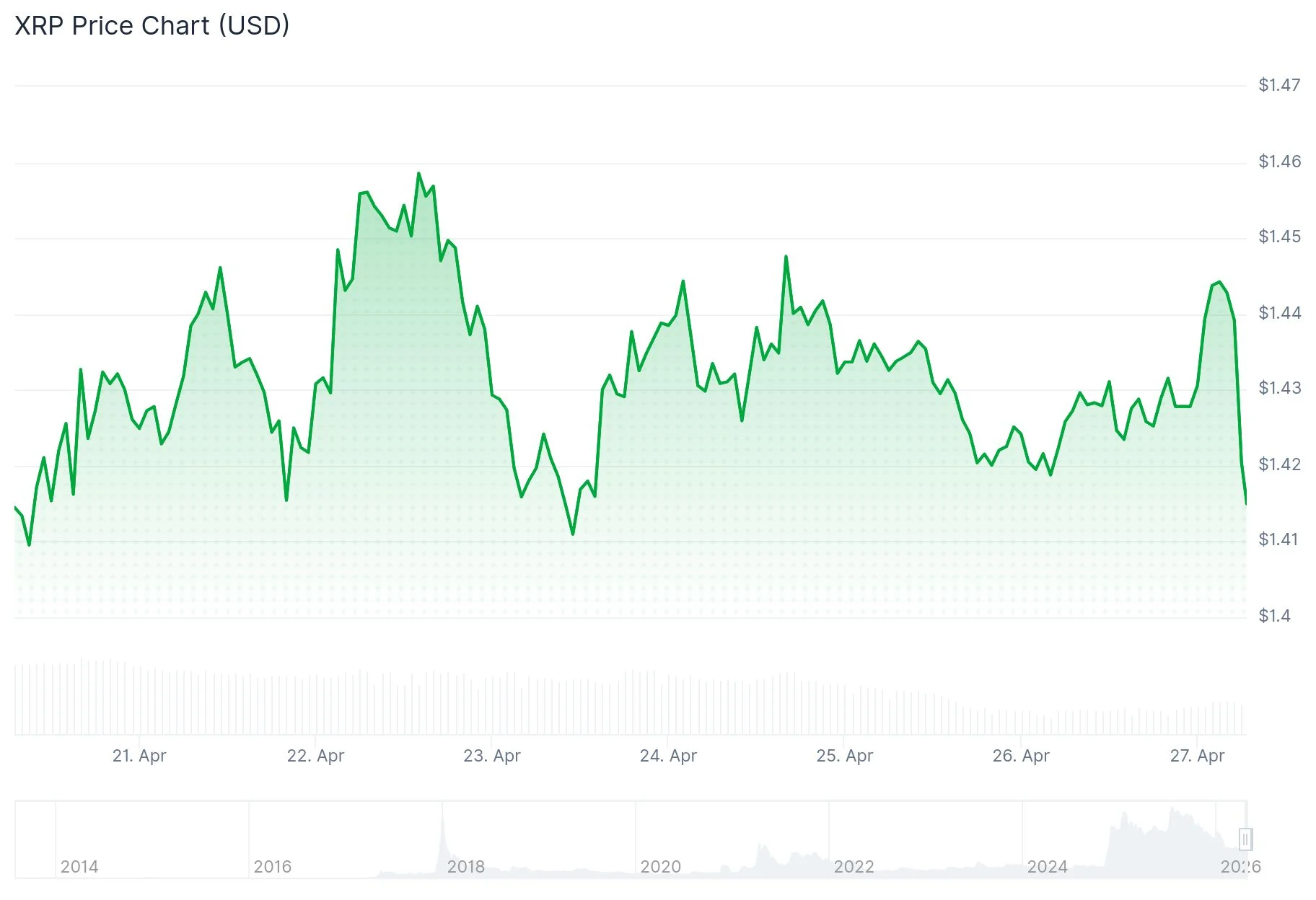
XRP Enters Compression Zone as Analysts Forecast Major Breakout Potential

Bitcoin at Crucial Pivot Point, Here's Why Fed Can Tilt Balance




