

Federal Reserve Influence: Trump’s Critical Claim to Decision-Making Power
BitcoinWorld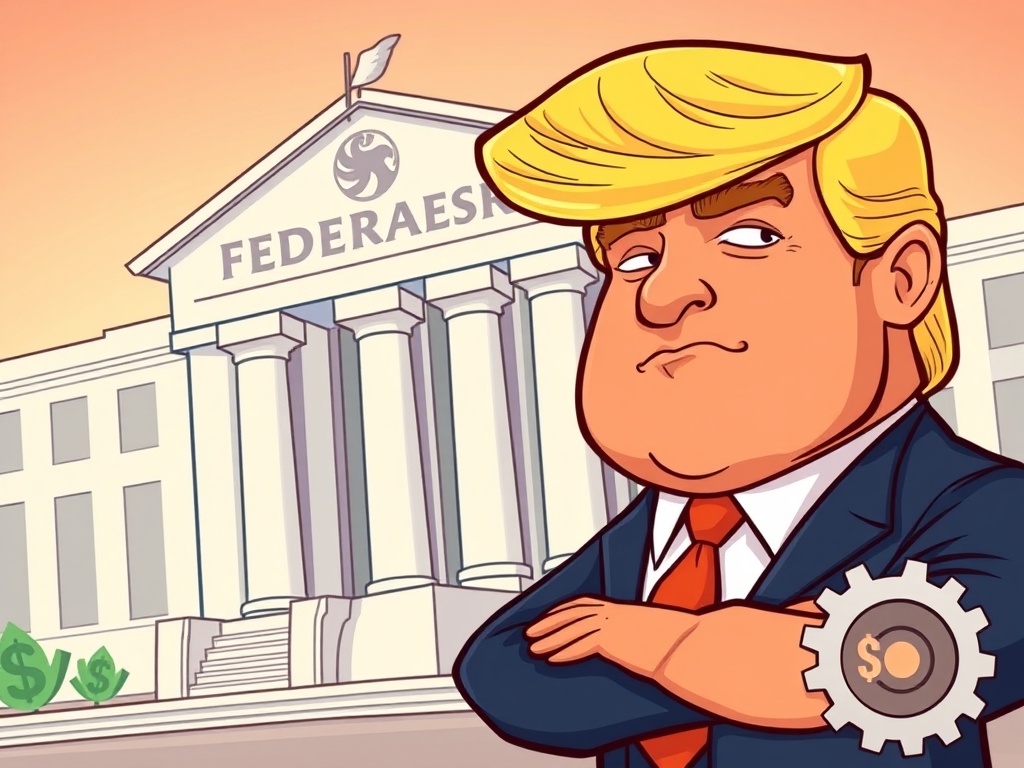
Federal Reserve Influence: Trump’s Critical Claim to Decision-Making Power
The cryptocurrency world often reacts to shifts in traditional financial markets and political statements. Recently, U.S. President Donald Trump made a significant declaration, stating his administration will soon hold a majority at the Federal Reserve, according to Walter Bloomberg. This comment suggests a belief that he will soon wield direct decision-making power within the central bank, raising crucial questions about future monetary policy and the independence of the Fed. Such an assertion of Federal Reserve influence could send ripples across all financial sectors, including digital assets.
Understanding the Claim: What Does ‘Federal Reserve Influence’ Truly Mean?
The Federal Reserve operates as the independent central bank of the United States. Its structure is designed to insulate it from direct political pressure. This allows it to make decisions based on economic data rather than political cycles. This independence is a cornerstone of its credibility and effectiveness.
However, President Trump’s statement implies a direct shift in this established balance. He suggests his appointees will soon constitute a majority. This would give his administration significant, if not outright, control over the Fed’s decisions. This potential for increased Federal Reserve influence from the executive branch challenges the very principle of central bank autonomy.
Why Does Direct Presidential Influence on the Fed Matter for the Economy?
The Federal Reserve plays a vital role in the U.S. and global economy. It sets interest rates, manages the money supply, and aims to achieve maximum employment and stable prices. When these critical functions come under political sway, it can lead to:
- Increased Market Volatility: Investors value predictability. Political interference introduces uncertainty.
- Inflationary Pressures: A politically motivated Fed might be pressured to keep rates low, potentially leading to unchecked inflation.
- Loss of International Confidence: Global markets rely on the Fed’s independent decision-making. Eroding this could weaken the dollar.
Any disruption to the Fed’s independence, and thus its Federal Reserve influence, has far-reaching implications. For cryptocurrency markets, this could mean heightened volatility as investors seek safe havens or alternative assets, or react to changes in dollar strength.
Historical Context: Presidential Relations with the Federal Reserve
Presidents have always had a relationship with the Federal Reserve, appointing its governors and chair. Yet, the tradition has been to respect its operational independence. While presidents may express opinions or frustrations, direct claims of “decision-making power” are less common and more contentious.
This situation differs from typical executive-central bank interactions. It directly questions the institutional firewall. Understanding the historical context helps us grasp the gravity of President Trump’s recent comments regarding his desired Federal Reserve influence.
Potential Challenges and Market Reactions to Heightened Executive Influence
If the executive branch gains significant control over the Federal Reserve, several challenges could emerge:
- Erosion of Trust: Both domestic and international markets might lose faith in the Fed’s ability to act impartially.
- Policy Swings: Monetary policy could become more erratic, aligning with political cycles rather than long-term economic stability.
- Impact on Asset Prices: Unpredictable monetary policy could lead to significant shifts in bond yields, stock valuations, and even commodity prices. This could indirectly affect cryptocurrency valuations as well.
Monitoring these developments is crucial for anyone involved in financial markets, especially those sensitive to macroeconomic shifts, like cryptocurrency investors. The extent of this Federal Reserve influence will be a key factor.
Navigating Future Economic Landscapes: Actionable Insights
In times of potential policy shifts, staying informed is paramount. Here are some actionable insights:
- Monitor Economic Indicators: Keep an eye on inflation rates, employment data, and interest rate announcements.
- Diversify Your Portfolio: Consider a balanced approach across different asset classes to mitigate risks from sudden policy changes.
- Understand Global Reactions: How other major economies and central banks react to these developments can offer clues about broader market sentiment.
Being prepared for various scenarios can help individuals and businesses adapt to an evolving economic environment, particularly if Federal Reserve influence dynamics truly change.
In Conclusion: President Trump’s statement about soon holding decision-making power at the Federal Reserve marks a potentially significant moment for U.S. monetary policy. This assertion of direct Federal Reserve influence challenges long-standing principles of central bank independence. Its implications could range from increased market volatility to shifts in inflation and investor confidence, affecting everything from traditional stocks to the burgeoning cryptocurrency markets. As events unfold, the financial world will closely watch how this dynamic evolves and what it means for the future of economic stability.
Frequently Asked Questions (FAQs)
1. What is the Federal Reserve’s primary role?
The Federal Reserve, often called the Fed, acts as the central bank of the United States. Its primary roles include managing the nation’s monetary policy, supervising and regulating banks, maintaining financial stability, and providing financial services to the U.S. government.
2. Why is the Federal Reserve’s independence important?
Independence helps the Fed make decisions based on economic data and long-term stability rather than short-term political pressures. This fosters market confidence and prevents monetary policy from being used for political gain.
3. How could increased political Federal Reserve influence affect the U.S. economy?
Increased political influence could lead to unpredictable policy shifts, higher inflation if interest rates are kept artificially low, and a loss of market confidence. This can result in economic instability and volatility.
4. What are the potential implications for cryptocurrency markets?
Changes in monetary policy, particularly those driven by political factors, can impact the U.S. dollar’s strength and overall market sentiment. This might lead to increased volatility in crypto markets as investors react to macroeconomic shifts, potentially seeking safe-haven assets or alternatives to traditional finance.
5. Has a U.S. President ever claimed such direct power over the Fed before?
While presidents appoint Fed governors and the chair, and may express opinions, direct claims of soon holding “decision-making power” are highly unusual and challenge the traditional understanding of the Fed’s operational independence.
Did this article shed light on the critical topic of Federal Reserve influence? Share your thoughts and spread awareness by sharing this article on your social media platforms! Your engagement helps others understand these vital economic discussions.
To learn more about the latest explore our article on key developments shaping US economic policy and its monetary policy future.
This post Federal Reserve Influence: Trump’s Critical Claim to Decision-Making Power first appeared on BitcoinWorld and is written by Editorial Team


You May Also Like
Latest US Iran War News Today: Trump Posts “A Whole Civilization Will Die Tonight” Before His 8 PM Deadline

Solana Foundation to Help Secure DeFi Protocols Following $285 Million Drift Hack




