BitcoinWorld CFTC Digital Asset Regulation: Urgent Call as Commissioner Johnson Departs The landscape of CFTC digital asset regulation is at a pivotal juncture. Commissioner Kristin Johnson, a significant voice at the U.S. Commodity Futures Trading Commission (CFTC), will step down on September 3. Her departure marks a critical moment for the agency, especially as it navigates its evolving role in overseeing the rapidly expanding digital assets sector. Johnson’s exit leaves Acting Chair Caroline Pham as the sole leader, raising questions about the future direction of crypto oversight and the agency’s capacity to manage it effectively. What Does Commissioner Johnson’s Departure Mean for CFTC Digital Asset Regulation? Kristin Johnson’s role as the sole Democratic commissioner provided a crucial perspective within the CFTC. Her upcoming departure on September 3, as reported by Bloomberg, signifies a shift in the agency’s internal dynamics. This transition leaves Acting Chair Caroline Pham to lead the commission alone, at least temporarily. The immediate implication is a potential impact on the CFTC’s approach to various regulatory matters, including its growing responsibilities concerning digital assets. Johnson’s statement announcing her resignation highlighted a key concern: the CFTC needs more support to fulfill its expanded mandate. This includes its increasingly vital role in regulating the complex world of digital assets. Her call underscores the immense pressure and the significant resources required for effective oversight in this innovative, yet often volatile, market. Why is Enhanced CFTC Digital Asset Regulation So Crucial? The call for greater support for the CFTC’s expanded role, particularly in CFTC digital asset regulation, is not without merit. The digital asset space, encompassing cryptocurrencies, stablecoins, and NFTs, continues to grow in sophistication and market capitalization. Without clear and robust regulatory frameworks, investors and markets face heightened risks. Johnson’s advocacy emphasizes the need for proactive, well-resourced oversight to protect consumers and maintain market integrity. Effective regulation can offer several benefits: Investor Protection: Safeguarding individuals from fraud, manipulation, and opaque practices. Market Stability: Establishing clear rules helps prevent systemic risks and fosters a more predictable environment. Innovation Growth: A well-defined regulatory perimeter can actually encourage responsible innovation by providing certainty for businesses. Global Competitiveness: Clear frameworks can position the U.S. as a leader in the digital economy. The challenges in this area are substantial, ranging from defining which digital assets fall under CFTC jurisdiction to developing appropriate enforcement mechanisms for novel technologies. These complexities demand a well-supported and knowledgeable regulatory body. Navigating the Future of CFTC Digital Asset Regulation As the CFTC moves forward, the focus on CFTC digital asset regulation will undoubtedly intensify. Industry stakeholders, policymakers, and market participants will closely monitor how the agency adapts to this new leadership structure and addresses Johnson’s concerns. The dialogue around legislative clarity for digital assets is ongoing, and the CFTC’s stance will play a significant role in shaping these discussions. Actionable insights for the industry include: Staying informed about evolving CFTC guidance and enforcement actions. Engaging with regulators to provide constructive feedback on proposed rules. Prioritizing robust internal compliance frameworks that anticipate future regulatory demands. The agency’s capacity to effectively regulate digital assets depends not only on its internal leadership but also on the support it receives from Congress and the broader government to secure necessary funding and legislative authority. This period of transition highlights the urgent need for a cohesive and well-supported strategy for digital asset oversight. Conclusion: Commissioner Kristin Johnson’s impending departure from the CFTC underscores a critical juncture for CFTC digital asset regulation. Her final call for increased support for the agency’s expanded role in overseeing digital assets serves as a powerful reminder of the challenges and opportunities ahead. As the CFTC navigates this transition under Acting Chair Caroline Pham, the crypto industry and policymakers must recognize the imperative of robust, well-resourced regulation to foster a secure and innovative digital economy. The future of digital asset markets hinges on these crucial decisions. Frequently Asked Questions About CFTC Digital Asset Regulation Who is Kristin Johnson and what was her role at the CFTC?Kristin Johnson served as a Democratic Commissioner at the U.S. Commodity Futures Trading Commission (CFTC), a key agency overseeing derivatives markets, including certain digital assets. Why is Commissioner Johnson stepping down?Commissioner Johnson is stepping down on September 3. While her specific reasons for resignation were not fully detailed in the report, her departure statement emphasized the need for more support for the CFTC’s expanded role, particularly in digital asset regulation. What is the CFTC’s role in digital asset regulation?The CFTC primarily regulates commodity derivatives markets. It has asserted jurisdiction over certain digital assets deemed commodities, like Bitcoin and Ethereum, when they are traded in futures or other derivatives markets. What does her departure mean for the future of crypto regulation?Her departure leaves Acting Chair Caroline Pham as the sole leader, potentially impacting the agency’s internal dynamics and approach to digital asset oversight. It also highlights the ongoing need for increased resources and legislative clarity for effective CFTC digital asset regulation. Who will lead the CFTC after her departure?Upon Kristin Johnson’s departure, Acting Chair Caroline Pham will temporarily lead the U.S. Commodity Futures Trading Commission as the sole remaining commissioner. If you found this article insightful, please consider sharing it with your network on social media to spread awareness about the evolving landscape of digital asset regulation! To learn more about the latest crypto market trends, explore our article on key developments shaping digital assets regulatory frameworks. This post CFTC Digital Asset Regulation: Urgent Call as Commissioner Johnson Departs first appeared on BitcoinWorld and is written by Editorial TeamBitcoinWorld CFTC Digital Asset Regulation: Urgent Call as Commissioner Johnson Departs The landscape of CFTC digital asset regulation is at a pivotal juncture. Commissioner Kristin Johnson, a significant voice at the U.S. Commodity Futures Trading Commission (CFTC), will step down on September 3. Her departure marks a critical moment for the agency, especially as it navigates its evolving role in overseeing the rapidly expanding digital assets sector. Johnson’s exit leaves Acting Chair Caroline Pham as the sole leader, raising questions about the future direction of crypto oversight and the agency’s capacity to manage it effectively. What Does Commissioner Johnson’s Departure Mean for CFTC Digital Asset Regulation? Kristin Johnson’s role as the sole Democratic commissioner provided a crucial perspective within the CFTC. Her upcoming departure on September 3, as reported by Bloomberg, signifies a shift in the agency’s internal dynamics. This transition leaves Acting Chair Caroline Pham to lead the commission alone, at least temporarily. The immediate implication is a potential impact on the CFTC’s approach to various regulatory matters, including its growing responsibilities concerning digital assets. Johnson’s statement announcing her resignation highlighted a key concern: the CFTC needs more support to fulfill its expanded mandate. This includes its increasingly vital role in regulating the complex world of digital assets. Her call underscores the immense pressure and the significant resources required for effective oversight in this innovative, yet often volatile, market. Why is Enhanced CFTC Digital Asset Regulation So Crucial? The call for greater support for the CFTC’s expanded role, particularly in CFTC digital asset regulation, is not without merit. The digital asset space, encompassing cryptocurrencies, stablecoins, and NFTs, continues to grow in sophistication and market capitalization. Without clear and robust regulatory frameworks, investors and markets face heightened risks. Johnson’s advocacy emphasizes the need for proactive, well-resourced oversight to protect consumers and maintain market integrity. Effective regulation can offer several benefits: Investor Protection: Safeguarding individuals from fraud, manipulation, and opaque practices. Market Stability: Establishing clear rules helps prevent systemic risks and fosters a more predictable environment. Innovation Growth: A well-defined regulatory perimeter can actually encourage responsible innovation by providing certainty for businesses. Global Competitiveness: Clear frameworks can position the U.S. as a leader in the digital economy. The challenges in this area are substantial, ranging from defining which digital assets fall under CFTC jurisdiction to developing appropriate enforcement mechanisms for novel technologies. These complexities demand a well-supported and knowledgeable regulatory body. Navigating the Future of CFTC Digital Asset Regulation As the CFTC moves forward, the focus on CFTC digital asset regulation will undoubtedly intensify. Industry stakeholders, policymakers, and market participants will closely monitor how the agency adapts to this new leadership structure and addresses Johnson’s concerns. The dialogue around legislative clarity for digital assets is ongoing, and the CFTC’s stance will play a significant role in shaping these discussions. Actionable insights for the industry include: Staying informed about evolving CFTC guidance and enforcement actions. Engaging with regulators to provide constructive feedback on proposed rules. Prioritizing robust internal compliance frameworks that anticipate future regulatory demands. The agency’s capacity to effectively regulate digital assets depends not only on its internal leadership but also on the support it receives from Congress and the broader government to secure necessary funding and legislative authority. This period of transition highlights the urgent need for a cohesive and well-supported strategy for digital asset oversight. Conclusion: Commissioner Kristin Johnson’s impending departure from the CFTC underscores a critical juncture for CFTC digital asset regulation. Her final call for increased support for the agency’s expanded role in overseeing digital assets serves as a powerful reminder of the challenges and opportunities ahead. As the CFTC navigates this transition under Acting Chair Caroline Pham, the crypto industry and policymakers must recognize the imperative of robust, well-resourced regulation to foster a secure and innovative digital economy. The future of digital asset markets hinges on these crucial decisions. Frequently Asked Questions About CFTC Digital Asset Regulation Who is Kristin Johnson and what was her role at the CFTC?Kristin Johnson served as a Democratic Commissioner at the U.S. Commodity Futures Trading Commission (CFTC), a key agency overseeing derivatives markets, including certain digital assets. Why is Commissioner Johnson stepping down?Commissioner Johnson is stepping down on September 3. While her specific reasons for resignation were not fully detailed in the report, her departure statement emphasized the need for more support for the CFTC’s expanded role, particularly in digital asset regulation. What is the CFTC’s role in digital asset regulation?The CFTC primarily regulates commodity derivatives markets. It has asserted jurisdiction over certain digital assets deemed commodities, like Bitcoin and Ethereum, when they are traded in futures or other derivatives markets. What does her departure mean for the future of crypto regulation?Her departure leaves Acting Chair Caroline Pham as the sole leader, potentially impacting the agency’s internal dynamics and approach to digital asset oversight. It also highlights the ongoing need for increased resources and legislative clarity for effective CFTC digital asset regulation. Who will lead the CFTC after her departure?Upon Kristin Johnson’s departure, Acting Chair Caroline Pham will temporarily lead the U.S. Commodity Futures Trading Commission as the sole remaining commissioner. If you found this article insightful, please consider sharing it with your network on social media to spread awareness about the evolving landscape of digital asset regulation! To learn more about the latest crypto market trends, explore our article on key developments shaping digital assets regulatory frameworks. This post CFTC Digital Asset Regulation: Urgent Call as Commissioner Johnson Departs first appeared on BitcoinWorld and is written by Editorial Team

CFTC Digital Asset Regulation: Urgent Call as Commissioner Johnson Departs

BitcoinWorld
CFTC Digital Asset Regulation: Urgent Call as Commissioner Johnson Departs

The landscape of CFTC digital asset regulation is at a pivotal juncture. Commissioner Kristin Johnson, a significant voice at the U.S. Commodity Futures Trading Commission (CFTC), will step down on September 3. Her departure marks a critical moment for the agency, especially as it navigates its evolving role in overseeing the rapidly expanding digital assets sector. Johnson’s exit leaves Acting Chair Caroline Pham as the sole leader, raising questions about the future direction of crypto oversight and the agency’s capacity to manage it effectively.

What Does Commissioner Johnson’s Departure Mean for CFTC Digital Asset Regulation?

Kristin Johnson’s role as the sole Democratic commissioner provided a crucial perspective within the CFTC. Her upcoming departure on September 3, as reported by Bloomberg, signifies a shift in the agency’s internal dynamics. This transition leaves Acting Chair Caroline Pham to lead the commission alone, at least temporarily. The immediate implication is a potential impact on the CFTC’s approach to various regulatory matters, including its growing responsibilities concerning digital assets.

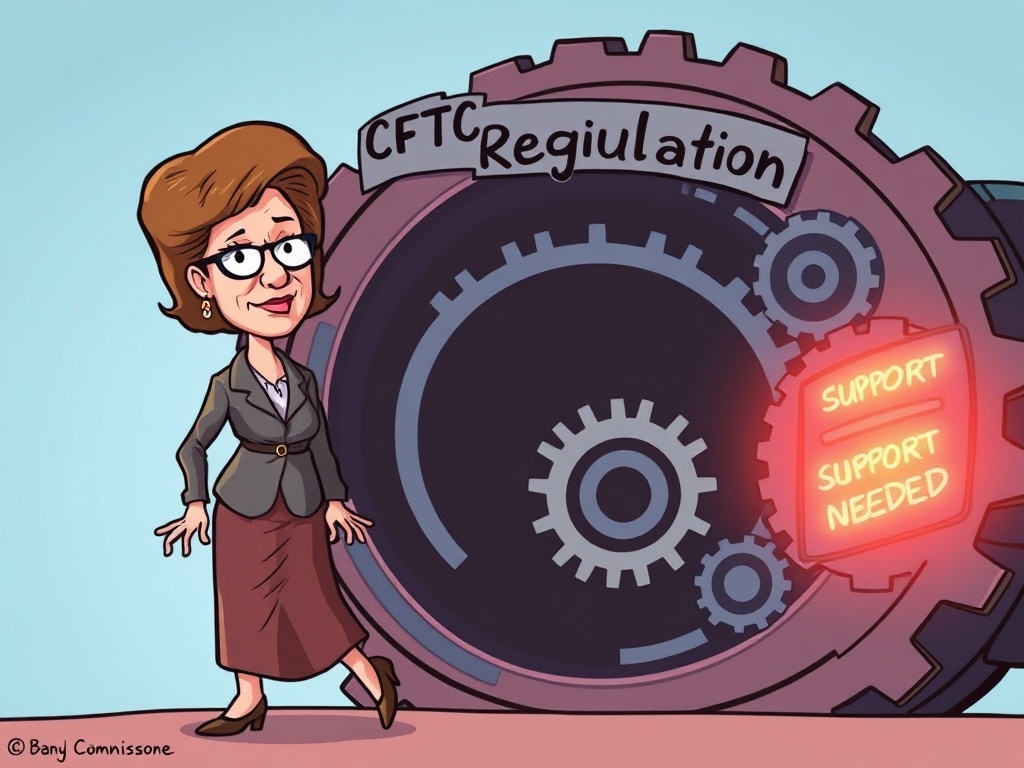
Johnson’s statement announcing her resignation highlighted a key concern: the CFTC needs more support to fulfill its expanded mandate. This includes its increasingly vital role in regulating the complex world of digital assets. Her call underscores the immense pressure and the significant resources required for effective oversight in this innovative, yet often volatile, market.

Why is Enhanced CFTC Digital Asset Regulation So Crucial?

The call for greater support for the CFTC’s expanded role, particularly in CFTC digital asset regulation, is not without merit. The digital asset space, encompassing cryptocurrencies, stablecoins, and NFTs, continues to grow in sophistication and market capitalization. Without clear and robust regulatory frameworks, investors and markets face heightened risks. Johnson’s advocacy emphasizes the need for proactive, well-resourced oversight to protect consumers and maintain market integrity.

Effective regulation can offer several benefits:

  • Investor Protection: Safeguarding individuals from fraud, manipulation, and opaque practices.
  • Market Stability: Establishing clear rules helps prevent systemic risks and fosters a more predictable environment.
  • Innovation Growth: A well-defined regulatory perimeter can actually encourage responsible innovation by providing certainty for businesses.
  • Global Competitiveness: Clear frameworks can position the U.S. as a leader in the digital economy.

The challenges in this area are substantial, ranging from defining which digital assets fall under CFTC jurisdiction to developing appropriate enforcement mechanisms for novel technologies. These complexities demand a well-supported and knowledgeable regulatory body.

As the CFTC moves forward, the focus on CFTC digital asset regulation will undoubtedly intensify. Industry stakeholders, policymakers, and market participants will closely monitor how the agency adapts to this new leadership structure and addresses Johnson’s concerns. The dialogue around legislative clarity for digital assets is ongoing, and the CFTC’s stance will play a significant role in shaping these discussions.

Actionable insights for the industry include:

  • Staying informed about evolving CFTC guidance and enforcement actions.
  • Engaging with regulators to provide constructive feedback on proposed rules.
  • Prioritizing robust internal compliance frameworks that anticipate future regulatory demands.

The agency’s capacity to effectively regulate digital assets depends not only on its internal leadership but also on the support it receives from Congress and the broader government to secure necessary funding and legislative authority. This period of transition highlights the urgent need for a cohesive and well-supported strategy for digital asset oversight.

Conclusion: Commissioner Kristin Johnson’s impending departure from the CFTC underscores a critical juncture for CFTC digital asset regulation. Her final call for increased support for the agency’s expanded role in overseeing digital assets serves as a powerful reminder of the challenges and opportunities ahead. As the CFTC navigates this transition under Acting Chair Caroline Pham, the crypto industry and policymakers must recognize the imperative of robust, well-resourced regulation to foster a secure and innovative digital economy. The future of digital asset markets hinges on these crucial decisions.

Frequently Asked Questions About CFTC Digital Asset Regulation

  • Who is Kristin Johnson and what was her role at the CFTC?
    Kristin Johnson served as a Democratic Commissioner at the U.S. Commodity Futures Trading Commission (CFTC), a key agency overseeing derivatives markets, including certain digital assets.
  • Why is Commissioner Johnson stepping down?
    Commissioner Johnson is stepping down on September 3. While her specific reasons for resignation were not fully detailed in the report, her departure statement emphasized the need for more support for the CFTC’s expanded role, particularly in digital asset regulation.
  • What is the CFTC’s role in digital asset regulation?
    The CFTC primarily regulates commodity derivatives markets. It has asserted jurisdiction over certain digital assets deemed commodities, like Bitcoin and Ethereum, when they are traded in futures or other derivatives markets.
  • What does her departure mean for the future of crypto regulation?
    Her departure leaves Acting Chair Caroline Pham as the sole leader, potentially impacting the agency’s internal dynamics and approach to digital asset oversight. It also highlights the ongoing need for increased resources and legislative clarity for effective CFTC digital asset regulation.
  • Who will lead the CFTC after her departure?
    Upon Kristin Johnson’s departure, Acting Chair Caroline Pham will temporarily lead the U.S. Commodity Futures Trading Commission as the sole remaining commissioner.

If you found this article insightful, please consider sharing it with your network on social media to spread awareness about the evolving landscape of digital asset regulation!

To learn more about the latest crypto market trends, explore our article on key developments shaping digital assets regulatory frameworks.

This post CFTC Digital Asset Regulation: Urgent Call as Commissioner Johnson Departs first appeared on BitcoinWorld and is written by Editorial Team


Market Opportunity
Brainedge Logo
Brainedge Price(LEARN)
$0.0091
$0.0091$0.0091
+0.11%
USD
Brainedge (LEARN) Live Price Chart
Disclaimer: The articles reposted on this site are sourced from public platforms and are provided for informational purposes only. They do not necessarily reflect the views of MEXC. All rights remain with the original authors. If you believe any content infringes on third-party rights, please contact service@support.mexc.com for removal. MEXC makes no guarantees regarding the accuracy, completeness, or timeliness of the content and is not responsible for any actions taken based on the information provided. The content does not constitute financial, legal, or other professional advice, nor should it be considered a recommendation or endorsement by MEXC.

You May Also Like

CME Group to launch options on XRP and SOL futures

CME Group to launch options on XRP and SOL futures

The post CME Group to launch options on XRP and SOL futures appeared on BitcoinEthereumNews.com. CME Group will offer options based on the derivative markets on Solana (SOL) and XRP. The new markets will open on October 13, after regulatory approval.  CME Group will expand its crypto products with options on the futures markets of Solana (SOL) and XRP. The futures market will start on October 13, after regulatory review and approval.  The options will allow the trading of MicroSol, XRP, and MicroXRP futures, with expiry dates available every business day, monthly, and quarterly. The new products will be added to the existing BTC and ETH options markets. ‘The launch of these options contracts builds on the significant growth and increasing liquidity we have seen across our suite of Solana and XRP futures,’ said Giovanni Vicioso, CME Group Global Head of Cryptocurrency Products. The options contracts will have two main sizes, tracking the futures contracts. The new market will be suitable for sophisticated institutional traders, as well as active individual traders. The addition of options markets singles out XRP and SOL as liquid enough to offer the potential to bet on a market direction.  The options on futures arrive a few months after the launch of SOL futures. Both SOL and XRP had peak volumes in August, though XRP activity has slowed down in September. XRP and SOL options to tap both institutions and active traders Crypto options are one of the indicators of market attitudes, with XRP and SOL receiving a new way to gauge sentiment. The contracts will be supported by the Cumberland team.  ‘As one of the biggest liquidity providers in the ecosystem, the Cumberland team is excited to support CME Group’s continued expansion of crypto offerings,’ said Roman Makarov, Head of Cumberland Options Trading at DRW. ‘The launch of options on Solana and XRP futures is the latest example of the…
Share
BitcoinEthereumNews2025/09/18 00:56
XLM Price Prediction: Stellar Targets $0.26-$0.27 Range by February 2026

XLM Price Prediction: Stellar Targets $0.26-$0.27 Range by February 2026

The post XLM Price Prediction: Stellar Targets $0.26-$0.27 Range by February 2026 appeared on BitcoinEthereumNews.com. Zach Anderson Jan 14, 2026 13:31 XLM
Share
BitcoinEthereumNews2026/01/15 10:06
Adoption Leads Traders to Snorter Token

Adoption Leads Traders to Snorter Token

The post Adoption Leads Traders to Snorter Token appeared on BitcoinEthereumNews.com. Largest Bank in Spain Launches Crypto Service: Adoption Leads Traders to Snorter Token Sign Up for Our Newsletter! For updates and exclusive offers enter your email. Leah is a British journalist with a BA in Journalism, Media, and Communications and nearly a decade of content writing experience. Over the last four years, her focus has primarily been on Web3 technologies, driven by her genuine enthusiasm for decentralization and the latest technological advancements. She has contributed to leading crypto and NFT publications – Cointelegraph, Coinbound, Crypto News, NFT Plazas, Bitcolumnist, Techreport, and NFT Lately – which has elevated her to a senior role in crypto journalism. Whether crafting breaking news or in-depth reviews, she strives to engage her readers with the latest insights and information. Her articles often span the hottest cryptos, exchanges, and evolving regulations. As part of her ploy to attract crypto newbies into Web3, she explains even the most complex topics in an easily understandable and engaging way. Further underscoring her dynamic journalism background, she has written for various sectors, including software testing (TEST Magazine), travel (Travel Off Path), and music (Mixmag). When she’s not deep into a crypto rabbit hole, she’s probably island-hopping (with the Galapagos and Hainan being her go-to’s). Or perhaps sketching chalk pencil drawings while listening to the Pixies, her all-time favorite band. This website uses cookies. By continuing to use this website you are giving consent to cookies being used. Visit our Privacy Center or Cookie Policy. I Agree Source: https://bitcoinist.com/banco-santander-and-snorter-token-crypto-services/
Share
BitcoinEthereumNews2025/09/17 23:45