BitcoinWorld Hyperliquid Short Squeeze: Explosive 200% Surge Creates Million-Dollar Opportunity The cryptocurrency world is no stranger to dramatic market movements, but recent events on Hyperliquid have truly captivated traders. Imagine a scenario where two tokens, XPL and WLFI, suddenly skyrocket over 200% in mere minutes. This wasn’t just a random pump; it was the direct result of a massive Hyperliquid short squeeze, an event that saw a single whale address trigger an unprecedented wave of liquidations and multi-million dollar profits. Understanding the Hyperliquid Short Squeeze Phenomenon What exactly is a Hyperliquid short squeeze, and why does it lead to such explosive price action? In simple terms, a short squeeze occurs when the price of an asset suddenly increases, forcing traders who bet against it (short sellers) to buy it back to cover their positions. This frantic buying further drives the price up, creating a vicious cycle. On platforms like Hyperliquid, with its perpetual futures trading, these events can be particularly intense due to high leverage. Short Selling: Traders borrow an asset, sell it, and hope to buy it back at a lower price to profit from the difference. Liquidation: If the price moves against a short seller significantly, their position is automatically closed by the exchange to prevent further losses, often at a substantial loss. Thin Order Book: A limited number of buy and sell orders available at various price points, making it easier for large orders to move the price dramatically. The Anatomy of XPL and WLFI’s Explosive Surge The recent incident on Hyperliquid unfolded rapidly overnight. A single, savvy whale address initiated a multi-million dollar long position in XPL. This means they were betting on the price to go up. Crucially, they exploited a “thin order book,” meaning there weren’t many sellers willing to offload XPL at current prices. As the whale’s large buy orders hit the market, the price of XPL had nowhere to go but up. This rapid price increase immediately put immense pressure on existing short sellers. Their positions began to bleed, and many were forced into liquidation. This forced buying from liquidations acted as fuel, propelling XPL’s price over 200% in just two minutes. The whale then strategically began to partially close their position, locking in an astonishing $16 million in profit. Industry observers, including mlmabc, described this as one of the most extreme and unusual liquidation incidents ever seen on the platform. Remarkably, a similar dramatic event, also involving a significant Hyperliquid short squeeze, reportedly impacted WLFI around the same time. This suggests a broader vulnerability or a coordinated strategy targeting illiquid assets on the platform. What Lessons Can We Learn from this Hyperliquid Short Squeeze? Such extreme market events offer valuable insights for all participants in the crypto space. They highlight both the immense opportunities and the significant risks involved in leveraged trading, especially on platforms with deep liquidity challenges. What can traders take away from the XPL and WLFI surges? Market Volatility is Real: Even established platforms can experience sudden, dramatic price swings. Order Book Awareness: Understanding the depth and liquidity of an asset’s order book is crucial, particularly for altcoins. Thin order books are ripe for manipulation or large-scale market impact. Risk Management: Leveraged trading amplifies both gains and losses. Setting stop-loss orders and managing position sizes are paramount to surviving a sudden Hyperliquid short squeeze. Whale Activity: Monitoring significant whale movements can sometimes provide early indicators of potential market shifts, though predicting their exact impact remains challenging. This incident serves as a stark reminder that while the crypto market offers incredible potential for profit, it also demands vigilance and a robust understanding of market dynamics. The speed and scale of the XPL and WLFI surges underscore the unique challenges and opportunities present in decentralized finance. In conclusion, the recent Hyperliquid short squeeze involving XPL and WLFI was a truly spectacular event, showcasing the power of concentrated capital against a thin order book. A single whale’s calculated move led to a 200% price surge, multi-million dollar profits, and widespread liquidations. This dramatic episode provides a powerful lesson in market mechanics, risk management, and the inherent volatility of the crypto landscape. It underscores the need for traders to be acutely aware of liquidity, leverage, and the potential for rapid market shifts. Frequently Asked Questions (FAQs) 1. What is a short squeeze in crypto? A short squeeze happens when the price of a cryptocurrency rapidly increases, forcing short sellers (who bet on price drops) to buy back the asset to limit losses, which further drives the price up. 2. How did the whale profit from the Hyperliquid short squeeze? The whale opened a large ‘long’ position, betting on the price to rise. By exploiting a thin order book, their massive buy orders quickly pushed the price up, leading to short sellers’ liquidations and allowing the whale to sell for a significant profit. 3. What is a “thin order book” and why does it matter? A thin order book means there are few buy or sell orders at various price levels. This lack of liquidity makes an asset’s price highly susceptible to large trades, allowing a single large order to cause significant price movements. 4. How can traders protect themselves from a sudden short squeeze? Traders can protect themselves by using stop-loss orders, managing their leverage carefully, diversifying their portfolios, and being aware of the liquidity of the assets they are trading. 5. Is Hyperliquid a safe platform for trading? Hyperliquid, like other decentralized perpetual exchanges, offers high leverage and unique market dynamics. While it provides opportunities, traders must understand its risks, including the potential for rapid liquidations due to events like a Hyperliquid short squeeze. Did this article shed light on the incredible volatility and potential profits in crypto trading? Share this insight with your fellow traders and crypto enthusiasts on social media! Let’s keep the conversation going about market dynamics and smart trading strategies. To learn more about the latest crypto market trends, explore our article on key developments shaping cryptocurrency price action. This post Hyperliquid Short Squeeze: Explosive 200% Surge Creates Million-Dollar Opportunity first appeared on BitcoinWorld and is written by Editorial TeamBitcoinWorld Hyperliquid Short Squeeze: Explosive 200% Surge Creates Million-Dollar Opportunity The cryptocurrency world is no stranger to dramatic market movements, but recent events on Hyperliquid have truly captivated traders. Imagine a scenario where two tokens, XPL and WLFI, suddenly skyrocket over 200% in mere minutes. This wasn’t just a random pump; it was the direct result of a massive Hyperliquid short squeeze, an event that saw a single whale address trigger an unprecedented wave of liquidations and multi-million dollar profits. Understanding the Hyperliquid Short Squeeze Phenomenon What exactly is a Hyperliquid short squeeze, and why does it lead to such explosive price action? In simple terms, a short squeeze occurs when the price of an asset suddenly increases, forcing traders who bet against it (short sellers) to buy it back to cover their positions. This frantic buying further drives the price up, creating a vicious cycle. On platforms like Hyperliquid, with its perpetual futures trading, these events can be particularly intense due to high leverage. Short Selling: Traders borrow an asset, sell it, and hope to buy it back at a lower price to profit from the difference. Liquidation: If the price moves against a short seller significantly, their position is automatically closed by the exchange to prevent further losses, often at a substantial loss. Thin Order Book: A limited number of buy and sell orders available at various price points, making it easier for large orders to move the price dramatically. The Anatomy of XPL and WLFI’s Explosive Surge The recent incident on Hyperliquid unfolded rapidly overnight. A single, savvy whale address initiated a multi-million dollar long position in XPL. This means they were betting on the price to go up. Crucially, they exploited a “thin order book,” meaning there weren’t many sellers willing to offload XPL at current prices. As the whale’s large buy orders hit the market, the price of XPL had nowhere to go but up. This rapid price increase immediately put immense pressure on existing short sellers. Their positions began to bleed, and many were forced into liquidation. This forced buying from liquidations acted as fuel, propelling XPL’s price over 200% in just two minutes. The whale then strategically began to partially close their position, locking in an astonishing $16 million in profit. Industry observers, including mlmabc, described this as one of the most extreme and unusual liquidation incidents ever seen on the platform. Remarkably, a similar dramatic event, also involving a significant Hyperliquid short squeeze, reportedly impacted WLFI around the same time. This suggests a broader vulnerability or a coordinated strategy targeting illiquid assets on the platform. What Lessons Can We Learn from this Hyperliquid Short Squeeze? Such extreme market events offer valuable insights for all participants in the crypto space. They highlight both the immense opportunities and the significant risks involved in leveraged trading, especially on platforms with deep liquidity challenges. What can traders take away from the XPL and WLFI surges? Market Volatility is Real: Even established platforms can experience sudden, dramatic price swings. Order Book Awareness: Understanding the depth and liquidity of an asset’s order book is crucial, particularly for altcoins. Thin order books are ripe for manipulation or large-scale market impact. Risk Management: Leveraged trading amplifies both gains and losses. Setting stop-loss orders and managing position sizes are paramount to surviving a sudden Hyperliquid short squeeze. Whale Activity: Monitoring significant whale movements can sometimes provide early indicators of potential market shifts, though predicting their exact impact remains challenging. This incident serves as a stark reminder that while the crypto market offers incredible potential for profit, it also demands vigilance and a robust understanding of market dynamics. The speed and scale of the XPL and WLFI surges underscore the unique challenges and opportunities present in decentralized finance. In conclusion, the recent Hyperliquid short squeeze involving XPL and WLFI was a truly spectacular event, showcasing the power of concentrated capital against a thin order book. A single whale’s calculated move led to a 200% price surge, multi-million dollar profits, and widespread liquidations. This dramatic episode provides a powerful lesson in market mechanics, risk management, and the inherent volatility of the crypto landscape. It underscores the need for traders to be acutely aware of liquidity, leverage, and the potential for rapid market shifts. Frequently Asked Questions (FAQs) 1. What is a short squeeze in crypto? A short squeeze happens when the price of a cryptocurrency rapidly increases, forcing short sellers (who bet on price drops) to buy back the asset to limit losses, which further drives the price up. 2. How did the whale profit from the Hyperliquid short squeeze? The whale opened a large ‘long’ position, betting on the price to rise. By exploiting a thin order book, their massive buy orders quickly pushed the price up, leading to short sellers’ liquidations and allowing the whale to sell for a significant profit. 3. What is a “thin order book” and why does it matter? A thin order book means there are few buy or sell orders at various price levels. This lack of liquidity makes an asset’s price highly susceptible to large trades, allowing a single large order to cause significant price movements. 4. How can traders protect themselves from a sudden short squeeze? Traders can protect themselves by using stop-loss orders, managing their leverage carefully, diversifying their portfolios, and being aware of the liquidity of the assets they are trading. 5. Is Hyperliquid a safe platform for trading? Hyperliquid, like other decentralized perpetual exchanges, offers high leverage and unique market dynamics. While it provides opportunities, traders must understand its risks, including the potential for rapid liquidations due to events like a Hyperliquid short squeeze. Did this article shed light on the incredible volatility and potential profits in crypto trading? Share this insight with your fellow traders and crypto enthusiasts on social media! Let’s keep the conversation going about market dynamics and smart trading strategies. To learn more about the latest crypto market trends, explore our article on key developments shaping cryptocurrency price action. This post Hyperliquid Short Squeeze: Explosive 200% Surge Creates Million-Dollar Opportunity first appeared on BitcoinWorld and is written by Editorial Team


Hyperliquid Short Squeeze: Explosive 200% Surge Creates Million-Dollar Opportunity

2025/08/27 08:55
6 min read
For feedback or concerns regarding this content, please contact us at crypto.news@mexc.com

BitcoinWorld

Hyperliquid Short Squeeze: Explosive 200% Surge Creates Million-Dollar Opportunity

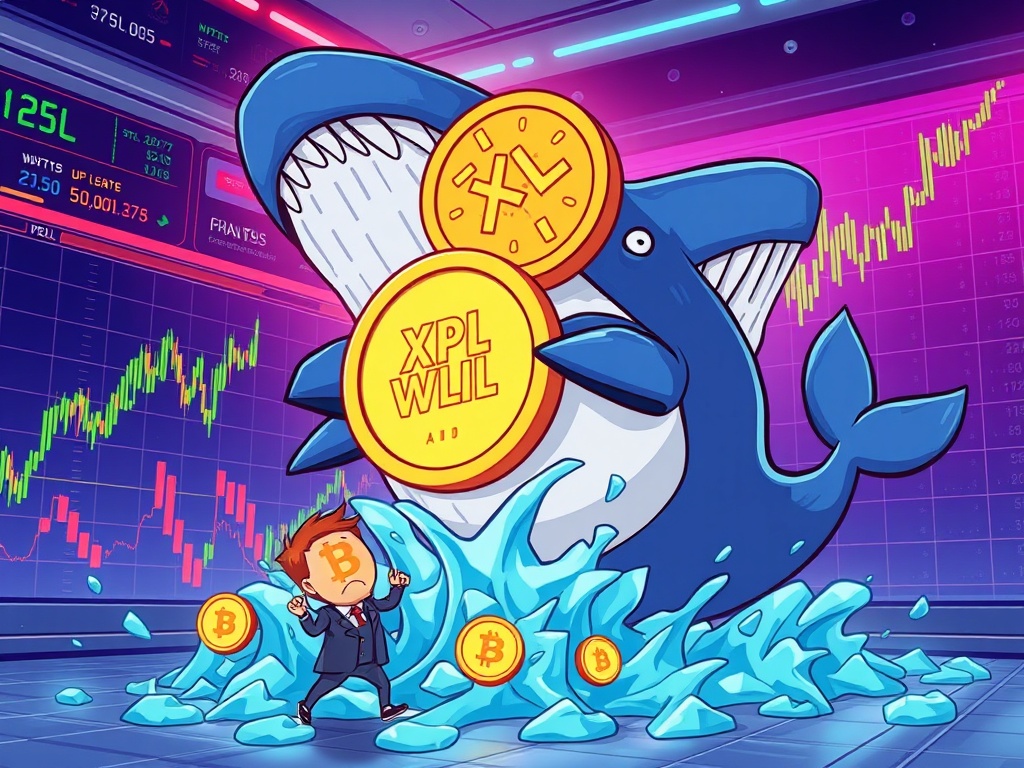
The cryptocurrency world is no stranger to dramatic market movements, but recent events on Hyperliquid have truly captivated traders. Imagine a scenario where two tokens, XPL and WLFI, suddenly skyrocket over 200% in mere minutes. This wasn’t just a random pump; it was the direct result of a massive Hyperliquid short squeeze, an event that saw a single whale address trigger an unprecedented wave of liquidations and multi-million dollar profits.

Understanding the Hyperliquid Short Squeeze Phenomenon

What exactly is a Hyperliquid short squeeze, and why does it lead to such explosive price action? In simple terms, a short squeeze occurs when the price of an asset suddenly increases, forcing traders who bet against it (short sellers) to buy it back to cover their positions. This frantic buying further drives the price up, creating a vicious cycle. On platforms like Hyperliquid, with its perpetual futures trading, these events can be particularly intense due to high leverage.

  • Short Selling: Traders borrow an asset, sell it, and hope to buy it back at a lower price to profit from the difference.
  • Liquidation: If the price moves against a short seller significantly, their position is automatically closed by the exchange to prevent further losses, often at a substantial loss.
  • Thin Order Book: A limited number of buy and sell orders available at various price points, making it easier for large orders to move the price dramatically.

The Anatomy of XPL and WLFI’s Explosive Surge

The recent incident on Hyperliquid unfolded rapidly overnight. A single, savvy whale address initiated a multi-million dollar long position in XPL. This means they were betting on the price to go up. Crucially, they exploited a “thin order book,” meaning there weren’t many sellers willing to offload XPL at current prices. As the whale’s large buy orders hit the market, the price of XPL had nowhere to go but up.

This rapid price increase immediately put immense pressure on existing short sellers. Their positions began to bleed, and many were forced into liquidation. This forced buying from liquidations acted as fuel, propelling XPL’s price over 200% in just two minutes. The whale then strategically began to partially close their position, locking in an astonishing $16 million in profit. Industry observers, including mlmabc, described this as one of the most extreme and unusual liquidation incidents ever seen on the platform.

Remarkably, a similar dramatic event, also involving a significant Hyperliquid short squeeze, reportedly impacted WLFI around the same time. This suggests a broader vulnerability or a coordinated strategy targeting illiquid assets on the platform.

What Lessons Can We Learn from this Hyperliquid Short Squeeze?

Such extreme market events offer valuable insights for all participants in the crypto space. They highlight both the immense opportunities and the significant risks involved in leveraged trading, especially on platforms with deep liquidity challenges. What can traders take away from the XPL and WLFI surges?

  • Market Volatility is Real: Even established platforms can experience sudden, dramatic price swings.
  • Order Book Awareness: Understanding the depth and liquidity of an asset’s order book is crucial, particularly for altcoins. Thin order books are ripe for manipulation or large-scale market impact.
  • Risk Management: Leveraged trading amplifies both gains and losses. Setting stop-loss orders and managing position sizes are paramount to surviving a sudden Hyperliquid short squeeze.
  • Whale Activity: Monitoring significant whale movements can sometimes provide early indicators of potential market shifts, though predicting their exact impact remains challenging.

This incident serves as a stark reminder that while the crypto market offers incredible potential for profit, it also demands vigilance and a robust understanding of market dynamics. The speed and scale of the XPL and WLFI surges underscore the unique challenges and opportunities present in decentralized finance.

In conclusion, the recent Hyperliquid short squeeze involving XPL and WLFI was a truly spectacular event, showcasing the power of concentrated capital against a thin order book. A single whale’s calculated move led to a 200% price surge, multi-million dollar profits, and widespread liquidations. This dramatic episode provides a powerful lesson in market mechanics, risk management, and the inherent volatility of the crypto landscape. It underscores the need for traders to be acutely aware of liquidity, leverage, and the potential for rapid market shifts.

Frequently Asked Questions (FAQs)

1. What is a short squeeze in crypto?
A short squeeze happens when the price of a cryptocurrency rapidly increases, forcing short sellers (who bet on price drops) to buy back the asset to limit losses, which further drives the price up.

2. How did the whale profit from the Hyperliquid short squeeze?
The whale opened a large ‘long’ position, betting on the price to rise. By exploiting a thin order book, their massive buy orders quickly pushed the price up, leading to short sellers’ liquidations and allowing the whale to sell for a significant profit.

3. What is a “thin order book” and why does it matter?
A thin order book means there are few buy or sell orders at various price levels. This lack of liquidity makes an asset’s price highly susceptible to large trades, allowing a single large order to cause significant price movements.

4. How can traders protect themselves from a sudden short squeeze?
Traders can protect themselves by using stop-loss orders, managing their leverage carefully, diversifying their portfolios, and being aware of the liquidity of the assets they are trading.

5. Is Hyperliquid a safe platform for trading?
Hyperliquid, like other decentralized perpetual exchanges, offers high leverage and unique market dynamics. While it provides opportunities, traders must understand its risks, including the potential for rapid liquidations due to events like a Hyperliquid short squeeze.

Did this article shed light on the incredible volatility and potential profits in crypto trading? Share this insight with your fellow traders and crypto enthusiasts on social media! Let’s keep the conversation going about market dynamics and smart trading strategies.

To learn more about the latest crypto market trends, explore our article on key developments shaping cryptocurrency price action.

This post Hyperliquid Short Squeeze: Explosive 200% Surge Creates Million-Dollar Opportunity first appeared on BitcoinWorld and is written by Editorial Team

Disclaimer: The articles reposted on this site are sourced from public platforms and are provided for informational purposes only. They do not necessarily reflect the views of MEXC. All rights remain with the original authors. If you believe any content infringes on third-party rights, please contact crypto.news@mexc.com for removal. MEXC makes no guarantees regarding the accuracy, completeness, or timeliness of the content and is not responsible for any actions taken based on the information provided. The content does not constitute financial, legal, or other professional advice, nor should it be considered a recommendation or endorsement by MEXC.

You May Also Like

President Trump’s Critical Talks With 7 Nations Revealed

President Trump’s Critical Talks With 7 Nations Revealed

The post President Trump’s Critical Talks With 7 Nations Revealed appeared on BitcoinEthereumNews.com. Strait Of Hormuz Crisis: President Trump’s Critical Talks
Share
BitcoinEthereumNews2026/03/16 11:25
Fed rate decision September 2025

Fed rate decision September 2025

The post Fed rate decision September 2025 appeared on BitcoinEthereumNews.com. WASHINGTON – The Federal Reserve on Wednesday approved a widely anticipated rate cut and signaled that two more are on the way before the end of the year as concerns intensified over the U.S. labor market. In an 11-to-1 vote signaling less dissent than Wall Street had anticipated, the Federal Open Market Committee lowered its benchmark overnight lending rate by a quarter percentage point. The decision puts the overnight funds rate in a range between 4.00%-4.25%. Newly-installed Governor Stephen Miran was the only policymaker voting against the quarter-point move, instead advocating for a half-point cut. Governors Michelle Bowman and Christopher Waller, looked at for possible additional dissents, both voted for the 25-basis point reduction. All were appointed by President Donald Trump, who has badgered the Fed all summer to cut not merely in its traditional quarter-point moves but to lower the fed funds rate quickly and aggressively. In the post-meeting statement, the committee again characterized economic activity as having “moderated” but added language saying that “job gains have slowed” and noted that inflation “has moved up and remains somewhat elevated.” Lower job growth and higher inflation are in conflict with the Fed’s twin goals of stable prices and full employment.  “Uncertainty about the economic outlook remains elevated” the Fed statement said. “The Committee is attentive to the risks to both sides of its dual mandate and judges that downside risks to employment have risen.” Markets showed mixed reaction to the developments, with the Dow Jones Industrial Average up more than 300 points but the S&P 500 and Nasdaq Composite posting losses. Treasury yields were modestly lower. At his post-meeting news conference, Fed Chair Jerome Powell echoed the concerns about the labor market. “The marked slowing in both the supply of and demand for workers is unusual in this less dynamic…
Share
BitcoinEthereumNews2025/09/18 02:44
TSMC taps AI for energy-efficient chips as Qualcomm targets enterprise PCs

TSMC taps AI for energy-efficient chips as Qualcomm targets enterprise PCs

The post TSMC taps AI for energy-efficient chips as Qualcomm targets enterprise PCs appeared on BitcoinEthereumNews.com. TSMC rolled out a new AI-based chip design method on Wednesday in Silicon Valley, aiming to cut the power demands of AI chips by up to tenfold. The company, which manufactures chips for Nvidia and other tech giants, says this change is necessary as current systems burn too much electricity. At full load, Nvidia’s AI servers can use up to 1,200 watts, the same as keeping 1,000 U.S. homes running non-stop. That kind of energy drain isn’t sustainable, and TSMC is reportedly trying to fix it with smarter design. The approach revolves around building chips with smaller pieces called chiplets, each made with different tech, all packaged into one. But it’s not just about throwing pieces together. These new packages are being designed by AI software from firms like Cadence Design Systems and Synopsys, not by engineers alone. Cadence and Synopsys beat engineers on speed and accuracy Jim Chang, deputy director at TSMC’s 3DIC Methodology Group, showed off the results. Using Cadence and Synopsys software, chip designs that once took two days of human effort were finished by AI in five minutes. “That helps to max out TSMC technology’s capability, and we find this is very useful,” Jim said during his talk. The company sees this speed boost as key to getting more efficient chips to market faster. But not every problem can be solved with smarter code.Kaushik Veeraraghavan, an engineer at Meta’s infrastructure division, said during his keynote that the current chip manufacturing model is hitting physical walls.Moving data in and out of chips with traditional wires is slowing things down. Switching to optical connections could fix that, but right now, they’re still too unreliable for large data centers. “Really, this is not an engineering problem,” Kaushik said. “It’s a fundamental physical problem.” At the same event, Qualcomm launched…
Share
BitcoinEthereumNews2025/09/25 11:46