

US Lawmakers Slam Trump Tariffs, Warn They Will Derail the Economy
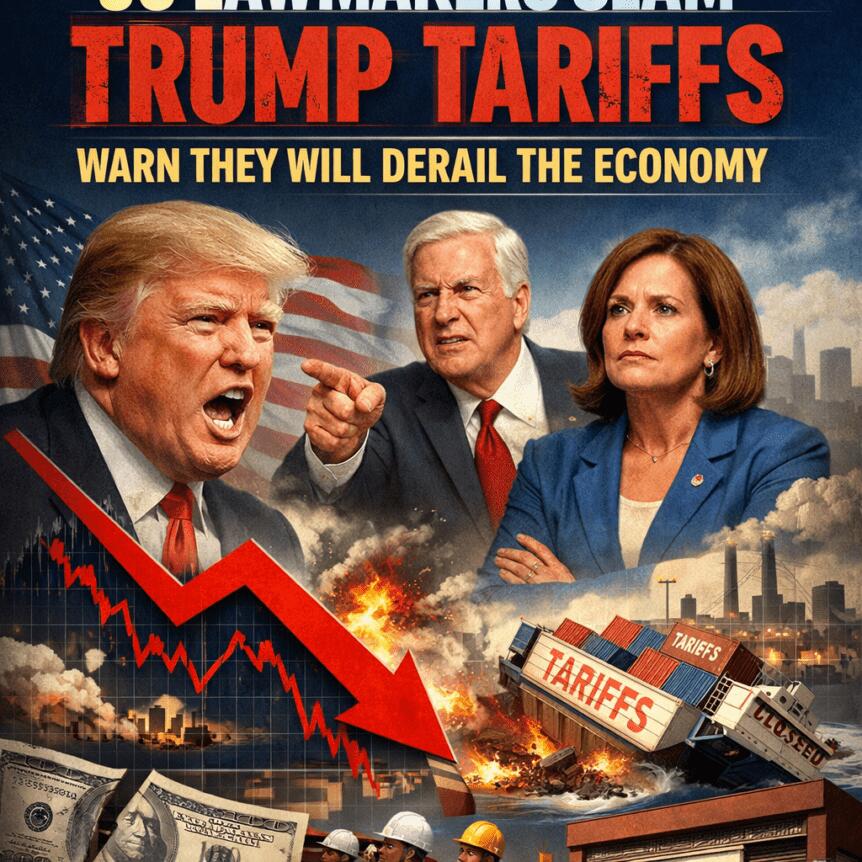
Tariff politics collided with crypto markets this week after a Supreme Court decision constrained the White House’s authority to impose duties under the IEEPA, prompting President Donald Trump to unveil a new 10% global tariff. The legal setback, coming as lawmakers and think tanks weighed in on the economic impact, did little to quell debate about the proper scope of U.S. trade policy or its ripple effects on risk assets. In crypto circles, the reaction was nuanced: bitcoin and wider digital-asset markets showed resilience, with BTC gaining ground even as traditional markets wrestled with the policy signal. The episode underscores how policy shifts in traditional finance can still shape sentiment and price action in decentralized markets.
Key takeaways
- The Supreme Court struck down Trump’s authority to levy tariffs under IEEPA, creating a constitutional and legal constraint on the administration’s tariff toolbox.
- Officials nevertheless announced a new 10% global tariff, layering the fresh measure on top of existing duties and signaling a broader protectionist posture.
- Crypto markets exhibited relative stability, with bitcoin (CRYPTO: BTC) rising about 3% following the tariff news, while the broader market showed limited movement.
- Critics, including Rand Paul and Ro Khanna, described the tariffs as a tax on workers and small businesses, framing them as a costful component of a contested trade strategy.
- A pro-crypto attorney cautioned that the legal scope for global tariffs remains constrained, suggesting long-run policy risks even if immediate moves appear limited in scope.
Tickers mentioned: $BTC
Sentiment: Neutral
Price impact: Positive. Bitcoin rose roughly 3% in response to the tariff announcements, even as other risk-on assets showed caution.
Trading idea (Not Financial Advice): Hold. The policy environment remains uncertain, and crypto prices have shown sensitivity to headlines without committing to a sustained directional move.
Market context: The tariff developments arrive amid ongoing shifts in risk sentiment, liquidity dynamics, and regulatory scrutiny that continue to shape crypto market behavior in a macro backdrop characterized by policy flux and evolving trade talks.
Why it matters
The Supreme Court’s ruling on IEEPA limited the executive branch’s ability to unilaterally deploy tariffs, a development watched closely by policymakers and markets alike. While the court’s decision constrains authority, the administration signaled a readiness to implement a 10% global tariff, a move that critics say could intensify costs for consumers and disrupt supply chains. The divergence between judicial constraints and executive intent creates a nuanced policy landscape that investors must monitor closely, particularly for asset classes with heightened sensitivity to macro shocks and regulatory signals.
Within the crypto ecosystem, the immediate price reaction was modest but notable. Bitcoin, often viewed as a risk-on barometer in times of policy uncertainty, posted a roughly 3% uptick after the tariff news, illustrating that crypto markets can decouple from traditional equities for short stretches or interpret policy announcements through a crypto-positive lens. The broader crypto market, as tracked by aggregate indicators, showed limited dispersion, suggesting that traders were weighing longer-run implications rather than chasing sharp short-term moves. This is consistent with a market that has learned to price in policy noise without overreacting to every headline.
Reactions from lawmakers and think tanks highlighted the political fault lines surrounding tariff policy. Rand Paul framed the tariffs as a tax transfer, arguing they burden working families and small businesses to fund a broader trade conflict. Ro Khanna countered that the measures aren’t about national security but about shouldering domestic costs for political ends. These voices underscore the partisan and ideological dimensions of tariff moves, which may shape future trade negotiations and regulatory trajectories that could indirectly affect crypto markets through volatility spillovers or shifts in capital flows.
Industry observers at policy think tanks and legal circles have also weighed in on the scope of presidential authority. Scott Lincicome of the Cato Institute cautioned that even in the absence of IEEPA, other statutes and political commitments could sustain a higher-tariff regime over time, with potential knock-on effects on economic performance and foreign relations. The tension between legal constraints and political ambitions illustrates a longer-running risk for markets that rely on predictability and stable policy environments to price risk accurately. In crypto markets, such a backdrop can intensify volatility during headlines while offering a resilience story when headlines become noise rather than signal.
Beyond these developments, market participants have tracked related coverage that suggests ongoing debates about how policy shocks could influence crypto-specific mechanics. For instance, separate analyses have discussed how policy shifts interact with crypto fear and greed metrics and how any perceived refund or relief discussions could alter risk sentiment in the near term. While the immediate moves in digital assets may appear modest, the longer arc remains tied to regulatory clarity, fiscal policy, and the evolving synchronization (or lack thereof) between traditional and decentralized financial systems.
What to watch next
- Follow any formal steps or commentary detailing the 10% global tariff’s implementation timeline and scope, including affected sectors and countries.
- Monitor potential legal challenges or administrative changes that could further constrain or expand tariff authority beyond IEEPA’s current framework.
- Watch crypto market liquidity and volatility in the wake of policy signals, especially any sustained moves in bitcoin and ether (CRYPTO: ETH) as policy headlines evolve.
- Track any discussions or proposals around tariff-related refunds or relief measures that could influence investor sentiment and capital allocation to crypto assets.
- Observe policymakers’ additional statements and regulatory steps that could affect risk appetite and cross-asset correlations in the weeks ahead.
Sources & verification
- Supreme Court ruling on tariffs and the IEEPA framework: cointelegraph.com/news/scotus-strikes-trump-tariffs-alternative-plan
- Trump expands with a 10% global tariff announcement: cointelegraph.com/news/trump-10-global-tariff-scotus-ruling
- Rand Paul on tariff policies: x.com/SenRandPaul/status/2024983414110085181
- Ro Khanna’s position on tariffs: x.com/RepRoKhanna/status/2024873957296337219
- Bitcoin price context and market response: cointelegraph.com/bitcoin-price
- Total3 market-cap indicator reference: https://www.tradingview.com/chart/g7xkPkTa/?symbol=CRYPTOCAP%3ATOTAL3
- Related coverage on crypto-market reactions to tariffs and refunds: cointelegraph.com/news/bitcoin-ignores-us-supreme-court-trump-tariff-strike-amid-talk-of-150b-refund
Tariffs, the Supreme Court ruling and crypto markets: the resilience test for Bitcoin and beyond
Bitcoin (CRYPTO: BTC) and its peers are again being tested by a combination of regulatory signals and geopolitical policy moves that bleed into the risk spectrum. The Supreme Court’s decision narrows executive latitude on punitive duties, but the administration’s follow-up announcement of a 10% global tariff demonstrates a continued willingness to use trade policy as a lever. The duality—legal constraint paired with policy intent—creates a bifurcated environment for markets: one where the rule of law structures potential actions, and another where political calculations determine timing and scale.
From a price perspective, the immediate reaction in digital assets was not dramatic, but notable for its direction. Bitcoin rose by roughly 3% in the wake of the tariff news, suggesting that some participants view crypto as a hedge or at least as a diversification option amid policy uncertainty. At the same time, broader market indicators showed muted responses, with the Total3 index hovering near prior levels, indicating that the overall crypto market did not exhibit a broad, abrupt shift in risk-on or risk-off sentiment in the immediate aftermath. This decoupling—where single-asset moves diverge from the wider market—highlights the nuance of crypto market dynamics in a policy-driven environment.
Industry voices have framed the tariff moves in distinctly different terms. Rand Paul described the tariffs as a tax transfer that harms working families and small businesses, underscoring the domestic economic costs of what he characterized as a reckless trade policy. Ro Khanna offered a counterpoint, emphasizing that the measures were not focused on national security but rather on domestic fiscal calculations that may burden consumers and small enterprises. In parallel, a prominent pro-crypto attorney noted that the legal scope of the president’s authority remains constrained by statutory limits, which could temper the medium-term impact of new tariffs if challenged or narrowed in subsequent fiscal cycles.
Looking ahead, market watchers will be closely tracking whether these tariff moves translate into concrete policy actions beyond headlines. A sustained higher-tariff regime could influence corporate investment, supply chain strategies, and cross-border capital flows—factors that, in turn, feed into crypto market sentiment and liquidity. Investors should also watch for any shifts in regulatory posture or fiscal relief discussions that might dampen or amplify the observed price responses in Bitcoin and other digital assets. The story remains fluid, with policy debates continuing to shape risk tolerance and the calculus of hedging across traditional and decentralized markets.
This article was originally published as US Lawmakers Slam Trump Tariffs, Warn They Will Derail the Economy on Crypto Breaking News – your trusted source for crypto news, Bitcoin news, and blockchain updates.


You May Also Like

CoreWeave (CRWV) Stock Surges 12% on $8.5B GPU-Backed Financing Deal — Here’s the Full Picture

Bitcoin, Gold, and U.S. Stocks Dive as Trump Pledges to Hit Iran ‘Extremely Hard’




