

Sam Altman AI Energy Debate: The Surprising Truth About ChatGPT’s Environmental Footprint
BitcoinWorld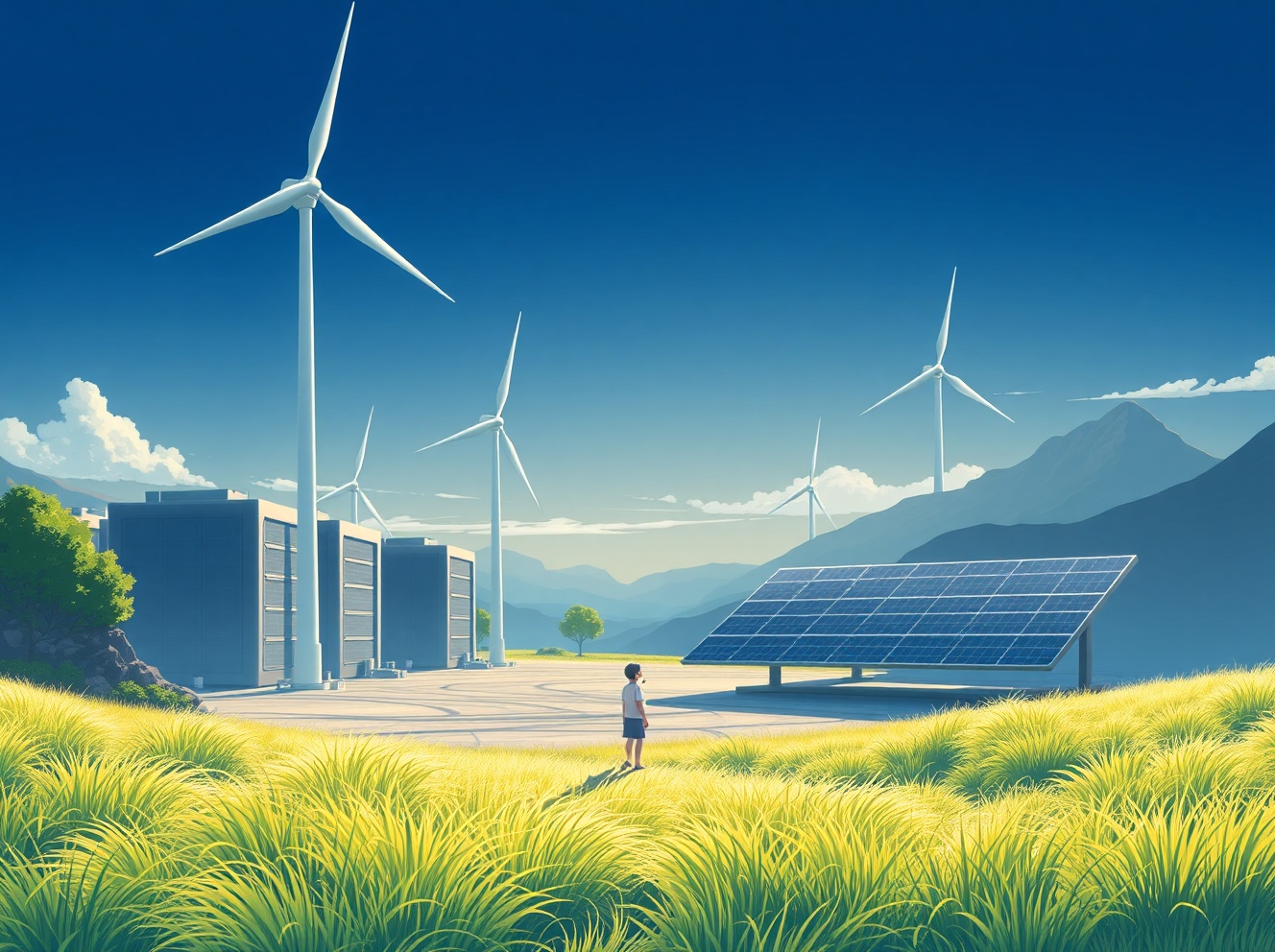
Sam Altman AI Energy Debate: The Surprising Truth About ChatGPT’s Environmental Footprint
MUMBAI, India – October 2025: OpenAI CEO Sam Altman delivered a provocative defense of artificial intelligence’s environmental impact this week, challenging widespread assumptions about AI energy consumption while calling for accelerated adoption of nuclear and renewable power sources. Speaking at The Indian Express AI Summit, Altman dismissed viral claims about ChatGPT’s water usage as “totally fake” and “completely untrue,” sparking renewed debate about how society measures technological progress against ecological responsibility.
Debunking the ChatGPT Water Consumption Myth
Altman specifically addressed circulating internet claims suggesting each ChatGPT query consumes approximately 17 gallons of water. He labeled these assertions “totally insane” with “no connection to reality.” The OpenAI executive explained that such figures originated from outdated data center cooling methods no longer in widespread use. Modern facilities employ advanced cooling technologies that dramatically reduce water consumption. However, Altman acknowledged legitimate concerns about AI’s aggregate energy footprint. He emphasized that the real issue involves total energy consumption across global AI systems rather than individual query metrics.
The Energy Reality of Modern AI Systems
Data centers powering AI systems have become significant electricity consumers. Recent studies indicate AI-related computation could account for 3-5% of global electricity by 2030. Unlike traditional computing, AI requires specialized hardware and continuous operation for both training and inference phases. Training large language models like GPT-4 involves thousands of specialized processors running for months. Inference—the process of generating responses to user queries—requires constant computational resources across global server networks. Despite these demands, efficiency improvements have been substantial. Modern AI chips deliver 10-100 times more computation per watt than those from just five years ago.
Comparative Energy Analysis: AI Versus Human Intelligence
Altman introduced a novel perspective during his Mumbai presentation. He argued that comparing AI energy consumption to human energy use provides more meaningful context. “It takes like 20 years of life and all of the food you eat during that time before you get smart,” Altman noted. He extended this comparison to humanity’s evolutionary development, suggesting that assessing AI’s efficiency requires considering the complete energy investment in human education and biological development. According to this framework, AI might already demonstrate superior energy efficiency for specific cognitive tasks once initial training costs are amortized across billions of queries.
The Renewable Energy Imperative
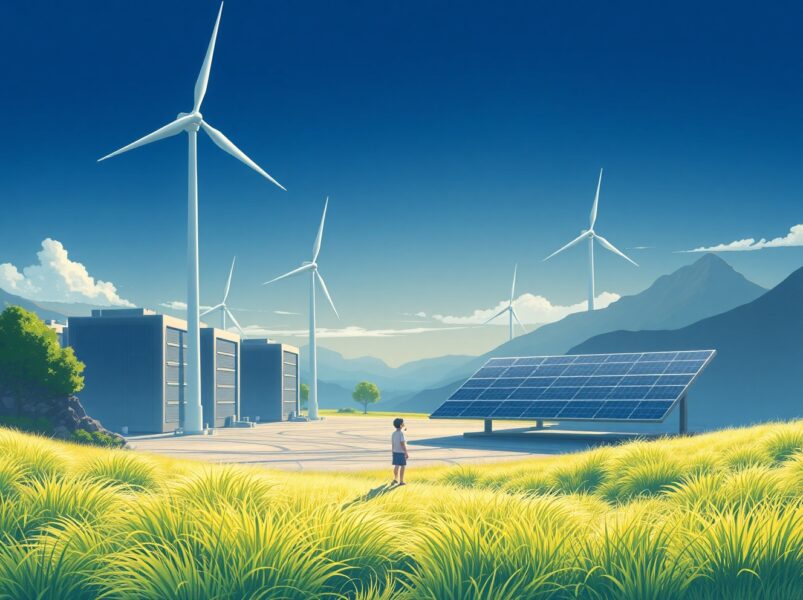
Regardless of efficiency debates, Altman stressed the urgent need for cleaner energy infrastructure. “The world needs to move towards nuclear or wind and solar very quickly,” he declared. This position aligns with growing industry consensus. Major technology companies increasingly power data centers with renewable sources. Microsoft and Google have committed to 100% renewable energy for their cloud operations by 2025. Nuclear energy, particularly next-generation small modular reactors, has gained attention as a potential solution for providing reliable, carbon-free power to energy-intensive computing facilities.
Transparency Challenges in Tech Energy Reporting
A significant obstacle in assessing AI’s environmental impact involves limited corporate transparency. No legal requirements currently mandate technology companies to disclose detailed energy and water consumption data. Consequently, researchers must rely on estimates and reverse engineering. Independent studies suggest AI model training can consume electricity equivalent to hundreds of homes for a year. However, companies rarely release specific figures, making accurate assessment difficult. This opacity fuels both exaggerated claims and genuine uncertainty about AI’s ecological footprint.
The Data Center Electricity Price Connection
Beyond environmental concerns, data center expansion affects electricity markets. Regions with concentrated computing infrastructure sometimes experience upward pressure on local electricity prices. This occurs because data centers represent large, consistent electricity demands that can strain grid capacity. Utility companies must invest in additional generation and transmission infrastructure, costs often passed to all consumers. Some municipalities now consider special electricity rates for data centers to mitigate community impacts while encouraging economic development.
Historical Context: Evolving Data Center Efficiency
Data center energy efficiency has improved dramatically over the past decade. The industry transitioned from traditional evaporative cooling to advanced systems using outside air, liquid cooling, and AI-optimized temperature management. Power usage effectiveness—a metric comparing total facility energy to IT equipment energy—has decreased from averages above 2.0 to approximately 1.2 for state-of-the-art facilities. These improvements mean modern data centers deliver substantially more computation per unit of energy and water than their predecessors. However, absolute consumption continues rising due to exponential growth in computing demand.
Expert Perspectives on AI Energy Debates
Energy researchers offer nuanced views on AI’s environmental impact. Dr. Emma Strubell, a computer scientist specializing in AI sustainability, notes that while individual query energy might be minimal, aggregate effects matter. “We must consider scale,” she explains. “If ChatGPT serves billions of queries daily, even efficient systems consume significant energy.” Other experts emphasize that AI could indirectly reduce energy consumption by optimizing logistics, transportation, and industrial processes. The net environmental impact thus depends on both direct energy use and efficiency gains enabled by AI applications.
The Bill Gates Comparison Clarified
During his Mumbai appearance, Altman addressed a specific comparison suggesting a single ChatGPT query uses energy equivalent to 1.5 iPhone battery charges. He dismissed this estimate, stating, “There’s no way it’s anything close to that much.” While precise figures remain undisclosed, available data suggests typical AI queries consume energy comparable to several minutes of smartphone use rather than multiple full charges. This clarification highlights the challenge of communicating technical energy concepts through accessible analogies that sometimes oversimplify complex realities.
Future Directions: Sustainable AI Development
The technology industry increasingly prioritizes sustainability alongside capability improvements. Research focuses on several approaches:
- Algorithmic efficiency: Developing AI models that achieve similar performance with fewer computations
- Hardware specialization: Designing processors optimized specifically for AI workloads
- Renewable integration: Locating data centers near renewable energy sources
- Carbon-aware computing: Scheduling intensive computations when renewable generation peaks
- Lifecycle assessment: Considering environmental impacts across hardware manufacturing, operation, and disposal
Conclusion
Sam Altman’s Mumbai remarks highlight the complex relationship between artificial intelligence development and environmental sustainability. While dismissing exaggerated claims about AI’s resource consumption, Altman acknowledges legitimate concerns about aggregate energy use. His call for accelerated renewable energy adoption reflects growing industry recognition that technological progress must align with ecological responsibility. The debate continues about appropriate metrics for comparing AI and human efficiency, but consensus emerges around the need for greater transparency, continued efficiency improvements, and cleaner energy infrastructure to support AI’s expanding role in society.
FAQs
Q1: How much energy does a single ChatGPT query actually use?
OpenAI hasn’t released exact figures, but estimates suggest typical queries consume minimal energy—likely equivalent to several minutes of smartphone use rather than the exaggerated claims of 17 gallons of water or multiple device charges.
Q2: What did Sam Altman say about AI’s water consumption?
Altman called viral claims about ChatGPT’s water usage “totally fake” and explained they’re based on outdated cooling methods. Modern data centers use advanced cooling systems with dramatically reduced water requirements.
Q3: Why does Altman compare AI energy use to human energy consumption?
He argues this provides fairer context, noting humans require decades of food, education, and evolutionary development. Comparing trained AI systems to educated humans might show AI’s superior energy efficiency for specific tasks.
Q4: What energy solutions does Altman recommend for AI development?
He advocates rapid adoption of nuclear, wind, and solar power to meet growing AI energy demands sustainably, aligning with broader industry moves toward renewable-powered data centers.
Q5: How have data centers improved their energy efficiency?
Modern facilities achieve power usage effectiveness ratings around 1.2 (compared to 2.0+ a decade ago) through advanced cooling, AI-optimized management, specialized hardware, and renewable energy integration.
This post Sam Altman AI Energy Debate: The Surprising Truth About ChatGPT’s Environmental Footprint first appeared on BitcoinWorld.


You May Also Like

Q2 Market Insights: Bitcoin regains dominance in risk-averse environment, ETFs remain critical to market structure

Crypto Hack: Drift Protocol Drained Over $200M in Private Key Breach

How to Spot a South African Cyber-Scam Before You Click “Pay”



