The post Mukesh Ambani’s Reliance is under U.S. pressure for importing discounted Russian oil appeared on BitcoinEthereumNews.com. Mukesh Ambani just got shoved into the middle of a geopolitical mud fight, and we’re pretty sure it’s not one he signed up for. The world’s richest Indian businessman, who normally prefers to control narratives from inside his Reliance boardroom, is now being dragged into the messy standoff between Washington and New Delhi over one thing: Russian oil. And also, Putin. Trump’s decision to double tariffs on Indian goods directly targets Reliance’s massive, discounted oil imports from Russia, which have allegedly saved the company hundreds of millions of dollars this year. But here’s the thing: Russian oil isn’t sanctioned, so technically no laws are being broken. Still, the optics are brutal. Buying from Rosneft under a long-term supply deal now looks like a geopolitical gamble, especially since that deal is tied to Reliance’s cutting-edge Jamnagar refining complex. Washington fumes, Delhi deflects, Reliance ducks Now let’s be real, Reliance doesn’t want any part of this. Their refining ops are world-class, and the Jamnagar site can process everything from sweet light crude to the gunk scraped off a pirate ship’s bilge. But the lifeblood of that business is cheap oil. And Russia’s been handing out discounts like it’s a Diwali sale. A 10-year supply pact with Rosneft went live earlier this year, locking in rates well below market. According to Bloomberg’s math here, Reliance saved at least $571 million in the first half of 2025 alone. That’s before you even count shipping or insurance. Yet that savings now has a cost. The U.S. wants India to stop buying Russian barrels and switch to American supply. But ditching Rosneft means breaching a deal, ceding market advantage, and (more importantly) undercutting the Indian government’s position. India never joined Western sanctions. It’s been loud and clear that it will keep buying where the prices work.… The post Mukesh Ambani’s Reliance is under U.S. pressure for importing discounted Russian oil appeared on BitcoinEthereumNews.com. Mukesh Ambani just got shoved into the middle of a geopolitical mud fight, and we’re pretty sure it’s not one he signed up for. The world’s richest Indian businessman, who normally prefers to control narratives from inside his Reliance boardroom, is now being dragged into the messy standoff between Washington and New Delhi over one thing: Russian oil. And also, Putin. Trump’s decision to double tariffs on Indian goods directly targets Reliance’s massive, discounted oil imports from Russia, which have allegedly saved the company hundreds of millions of dollars this year. But here’s the thing: Russian oil isn’t sanctioned, so technically no laws are being broken. Still, the optics are brutal. Buying from Rosneft under a long-term supply deal now looks like a geopolitical gamble, especially since that deal is tied to Reliance’s cutting-edge Jamnagar refining complex. Washington fumes, Delhi deflects, Reliance ducks Now let’s be real, Reliance doesn’t want any part of this. Their refining ops are world-class, and the Jamnagar site can process everything from sweet light crude to the gunk scraped off a pirate ship’s bilge. But the lifeblood of that business is cheap oil. And Russia’s been handing out discounts like it’s a Diwali sale. A 10-year supply pact with Rosneft went live earlier this year, locking in rates well below market. According to Bloomberg’s math here, Reliance saved at least $571 million in the first half of 2025 alone. That’s before you even count shipping or insurance. Yet that savings now has a cost. The U.S. wants India to stop buying Russian barrels and switch to American supply. But ditching Rosneft means breaching a deal, ceding market advantage, and (more importantly) undercutting the Indian government’s position. India never joined Western sanctions. It’s been loud and clear that it will keep buying where the prices work.…

Mukesh Ambani’s Reliance is under U.S. pressure for importing discounted Russian oil

Mukesh Ambani just got shoved into the middle of a geopolitical mud fight, and we’re pretty sure it’s not one he signed up for.

The world’s richest Indian businessman, who normally prefers to control narratives from inside his Reliance boardroom, is now being dragged into the messy standoff between Washington and New Delhi over one thing: Russian oil. And also, Putin.

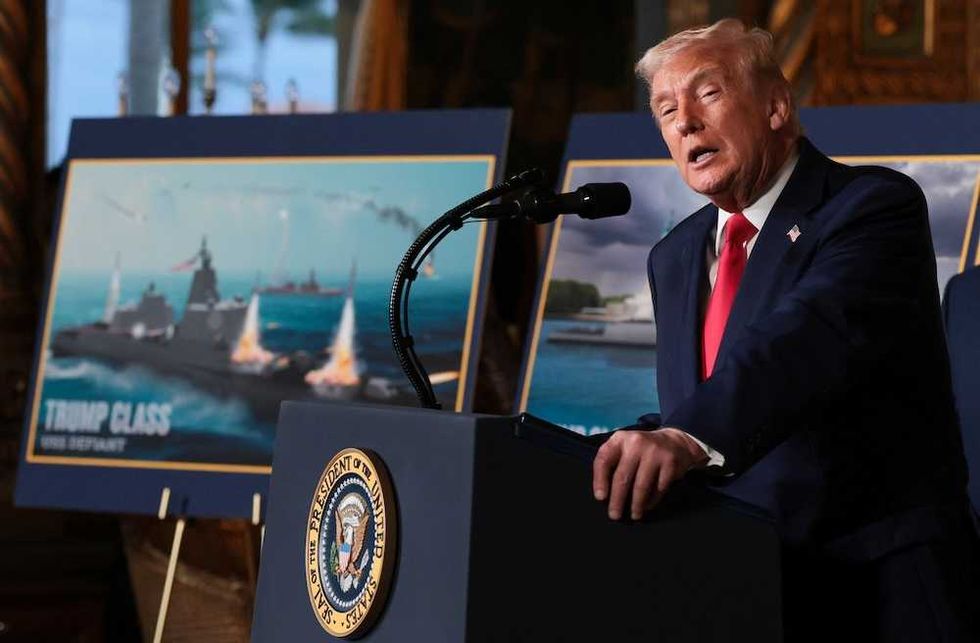
Trump’s decision to double tariffs on Indian goods directly targets Reliance’s massive, discounted oil imports from Russia, which have allegedly saved the company hundreds of millions of dollars this year.

But here’s the thing: Russian oil isn’t sanctioned, so technically no laws are being broken. Still, the optics are brutal. Buying from Rosneft under a long-term supply deal now looks like a geopolitical gamble, especially since that deal is tied to Reliance’s cutting-edge Jamnagar refining complex.

Washington fumes, Delhi deflects, Reliance ducks

Now let’s be real, Reliance doesn’t want any part of this. Their refining ops are world-class, and the Jamnagar site can process everything from sweet light crude to the gunk scraped off a pirate ship’s bilge. But the lifeblood of that business is cheap oil.

And Russia’s been handing out discounts like it’s a Diwali sale. A 10-year supply pact with Rosneft went live earlier this year, locking in rates well below market. According to Bloomberg’s math here, Reliance saved at least $571 million in the first half of 2025 alone. That’s before you even count shipping or insurance.

Yet that savings now has a cost. The U.S. wants India to stop buying Russian barrels and switch to American supply. But ditching Rosneft means breaching a deal, ceding market advantage, and (more importantly) undercutting the Indian government’s position.

India never joined Western sanctions. It’s been loud and clear that it will keep buying where the prices work. So Reliance is basically being asked to walk a diplomatic tightrope on stilts. Fun, huh?

And while the Trump administration hasn’t named names, they’re never exactly subtle. White House trade advisors have called out India’s richest families for “war profiteering,” again, not naming Mukesh, but come on. His company is the single biggest importer of Russian crude in the country. What more needs to be said?

Jio, clean energy, and the quiet oil shuffle

At Reliance’s much-hyped investor meeting, you’d think oil would be the hot topic, but according to Bloomberg, Mukesh plans to stay away from that landmine, in that his keynote won’t even mention Russia at all.

Instead, the spotlight will be on Jio’s AI innovation. But make no mistake, the company’s transition away from fossil fuels has been a decade in the making.

Oil, gas, and chemicals still account for over 50% of Reliance’s revenue, and 40% of its EBITDA. The digital services arm only overtook refining in profitability recently. So, for all the AI and EV chatter, crude oil still pays the bills.

That’s why Reliance isn’t throwing away Russian barrels just because the U.S. is angry. The company has always hunted for deals that give it a competitive edge.

Back in 2012, they locked in a 15-year deal to buy Venezuelan crude, notoriously heavy and dirty. They ran with it until U.S. sanctions killed the trade. Then came a waiver from Biden. But even that lifeline dried up in May.

So, what’s the next move? The company’s been testing new waters. West Africa. Middle East. U.S. Earlier this week, they quietly bought 2 million barrels of American crude, set to load in October. Some say it’s a peace offering. Others call it hedging.

Mukesh, true to form, is saying nothing publicly. But his actions speak loud. No flashy statements on oil. Just deals being made in the background while the spotlight shifts to digital and green energy. Internally, the company is focused on buying whatever crude works on the spreadsheet, regardless of where it comes from.

Get seen where it counts. Advertise in Cryptopolitan Research and reach crypto’s sharpest investors and builders.

Source: https://www.cryptopolitan.com/mukesh-ambani-russia-india-us-trade-beef/

Market Opportunity
LETSTOP Logo
LETSTOP Price(STOP)
$0.01475
$0.01475$0.01475
+0.13%
USD
LETSTOP (STOP) Live Price Chart
Disclaimer: The articles reposted on this site are sourced from public platforms and are provided for informational purposes only. They do not necessarily reflect the views of MEXC. All rights remain with the original authors. If you believe any content infringes on third-party rights, please contact service@support.mexc.com for removal. MEXC makes no guarantees regarding the accuracy, completeness, or timeliness of the content and is not responsible for any actions taken based on the information provided. The content does not constitute financial, legal, or other professional advice, nor should it be considered a recommendation or endorsement by MEXC.

You May Also Like

BitGo expands its presence in Europe

BitGo expands its presence in Europe

The post BitGo expands its presence in Europe appeared on BitcoinEthereumNews.com. BitGo, global leader in digital asset infrastructure, announces a significant expansion of its presence in Europe. The company, through its subsidiary BitGo Europe GmbH, has obtained an extension of the license from BaFin (German Federal Financial Supervisory Authority), allowing it to offer regulated cryptocurrency trading services directly from Frankfurt, Germany. This move marks a decisive step for the European digital asset market, offering institutional investors the opportunity to access secure, regulated cryptocurrency trading integrated with advanced custody and management services. A comprehensive offering for European institutional investors With the extension of the license according to the MiCA (Markets in Crypto-Assets) regulation, initially obtained in May 2025, BitGo Europe expands the range of services available for European investors. Now, in addition to custody, staking, and transfer of digital assets, the platform also offers a spot trading service on thousands of cryptocurrencies and stablecoins. Institutional investors can now leverage BitGo’s OTC desk and a high-performance electronic trading platform, designed to ensure fast, secure, and transparent transactions. Aggregated access to numerous liquidity sources, including leading market makers and exchanges, allows for trading at competitive prices and high-quality executions. Security and Regulation at the Core of BitGo’s Strategy According to Brett Reeves, Head of European Sales and Go Network at BitGo, the goal is clear: “We are excited to strengthen our European platform and enable our clients to operate smoothly, competitively, and securely.§By combining our institutional custody solution with high-performance trading execution, clients will be able to access deep liquidity with the peace of mind that their assets will remain in cold storage, under regulated custody and compliant with MiCA.” The security of digital assets is indeed one of the cornerstones of BitGo’s offering. All services are designed to ensure that investors’ assets remain protected in regulated cold storage, minimizing operational and counterparty risks.…
Share
BitcoinEthereumNews2025/09/18 04:28
Wormhole Unveils W Token 2.0 with Enhanced Tokenomics

Wormhole Unveils W Token 2.0 with Enhanced Tokenomics

The post Wormhole Unveils W Token 2.0 with Enhanced Tokenomics appeared on BitcoinEthereumNews.com. Joerg Hiller Sep 17, 2025 13:57 Wormhole introduces W Token 2.0, featuring upgraded tokenomics, a strategic Wormhole Reserve, and a 4% base yield, aiming to optimize ecosystem growth and align incentives. Wormhole has announced a significant upgrade to its native token, unveiling the W Token 2.0. This upgrade introduces new tokenomics including the establishment of a Wormhole Reserve, a 4% base yield, and an optimized unlock schedule, marking a pivotal development in the ecosystem, according to Wormhole. The W Token Evolution Launched in October 2020, Wormhole’s W token has been central to the platform’s mission of creating a connected internet economy. The latest upgrade aims to enhance the token’s utility across more than 40 blockchains. With a capped supply of 10 billion, the W token supports governance, staking, and ecosystem growth, aligning incentives for network security and development. Introducing the Wormhole Reserve The Wormhole Reserve will accumulate value from both onchain and offchain activities, supporting the ecosystem’s expansion. As Wormhole adoption grows, the token will capture value through network expansions and ecosystem applications, ensuring that growth is directly reflected in the token’s value. 4% Base Yield and Governance Rewards Wormhole 2.0 introduces a 4% base yield for W holders who actively participate in governance. The yield, derived from existing token supplies and protocol revenues, is designed to incentivize active participation without inflating the token supply. Optimized Unlock Schedule Updating its token release schedule, Wormhole replaces annual cliffs with bi-weekly unlocks, starting October 3, 2025. This change aims to reduce market pressure and provide a more stable environment for investors and contributors. The bi-weekly schedule will span over 4.5 years, affecting categories such as Guardian Nodes and Community & Launch. Wormhole’s Future Vision With these upgrades, Wormhole aims to expand its role as…
Share
BitcoinEthereumNews2025/09/18 15:48
SEC Greenlights Generic Listing Standards, Paving Faster Path for Crypto ETPs

SEC Greenlights Generic Listing Standards, Paving Faster Path for Crypto ETPs

TLDR: SEC approves generic listing standards for commodity-based trust shares on Nasdaq, CBOE, and NYSE. New rules remove the need for separate filings, speeding up crypto ETP listings and reducing delays. Grayscale Digital Large Cap Fund and bitcoin options contracts cleared for listing under updated framework. Experts say more work remains before all crypto ETPs [...] The post SEC Greenlights Generic Listing Standards, Paving Faster Path for Crypto ETPs appeared first on Blockonomi.
Share
Blockonomi2025/09/18 13:37