

Decentralized AI In Action: Subnet.ai Founder On Challenges, Adoption, And The Future Of Open-Source Intelligence
In many industries, decentralized AI faces skepticism because its real-world utility is not immediately visible; critics question whether token-driven incentives can consistently produce reliable outputs and worry that experimental, open networks may fall short of the standards required for production-ready applications.
Bittensor, a protocol designed to incentivize open-source AI contributions, offers a tangible answer. According to Barry Silbert, founder of Digital Currency Group, more than $100 million per year is available for participants competing across 128 subnets to generate decentralized intelligence, with individual subnets such as BitMind distributing as much as $18,000 per day to top contributors at one point last year.
Furthermore, the economic potential of open-source AI is striking. Harvard research from March 2024 estimated that open-source software generates $8.8 trillion in economic value while costing just $4.15 billion to develop, suggesting that stronger incentives in high-impact areas like AI could unlock even greater global value.
Bittensor represents the first protocol-scale experiment testing that thesis, creating a decentralized ecosystem where contributors are rewarded for producing real outputs and shipping products.
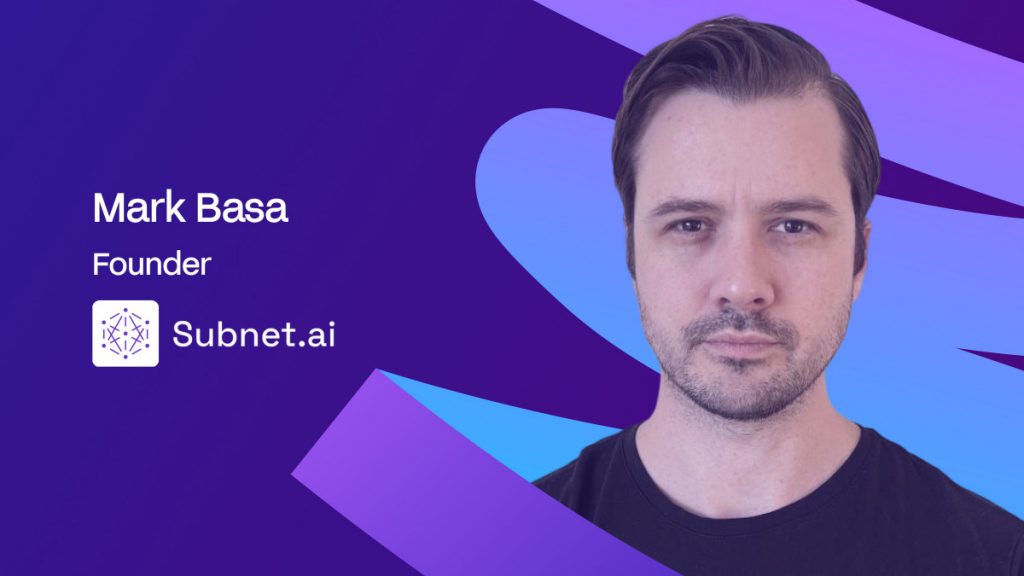
Mark Basa, founder of Subnet.ai, has built a comprehensive dashboard that tracks activity across all 128 subnets, revealing which networks pay the most, what they are building, and who is earning. Notable examples include Chutes, which has processed over 9.1 trillion tokens and serves 400,000 users, emerging as the top open-source provider on OpenRouter. The system’s emissions model adds market pressure, gradually squeezing out underperforming subnets and reinforcing the principle that permissionless protocols can coordinate meaningful economic activity while compensating contributors at competitive rates.
In this interview with MPost he explores how Bittensor’s network demonstrates real-world utility, the opportunities and challenges of decentralized AI, and what the future may hold for open-source intelligence built outside traditional corporate structures.
How does Bittensor’s growth to 128 subnets demonstrate real-world utility, and how would you respond to skeptics asking, “Where’s the use case?”
The skeptics asking “where’s the use case” should know that miners on Bittensor are being incentivized by subnets to produce real outputs and final answers. Because these are people from all over the world with different backgrounds and no shared company culture, the thinking is more diverse and the answers will gradually become better than anything produced within the walls of a single organization. The billions being raised in Silicon Valley for centralized AI will struggle to match the speed, cost, and robustness of what an open source incentivized network can produce over time.
I think healthy skepticism should also be applied to the ecosystem itself. Some subnets have received millions in emissions and built very little, and tools like subnet.ai make it easy to compare what a subnet has earned against what it has actually shipped. The more telling signal are subnets operating with modest emissions that are quietly acquiring customers and building real products, because the culture of a decentralized network ultimately defines its integrity, and that culture is now in the hands of a global community rather than a handful of corporations.
Why is public sentiment shifting toward decentralized AI, and how does Bittensor fit into this trend?
Take Meta for example. It has faced lawsuit after lawsuit for data breaches, algorithm manipulation, and deliberately engineering addictive experiences. Companies like this had every opportunity to use their technology to build something genuinely better for humanity and chose profits instead. At some point the public notices, and when they do, they start looking for alternatives. That said, it would be naive to think Big Tech is going to step aside quietly. Politicians still need to get elected, VC funds and hedge funds might not be rushing to invest in open source, and there is no overnight transition.
What actually drives the shift is better products and more freedom, and that’s where Bittensor matters. The warning worth adding is that backing subnets that don’t deliver is just a decentralized version of the same problem. The subnets that are shipping real products and earning trust are the ones that will define whether decentralized AI actually lives up to what people are hoping for.
What do Bittensor’s high TAO token rewards indicate about funding AI via crypto networks, and is this model sustainable?
The token rewards are a genuine signal that the network is funding real work at a scale traditional models struggle to match. An engineer mining on Bittensor can earn tens of thousands per day which is a compelling reason for someone at Google to reconsider where they want to build. That kind of incentive is powerful and it’s one of the things that makes Bittensor interesting.
But sustainability is the right question to be asking. The honest answer is that subnets and miners who game and exploit the system are contributing to its downfall, whether they realize it or not. Rapid protocol changes with no warning, emissions going to subnets that have never shipped anything, and infighting within the community over who deserves more are tiny cracks in the stone that eventually bring down the tower. None of this attracts serious enterprises or the best developers in the world.
There’s also a reason many subnets couldn’t raise from a VC. In that world, if you grift you get sued. Here, the consequences are less immediate, which means the culture has to do the work that legal accountability does elsewhere.
Sustainability looks like people being paid for honest work that actually improves the network. When that’s happening, the model is genuinely better than traditional funding. When it isn’t, you’re just recreating the same extractive incentives in a decentralized wrapper.
Which Bittensor AI application categories attract the most participation and rewards, and why?
Participation and rewards are driven by emissions, so the highest market cap subnets naturally attract the most attention. But more miners doesn’t always mean better outcomes as competition gets fierce and margins shrink. What’s interesting is that low and mid cap subnets tend to have full miner slots too because the barrier to entry is lower, so participation is actually more spread across the ecosystem than the headline numbers suggest. The subnets gaining real traction tend to be the ones where the work miners are doing maps to something that actually gets used.
What patterns emerge in contributions and rewards across Bittensor’s 128 subnets, and who captures most of the value?
Value is not evenly distributed and honestly it shouldn’t be. Chutes (SN64) sits at an $83M market cap, which is $50M above the second largest subnet, and is capturing just under 20% of daily protocol emissions. That gap tells you a lot about how the network is maturing. A handful of subnets are doing the heavy lifting while a long tail of others are still finding their footing.
What’s more interesting to observe through subnet.ai is that some of the subnets providing genuine value to the open source community are not being rewarded proportionally, simply because they haven’t figured out how to optimize TAOflow. That’s a real problem worth paying attention to because the protocol still plays too large a role in emissions, and if you know how to game the system at the top, you can. The subnets that deserve more attention are often the ones quietly building with modest emissions, and right now the market doesn’t always reflect that.
What makes Chutes unique in Bittensor, and what does its growth reveal about demand for decentralized AI compute?
Chutes is Bittensor’s moonshot. Processing 9.1 trillion tokens since late 2024 with hundreds of thousands of users is a remarkable number for any infrastructure play, let alone a decentralized one. The growth is real and the demand it reflects for affordable, open GPU compute is even more real.
The honest tension though is that very few of those users know they’re on Bittensor. Chutes doesn’t do much marketing or PR that puts the broader ecosystem on the map, and a lot of the capital flowing into it is there for the APY rather than a belief in what the network is building. That’s not a criticism of Chutes, the product speaks for itself, but for Bittensor to fully benefit from having a subnet of that scale, that story needs to be told better.
What does growing institutional engagement indicate about the credibility and future of decentralized AI?
Institutional engagement solves a piece of the puzzle but it’s only one piece. The culture within Bittensor right now is heavily focused on institutions buying cheap TAO and alpha tokens to sell when the market is higher. That’s fine, but Bittensor becomes something if subnets can build real businesses. Tonnes of projects hit huge marketcaps and then slowly die, mostly due to no product market fit. I think a part of the missing puzzle is retail. That entry point, that consumer-facing layer that pulls billions of ordinary users into the ecosystem, hasn’t been built or positioned yet, until now. We built subnet.ai because we believe if you’re going to bring serious retail and institutional capital, there needs to be a research layer that gives you the information you need to trust subnets. Buying a subnet’s token is secondary – we need to build trust and clearly explain what these subnets are actually doing. Only then will institutions and retail investors alike will have the ah-huh moment and throw everything into Bittensor.
The bigger issue is that too many subnets are being under-supported. Paying a registration fee and putting your name on a deck is not incubation. These teams need commercial deals, branding, advisors, and real business development help. Institutions have come in, made money, and moved on from plenty of blockchain projects that are now dead. The question worth asking is not just whether Bittensor can attract capital, but whether the businesses being built on it are sustainable enough to still be here in years to come. Putting all the fancy logos on a subnet’s profile does not compare to a subnet doing business and solving real problems people want to pay for.
Bittensor already supports consumer-facing apps—Targon (SN4) powers the Dippy roleplay chat with over 4 million users. Do you think decentralized AI is approaching mainstream adoption by end users, and what kinds of consumer or enterprise applications are likely to emerge as the ecosystem grows?
Dippy recently sold Subnet 11 and stepped back from operating subnets entirely, recognizing that their real value-add to Bittensor is building products on top of the network, not managing infrastructure. If anything, the sale demonstrates how valuable this digital ‘’AI real estate’’ has become. The subnets powering the inference behind your app are worth owning, and the builders who understand that early will have a significant advantage.
The end goal for decentralized AI, like most decentralized technology, is to fade into the background entirely. Billions in capital won’t flow into this ecosystem until people trust what they’re buying or until the products built on top of it work. The average person using a game, a creative tool, or any consumer app shouldn’t need to know what infrastructure it runs on and subnets shouldn’t be pitching this either as it causes a distraction and leads potential customers down a rabbit hole. That’s already happening with products like Pax Historia, a YC-backed alternate history sandbox game running on Chutes (SN64) with 35,000+ daily users processing 100 billion tokens a week, most of whom have no idea they’re using decentralized infrastructure. What drives adoption from here is builders choosing decentralized infrastructure because the economics make sense, and as more of them figure that out, the network effects follow.
What do you see as the biggest challenge or misconception about decentralized AI that outsiders might have?
The biggest misconception is that decentralized AI is automatically better or safer just because it isn’t controlled by a big corporation. The people running and owning decentralized services can be just as self-serving as anyone in a centralized structure, and a lot of projects that call themselves decentralized still have a handful of people making all the real decisions. That’s worth being honest about.
The reason these technologies still matter is that when decentralization actually works, it changes who gets to participate. Instead of AI being something that replaces people, it becomes something people can build real businesses on top of. That shift, from being a consumer of someone else’s technology to being an owner or builder within an open network, is the opportunity that doesn’t get talked about enough.
Looking ahead to 2025–2026, what key industry trends should we watch for in decentralized AI?
The trend worth watching is who actually builds successful companies on top of decentralized AI infrastructure. The most exciting version of where this goes is open source business infrastructure that doesn’t rely on any single entity, where someone with ambition and a good idea but no technical background can launch an app, run their marketing, handle payments, and scale, all through an intelligent layer that removes the barriers that have historically kept that kind of entrepreneurship out of reach. If that gets built properly, the entrepreneur economy could explore.
The post Decentralized AI In Action: Subnet.ai Founder On Challenges, Adoption, And The Future Of Open-Source Intelligence appeared first on Metaverse Post.


You May Also Like

Spot Bitcoin ETFs Return to Net Inflows After Two-Day Outflow Streak

Ripple Gets Major Boost For Prime Brokerage Growth: $200M Debt Facility Announced




