

Must Read
FREE HUGS. Regina and Oneal Rosero give out free hugs at the LOV3LABAN Pride Festival at UP Diliman on June 28, 2025.FREE HUGS. Regina and Oneal Rosero give out free hugs at the LOV3LABAN Pride Festival at UP Diliman on June 28, 2025.
Love starts at home: How family acceptance shapes the well-being of LGBTQ+ youth
For feedback or concerns regarding this content, please contact us at crypto.news@mexc.com
For many individuals in the LGBTQ+ community, discovering their identity doesn’t start with celebration but with internal turmoil.
Often, they ask themselves who they really are, and in the thick of it, hope to turn to their families for comfort and acceptance. After all, it is the family that sees them in their most raw and vulnerable state each day.
But what happens when the members of these safe spaces meet them with disgust and hatred rather than love and acceptance?
Challenges at home
The real-life issue involving transwoman Sofia Trazona, her mother, former SexBomb Girls member Izzy Trazona, and her stepfather Alvin Aragon, sparked discussion on the complexities of identity and expression among young Filipinos.
When Sofia came out as a member of the LGBTQ+ community in 2023, tensions with her parents turned into an example of how acceptance or rejection at home can affect how an LGBTQ+ individual like Sofia navigates life and expresses identity.
Years later, in 2026, Sofia released an open statement directed toward Alvin, saying that she is tired and hurt from constantly having to protect her mother and that she wants to put the issue to rest.
Sofia isn’t the only LGBTQ+ individual to go through this — and feeling like an outcast in their own homes isn’t an isolated experience either. It’s a major struggle for queer individuals on the path to coming to terms with their own identities, as their family largely shapes their personality and overall well-being.
According to Riyan Portuguez, a clinical and industrial-organizational psychologist, identity formation is part of how LGBTQ+ youth grow up. From an early age, they start to question themselves, their feelings, and the changes in their bodies. She said that when parents are not accepting — like if a child develops same-sex attractions and is told that something is wrong — internal conflicts may arise.
“Instead of being able to focus on developing their skills, building confidence, and exploring their interests, LGBTQ+ youth may end up fixating on the belief that there is something wrong with them,” she said in Filipino.
“Halimbawa, kapag kulang ‘yung social and emotional support ng family, may chance na hindi din ganoon kataas yung self-worth ng bata, mababa ‘yung kanyang self-esteem, tapos pwedeng makaapekto din ‘yun kung paano siya makikihalubilo sa iba kasi ‘yung feeling na may mali sa’yo, nanggagaling ‘yun sa family,” added Portuguez, who is also known as Your Millennial Psychologist on social media.
(For example, if the family’s social and emotional support is lacking, there’s a chance that the child’s self-worth may not be as high and their self-esteem may be low. That can also affect how they interact with others because the feeling that there’s something wrong with you often comes from the family.)
When the necessary support LGBTQ+ individuals need from their families falls short, mental health risks end up becoming a part of the issue.
“Some may be more prone to depression, anxiety, even self-harm and suicide. Studies have shown that LGBTQ+ individuals are at higher risk of developing mental health problems, especially when they lack support from their family or friends,” she said in a mix of Filipino and English.
This aligns with the findings of the 2024 national mental health survey of LGBTQ+ young people in the Philippines by The Trevor Project. The survey reported that 75% have seriously considered suicide, 59% did so in the past year, and 46% have attempted suicide, 34% within the past year. It also reported that 62% experienced symptoms of depression in the past year, while the same percentage reported recent symptoms of anxiety.
Portuguez emphasized that even support from just one family member can make a significant difference.
“Actually, it starts with one family member. They are the ones who can help bridge the issue. They are the ones who can mediate with the person who doesn’t understand,” said Portuguez in a mix of Filipino and English.
Support systems beyond the family
LGBTQ+ advocate Mela Habijan emphasized that, aside from support from their families, LGBTQ+ youth must also receive support from the communities that they engage with daily. Friends, schools, and workplaces can serve as safe spaces where they are valued and affirmed, creating an environment where they can focus on being themselves rather than just survival.
“If we have classmates who do not see us differently, if we have teachers who will see the capacities that we have and will help foster those capacities and capabilities, if we have bosses or workmates [who] can be supportive of us, then that is a strong ground for thriving as LGBTQ+ people,” she explained.
But Habijan has noticed a growing acceptance of the community in the Philippines over the past few years.
“As more and more people have become exposed to narratives of LGBTQ+, progressive mindsets about raising kids have also flourished. So that in itself is a milestone for the LGBTQ+ community, more so for the marginalized people,” said the Sparks Camp host.
In a national survey conducted by Social Weather Stations (SWS) from March 26 to 29, 2023, among 1,200 adults, 79% of Filipinos said gays and lesbians are just as trustworthy as any other Filipino, while 73% said they have contributed significantly to the country’s progress.
 Photo courtesy of SWS
“Acceptance will always be a matter of quality rather than quantity,” Habijan emphasized. “We are seeing LGBTQ+ people who are thriving in their lives, and more importantly, parents of LGBTQ+ who are accepting and loving. We are reversing the narrative, even if it’s slow. We have made big movements towards what it’s like to build a home that is accepting of LGBTQ+ people.”
She highlighted viral moments that have captured the hearts of people on the Internet, such as a father from Tarlac who surprised his gay son with a Valentine’s Day date, and US-based content creator Mama LuLu, who wholeheartedly accepts her gay son and lesbian daughter.
“With those kinds of images, videos, pictures, [and] situations that we see on social media, hopefully, it can help fuel love towards LGBTQ+ kids,” she said.
Portuguez expressed optimism about Generation Z, saying she hopes the generation will continue to make a safer, more inclusive environment for the LGBTQ+ community.
Many Gen Zs are more unapologetic about expressing their sexuality and are willing to speak up in the defense of those who experience ridicule or discrimination. This is a refreshing sight compared to the previous generations, when queerphobia and bigotry were more likely to just get swept under the rug.
In the past, members of the LGBTQ+ community were often barred from using restrooms that aligned with their gender identity and were met with little public support when they faced discrimination. Now, however, some malls and local government units (LGUs) across the country have begun installing all-gender restrooms, reflecting a gradual shift toward inclusivity and greater recognition of LGBTQ+ rights.
“In today’s generation, they’re more open to talking about their sexuality; they’re not afraid to share who they are, their identity. Even on social media, you can see that younger people today aren’t afraid to hold hands, be affectionate, or cuddle, even in front of the camera,” she said in a mix of Filipino and English.
Policies for a safe, inclusive environment
Habijan also highlighted the role of government policies in creating inclusive spaces for LGBTQ+ individuals and other marginalized groups, which can lead to societal acceptance.
“If we have policies protecting marginalized communities, then it will also become a strong ground of acceptance for our community,” she remarked.
Portuguez echoed this sentiment, highlighting that schools, organizations, and communities can complement family support by including parents in discussions about supporting LGBTQ+ youth. She suggested that registered guidance counselors (RGCs) could partner with the gender and development office in schools to conduct workshops and trainings on gender and sexuality.
“For example, we have the proposed SOGIE Equality Bill. If that gets passed, it would truly demonstrate acceptance — not just tolerance. It would already be accepted because concrete laws recognizing LGBTQ+ rights would be in place, such as acknowledging LGBTQ+ partners in insurance policies,” she said in Filipino. – Rappler.com
Alfon Cabanilla is a Rappler intern studying AB Communication at Ateneo de Manila University.


Disclaimer: The articles reposted on this site are sourced from public platforms and are provided for informational purposes only. They do not necessarily reflect the views of MEXC. All rights remain with the original authors. If you believe any content infringes on third-party rights, please contact crypto.news@mexc.com for removal. MEXC makes no guarantees regarding the accuracy, completeness, or timeliness of the content and is not responsible for any actions taken based on the information provided. The content does not constitute financial, legal, or other professional advice, nor should it be considered a recommendation or endorsement by MEXC.
You May Also Like
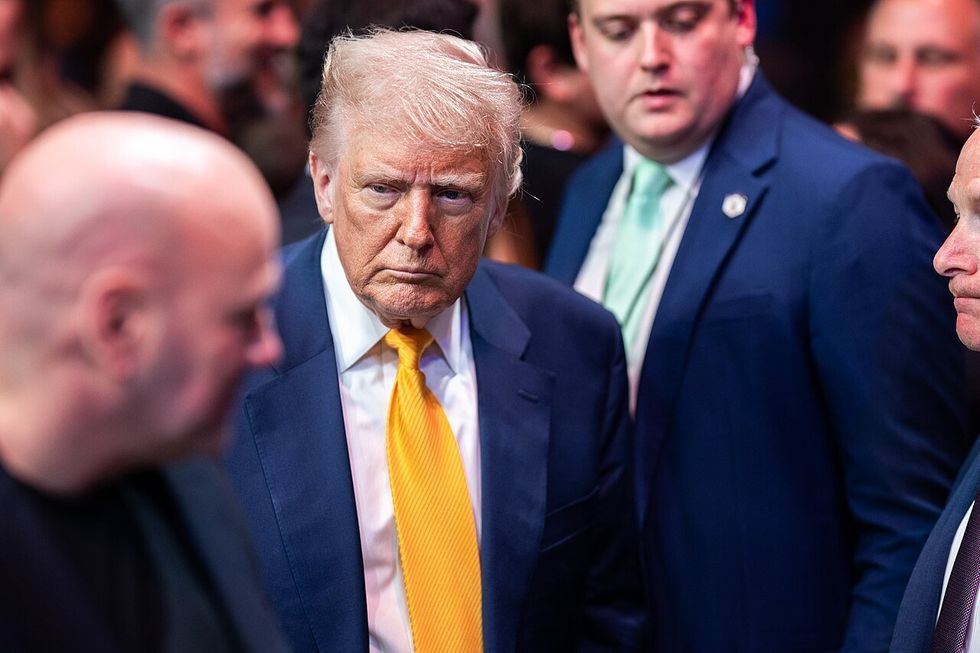
Trump muscles a red state Senate race with strategic endorsement — and a backroom deal
The night before the Kentucky Derby, Republican President Donald Trump placed his bets on two Republicans facing crowded primaries — U.S. Rep. Andy Barr for U.S
Share
Alternet2026/05/02 18:29

Zcash (ZEC) Jumps 8% Daily, Bitcoin (BTC) Calms at $78K: Weekend Watch
HASH and SIREN have charted the most gains daily after ZEC.
Share
CryptoPotato2026/05/02 18:20

Propaganda narrative crumbles in 'political disaster for Donald Trump': analysis
Negotiations between the United States and Iran to end the war are at an impasse as the conflict enters its third month. The Wall Street Journal reported late Tuesday
Share
Alternet2026/05/02 18:43



