

ChatGPT Predicts the Price of XRP and Bitcoin If a U.S.–Iran Ceasefire Is Announced
Over the weekend, crypto Twitter exploded with warnings of World War 3. Traders were told everything could crash in days; stocks, crypto, bonds, even the dollar.
The logic is that if conflict in the Middle East escalates and the Strait of Hormuz gets disrupted, oil spikes. And when oil spikes, inflation fears return fast.
Higher inflation pushes yields higher. Higher yields drain liquidity. And when liquidity drains, risk assets get sold first. Bitcoin falls because it’s liquid. Altcoins fall because they’re risk.
Right now, markets are pricing tension, not full-scale disaster, but real duration risk. Oil is elevated. Sentiment is fragile. Crypto is holding, but barely. So, what happens if a U.S.–Iran ceasefire is suddenly announced?
Bitcoin Chart Breakdown
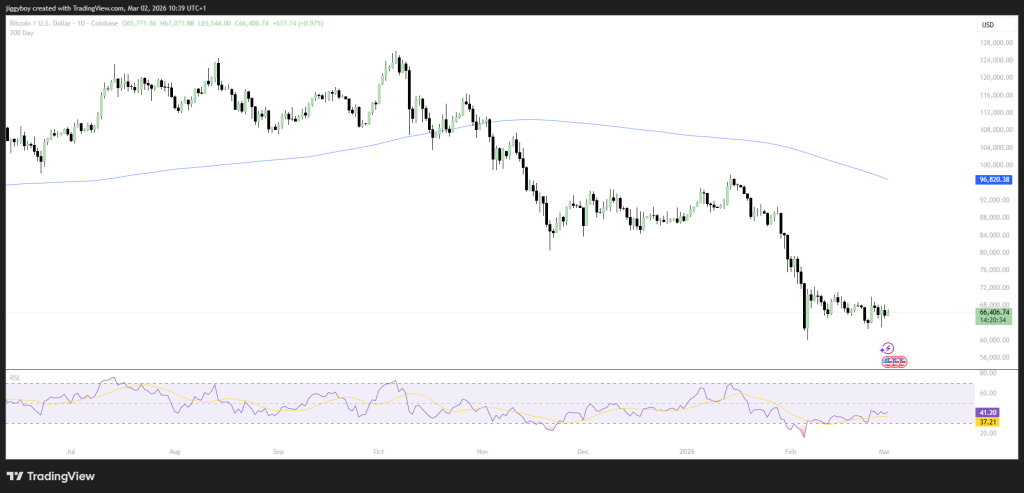
On the daily chart, the Bitcoin price is in a corrective structure. After topping earlier in the cycle, BTC has printed lower highs and lower lows. This latest flush has caused the price to dip towards the low end of the $60,000 range before stabilizing again. The current price of BTC is trading at $66,430.
The 200-day moving average is located at the mid-$90,000 range, and the BTC price is trading well below this range.
RSI is hovering around the low-40s. Momentum is weak but not oversold. That means there’s room for a relief move if sentiment improves.
Immediate resistance sits around $72,000, which aligns with prior breakdown structure. Above that, the $78,000–$80,000 zone is a major liquidity cluster and former consolidation area.
 Source: TradingView.com
Bitcoin (BTC): A Ceasefire Relief Scenario
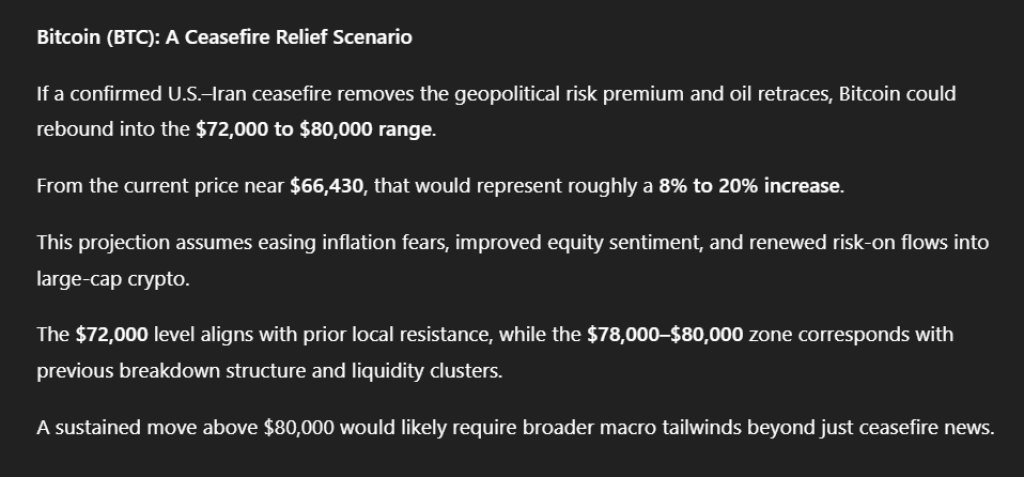
If the U.S. and Iran officially agree to a ceasefire and the tension drops, Bitcoin could move back up to the $72,000 to $80,000 range.
It’s trading near $66,430 now. So reaching that area would mean about an 8% to 20% move higher from here.
That kind of recovery would likely happen if inflation fears settle down, stocks stop sliding, and investors feel comfortable taking risk again.
The $72,000 level has been a barrier before. And the $78,000 to $80,000 zone is where price previously broke down, so it’s not an easy area to clear.
For the Bitcoin price to move above $80,000 and actually stay there, it would probably need more than just ceasefire headlines. The bigger economic picture would have to support it too.
 Source: ChatGPT
XRP Chart Breakdown
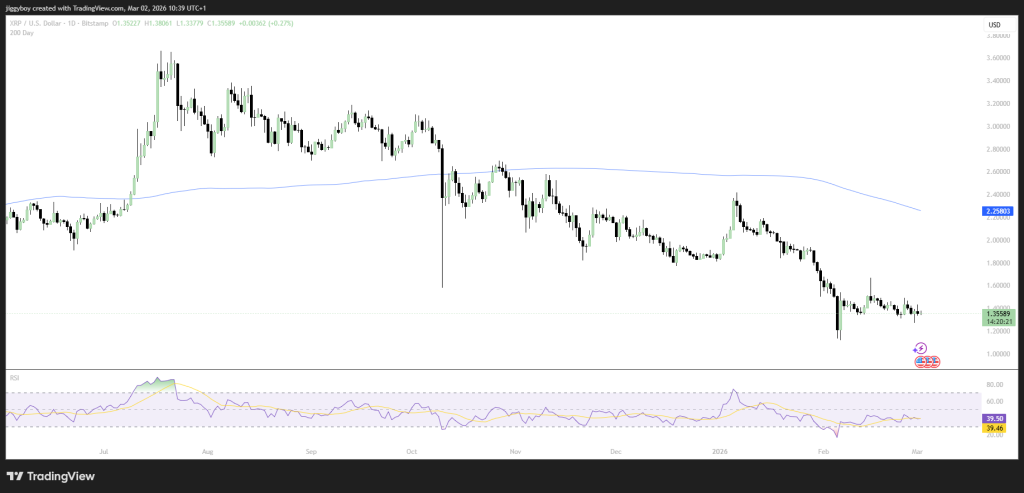
XRP’s structure is weaker than Bitcoin’s. XRP is trading at $1.35 right now. It’s still far below the 200-day moving average, which is around $2.25 and still pointing down. That shows the bigger trend hasn’t turned yet.
The recent sell-off pushed XRP down to about $1.20 before it finally found some support and steadied there. That area is acting as short-term support.
RSI is around 39–40. Momentum is soft, but not deeply oversold. This will open the door for a potential “bounce” in the event of a positive change in overall sentiment.
The initial resistance area is located in the range of $1.70 to $1.85, which are the levels of consolidation breakdowns. Following this is the range of $2.00 to $2.20, which represents the area of structural reclaim and is close to the
Read Also: Crypto Social Media Explodes With World War 3 Fears as Israel–Iran Conflict Escalates
 Source: TradingView.com
XRP: A High-Beta Relief Bounce Scenario
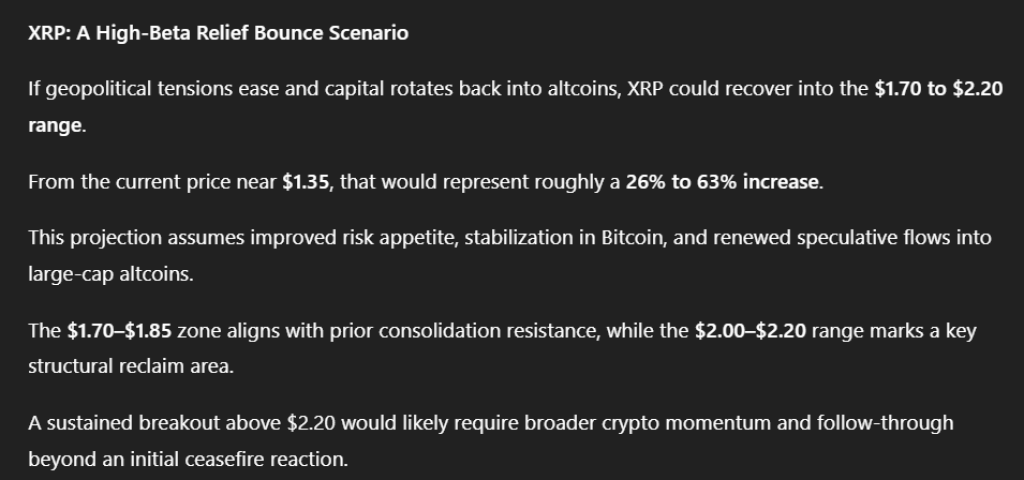
If the situation settles down and money starts going back into altcoins, XRP could move up to the $1.70 to $2.20 range.
XRP is around $1.35 right now. So getting there would mean about a 26% to 63% rise from here.
This move would likely need Bitcoin to stay steady and traders to start taking more risk again.
The $1.70–$1.85 area was resistance before, and the $2.00–$2.20 zone is an important level on the chart.
For the XRP price to move clearly above $2.20, the whole crypto market would probably need to keep pushing higher, not just react to short-term news.
 Source: ChatGPT
However,markets are not reacting to what is certain. They are reacting to how long this situation might last. Oil prices are one of the main pressure points. Liquidity is what really moves everything.
Prediction markets give some clues. On Polymarket, the odds of a ceasefire by this Friday (March 6) are low. Most traders don’t think it will happen that quickly.
But the chances of a deal by the end of April are much higher, above 70%. That shows people think a ceasefire is possible, just not immediate. If an agreement comes sooner than expected, prices could jump fast.
If the conflict spreads, crypto will probably stay weak. If a ceasefire is announced, prices could bounce quickly. Bitcoin would likely react first. XRP could move even faster. In times like this, markets move on what they expect, not on full confirmation.
Subscribe to our YouTube channel for daily crypto updates, market insights, and expert analysis.
The post ChatGPT Predicts the Price of XRP and Bitcoin If a U.S.–Iran Ceasefire Is Announced appeared first on CaptainAltcoin.


You May Also Like

Justice Department has 'gone off the rails' for Trump's 'pretzel logic': analysis

Robotics Automation Prototyping: Engineering Kinetic Agility into End-Effectors

From Telegram to Terminal: Banana Gun’s Pro Platform Hits Ethereum as User Base Surpasses One Million



