

Bitcoin Q1 Performance Crashes 23.21%, Third-Worst Since 2013
This article was first published on The Bit Journal.
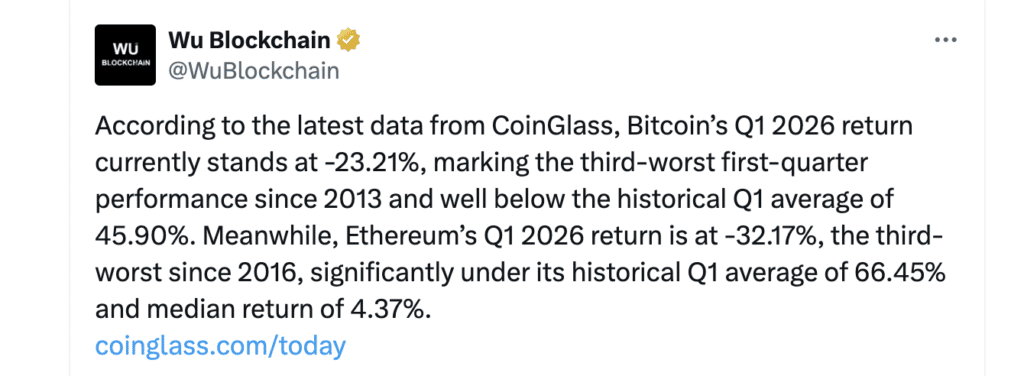
Bitcoin Q1 performance has made the headlines after the flagship cryptoasset tumbled massively and registered a bloodbath 23.21% fall to one of its third‑worst quarterly results since 2013. This sudden plunge underscores the scale of the Bitcoin price correction 2026 and has market experts puzzling over whether the crypto sector has entered a new age of volatility and woe.
With market watchers now observing a performance wildly different from the average quarterly gains recorded in previous cycles, the strong showing underscores the growing influence of macroeconomic pressures and changing investor sentiment across digital assets.
Bitcoin Price and Market Overview
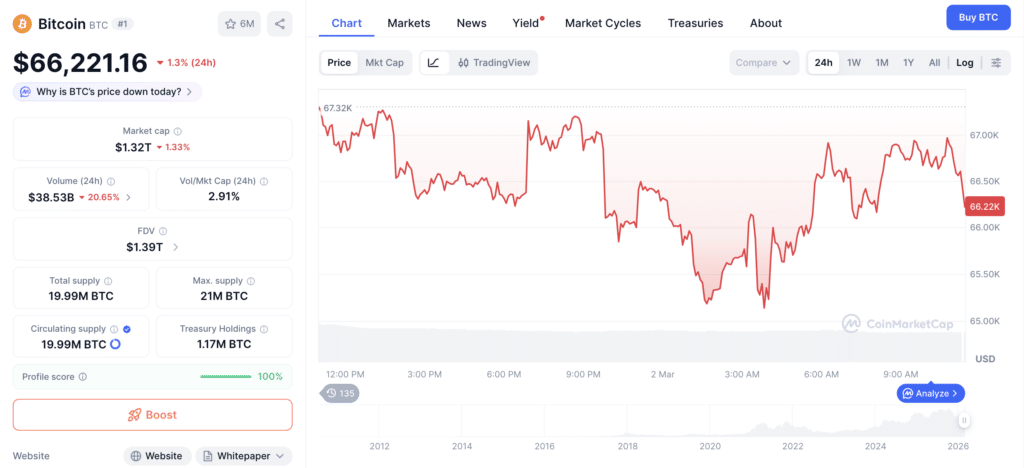
At the current Bitcoin price today, BTC is trading at a near $66,921.33 USD with around a 24‑hour trading volume of about $38.83 billion USD. Bitcoin is down slightly on the past day, lowering its live market cap to approximately $1.34 trillion USD with just under 19.996 million BTC in circulation of a maximum supply of 21 million currency units. The figures underscore how far Bitcoin’s valuation has diverged from its all‑time highs above $126,000 in late 2025, a peak that was driven by interest from institutional firms and ETF flows.
 Bitcoin Q1 Performance Crashes 23.21%, Third-Worst Since 2013 1
Comparative analysis of Q1 2026 versus Historical Bitcoin Quarterly Returns
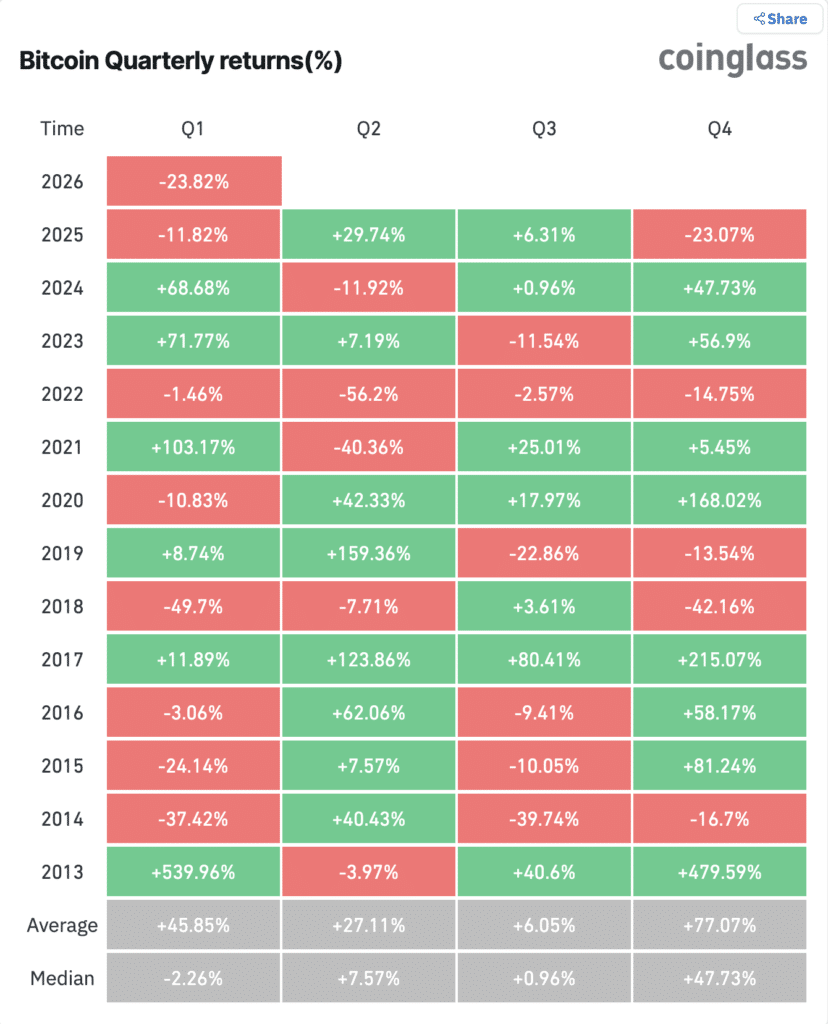
Assessing the magnitude of this rejection requires a Bitcoin Q1 performance comparison against past metrics. While historical first‑quarter Bitcoin returns can be all over the map, many years show healthy to strong gains as markets settle after year‑end exuberance. Yet the −23.21% return in Q1 2026 stands well below the long‑term trend, making this quarter one of the deepest drawdowns in the asset’s history. Notably, instances of such steep quarterly losses were more prevalent in early-cycle bear markets, indicating a much higher degree of risk aversion pervading the broader market.
 Bitcoin Q1 Performance Crashes 23.21%, Third-Worst Since 2013 2
Bitcoin Market Crash Q1 vs. Recent Market Behavior
The Bitcoin market crash Q1 narrative this year is not isolated; other major digital assets like Ethereum mirrored the downward pressure, underlining how the crypto market downturn has taken hold broadly rather than being BTC‑specific. Ethereum, for instance, recorded steeper losses over the same period, signaling a correction that hit across the board. This often happens when leveraged positions get unwound, and liquidity dries up, forcing multi‑asset sell‑offs that amplify losses beyond what would be expected from Bitcoin alone.
A Technical Explanation for the Quarterly BTC Downside
Technical catalysts behind BTC loss in Q1 2026. For one, the retreat from late 2025 highs prompted some traders to cash in their profits at above six-figure levels. Second, wider macro issues, tighter monetary policy expectations, and equity volatility, retrenched risk capital from speculative markets such as Bitcoin. This technical sell pressure built, sending BTC beneath key supports and giving rise to the bearish momentum that analysts had warned could be seen.
 Bitcoin Q1 Performance Crashes 23.21%, Third-Worst Since 2013 3
Bitcoin Bearish Outlook: Is This a Longer‑Term Trend?
The sudden drop has intensified discussions around a potential Bitcoin bearish outlook for the remainder of 2026. The key question on many analysts’ lips: Is Bitcoin entering a bear market 2026? While a single quarter of losses doesn’t confirm a full bear cycle, history shows BTC has rebounded fiercely after deep drawdowns. This performance raises concerns about sustained downward pressure and whether broader economic headwinds will continue to weigh on risk assets.
How Market Sentiment Influenced Bitcoin’s Q1 Performance
Bitcoin Q1 performance was heavily influenced by sentiment. Feeling euphoric as 2025’s all‑time highs receded into memory for many, sentiment reversed rapidly when it dawned on traders that they were looking at more risk aversion. That shift in sentiment, evident in both trader flows as well as on‑chain activity, frequently precedes price moves and may have even hastened the downturn this time around. Today’s Bitcoin price analysis also indicates that it may be market psychology, rather than pure fundamentals, driving bearish action.
Outlook and BTC Price Prediction 2026 After Q1 Loss
BTC price prediction 2026 is at a wide range, looking forward. Some models imply, after steep corrections, Bitcoin typically accumulates and prepares support levels for the next bull phase, whilst others highlight prolonged range-bound price action during a bear macro environment. A critical point for recovery will be if buyer demand comes back at these levels and whether institutional interest can get flows heading into Bitcoin products like ETFs again, a mechanism that drove prices higher early in 2025.
Will Bitcoin Bounce Back From Q1 Loss?
The probability of Bitcoin price recovery following Q1 loss depends on multiple factors. Historically, the extreme drawdowns in market cycles are followed by consolidation phases that lead to big rallies. But investors should be wary and look for signs such as higher trading volume, increased open interest on futures, and renewed institutional participation, all strong indications that bearish momentum may be fading and a recovery is possible.
Conclusion
The Bitcoin Q1 performance in 2026 represents a stark reminder of crypto’s inherent volatility. Recording a −23.21% return, Bitcoin delivered its third‑worst quarterly decline since 2013, a figure that demands attention from all market participants. Whether this marks the beginning of a prolonged bear trend or simply a temporary setback, it’s clear that investors and analysts alike must stay vigilant, grounded in data, and patient. Ambitious traders and long‑term holders should closely monitor market signals before recalibrating strategies.
Frequently Asked Questions About Bitcoin Q1 Performance
Why did Bitcoin post a third‑worst return in Q1 2026?
Due to a confluence of profit‑taking, broader market risk aversion, and macro uncertainties, driving selling pressure.
Is this action a sign of an all‑out bear market?
Not necessarily; historically, deeper corrections lead to stabilizations, but we should be cautious.
Can Bitcoin rebound later in 2026?
Recovery depends on renewed demand, macro improvements, and stronger institutional interest.
Appendix: Glossary of Key Terms
Bitcoin Q1 return: The overall percentage profit Bitcoin produced over the first quarter of the year.
BTC quarterly loss: Any negative return that Bitcoin registers over three months.
Bitcoin market crash Q1: A major decline in the JPY rate over the period of time between 3 months was recorded in Bitcoin.
Bitcoin historical returns: Comparison, Data evaluating Bitcoin performance over the years.
Bearish outlook on Bitcoin: An actionable belief that prices would drop.
References
Bitcoin Q1 performance update
Coinmarketcap
Coinglass
Disclaimer:
Cryptocurrency rates are unstable and might fluctuate quickly. What you see below is based on data at the time of writing and does not represent financial advice. Do your own research before making any investment decisions.
Read More: Bitcoin Q1 Performance Crashes 23.21%, Third-Worst Since 2013">Bitcoin Q1 Performance Crashes 23.21%, Third-Worst Since 2013


You May Also Like

Trump aides fret pardons will not be 'enough' after November: report

X Smart Cashtags Bring Crypto Trading to the Social Media Timeline




