Top 10 Crypto Exchanges

Did you know that choosing the wrong crypto exchange can cost you thousands in hidden fees alone?
At Platinum Crypto Academy, we analyze platforms so our community can make smarter, more informed decisions. Not every exchange deserves your trust or your capital. They differ in regulation, fees, liquidity, and the tools they offer. We evaluated each platform based on security records, regulatory standing, fee structures, and trading features that matter to real traders.
Top 10 Crypto Exchanges in 2026
1. Binance

First on the list is Binance, and for good reason. Launched in June 2017, Binance rapidly grew into the largest cryptocurrency exchange in the world. Today, it serves a massive global audience and stands as the clear leader in trading volume. Whether you are a casual buyer or a serious trader, Binance has tools built for every level.
Binance serves over 300 million users globally and offers access to 350+ cryptocurrencies and more than 1,500 trading pairs. Beyond basic trading, the platform has grown into a full ecosystem. It includes Binance Earn, Binance Pay, copy trading, and its own blockchain, BNB Chain. Clearly, Binance is more than just an exchange.
Key Features:
- Spot trading fees start at 0.1%, with futures maker fees as low as 0.02%. Fees drop further when you pay with BNB or reach higher VIP tiers.
- Over 300 perpetual and quarterly contract pairs offer leverage up to 125x on BTC and ETH.
- Binance holds a $1 billion SAFU insurance fund, which was fully converted to Bitcoin in early 2026, to cover losses from security breaches.
- In December 2025, Binance secured three licenses under the Abu Dhabi Global Market framework and officially transitioned its global operations to this regulated structure on January 5, 2026.
- Binance Square, a social platform, connects over 35 million monthly active users with market news and insights.
2. Coinbase

Now let’s move to the second exchange on our list. Coinbase is one of the most trusted names in crypto, especially for users in the United States. Founded in 2012 by Brian Armstrong, Coinbase has built a strong reputation as one of the most compliant and regulation-oriented crypto platforms. Its public listing on NASDAQ makes it one of the few exchanges held to strict financial reporting standards.
The platform serves over 110 million verified users and has safeguarded $516 billion in assets. Coinbase is not the cheapest exchange, but it earns its place through transparency and reliability. In June 2025, the U.S. Supreme Court declined to hear the SEC’s appeal of a lower court ruling in favor of Coinbase, effectively ending the agency’s primary lawsuit and providing significant clarity for the platform’s business model. That legal resolution was a major milestone for both Coinbase and the broader industry.
Key Features:
- Maker and taker fees start at 0.35% and 0.55% respectively on Coinbase Advanced, with futures maker fees at 0%.
- Coinbase One subscription offers zero trading fees on up to $10,000 in trades per month for Preferred members.
- About 98% of customer crypto is held in offline cold storage, with audited financials available publicly.
- The Base Layer 2 network, launched in 2023, consistently ranks among the top Ethereum L2 solutions by total value locked.
- Coinbase Advanced supports 550+ spot pairs and 150+ perpetual and futures contracts with TradingView charting.
- Coinbase recorded $295 billion in institutional trading volume in Q3 2025, leading the industry in that category.
3. KuCoin

Moving on to the third exchange, KuCoin has earned a strong reputation as a go-to platform for altcoin traders worldwide. Founded in 2017, KuCoin has grown to become one of the leading crypto exchanges by trading volume, offering more than 1,000 tradable cryptocurrencies. Many traders love it for its early access to newer tokens before they appear on other major platforms.
KuCoin serves over 40 million users in more than 200 countries, and holds SOC 2 Type II, ISO 27001:2022, and ISO 27701 certifications for information security and privacy. The platform is feature-rich, offering built-in trading bots, copy trading, and a multi-chain Web3 wallet. However, it is worth noting that KuCoin pleaded guilty in January 2025 and agreed to exit the U.S. market for at least two years, leaving U.S. users with withdrawal-only access. Traders outside the U.S. still enjoy full platform access.
Key Features:
- Trading fees range between 0.10% and 0.30% for most tiers, with additional discounts available through the native KCS token.
- Supports over 1,000 cryptocurrencies, including many early-stage altcoins not yet listed on larger exchanges.
- KCS token holders receive daily dividends, as KuCoin distributes 50% of daily trading fee revenue proportionally to holders.
- Proof of Reserves is verified monthly using Merkle tree technology, giving users independent confirmation of available funds.
- Daily spot trading volume remains significant, often exceeding $1.4 billion, reflecting strong global liquidity.
- Built-in DCA and trading bots allow users to automate strategies without relying on third-party tools.
4. Bybit

Now let’s move to number four on our list. Bybit launched in 2018 and is a centralized, custodial exchange known for derivatives and now offers a full stack across spot, margin, perpetuals, and options. It quickly became the go-to platform for serious derivatives traders worldwide. Interestingly, Bybit now ranks as the second-largest exchange by trading volume, sitting just behind Binance.
With a user base exceeding 80 million traders worldwide, Bybit has built a strong reputation for its high-speed trading engine, deep liquidity, and robust security infrastructure. The platform handles roughly $3.5 billion in daily spot volume. Within Europe, Bybit EU GmbH references MiCAR permissions via the Austrian authority, supporting regulated crypto-asset activities across the wider EEA. However, U.S. and Indian users cannot access the platform due to regulatory restrictions.
Key Features:
- Base spot trading fees start at 0.10% for makers and 0.10% for takers, below the industry average of 0.15% for makers and 0.194% for takers.
- Offers up to 100x leverage on BTC and ETH perpetual contracts, with a high-speed engine capable of processing 100,000 transactions per second.
- Copy trading feature connects users with over 800,000 master traders, allowing beginners to mirror proven strategies automatically.
- Maintains a multi-layered security policy with the majority of user funds held in offline cold storage to reduce the risk of hacks.
- Transparent Proof of Reserves system ensures all user funds are backed 1:1 and independently verifiable at any time.
- Paying fees with the native Mantle (MNT) token unlocks an additional discount of up to 25% on top of VIP rate reductions.
5. Kraken

Moving along to number five, Kraken is one of the oldest and most trusted exchanges in the industry. Founded in 2011 by Jesse Powell, the exchange was built from the ground up with one clear goal: security. From a practical standpoint, very few exchanges can match Kraken’s track record. Since its founding, Kraken-managed custodial wallets have never been breached, an impressive feat given its size and longevity.
By 2026, Kraken serves around 15 million users globally, offering more than 500 digital assets across spot, margin, futures, OTC, and staking services. The platform also made history by becoming the first crypto company to receive a Special Purpose Depository Institution banking charter in Wyoming. Research suggests that for traders who value compliance and transparency above all else, Kraken remains one of the strongest choices available.
Key Features:
- Kraken Pro spot fees start at 0.25% maker and 0.40% taker, scaling down as trading volume increases across monthly tiers.
- Over 95% of customer funds are stored in air-gapped cold wallets, with SOC 2 Type II and ISO/IEC 27001 certifications confirming security standards.
- Holds regulatory licenses across multiple jurisdictions, including EU MiCA registration, FinCEN in the U.S., and VASP registration in several EEA countries, among others.
- Futures trading is available for over 350 crypto assets, with base fees starting at 0.02% for makers and 0.05% for takers.
- Semi-annual Proof of Reserves audits cover major assets including BTC, ETH, SOL, USDC, USDT, and XRP, with client-verifiable Merkle tree paths.
- Eligible U.S. users can access commission-free stocks and ETFs directly within the same Kraken app, making it a unique hybrid platform.
6. OKX

Next up is OKX, a platform that has quietly become one of the most powerful exchanges in the world. Founded in 2017 by Star Xu, OKX operates as a leading crypto exchange renowned for its low fees, high-end security features, and diverse trading options. The platform rebranded from OKEx to OKX in 2022 and has not looked back since. As of January 2026, OKX records over $21.8 billion in daily transaction volume, ranking it as the second-largest exchange globally by derivatives volume.
What truly sets OKX apart is its evolution beyond a standard exchange. OKX has secured MiCA pre-authorization, allowing it to operate within the European Economic Area. Its integrated Web3 wallet lets users interact with DeFi protocols, NFT marketplaces, and decentralized apps across more than 100 blockchains without leaving the platform. The exchange has seen over 60 million registered users since launch and publishes monthly Proof of Reserves releases to maintain full transparency.
Key Features:
- Spot trading fees start at 0.08% for makers and 0.10% for takers, with derivatives fees coming in even lower at 0.02% for makers and 0.05% for takers.
- Holding OKB, the platform’s native token, can cut fees by as much as 40% compared to base rates for eligible traders.
- OKX handles around $1.5 billion in daily spot volume and holds a liquidity score of 780 on CoinMarketCap, ranking among the top global exchanges.
- Features 12 pre-built intelligent trading bots that automate strategies around the clock using pre-defined parameters.
- About 95% of client assets are stored in cold wallets, which are limited to a maximum of 1,000 BTC per address to prevent single points of failure.
- OKX Pay, launched in Brazil in 2025, allows users to convert reais to stablecoins via PIX integration and earn up to 10% APY on their balances.
7. Crypto.com

Now let’s move to number seven, Crypto.com, a platform built for users who want everything in one place. The platform supports over 350 cryptocurrencies and 500 trading pairs across spot, margin, and derivatives markets, all backed by institutional-grade liquidity. What truly makes Crypto.com stand out is its lifestyle ecosystem. It connects everyday spending with crypto through its well-known Visa card program.
The platform’s native token, Cronos (CRO), powers many features, from fee reductions to staking rewards and cashback on card purchases. Beyond trading, Crypto.com bridges traditional finance and Web3 through its Cronos Chain and DeFi products. The platform holds 1:1 proof of reserves and maintains a $750 million insurance fund for cold-storage assets, offering strong financial protection for users. It is best suited for intermediate traders who value both trading tools and real-world crypto utility.
Key Features:
- Spot trading fees start at 0.075% maker and 0.075% taker on the Exchange, with CRO staking further reducing these rates for high-volume traders.
- Derivative fees stand at 0.017% for makers and 0.034% for takers, with BTC and ETH perpetuals offering up to 100x leverage.
- The Rewards Hub features daily missions where users earn diamonds, redeemable for prizes including mystery boxes and event passes.
- Crypto.com Onchain is a non-custodial wallet that gives users full control over their assets and direct access to DeFi products.
- The OTC trading service is available for high-volume traders and institutions needing large-order execution with minimal market impact.
- Automated trading bots, including DCA, Grid, and TWAP, allow users to run strategies around the clock without manual intervention.
8. MEXC

Moving on to number eight, MEXC is one of the best exchanges for traders who want access to the widest range of tokens available anywhere. Founded in 2018, MEXC handles an average of $3.5 billion in daily spot volume and holds licenses in jurisdictions such as Australia (AUSTRAC), though its regulatory status in the U.S. and Estonia has faced significant headwinds. The platform has built a strong reputation for listing new tokens faster than almost any other exchange in the world.
MEXC serves over 40 million users globally and runs a trading engine capable of handling 1.4 million transactions per second. From a practical standpoint, very few platforms offer this combination of speed, variety, and cost efficiency. In 2025, MEXC launched its Proof of Trust initiative, which includes live Proof of Reserves reporting and a $100 million Guardian Fund to reimburse users in case of platform breaches or technical failures. However, U.S. residents cannot access the full platform due to regulatory restrictions.
Key Features:
- Spot trading fees are 0% for makers and 0.05% for takers, with futures fees at 0% maker and 0.01%–0.02% taker, making MEXC one of the lowest-cost exchanges in 2026.
- Over 1,200 perpetual contracts are available with leverage up to 200x on select major assets, catering to aggressive traders seeking maximum flexibility.
- MEXC has captured roughly 7.8% of the global spot market, with daily spot trades often exceeding $3 billion and significant liquidity across its extensive pair list.
- A 10 out of 10 Trust Score on CoinGecko and a CertiK “AAA” security rating place MEXC in the top tier of crypto platforms for operational security.
- MEXC has listed thousands of digital assets since its inception, maintaining an aggressive listing strategy while publishing bi-monthly security reports on asset integrity.
- Effective early 2026, MEXC expanded its KYC requirements, requiring identity verification to access higher withdrawal limits and participate in exclusive platform events like “Kickstarter.”
9. Bitget

Next up is Bitget, and it has earned its spot by doing one thing better than almost anyone else: copy trading. Founded in 2018, Bitget has grown into one of the largest crypto copy trading platforms, with over 45 million registered users and daily trading volumes exceeding $10 billion. The platform is packed with tools for all trader types, but its social trading features are what truly set it apart from the crowd.
Bitget is recognized globally as a leader in copy trading, with over 180,000 elite traders and more than 800,000 followers actively using the feature. Clearly, beginners love it for the ability to mirror proven strategies without needing deep market knowledge. The exchange holds ISO 27001 and ISO 27701 certifications and has never experienced a major security breach since its launch in 2018. It is worth noting that U.S., U.K., and Canadian users currently face access restrictions on the platform.
Key Features:
- Spot trading fees are 0.1% for both makers and takers, with futures fees at 0.02% for makers and 0.06% for takers, with VIP users unlocking lower rates.
- A $450 million Protection Fund safeguards user assets, maintained at a high level following the collapse of FTX in 2022 to ensure user confidence.
- In 2025, Bitget introduced the Unified Trading Account, allowing users to manage margin and collateral across multiple products within a single view.
- Leverage of up to 125x is available on perpetual contracts, including USDT-M, USDC-M, and Coin-M contracts, along with delivery futures.
- Monthly Merkle tree Proof of Reserves reports confirm a reserve ratio exceeding 100%, ensuring all user funds are fully backed at all times.
- High-profile global partnerships with Lionel Messi and LALIGA reinforce Bitget’s credibility and mainstream brand presence.
10. Gate

Last but certainly not least, Gate.io rounds out our list as one of the most veteran platforms in the entire crypto space. Launched in 2013, Gate.io has grown significantly over the years and now serves 17 million users globally, consistently ranking among the top 10 exchanges by trading volume. In May 2025, the platform also rebranded and adopted the new international domain Gate.com, signaling its continued push toward global expansion.
Gate lists over 3,800 cryptocurrencies, making it one of the most diverse exchanges available for discovering niche and emerging tokens. For experienced traders who want pre-market access, advanced bots, and deep altcoin variety, Gate.io is genuinely hard to beat. The exchange recorded a daily trading volume of over $4.95 billion, reflecting strong liquidity and an active user base. Gate.io is not available to U.S., Canadian, or Indian users due to current regulatory restrictions.
Key Features:
- Base spot trading fees start at 0.1% for both makers and takers, scaling down to 0% maker and 0.02% taker at the highest VIP levels, with an extra 10% discount when fees are paid in GT tokens.
- Futures fees are as low as 0.015% for makers and 0.05% for takers, with margin trading offering up to 100x leverage on select contracts.
- Gate.io maintains 100% proof of reserves, ensuring it holds enough assets to fully cover all user deposits at all times.
- The Gate SAFU user protection fund is valued at over $100 million, providing an additional safety net for users in cases of platform-level risk.
- Pre-market OTC trading lets users buy and sell tokens before their official launch, giving early access to emerging projects ahead of the crowd.
- Built-in copy trading and automated trading bots, including spot grid, futures grid, and DCA bots, are integrated directly into the main trading interface.
Best Crypto Exchanges by Category
Not every trader has the same needs. Some want simplicity, while others chase low fees or deep altcoin markets. Below, we break down the best exchange for each specific use case, based on real, verified data from 2026.
Best Exchange for Beginners: Coinbase
Coinbase stands out as an ideal crypto exchange for beginners taking their first steps into digital asset investing. Established in 2012, the platform has built a solid reputation by prioritizing simplicity and security, making it accessible to users with no prior experience.
Coinbase is best for compliance-first users who want a simple way to buy and hold major coins with strong legal oversight. The signup process is smooth, verification is quick, and the dashboard never overwhelms new users. The exchange offers multiple types of two-factor authentication and allows customers to store funds in a vault with time-delayed withdrawals. While USD cash balances are held in FDIC-insured banks up to $250,000, it is important to note that crypto assets themselves are not insured by the FDIC or SIPC.
Lowest Fee Crypto Exchange: MEXC
When it comes to trading costs, MEXC sits in a category of its own. MEXC offers 0% maker fees and 0.1% taker fees for spot trading, significantly below industry averages, and 0% maker fees with only 0.02% taker fees for futures trading. For active traders, those savings compound quickly over time.
MEXC’s zero-fee policy applies not just to specific trading pairs but covers the vast majority of mainstream coins on the platform, something almost unique in the industry. On top of that, traders holding 1,000 or more MX tokens for 24 consecutive hours qualify for a 50% discount on futures trading fees and various spot incentives. For cost-conscious traders, it is very hard to beat this structure in 2026.
Most Secure Crypto Exchange: Kraken
Security is where Kraken truly goes the extra mile, and its record speaks for itself. Kraken has never been hacked since its founding in 2011, with 95% cold storage, multiple security layers, and industry-leading practices across the board. That track record is exceptional given how many exchanges have suffered major breaches over the years.
The platform uses a multi-layered security approach, including storing over 95% of customer assets in air-gapped cold wallets, enforcing two-factor authentication, and offering features like Global Settings Lock, withdrawal whitelists, and Master Key protections. Proof of Reserves audits confirm that in-scope assets are backed one-to-one, and each client can download a record and match it to the auditor’s root. In 2026, that level of verifiable transparency is rare and genuinely valuable.
Best Exchange for Futures Trading: Bybit
For futures traders, Bybit has been the gold standard since its very beginning. Bybit was launched in 2018 as a derivatives-focused exchange, with spot trading only being added in 2021. Today, it ranks as one of the largest exchanges by trading volume, second only to Binance.
Bybit has built its reputation as a derivatives-first exchange, catering primarily to active and experienced futures traders. The platform focuses on perpetual contracts for major cryptocurrencies and selected altcoins, with an emphasis on fast execution, system stability, and a professional trading interface. It offers both crypto- and stablecoin-margined contracts with leverage up to 125x on major assets, backed by strong liquidity and a reputation for reliability, with advanced order types, API integrations, and built-in risk controls. From a practical standpoint, serious derivatives traders consistently name Bybit as their platform of choice.
Best Exchange for Altcoins: KuCoin
When it comes to altcoins, KuCoin has earned its place at the top of the list. KuCoin’s massive selection of 1,200-plus coins makes it a leading destination for altcoin traders, with coins like Kaspa listed on KuCoin years before reaching platforms such as Kraken, giving traders early access to tokens before they hit the broader market.
KuCoin’s wide listing roster of over 1,230 assets and 1,300-plus pairs makes it a strong hunting ground for smaller-cap and early listings, which is great for discovery if you manage liquidity risk. The platform also features a dedicated Launch Hub, including GemPool and Pre-Market options for early token participation. KuCoin’s most popular launch program, GemPool, regularly sees total value locked exceeding $4 billion during active events. For altcoin explorers who want early access and deep variety, few exchanges come close.
Best Exchange for Passive Income: Binance
For traders who want their crypto working around the clock, Binance offers one of the most complete passive income ecosystems available. Binance Earn offers different duration options so users can choose between liquidity and higher returns, with everything presented in a single dashboard for staking, earning interest, or participating in promotions easily.
Binance Earn includes Simple Earn with flexible and locked products, ETH Staking, SOL Staking, Launchpool, and Dual Investment products across more than 300 assets, with returns varying by product type. Research suggests that Binance Earn is best suited for investors who hold many different types of altcoins and want convenience above all else. Staking on Binance is generally considered safe, supports dozens of Proof of Stake coins, and gives users the flexibility to select between locked or flexible options based on their specific needs. For passive income built inside one trusted ecosystem, Binance remains a top pick in 2026, serving over 300 million users globally.
CEX vs. DEX: Understanding How Crypto Exchanges Actually Work
Before choosing a platform, every trader should understand how different exchange types operate. The difference between a centralized and decentralized exchange is not just technical. It directly affects your control over funds, your privacy, your costs, and your overall trading experience. Knowing which model suits you is one of the most important decisions you will make in crypto.
CEX
A centralized exchange is run by a company that manages all trading activity on your behalf. As of early 2026, roughly 75% to 85% of all crypto trading volume flows through centralized exchanges, largely because of their accessibility, deep liquidity, and high-speed order management. They support fiat deposits, offer intuitive interfaces, and provide customer support. The trade-off is that you do not hold your own private keys, meaning the platform holds custody of your funds and you must trust the exchange’s security infrastructure.
DEX
A decentralized exchange runs entirely on blockchain technology, with no company controlling your funds or requiring identity verification. Decentralized exchanges collectively represent approximately 17.9% to 25% of spot trading volume as of February 2026, a figure that has grown significantly as more users value self-custody and open access. Trades execute through smart contracts, giving users full ownership of their assets at all times. However, DEXs come with a steeper learning curve and often have wider bid-ask spreads than their centralized counterparts.

Which To Use?
In 2026, the CEX vs. DEX question is no longer an either-or decision, since most crypto investors use both depending on what they are trying to accomplish. Centralized exchanges work best for beginners, high-volume traders, and anyone needing fiat access. DEXs suit experienced users who want full asset control and early access to new tokens.
You can use a mix of both exchange types, starting with a centralized platform and gradually exploring decentralized options as your knowledge and portfolio grow. From a practical standpoint, many seasoned traders use a CEX for daily trading and a DEX for DeFi participation. The smartest approach is to match the tool to the task rather than commit to just one model.
How to Pick the Right Crypto Exchange for Your Needs
With so many platforms available, choosing the right exchange can feel overwhelming. The good news is that the right choice becomes clear once you understand what to look for. Here are five key factors that every trader should evaluate before committing to any platform in 2026.
Check the Security Record
Security should always be the first thing you examine before depositing any funds. Look for exchanges that publish regular Proof of Reserves reports, maintain the majority of funds in cold storage, and hold recognized certifications such as ISO 27001 or SOC 2. Security incidents have surged in recent years, prompting a necessary industry-wide shift toward greater transparency and stronger risk management practices. An exchange with a clean security track record and verifiable reserves is far more trustworthy than one without.
Verify Regulatory Standing
A regulated exchange operates under legal obligations that protect your funds and your rights as a user. In 2026, this matters more than ever as global regulators tighten their grip on the crypto industry. Centralized exchanges continue to face regulatory requirements including KYC verification, AML compliance, and jurisdictional licensing, all of which actually benefit users by adding layers of accountability. Always confirm that your chosen exchange holds valid licenses in your region before you sign up.
Compare Fee Structures
Trading fees may look small, but they add up fast over weeks and months of active trading. Always compare maker and taker fees, withdrawal costs, and any hidden charges tied to deposits or conversions. Some platforms, like MEXC, offer 0% maker fees on spot trading, while others charge up to 0.50% per trade. Centralized exchanges dictate fees based on trading volume, liquidity, and internal business decisions, so higher-volume traders almost always qualify for meaningful discounts. Understanding the full fee picture before you trade is essential.
Assess Liquidity and Volume
Liquidity determines how quickly and efficiently your trades execute at the price you expect. Low liquidity means wider spreads, slower fills, and more slippage, which all eat into your returns. Institutional investors now make up 42% of total exchange trading volume in 2025, compared to just 26% in 2023, which has significantly improved liquidity depth across the top tier exchanges. For active traders, choosing a platform ranked in the top 10 by daily volume is usually the safest bet for reliable trade execution.
Match the Platform to Your Goals
Every trader has different needs, and no single exchange is perfect for everyone. Beginners should prioritize simplicity and customer support. Futures traders need deep derivatives markets and competitive leverage. Ethereum staking is now integrated into 73% of centralized exchanges as of 2025, making passive income features a standard offering rather than a bonus at most top platforms. Think clearly about what you need most, whether that is altcoin variety, low fees, copy trading, or staking rewards, and let that guide your final decision.
Takeaway
Choosing the right crypto exchange comes down to knowing your own needs. Security, fees, regulation, and liquidity all play a role in that decision. Platforms like Kraken and Coinbase lead on trust and compliance, while MEXC and Bybit win on cost and derivatives. No single exchange is perfect for every trader, and that is completely fine.
At Platinum Crypto Academy, we always encourage traders to do their homework before committing to any platform. Our publication, Cryptonaire Weekly, is one of the oldest and most trusted sources of crypto news and blockchain insights, built to guide our clients through research and thought leadership. Follow us to stay ahead and trade with confidence.
Hopefully, you have enjoyed today’s article. Thanks for reading! Have a fantastic day! Live from the Platinum Crypto Trading Floor.
Earnings Disclaimer: The information you’ll find in this article is for educational purpose only. We make no promise or guarantee of income or earnings. You have to do some work, use your best judgement and perform due diligence before using the information in this article. Your success is still up to you. Nothing in this article is intended to be professional, legal, financial and/or accounting advice. Always seek competent advice from professionals in these matters. If you break the city or other local laws, we will not be held liable for any damages you incur.
The post Top 10 Crypto Exchanges appeared first on Platinum Crypto Academy.


You May Also Like
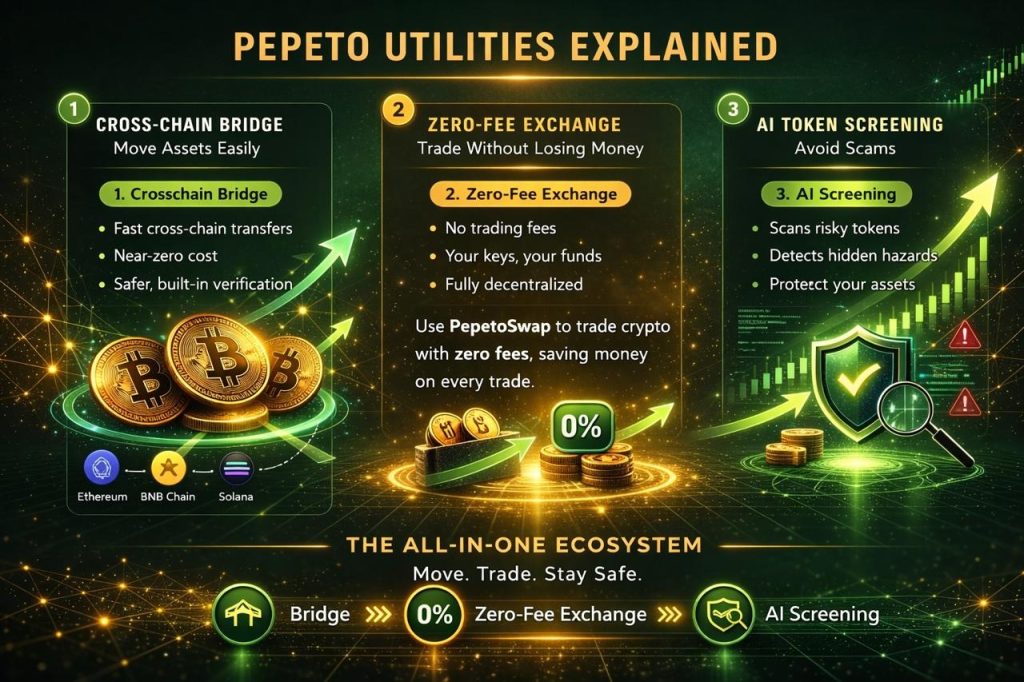
Shiba Inu Price Prediction Weakens as AI Token Sector Surges 30% to $19B While Pepeto SHIB and TAO Take Different Paths

Trump Crypto Manipulation: Explosive Claims of Daily Bitcoin Market Influence Through Geopolitical Statements