The post The CLARITY Act Defined ‘Mature’ Blockchains. Here’s What It Missed. appeared on BitcoinEthereumNews.com. As the digital asset industry evolves, so does the language we use to describe it. A promising new term —“mature blockchain” — has entered the regulatory discourse via the CLARITY Act, a bipartisan legislative proposal aimed at providing much-needed regulatory certainty around digital assets in the U.S. Among other things, it defines a “mature blockchain” as one that is sufficiently decentralized and not reliant on any single person or entity to operate. This makes decentralization a critical legal distinction, and may also determine whether an asset on a given network should be treated as a security. However, fitting the definition of decentralized doesn’t mean a blockchain is ready for global scale or real-world adoption. To bring blockchain technology into mainstream, real-world use, maturity must mean more than just decentralization: it must also mean operational readiness, i.e. the ability of a network to deliver performance, reliability, and scalability under these conditions. Decentralization is and must remain a foundational pillar of blockchain. It ensures resilience, neutrality, and censorship resistance. But decentralization alone is not enough. A blockchain that is highly decentralized but cannot reliably scale, or routinely suffers downtime, or finalizes transactions only after minutes of uncertainty, will struggle to support the kinds of applications (payments, identity verification, tokenized assets) that the world is ready for. Some blockchains today, like Ethereum and Cardano, are still working through what could be called growing pains. Their engineering teams are focused on solving base-layer challenges: scaling past double-digit transactions per second, reducing finality times from minutes to seconds, stabilizing consensus mechanisms, or addressing uptime reliability. These challenges are real, and the work is important. But they also signal that the network is still in its developmental phase, not yet ready to support high-stakes, production-grade use. By contrast, a handful of blockchains, like Solana and Algorand, have… The post The CLARITY Act Defined ‘Mature’ Blockchains. Here’s What It Missed. appeared on BitcoinEthereumNews.com. As the digital asset industry evolves, so does the language we use to describe it. A promising new term —“mature blockchain” — has entered the regulatory discourse via the CLARITY Act, a bipartisan legislative proposal aimed at providing much-needed regulatory certainty around digital assets in the U.S. Among other things, it defines a “mature blockchain” as one that is sufficiently decentralized and not reliant on any single person or entity to operate. This makes decentralization a critical legal distinction, and may also determine whether an asset on a given network should be treated as a security. However, fitting the definition of decentralized doesn’t mean a blockchain is ready for global scale or real-world adoption. To bring blockchain technology into mainstream, real-world use, maturity must mean more than just decentralization: it must also mean operational readiness, i.e. the ability of a network to deliver performance, reliability, and scalability under these conditions. Decentralization is and must remain a foundational pillar of blockchain. It ensures resilience, neutrality, and censorship resistance. But decentralization alone is not enough. A blockchain that is highly decentralized but cannot reliably scale, or routinely suffers downtime, or finalizes transactions only after minutes of uncertainty, will struggle to support the kinds of applications (payments, identity verification, tokenized assets) that the world is ready for. Some blockchains today, like Ethereum and Cardano, are still working through what could be called growing pains. Their engineering teams are focused on solving base-layer challenges: scaling past double-digit transactions per second, reducing finality times from minutes to seconds, stabilizing consensus mechanisms, or addressing uptime reliability. These challenges are real, and the work is important. But they also signal that the network is still in its developmental phase, not yet ready to support high-stakes, production-grade use. By contrast, a handful of blockchains, like Solana and Algorand, have…

The CLARITY Act Defined ‘Mature’ Blockchains. Here’s What It Missed.

For feedback or concerns regarding this content, please contact us at crypto.news@mexc.com

As the digital asset industry evolves, so does the language we use to describe it. A promising new term —“mature blockchain” — has entered the regulatory discourse via the CLARITY Act, a bipartisan legislative proposal aimed at providing much-needed regulatory certainty around digital assets in the U.S. Among other things, it defines a “mature blockchain” as one that is sufficiently decentralized and not reliant on any single person or entity to operate.

This makes decentralization a critical legal distinction, and may also determine whether an asset on a given network should be treated as a security.

However, fitting the definition of decentralized doesn’t mean a blockchain is ready for global scale or real-world adoption. To bring blockchain technology into mainstream, real-world use, maturity must mean more than just decentralization: it must also mean operational readiness, i.e. the ability of a network to deliver performance, reliability, and scalability under these conditions. Decentralization is and must remain a foundational pillar of blockchain. It ensures resilience, neutrality, and censorship resistance. But decentralization alone is not enough. A blockchain that is highly decentralized but cannot reliably scale, or routinely suffers downtime, or finalizes transactions only after minutes of uncertainty, will struggle to support the kinds of applications (payments, identity verification, tokenized assets) that the world is ready for.

Some blockchains today, like Ethereum and Cardano, are still working through what could be called growing pains. Their engineering teams are focused on solving base-layer challenges: scaling past double-digit transactions per second, reducing finality times from minutes to seconds, stabilizing consensus mechanisms, or addressing uptime reliability. These challenges are real, and the work is important. But they also signal that the network is still in its developmental phase, not yet ready to support high-stakes, production-grade use.

By contrast, a handful of blockchains, like Solana and Algorand, have already moved past these foundational hurdles. They’ve demonstrated the ability to deliver high throughput, low latency, sub-three-second finality, and virtually zero downtime. These networks aren’t scrambling to stabilize. They’re focused on simplifying the user experience, onboarding non-Web3 developers, integrating with decentralized identity frameworks, and supporting regulated use cases like payments, tokenization, and even AI-agent transactions.

This shift (from survival to usability) is the true marker of a mature blockchain. It’s what signals readiness not just to regulators, but to developers, enterprises, and end users.

So how do we recognize blockchain maturity in practice? One clue is the roadmap. If a blockchain’s roadmap is dominated by protocol-level upgrades, core infrastructure rework, or fundamental scalability improvements, often expressed in years, it’s likely still working to stabilize. That doesn’t mean it won’t mature, but it’s not there yet.

On the other hand, if the roadmap is centered around new features and expanding usability, integrations, and new use cases, that is a strong signal that the chain is content with its technical foundation and is capable of scaling.

Decentralization is important, and the focus the CLARITY Act gives it is a good thing. By introducing the concept of blockchain maturity, the proposed legislation invites us to move beyond one-size-fits-all thinking and begin differentiating between networks not just by ideology, but by architecture, performance, and purpose. It also lays the foundation for institutional adoption, where chains that meet both decentralization and operational maturity thresholds can be treated as truly public infrastructure.

In a world where blockchains are expected to settle billions in value, host critical identity credentials, and power automated machine-to-machine payments, both its trustlessness and trustworthiness are essential. We must keep decentralization as a non-negotiable principle, but we must also insist on real-world reliability.

Maturity, in this expanded sense, is about balance. It’s about chains that have preserved decentralization while delivering enterprise-grade performance. Chains that don’t just resist capture, but resist failure. Chains that are ready not just for crypto-native experimentation, but for meaningful adoption in industries like finance, energy, mobility, and beyond.

The future of blockchain won’t be shaped by ideology alone. It will be shaped by networks that are ready to integrate, to scale, to settle instantly, and to disappear quietly into the infrastructure of daily life. That’s the kind of maturity that will move this industry from speculation to significance.

Source: https://www.coindesk.com/opinion/2025/09/03/the-clarity-act-defined-mature-blockchains-here-s-what-it-missed


Market Opportunity
Threshold Logo
Threshold Price(T)
$0.004748
$0.004748$0.004748
+0.95%
USD
Threshold (T) Live Price Chart

AI Strategy: Powered 24/7

AI Strategy: Powered 24/7AI Strategy: Powered 24/7

Generate automated strategies using natural language

Disclaimer: The articles reposted on this site are sourced from public platforms and are provided for informational purposes only. They do not necessarily reflect the views of MEXC. All rights remain with the original authors. If you believe any content infringes on third-party rights, please contact crypto.news@mexc.com for removal. MEXC makes no guarantees regarding the accuracy, completeness, or timeliness of the content and is not responsible for any actions taken based on the information provided. The content does not constitute financial, legal, or other professional advice, nor should it be considered a recommendation or endorsement by MEXC.

You May Also Like

How to earn from cloud mining: IeByte’s upgraded auto-cloud mining platform unlocks genuine passive earnings

How to earn from cloud mining: IeByte’s upgraded auto-cloud mining platform unlocks genuine passive earnings

The post How to earn from cloud mining: IeByte’s upgraded auto-cloud mining platform unlocks genuine passive earnings appeared on BitcoinEthereumNews.com. contributor Posted: September 17, 2025 As digital assets continue to reshape global finance, cloud mining has become one of the most effective ways for investors to generate stable passive income. Addressing the growing demand for simplicity, security, and profitability, IeByte has officially upgraded its fully automated cloud mining platform, empowering both beginners and experienced investors to earn Bitcoin, Dogecoin, and other mainstream cryptocurrencies without the need for hardware or technical expertise. Why cloud mining in 2025? Traditional crypto mining requires expensive hardware, high electricity costs, and constant maintenance. In 2025, with blockchain networks becoming more competitive, these barriers have grown even higher. Cloud mining solves this by allowing users to lease professional mining power remotely, eliminating the upfront costs and complexity. IeByte stands at the forefront of this transformation, offering investors a transparent and seamless path to daily earnings. IeByte’s upgraded auto-cloud mining platform With its latest upgrade, IeByte introduces: Full Automation: Mining contracts can be activated in just one click, with all processes handled by IeByte’s servers. Enhanced Security: Bank-grade encryption, cold wallets, and real-time monitoring protect every transaction. Scalable Options: From starter packages to high-level investment contracts, investors can choose the plan that matches their goals. Global Reach: Already trusted by users in over 100 countries. Mining contracts for 2025 IeByte offers a wide range of contracts tailored for every investor level. From entry-level plans with daily returns to premium high-yield packages, the platform ensures maximum accessibility. Contract Type Duration Price Daily Reward Total Earnings (Principal + Profit) Starter Contract 1 Day $200 $6 $200 + $6 + $10 bonus Bronze Basic Contract 2 Days $500 $13.5 $500 + $27 Bronze Basic Contract 3 Days $1,200 $36 $1,200 + $108 Silver Advanced Contract 1 Day $5,000 $175 $5,000 + $175 Silver Advanced Contract 2 Days $8,000 $320 $8,000 + $640 Silver…
Share
BitcoinEthereumNews2025/09/17 23:48
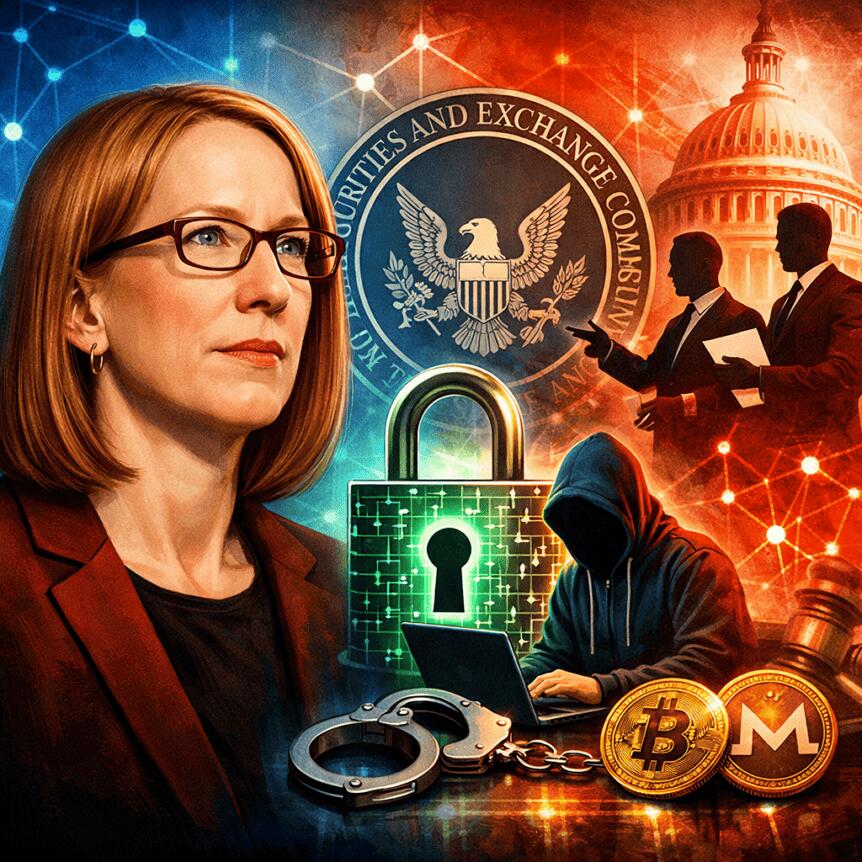
SEC’s Peirce Defends Crypto Privacy Tools as Regulators Tighten Rules

SEC’s Peirce Defends Crypto Privacy Tools as Regulators Tighten Rules

U.S. Securities and Exchange Commission (SEC) Commissioner Hester Peirce has flagged a growing undervaluation of financial privacy within U.S. regulation, urging
Share
Crypto Breaking News2026/05/29 06:02
NBIS stock: Above 205–206, the upward move is aimed at 209.60–212.54; volatility is increasing

NBIS stock: Above 205–206, the upward move is aimed at 209.60–212.54; volatility is increasing

NBIS stock shows an upward trend and increasing volatility: watch the 205–212 level and the 209–209.34 cluster for a possible breakout or pullback.
Share
The Cryptonomist2026/05/29 05:56

No Chart Skills? Still Profit

No Chart Skills? Still ProfitNo Chart Skills? Still Profit

Copy top traders in 3s with auto trading!