From Narrative To Necessity: DePIN And AI Gain Real Economic Utility
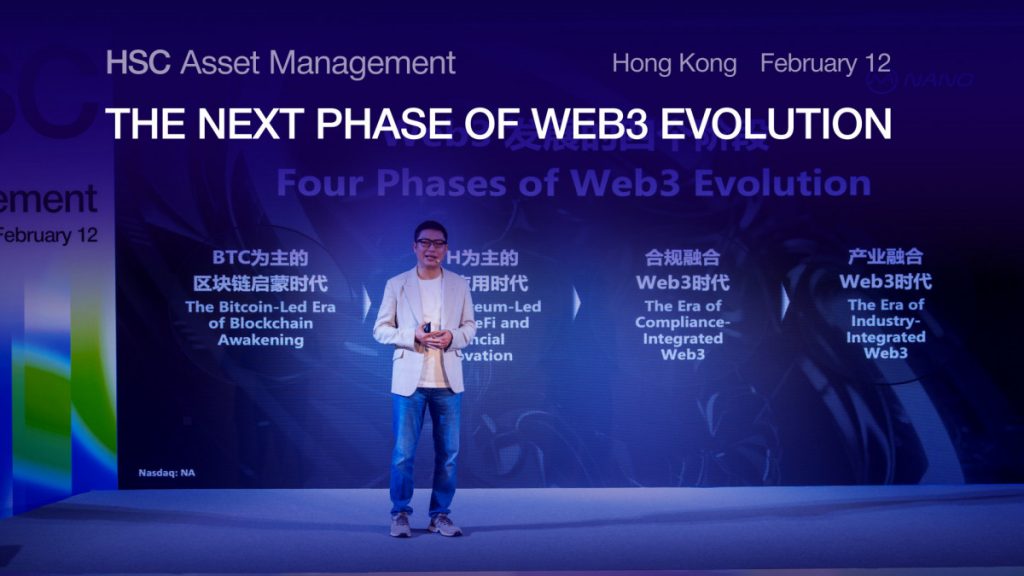
Dr. Kong Jianping of Nano Labs and the Hong Kong Cyberport Board shows that Web3 has reached specific developmental stages over the last 10 years. The initial stage was characterized by Bitcoin who brought about decentralized digital money. The second wave was led by Ethereum, which diversified blockchain use by introducing smart contracts and decentralized applications.
The third phase of Web3 is currently underway, as it involves integration into regulatory policies, institutional involvement, and physical financial usage. The acceptance of Bitcoin exchange-traded funds (ETFs) in the United States and Hong Kong is now a new stage that indicates increasing acceptance of blockchain by traditional financial systems. In the next two years, Dr. Kong thinks that additional financial assets and services will be shifted on-chain as blockchain penetration into mainstream finance continues.
Stablecoins Are the Most Successful Real-World Web3 Application
Stablecoins are the most successful example of blockchain application in the real world, compared to other Web3 sectors. Their development took place in three surges, and each of them extended their influence in the world financial system.
The initial wave was fueled by crypto trading, where stablecoins have offered liquidity to those markets that do not have access to a traditional banking system. This allowed transactions and users to efficiently interact without the need to use the infrastructure of fiat currency.
The second wave encountered decentralized finance (DeFi), in which stablecoins were necessary in lending, borrowing, and providing liquidity. This largely increased their usage and made stablecoins a fundamental part of blockchain financial infrastructure.
The third and most recent wave revolves around payments, particularly on cross-border payments. Stablecoins can also be used to conduct international transactions faster and cheaper than financial systems, which is considered to be of enormous value. In the global Real-world asset (RWA) tokenization is an emerging focus of significant Web3 growth. It is associated with the registration of ownership of traditional assets (stock, currency, or commodity) on blockchain networks.
Dr. Kong pointed to the fact that effective RWA applications should provide clear benefits, whether in the form of enhancing financial efficiency, lowering operational costs, or enabling new economic value. Stablecoins in themselves can be considered a successful model of tokenized real-world assets, which proves that blockchain can revolutionize traditional finance.
The use of tokenized stocks, financial products, and payment systems are highly likely to become increasingly prevalent in the years ahead, further narrowing the divide between traditional finance and the decentralized infrastructure.
Hong Kong Is Positioning Itself as a Global Web3 Hub
Hong Kong has become one of the most active regions that promotes the development of Web3. Regulatory clarity and legal frameworks. Since 2023, government policy frameworks have put in place regulatory clarity and legal frameworks to facilitate blockchain innovation, such as stablecoin regulation and licensing of digital asset exchanges.
Several digital asset exchanges have already been approved in the region, and the regulatory infrastructure is still being expanded. Future stablecoin issuance platforms and over-the-counter trading systems will only enhance the position of Hong Kong as a global Web3 center.
Hong Kong Cyberport is at the heart of this ecosystem and provides over 2,000 tech firms, many of which are more than 300 Web3 firms. The government is still allocating funds and infrastructure incentives to drive blockchain and fintech innovation.
Along with the use of blockchain, Hong Kong spends a lot of money on the development of artificial intelligence infrastructure. Cyberport has formed one of the largest AI computing centers in the area due to the increased integration of AI and Web3 technologies.
Such an intersection is likely to push forth fresh applications in finance, automation, and digital ownership. Blockchain can offer a safe, open architecture to the management of digital assets, whereas AI enhances the demand for decentralized data, computer systems, and financial systems. The tendencies demonstrate that blockchain-based assets are able to enjoy greater efficiency, economy of money, and financial opportunities.
The post From Narrative To Necessity: DePIN And AI Gain Real Economic Utility appeared first on Metaverse Post.


You May Also Like

Stock Market Tumbles as IBM and ServiceNow Earnings Disappoint While Oil Surges Past $102

U.S. military runs a Bitcoin (BTC) node, sees crypto as ‘power projection’ vs China