Pound Sterling Plummets: UK Confronts Stagflation Nightmare Amid Middle East War Fallout
BitcoinWorld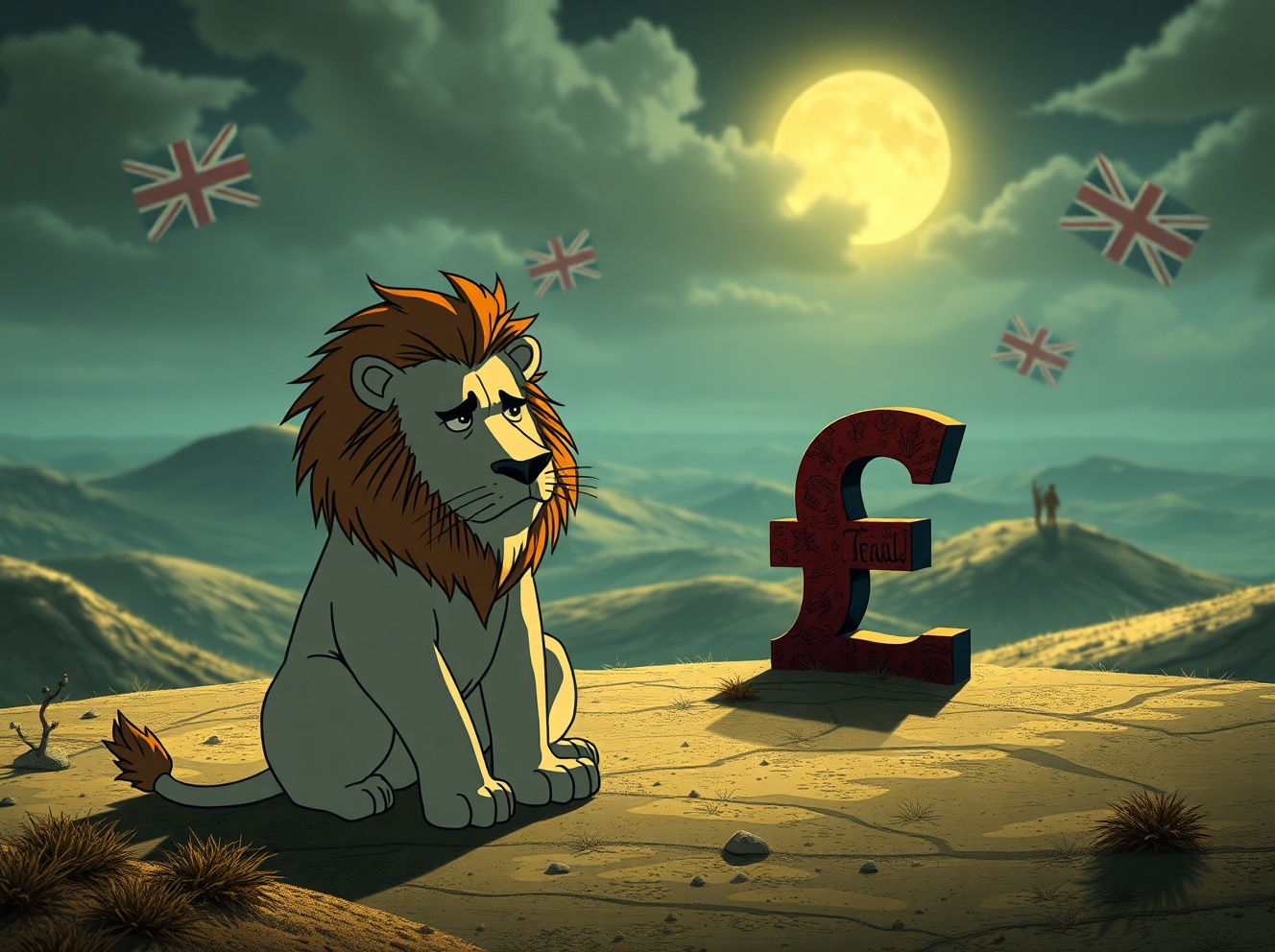
Pound Sterling Plummets: UK Confronts Stagflation Nightmare Amid Middle East War Fallout
LONDON, October 2025 – The Pound Sterling faces significant downward pressure this week, underperforming against major peers as the United Kingdom confronts a dual economic threat: rising stagflation risks at home and escalating geopolitical instability in the Middle East. Consequently, currency traders and economic analysts are closely monitoring a volatile situation that combines persistent inflation with slowing growth. This complex scenario presents substantial challenges for the Bank of England’s monetary policy committee.
Pound Sterling Underperforms in Volatile Currency Markets
The British Pound has registered notable declines against both the US Dollar and the Euro in recent trading sessions. Market data reveals a clear trend of underperformance relative to other G10 currencies. Specifically, analysts attribute this weakness to shifting investor sentiment regarding the UK’s economic resilience. Furthermore, comparative analysis shows the Pound’s trajectory diverging from historical patterns. This divergence suggests that fundamental domestic concerns are now outweighing traditional drivers of Sterling value.
Several key factors are driving this currency movement. Firstly, recent inflation data remains stubbornly above the Bank of England’s 2% target. Secondly, preliminary GDP figures indicate economic growth is slowing more sharply than forecast. Thirdly, bond market yields reflect growing investor anxiety. Therefore, the currency market is pricing in a higher risk premium for holding Sterling-denominated assets. This risk reassessment is a primary cause of the Pound’s current weakness.
Understanding the UK’s Stagflation Risk Profile
Stagflation, a portmanteau of stagnation and inflation, describes a rare and challenging economic condition. It combines high inflation with stagnant growth and elevated unemployment. The UK economy now shows early warning signs of this phenomenon. For instance, consumer price inflation has persisted despite aggressive interest rate hikes. Meanwhile, business investment surveys point to declining confidence and postponed capital expenditure.
Historical context is crucial for understanding the current risk. The UK last experienced significant stagflation in the 1970s, triggered by an oil price shock. Today, similar supply-side pressures are emerging, though from a different constellation of events. The current economic structure, however, differs substantially from the 1970s, with a larger services sector and different labor market dynamics. These differences may influence how stagflationary pressures manifest and how policymakers can respond.
| Indicator | Current Reading | Official Target | Trend |
|---|---|---|---|
| CPI Inflation | 4.2% | 2.0% | Persistently High |
| GDP Growth (QoQ) | 0.1% | ~0.5% | Slowing |
| Unemployment Rate | 4.5% | ~4.0% | Rising |
| Bank Rate | 5.25% | N/A | Restrictive |
Expert analysis from major financial institutions highlights the policy dilemma. Raising interest rates could further dampen growth, while cutting rates might exacerbate inflation. This difficult trade-off complicates the path forward for monetary authorities. Moreover, fiscal policy options appear constrained by high public debt levels. As a result, the UK’s economic toolkit seems more limited than in previous decades.
Geopolitical Shockwaves from the Middle East Conflict
The ongoing war in the Middle East acts as a powerful external amplifier of the UK’s domestic economic challenges. This conflict directly impacts global energy markets, a critical transmission channel to the UK economy. Notably, oil and natural gas prices have experienced heightened volatility since hostilities intensified. The UK, while a producer, remains a net importer of energy, making it sensitive to these price swings.
Beyond energy, the conflict disrupts key shipping lanes and global supply chains. The UK’s import-dependent economy is particularly vulnerable to these logistical disruptions. For example, delayed components can halt manufacturing production, while increased shipping insurance costs raise import prices. These effects introduce additional inflationary pressures while simultaneously harming economic output, thereby feeding the stagflation dynamic.
The timeline of market reactions is instructive. Initial currency weakness followed specific geopolitical escalations, demonstrating a clear correlation. Subsequently, each breakdown in ceasefire talks or expansion of the conflict zone triggered a fresh sell-off in Sterling. This pattern underscores the market’s acute sensitivity to developments in the region. Financial analysts now routinely incorporate a “geopolitical risk premium” into their Sterling forecasts.
Comparative Currency Performance and Market Psychology
The Pound’s underperformance is most evident when compared to the US Dollar, which often benefits from safe-haven flows during global uncertainty. Conversely, the Euro has shown more resilience, partly due to the Eurozone’s different energy mix and trade exposures. This relative performance tells a story about perceived economic management and vulnerability.
- Federal Reserve Policy: The US central bank appears closer to ending its tightening cycle, providing Dollar stability.
- European Central Bank Stance: The ECB maintains a consistently hawkish rhetoric, supporting the Euro.
- Bank of England Uncertainty: Mixed signals from the BoE have increased Sterling volatility and eroded confidence.
Market psychology plays a significant role in currency valuation. The narrative of “UK stagflation” has gained traction among institutional investors, creating a self-reinforcing cycle of selling. Additionally, algorithmic trading models, which detect and amplify trends, have exacerbated the Pound’s moves. Therefore, breaking this negative cycle requires a clear change in fundamental data or a decisive shift in policy communication.
Historical Precedents and Potential Pathways
Examining past episodes of currency stress during stagflationary periods offers limited but valuable insight. The 1970s experience suggests that currencies can remain under pressure for extended periods until inflation is convincingly tamed. However, modern central banking frameworks and independent inflation targeting provide new tools and credibility that were absent fifty years ago.
A potential pathway for stabilization involves a coordinated policy response. This would require clear communication from the Bank of England regarding its inflation-fighting priority, coupled with targeted fiscal measures to support growth without fueling prices. Furthermore, a de-escalation in the Middle East would remove a major external headwind. Such a development would likely trigger a swift, positive reassessment of Sterling’s prospects by the foreign exchange market.
Conclusion
The Pound Sterling is underperforming due to a confluence of domestic and international pressures. The primary driver is the rising risk of UK stagflation, characterized by persistent inflation and slowing growth. Simultaneously, the Middle East war exacerbates these problems by disrupting energy markets and global trade. Consequently, the currency faces a challenging environment with limited near-term catalysts for a sustained recovery. The path forward depends heavily on upcoming economic data, central bank policy decisions, and, critically, geopolitical developments. Monitoring these factors will be essential for understanding the future trajectory of the Pound Sterling.
FAQs
Q1: What exactly is stagflation and why is it a risk for the UK?
A1: Stagflation is an economic condition combining high inflation, stagnant economic growth, and rising unemployment. It is a risk for the UK because current data shows inflation remaining above target while GDP growth is slowing significantly, creating a difficult policy environment where tools to fight inflation can worsen growth, and vice versa.
Q2: How does a war in the Middle East affect the British Pound?
A2: The conflict affects the Pound through several channels. It increases global oil and gas prices, raising UK import costs and inflation. It also disrupts shipping and supply chains, harming trade and economic output. This combination of higher prices and lower growth potential leads investors to sell Sterling, causing it to underperform.
Q3: Is the Bank of England likely to raise or lower interest rates in this situation?
A3: The Bank of England faces a severe dilemma. Raising rates could help control inflation but would further weaken economic growth. Lowering rates might support growth but could cause inflation to surge. Most analysts expect the Bank to maintain a cautious, data-dependent stance, potentially keeping rates “higher for longer” until inflation shows clear signs of returning to target.
Q4: How does the Pound’s performance compare to the Euro and US Dollar?
A4: Recently, the Pound has underperformed both. The US Dollar often strengthens as a global safe-haven asset during geopolitical turmoil. The Euro has shown more resilience, partly due to different economic structures and policy expectations. The Pound’s unique exposure to both domestic stagflation risks and external energy shocks explains its relative weakness.
Q5: What would need to happen for the Pound Sterling to recover?
A5: A sustained recovery would likely require a clear downtrend in UK inflation data, signs of economic resilience or recovery, and/or a de-escalation of the Middle East conflict. A decisive and credible policy plan from the UK government and the Bank of England to navigate the stagflation risks could also help restore investor confidence in the currency.
This post Pound Sterling Plummets: UK Confronts Stagflation Nightmare Amid Middle East War Fallout first appeared on BitcoinWorld.
You May Also Like

Ethereum unveils roadmap focusing on scaling, interoperability, and security at Japan Dev Conference
XRP Open Interest Splits Across Exchanges as Evernorth Plans Historic Nasdaq Treasury Debut