

Data Intelligence Strategy: How Hinduja Group’s Digital Leadership Signals the Future of CX
Hinduja Group has appointed Ramesh Narayanaswamy as Group President – Digital and Data Intelligence. The move signals the conglomerate’s commitment to enterprise-wide digital transformation.
Why Are Conglomerates Racing Toward Data Intelligence Leadership?
Imagine a customer interacting with three brands from the same conglomerate.
A car service reminder arrives late.
A banking app fails to recognize the customer’s loyalty history.
A retail offer feels irrelevant.
To the customer, it feels fragmented.
To the enterprise, it reveals a deeper problem: siloed data and disconnected digital strategies.
This challenge increasingly confronts large multinational groups. Many operate across dozens of industries and countries. Their digital maturity varies widely across business units.
That is why leadership roles focused on digital transformation and data intelligence are rising rapidly.
A recent example illustrates this shift.
Hinduja Group has appointed Ramesh Narayanaswamy as Group President – Digital and Data Intelligence.

The move signals a strategic focus on enterprise-wide digital ecosystems, data-led innovation, and enhanced customer experience.
For CX and EX leaders, the appointment highlights an important trend:
Data intelligence is becoming the backbone of experience transformation.
What Is Digital and Data Intelligence in CX?
Digital and data intelligence refers to the unified use of digital platforms, analytics, and data engineering to improve customer and employee experiences.
It connects operational systems, behavioral data, and decision engines to enable faster, smarter, and more personalized experiences.
Without this foundation, organizations struggle with:
- Fragmented customer journeys
- Inconsistent personalization
- Slow decision-making
- Poor cross-business insights
With it, companies can build experience-driven ecosystems.
For conglomerates, the stakes are even higher.
Why Does a Conglomerate Like Hinduja Group Need a Data Intelligence Leader?
Conglomerates operate multiple businesses with separate technologies, cultures, and data systems.
A central digital leader helps unify these systems and create enterprise-wide capabilities.
Hinduja Group is a 111-year-old multinational conglomerate operating across automotive, banking, mobility, healthcare, energy, and digital services. The group employs more than 250,000 people across 100 countries.
Such scale creates immense opportunity but also immense complexity.
Data lives everywhere:
- Automotive telemetry
- Banking transactions
- Logistics networks
- Healthcare records
- Digital platform interactions
Without unified governance, these assets remain underutilized.
According to Amit Chincholikar, Group President – HR at Hinduja Group:
This perspective aligns with global CX trends.
Organizations increasingly view data platforms as strategic infrastructure rather than IT utilities.
Who Is Ramesh Narayanaswamy and Why Does His Experience Matter?
Ramesh Narayanaswamy brings nearly three decades of technology leadership across banking, logistics, and digital platforms.
His career includes more than 18 years at CIO, CTO, and COO levels.
Before joining Hinduja Group, he served as Group CTO at Aditya Birla Capital.
He also held leadership roles at:
Standard Chartered Bank
Citibank
CIMB Group
Singapore Post
High Tech Payment Systems
These organizations operate in highly regulated, data-intensive sectors.
His expertise includes:
- Digital banking platforms
- Super app ecosystems
- Legacy modernization
- Cloud transformation
- Advanced data engineering
Narayanaswamy has also worked across India, Malaysia, and Singapore, bringing global operational perspective.
His academic background includes degrees from:
This mix of engineering, technology, and policy reflects the interdisciplinary nature of modern digital leadership.
Narayanaswamy himself emphasized the transformation opportunity:
How Does Data Intelligence Improve Customer Experience?
Data intelligence enables organizations to understand customer behavior across touchpoints and respond in real time.
Instead of isolated systems, enterprises build connected experience ecosystems.
Consider three transformation layers.
1. Unified Customer Identity
Many organizations maintain multiple customer records.
This causes:
- Duplicate profiles
- Incorrect personalization
- Broken journeys
A unified data platform creates single customer views across businesses.
For conglomerates, this unlocks cross-brand insights.
2. Predictive Customer Insights
Advanced analytics turns raw data into predictive signals.
Examples include:
- churn risk prediction
- proactive service alerts
- next-best-product recommendations
CX teams shift from reactive service to anticipatory experience management.
3. Real-Time Decision Engines
Modern experience platforms integrate AI and automation.
These systems trigger actions such as:
- instant offers
- dynamic pricing
- proactive support
This capability transforms CX from static processes to adaptive experiences.
What CX Leaders Can Learn from the Hinduja Appointment
The appointment reflects broader trends shaping digital enterprises.
Key Insight 1: Experience Requires Data Foundations
Customer experience initiatives often fail due to weak data architecture.
Journey mapping alone cannot solve structural data fragmentation.
Key Insight 2: Transformation Must Be Enterprise-Wide
Digital innovation within one business unit rarely scales.
A group-level leader can align:
- technology investments
- data governance
- platform architecture
Key Insight 3: CX and EX Must Evolve Together
Employees rely on the same systems customers experience.
If internal platforms remain fragmented, service delivery suffers.
Data intelligence improves both:
- employee productivity
- customer satisfaction
What Are the Common Pitfalls in Enterprise Digital Transformation?
Many large organizations underestimate the complexity of transformation.
Here are the most common challenges.
Siloed Data Ownership
Business units guard their data.
This limits cross-enterprise analytics.
Legacy Infrastructure
Older systems slow innovation and integration.
Modernization often requires phased architecture strategies.
Talent and Capability Gaps
Data engineering, AI, and platform design skills remain scarce.
Leadership must invest in capability development.
Governance Complexity
Global organizations must manage:
- privacy regulations
- cybersecurity risks
- compliance frameworks
Strong digital leadership helps navigate these constraints.
What Framework Can CX Leaders Use for Data-Driven Transformation?
CXQuest research often highlights a four-layer digital intelligence framework.
Layer 1: Data Foundation
Build scalable data infrastructure.
Key elements include:
- unified data lakes
- governance frameworks
- identity resolution
Layer 2: Intelligence Engine
Deploy advanced analytics and machine learning.
Capabilities include:
- predictive modeling
- behavioral segmentation
- AI-driven insights
Layer 3: Experience Activation
Integrate insights into operational systems.
Examples include:
- marketing automation
- service platforms
- digital apps
Layer 4: Continuous Learning
Measure and optimize outcomes.
Use feedback loops such as:
- customer sentiment analysis
- journey analytics
- employee experience metrics
Organizations that execute across all four layers create experience-driven enterprises.
How Will Digital Intelligence Shape Conglomerates in the Next Decade?
Large business groups increasingly resemble platform ecosystems rather than isolated companies.
Digital intelligence will enable:
- cross-industry innovation
- shared customer insights
- scalable digital services
Imagine a future scenario within a conglomerate ecosystem.
A customer purchases an electric vehicle.
The mobility business shares usage data.
The financial services unit offers dynamic insurance.
The energy unit optimizes home charging plans.
All interactions feel seamless.
This is the promise of data-driven enterprise ecosystems.
For organizations like Hinduja Group, digital leadership roles will define competitive advantage.
FAQ: Digital and Data Intelligence in CX
Why are companies creating Chief Data or Digital Intelligence roles?
Organizations need centralized leadership to unify data strategies and drive enterprise-wide transformation.
How does data intelligence impact customer journeys?
It enables personalization, predictive insights, and real-time decision-making across digital and physical channels.
What industries benefit most from data-driven CX?
Banking, mobility, logistics, healthcare, and retail see significant benefits due to complex customer journeys.
How do conglomerates manage cross-business data sharing?
They implement governance frameworks, secure data platforms, and enterprise APIs.
What skills define modern digital transformation leaders?
Successful leaders combine technology expertise, business strategy, and experience design knowledge.
Actionable Takeaways for CX Leaders
- Audit your data architecture. Identify silos across marketing, service, and operations systems.
- Create a unified customer identity model. Connect profiles across channels and business units.
- Invest in predictive analytics. Use machine learning to anticipate customer needs.
- Modernize legacy platforms gradually. Prioritize high-impact systems first.
- Establish cross-business data governance. Define ownership, standards, and privacy policies.
- Align CX and EX strategies. Employees must access the same unified insights as customers.
- Measure transformation outcomes. Track metrics such as customer lifetime value and journey completion.
- Develop digital leadership capabilities. Transformation requires strategic technology leadership at the enterprise level.
Large organizations are discovering a simple truth.
Customer experience is no longer just a design discipline.
It is a data discipline.
The appointment of Ramesh Narayanaswamy at Hinduja Group reflects this evolution.
The future of CX will belong to enterprises that transform data into intelligence and intelligence into experience.
The post Data Intelligence Strategy: How Hinduja Group’s Digital Leadership Signals the Future of CX appeared first on CX Quest.


You May Also Like
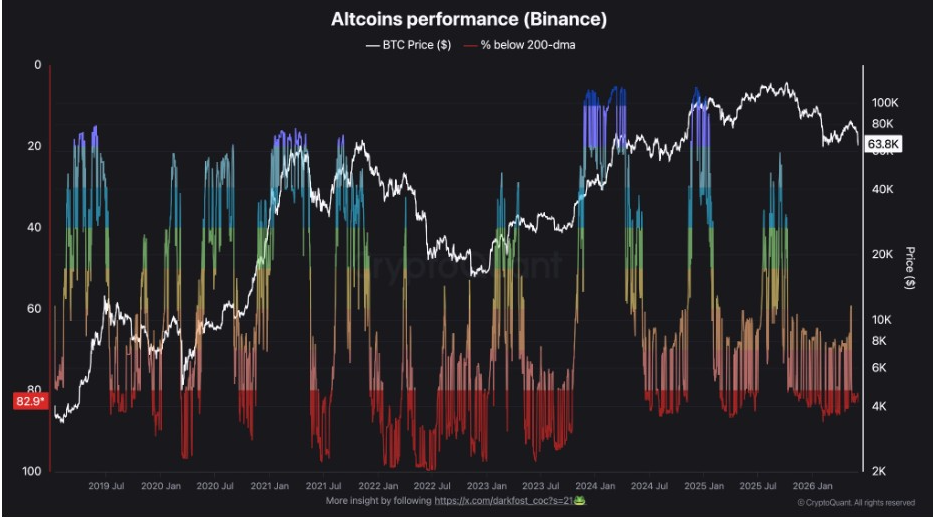
Altcoin Market Loses $520B as 83% Trade Below 200-Day Average

How Bitcoin Turned $10K Into $119 Million While Facebook Lagged Behind

US eyes Iranian assets for Gulf allies’ reconstruction, source says



