Nigeria’s electricity distribution companies collected ₦207.49 billion in December 2025, with Eko DisCo being the top-performing distributor in… The post ElectricityNigeria’s electricity distribution companies collected ₦207.49 billion in December 2025, with Eko DisCo being the top-performing distributor in… The post Electricity

Electricity DisCos lost ₦51 billion in December 2025

2026/03/07 03:38
3 min read
For feedback or concerns regarding this content, please contact us at crypto.news@mexc.com

Nigeria’s electricity distribution companies collected ₦207.49 billion in December 2025, with Eko DisCo being the top-performing distributor in revenue recovery. This is according to a factsheet released by the Nigerian Electricity Regulatory Commission (NERC).

The figures indicate that there was a shortfall compared to the ₦258.66 billion billed to customers that month, resulting in a gap of ₦51 billion. The collection efficiency improved to 80.22%, an increase of 2.73 percentage points from November.

In December, Distribution Companies (DisCos) received ₦309.65 billion worth of energy and billed 83.53% of that amount, which is also higher than in the previous month.

DisCos are permitted to charge an average of ₦124.30 per kilowatt-hour, but they only collected ₦98.97, resulting in a sector-wide recovery efficiency of 79.62%. This figure reflects an increase of 7.14 percentage points since November 2025.

NERC raises prices of prepaid electricity meters by 40%
Eko DisCo leads as Jos struggles to collect half of what it is owed

Eko DisCo achieved a recovery efficiency of 99.45%, the highest in the country. This means it collected almost all the money it was owed in December. Yola came next with 87.89%, followed by Ikeja at 85.32%, and Abuja at 84.43%.

Jos DisCo had the weakest performance. It recovered only 40.67% of its allowed revenue and collected just 42.92% of its billings. In simple terms, Jos collected less than half of what customers owed that month.

Kano had a rate of 61.99%. Benin recorded 71.36%, and Ibadan had 73.19%. Kaduna did not provide any data because it is updating its billing system to meet NERC requirements.

Similar read: More than half of Nigeria’s 12.1 million electricity customers now have meters

The gap of nearly 60 percentage points between Eko and Jos shows how differently Nigeria’s distribution companies are performing, even though they follow the same rules.
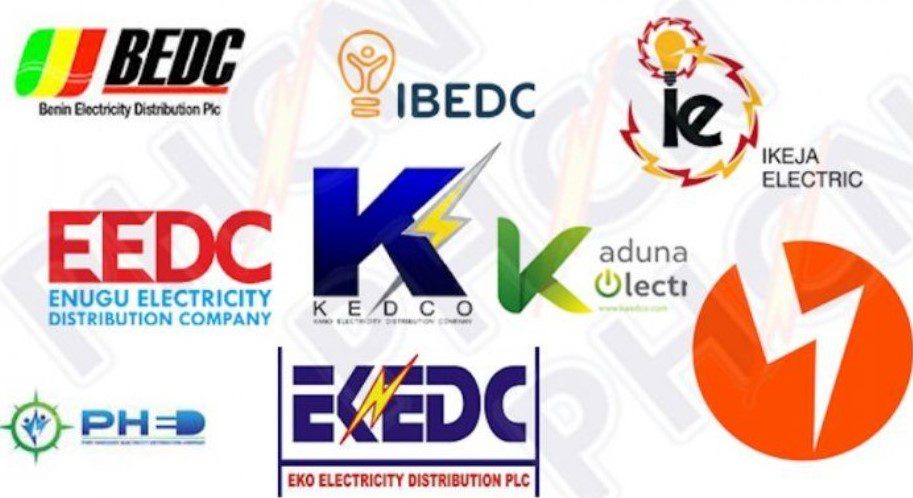
DisCos
What the ₦51 billion shortfall means for electricity supply

Revenue recovery affects how much money distribution companies (DisCos) have to maintain their infrastructure and fix problems. For example, Jos collects less than half of what it is owed. This makes it hard for them to fund repairs, replace equipment, or maintain a steady supply of electricity. Customers in these areas usually face the consequences.

In December, the recovery efficiency was 79.62%. This means that for every ₦5 in allowed revenue, roughly ₦1 went uncollected. This gap makes it harder for a sector that has struggled with money flow to invest in the infrastructure improvements that customers in Nigeria still need.

List of 10 African countries with the cheapest unit of electricity per kWh

The December numbers show that the sector is improving from last month. However, the gap between the best and worst performers indicates that there is still a lot of work to be done.

NERC publishes a monthly factsheet that shows how well Nigeria’s 11 distribution companies are performing in billing, collecting payments, and recovering revenue.

The post Electricity DisCos lost ₦51 billion in December 2025 first appeared on Technext.

Disclaimer: The articles reposted on this site are sourced from public platforms and are provided for informational purposes only. They do not necessarily reflect the views of MEXC. All rights remain with the original authors. If you believe any content infringes on third-party rights, please contact crypto.news@mexc.com for removal. MEXC makes no guarantees regarding the accuracy, completeness, or timeliness of the content and is not responsible for any actions taken based on the information provided. The content does not constitute financial, legal, or other professional advice, nor should it be considered a recommendation or endorsement by MEXC.

You May Also Like

Trump signals possible delay to Beijing summit as U.S. pressures China to help reopen Strait of Hormuz

Trump signals possible delay to Beijing summit as U.S. pressures China to help reopen Strait of Hormuz

The post Trump signals possible delay to Beijing summit as U.S. pressures China to help reopen Strait of Hormuz appeared on BitcoinEthereumNews.com. U.S. President
Share
BitcoinEthereumNews2026/03/16 09:30
Mutuum Finance (MUTM) Highlights Core V1 Protocol Mechanics as TVL Surpasses $230M

Mutuum Finance (MUTM) Highlights Core V1 Protocol Mechanics as TVL Surpasses $230M

The decentralized finance sector is currently seeing a period of steady technical growth. One project, Mutuum Finance (MUTM), has recently reported a major milestone
Share
Techbullion2026/03/16 09:13
BDACS rolls out KRW1 stablecoin backed by Woori Bank PoC

BDACS rolls out KRW1 stablecoin backed by Woori Bank PoC

The post BDACS rolls out KRW1 stablecoin backed by Woori Bank PoC appeared on BitcoinEthereumNews.com. In this post: BDACS has launched KRW1 stablecoin, which is backed by the South Korean won, after completing a full proof of concept with Woori Bank. The firm has also developed issuance and management systems and a user-facing app that supports P2P transfers and transaction verification. BDACS believes banking API integration will ensure transparent, verifiable proof of reserves and reinforce trust and accountability within its network. BDACS officially launched a South Korean won-backed stablecoin, KRW1, on Wednesday. The initiative comes after the company completed a full proof of concept (PoC) with Woori Bank. The company acknowledged that the milestone marks the interaction of fiat deposits, stablecoin issuance, and blockchain verification into a fully operational ecosystem. The firm also revealed that KRW1 is a proprietary stablecoin brand it trademarked in December 2023.  BDACS develops issuance and management systems BDACS said it anticipated the central role of stablecoins in the digital asset economy and started building the necessary infrastructure well before formal regulations were in place. The Korean firm stated that its Go-to-Market strategy has positioned it as a first mover in the region’s evolving digital asset market. According to the report, the initiative extends beyond token issuance. The digital asset custody service firm has developed a comprehensive framework, including issuance and management systems. BDACS has also developed an app that supports peer-to-peer transfers and transaction verification.  Each KRW1 token will be fully collateralized with South Korean won held in escrow at Woori Bank, the company’s strategic partner. BDACS believes that real-time banking API integration will ensure transparent, verifiable proof of reserves and reinforce trust and accountability within its network. The report revealed that Woori Bank also participated in the POC. BDACS acknowledged that it aims to position KRW1 as a universal-user stablecoin for remittances, payments, investments, and deposits. The Korean firm…
Share
BitcoinEthereumNews2025/09/18 17:29