

AI-Powered Quant Funds Outperform Individual Traders in Stock and Crypto Markets
Key Takeaways
- Goldman Sachs has issued warnings that artificial intelligence may trigger significant job losses in finance and beyond
- Ningbo’s High-Flyer, an AI-driven quant hedge fund, achieved an average 52.55% return in 2025
- A staggering 84% of retail cryptocurrency traders experienced losses during their initial trading year
- Approximately 19% of investors worldwide now leverage AI technologies for portfolio management and investment decisions
- Financial professionals believe the ability to choose and oversee AI trading systems will become the most critical investment skill
Artificial intelligence is revolutionizing investment strategies, trading methodologies, and wealth preservation techniques. What began as simple chatbot consultations for basic financial inquiries has evolved into sophisticated systems where AI agents execute transactions, provide continuous market surveillance, and handle risk management with minimal human intervention.
Goldman Sachs has issued stark warnings about potential widespread unemployment driven by AI advancement. Citrini Research highlighted a job-displacement scenario that temporarily shook financial markets. These alerts are prompting investors to reconsider their financial protection strategies.
According to industry experts, the solution isn’t attempting to master every emerging AI platform. Rather, success lies in developing a single critical competency: the ability to choose and supervise AI trading systems.
Ningbo’s High-Flyer, an AI-powered quant hedge fund, delivered an impressive average return of 52.55% in 2025, ranking among the sector’s elite performers. This performance becomes even more striking when contrasted with broader retail trading outcomes.
In cryptocurrency markets, 84% of individual traders suffered losses in their first twelve months. These losses rarely stemmed from inadequate market information. Instead, they resulted from poor discipline — including panic-driven selling, emotionally-charged revenge trades, and impulsive decision-making.
AI systems don’t suffer from these human weaknesses. They operate continuously without fatigue, emotional responses, or second-guessing. These algorithms execute predetermined strategies consistently, following established rules without deviation.
The Growing Dominance of AI in Financial Markets
According to eToro, approximately 19% of global investors currently utilize AI technologies to construct or modify their investment portfolios. In the United Kingdom specifically, Lloyds Group reports that nearly 39% of individuals employ AI for long-term financial strategy development.
Despite this expansion, individual investors remain significantly underutilized AI trading agents. Most applications involve requesting AI-generated recommendations rather than implementing autonomous strategic execution.
This distinction is crucial. Consulting AI for investment suggestions differs fundamentally from deploying an agent that independently executes a comprehensive strategy with predefined risk parameters.
Industry experts compare the process to coaching a professional sports team. Investors establish objectives, define operational parameters, and allow the agents to perform independently. Critical safeguards include emergency shutdown mechanisms, position size limitations, and ongoing performance evaluation.
Implications for Individual Market Participants
Success doesn’t depend on selecting the most advanced AI model. It requires constructing a framework with explicit objectives and boundaries, then consistently evaluating outcomes.
Cryptocurrency markets operate continuously without interruption, 24 hours daily, throughout the entire week. AI systems are purpose-built for this environment. Human traders fundamentally are not.
As AI trading tools become increasingly accessible, the performance gap separating institutional and retail investors may diminish. However, this advantage will only materialize for those who develop proficiency in effectively utilizing these technologies.
The competency being emphasized isn’t primarily technical. It’s fundamentally managerial. Determine your objectives, establish operational guidelines, confirm protective measures, and monitor outcomes systematically.
Ningbo’s High-Flyer’s 52.55% return in 2025 continues to serve as one of the most frequently referenced demonstrations of AI-driven trading potential in today’s market conditions.
The post AI-Powered Quant Funds Outperform Individual Traders in Stock and Crypto Markets appeared first on Blockonomi.


You May Also Like
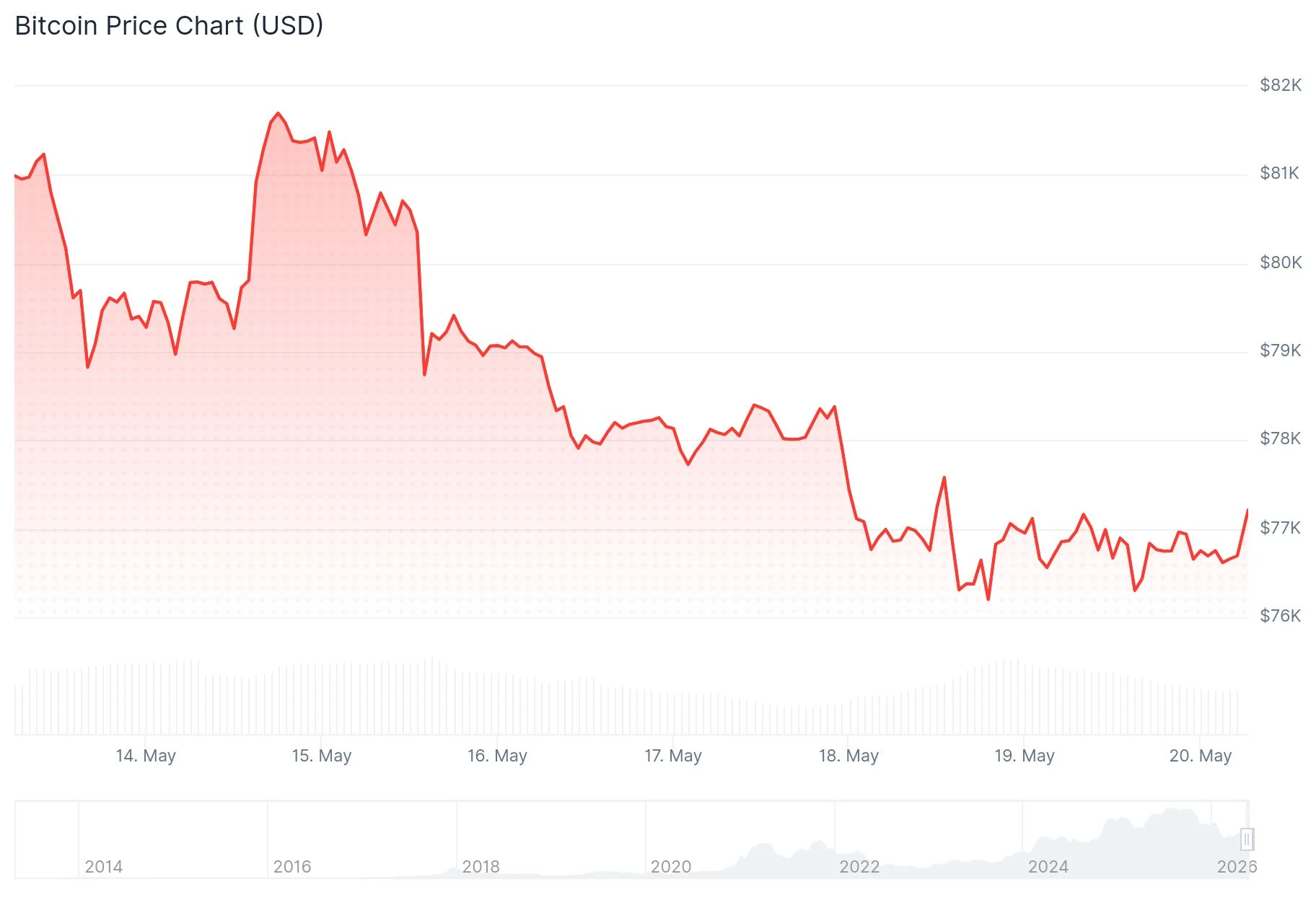
Bitcoin (BTC) Hovers Above $77K Amid Iran Diplomacy and Rising Treasury Yields

Beyond Cleaning: What Else You Must Check Before Moving Out




