

Trump’s Defiant Stance: US Vows to Continue Until Iran is Completely Defeated
BitcoinWorld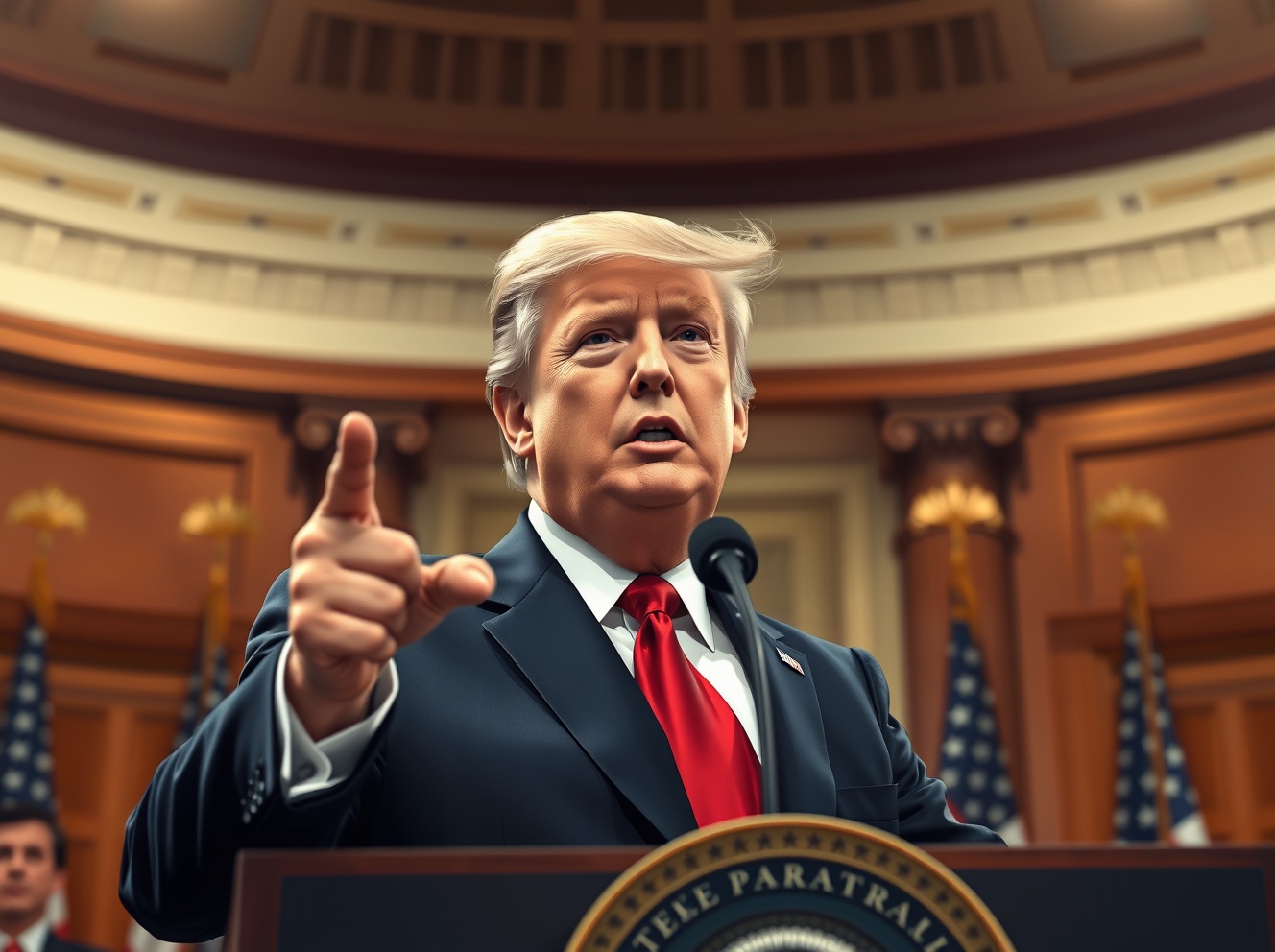
Trump’s Defiant Stance: US Vows to Continue Until Iran is Completely Defeated
In a significant policy declaration with far-reaching geopolitical implications, President Donald Trump told Republican lawmakers this week that the United States “will not stop until Iran is completely defeated.” This definitive statement about US-Iran relations represents a hardening of Washington’s position toward Tehran and signals potential escalation in ongoing regional tensions.
Trump’s Iran Policy Declaration and Its Immediate Context
President Trump delivered his remarks about Iran during a closed-door meeting with Republican legislators on Capitol Hill. According to multiple sources present at the gathering, the president emphasized that previous measures against Tehran had proven insufficient. Furthermore, he specifically stated that the country “has not yet won enough” in its confrontations with the Iranian regime. This language suggests a more aggressive approach may be forthcoming.
The timing of this declaration coincides with increasing regional instability. Additionally, it follows recent incidents involving Iranian-backed militias in Iraq and Syria. Meanwhile, diplomatic efforts to revive the 2015 nuclear deal have remained stalled for months. Consequently, analysts interpret Trump’s statement as both a policy direction and a political message to his base ahead of the election cycle.
Historical Background of US-Iran Relations
The current tensions between Washington and Tehran have deep historical roots. Specifically, relations have been strained since the 1979 Iranian Revolution and the subsequent hostage crisis. Over decades, multiple US administrations have pursued varying strategies toward Iran.
Key Policy Approaches Through Different Administrations
Previous presidents have employed different tactics regarding Iran. For instance, the Obama administration pursued diplomatic engagement, resulting in the 2015 Joint Comprehensive Plan of Action (JCPOA). Conversely, the Trump administration withdrew from that agreement in 2018. Since then, Washington has implemented a “maximum pressure” campaign involving severe economic sanctions.
The current declaration represents a further evolution of this strategy. Notably, it moves beyond economic pressure toward more explicit military and strategic objectives. Regional experts note this shift could have significant consequences for Middle Eastern stability.
Geopolitical Implications of the “Complete Defeat” Objective
Defining what constitutes Iran’s “complete defeat” presents considerable analytical challenges. Potentially, it could refer to several different outcomes. These might include regime change, nuclear program abandonment, or cessation of regional proxy activities.
Regional allies and adversaries are closely monitoring this development. For example, Israel and Saudi Arabia have consistently advocated for stronger action against Iran. Meanwhile, European powers have expressed concern about further escalation. Similarly, Russia and China maintain strategic partnerships with Tehran that could be affected.
Potential Military and Economic Consequences
Several scenarios could emerge from this policy direction. First, increased military posturing in the Persian Gulf seems likely. Second, additional sanctions targeting new sectors of Iran’s economy may follow. Third, covert operations against Iranian interests might intensify. Finally, diplomatic isolation efforts could expand to include Iran’s trading partners.
The economic impact already shows in several key indicators:
- Oil Markets: Brent crude prices increased 3.2% following the announcement
- Iranian Rial: Currency depreciation accelerated to 15% monthly
- Regional Stocks: Gulf Cooperation Council markets showed mixed reactions
- Defense Stocks: Major contractors saw moderate gains in after-hours trading
Expert Analysis and Regional Perspectives
Foreign policy specialists offer varying interpretations of Trump’s statement. Dr. Eleanor Vance, Middle East Studies professor at Georgetown University, notes: “The language of ‘complete defeat’ represents a significant escalation in rhetoric. Historically, such terminology precedes substantive policy shifts.”
Regional responses have been equally diverse. Israeli Prime Minister Benjamin Netanyahu welcomed the “clarity of purpose” in Washington’s position. Conversely, Iranian Foreign Minister Mohammad Javad Zarif dismissed the statement as “empty threats from a failing administration.” European Union foreign policy chief Josep Borrell expressed concern about “language that reduces diplomatic space.”
Legal and Constitutional Considerations
The declaration raises important questions about presidential authority. Specifically, the 1973 War Powers Resolution requires congressional approval for extended military engagements. Additionally, existing Authorizations for Use of Military Force (AUMF) do not explicitly cover conflict with Iran. Consequently, any sustained military action would likely require new legislative authorization.
Historical precedents suggest several possible paths forward. For instance, the executive branch might pursue limited strikes under self-defense provisions. Alternatively, it could seek new congressional authorization for broader operations. Meanwhile, economic measures generally fall within existing presidential authorities.
Domestic Political Context and Electoral Implications
The announcement occurs during a heated election season. Notably, foreign policy traditionally plays a significant role in presidential campaigns. Furthermore, Iran policy specifically has emerged as a key differentiating issue between candidates.
Recent polling data reveals divided public opinion:
| Policy Approach | Republican Support | Democratic Support | Independent Support |
|---|---|---|---|
| Military Action Against Iran | 58% | 22% | 35% |
| Economic Sanctions Only | 75% | 68% | 72% |
| Diplomatic Negotiations | 41% | 83% | 61% |
| Regime Change Objective | 52% | 18% | 31% |
These divisions suggest the Iran policy could become a major campaign issue. Moreover, they indicate potential challenges in maintaining bipartisan support for sustained actions.
International Law and Diplomatic Framework
The United Nations Charter establishes clear guidelines for international conflict. Specifically, Article 2(4) prohibits the threat or use of force against territorial integrity. However, Article 51 recognizes the inherent right of self-defense. Legal experts debate which framework would apply to potential US actions against Iran.
Diplomatic channels remain technically open despite tensions. For example, Switzerland continues to serve as a protecting power for US interests in Iran. Similarly, indirect communications occur through various international forums. Nevertheless, the “complete defeat” language complicates traditional diplomatic engagement.
Conclusion
President Trump’s declaration that the United States will not stop until Iran is completely defeated represents a pivotal moment in US foreign policy. This statement signals potential escalation in longstanding tensions between Washington and Tehran. Furthermore, it carries significant implications for Middle Eastern stability, global energy markets, and international security architecture. As regional actors assess their positions and domestic political considerations evolve, the precise meaning and implementation of this policy direction will become clearer in coming months. The Trump administration’s Iran policy now appears positioned as a defining element of its national security legacy.
FAQs
Q1: What exactly did President Trump say about Iran?
President Trump told Republican lawmakers that the United States “will not stop until Iran is completely defeated” and added that the country “has not yet won enough” in its dealings with Tehran.
Q2: How does this statement differ from previous US policy toward Iran?
This represents an escalation from the “maximum pressure” campaign of economic sanctions to more explicit language about strategic objectives, potentially including military dimensions previously left ambiguous.
Q3: What might “complete defeat” of Iran mean in practical terms?
Analysts suggest several possibilities including regime change, complete abandonment of nuclear programs, cessation of regional proxy activities, or fundamental changes in Iran’s foreign policy orientation.
Q4: How have other countries responded to this declaration?
Responses have varied significantly with allies like Israel expressing support, European powers expressing concern, and Iran itself dismissing the statement as empty threats.
Q5: What are the potential consequences for global oil markets?
Increased tensions typically cause oil price volatility, particularly affecting Persian Gulf shipping routes. Brent crude prices already showed immediate increases following the announcement.
This post Trump’s Defiant Stance: US Vows to Continue Until Iran is Completely Defeated first appeared on BitcoinWorld.


You May Also Like

Pi Network Emphasizes Digital Identity Role as Web3 Adoption Grows

Why Businesses Need Professional Machine Design and Development Services




