

Gold Price Stalls Below $5,200 as Markets Brace for Critical US Inflation Data
BitcoinWorld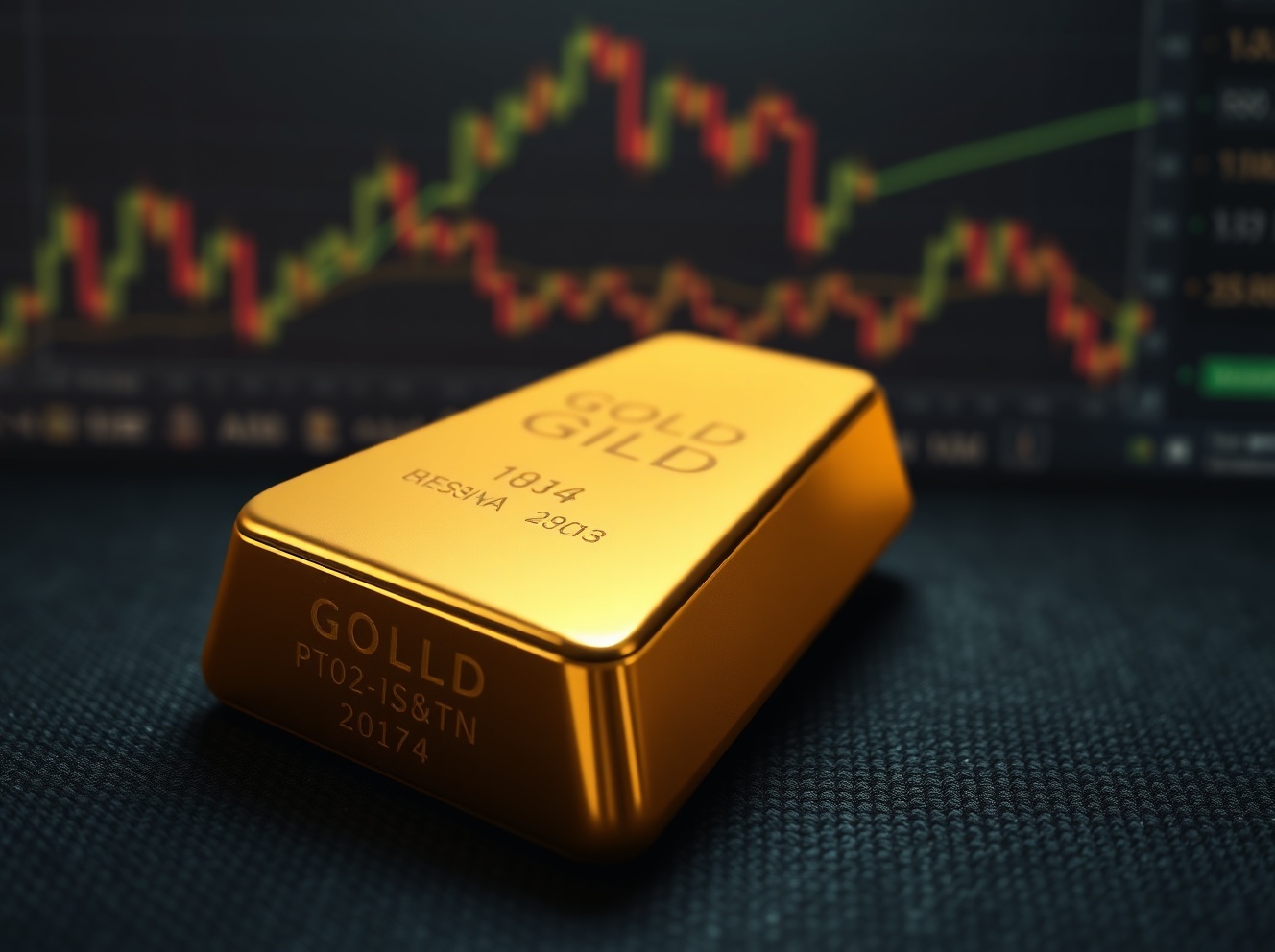
Gold Price Stalls Below $5,200 as Markets Brace for Critical US Inflation Data
Global gold markets entered a holding pattern on Tuesday, with the precious metal’s price consolidating just below the $5,200 per ounce threshold. This cautious stall reflects a broader market sentiment awaiting the release of pivotal US inflation data, a key determinant for future Federal Reserve monetary policy. The upcoming Consumer Price Index (CPI) report for April 2025 carries significant weight, potentially dictating the trajectory of interest rates and, consequently, non-yielding assets like gold. Analysts worldwide are scrutinizing every data point, understanding its profound implications for currency valuations and global capital flows.
Gold Price Dynamics and the Inflation Crossroads
Gold’s recent price action demonstrates a classic market pause ahead of a major economic catalyst. The metal has traded within a narrow band of $5,180 to $5,195 over the past 48 hours, according to spot market data from major exchanges. This consolidation follows a volatile period driven by shifting expectations for central bank policy. Historically, gold exhibits an inverse relationship with real interest rates. Consequently, higher-than-expected inflation figures could pressure the Federal Reserve to maintain or even accelerate a hawkish stance, boosting the US dollar and Treasury yields while dampening gold’s appeal. Conversely, softer inflation data might fuel expectations for a policy pivot, weakening the dollar and supporting gold prices.
Market participants are closely monitoring several key indicators beyond the headline CPI number. Core CPI, which excludes volatile food and energy prices, provides a clearer view of underlying inflationary trends. Additionally, the Personal Consumption Expenditures (PCE) index, the Fed’s preferred gauge, will offer further confirmation in subsequent weeks. The current market consensus, as surveyed by financial data firms, anticipates a modest cooling in the annual inflation rate. However, any deviation from this forecast is likely to trigger immediate and substantial volatility across all asset classes, with gold positioned as a primary barometer of risk sentiment.
The Global Context for Precious Metals
The significance of US data extends far beyond domestic markets, influencing gold demand on a global scale. As the world’s reserve currency, movements in the US dollar directly impact the purchasing power of international buyers. A stronger dollar makes gold more expensive in other currencies, potentially suppressing physical demand from key markets like India and China. Furthermore, central bank purchasing activity, a major support pillar for gold in recent years, may also adjust its pace based on dollar strength and global liquidity conditions. Several emerging market banks have publicly stated their intent to diversify reserves, but the timing and scale of purchases often correlate with relative currency valuations.
Expert Analysis on Market Mechanics
Financial institutions provide critical insights into the current market structure. “The options market is pricing in a significant move for gold following the CPI print,” noted a strategist from a leading investment bank. “Implied volatility for short-dated contracts has spiked, indicating traders are hedging for a breakout in either direction.” This technical setup suggests that the current stall is not a sign of disinterest but rather a compression of energy before a potential directional shift. Analysts also point to futures market positioning data from the Commodity Futures Trading Commission (CFTC), which shows managed money accounts have recently reduced their net-long exposure, a typical pre-event risk management maneuver.
The following table summarizes key price levels and corresponding market reactions based on the CPI outcome:
| CPI Scenario | Expected Gold Reaction | Primary Driver |
|---|---|---|
| Significantly Above Forecast | Sharp decline below $5,150 | Stronger USD, higher rate expectations |
| In Line with Forecast | Volatile but range-bound trade | Confirmation of existing market narrative |
| Significantly Below Forecast | Rally above $5,250 resistance | Weaker USD, dovish Fed repricing |
Historical Precedents and Structural Support
Examining past reactions to inflation data reveals patterns but also underscores the unique conditions of 2025. The post-pandemic era has been characterized by elevated geopolitical tensions and a fragmented global trade landscape. These factors provide a structural floor for gold, often referred to as a safe-haven asset. Even in a higher interest rate environment, persistent demand from exchange-traded funds (ETFs) and direct central bank acquisitions has altered the traditional price calculus. Physical market indicators, such as premiums in major consuming nations and inventory levels at bullion banks, remain robust, suggesting underlying strength that may cushion any downside reaction to the data.
Other precious metals are also in focus. Silver, platinum, and palladium often exhibit correlated movements with gold, albeit with higher beta due to their industrial demand components. Their performance will offer additional clues about whether the market interprets the data as purely monetary or as a signal for broader economic growth. For instance, weaker-than-expected inflation coupled with soft industrial data could see gold outperform its sister metals, highlighting its monetary role over its cyclical characteristics.
Conclusion
The stall in the gold price below $5,200 is a clear manifestation of market anticipation. All eyes are fixed on the upcoming US inflation data, a report that will critically inform the Federal Reserve’s policy path. The outcome will directly influence the dollar’s strength and real yield environment, the two most powerful short-term drivers for gold. While the immediate reaction will be swift, the longer-term trend for the gold price will also depend on the persistence of geopolitical risks and the continued evolution of central bank reserve management strategies. Today’s pause is merely the calm before a potentially significant repricing of global monetary expectations.
FAQs
Q1: Why does US inflation data affect the gold price?
Gold is priced in US dollars and does not yield interest. Higher US inflation can lead the Federal Reserve to raise interest rates, strengthening the dollar and increasing the opportunity cost of holding gold, which often pressures its price.
Q2: What is the current key resistance level for gold?
The $5,200 per ounce level has acted as a significant psychological and technical resistance point in recent sessions, with the market consolidating just below it ahead of the data release.
Q3: How do real interest rates impact gold?
Real interest rates (nominal rates minus inflation) represent the true return on holding interest-bearing assets like bonds. When real rates rise, the relative attractiveness of non-yielding gold diminishes, and vice-versa.
Q4: What other economic indicators should gold investors watch?
Beyond CPI, investors monitor the PCE index, Federal Open Market Committee (FOMC) meeting minutes and dot plots, US Treasury yield movements, and physical demand metrics from major global markets.
Q5: Could gold rise even if the Fed remains hawkish?
Yes, structural factors like geopolitical uncertainty, central bank buying, and currency devaluation concerns in other regions can provide support for gold even in a moderately rising US rate environment.
This post Gold Price Stalls Below $5,200 as Markets Brace for Critical US Inflation Data first appeared on BitcoinWorld.


You May Also Like

Trafigura in Talks With Tether to Pilot USDT Payments at El Salvador Gas Stations
CNN's Anderson Cooper amazed pardoned J6 rioter may have predicted his own payoff




