Twelve Senate Democrats released a unified crypto regulation framework Tuesday, ending months of public silence on digital asset legislation. According to a report by Axios, the group includes Mark Warner (Va.), Kirsten Gillibrand (N.Y.), Cory Booker (N.J.), Adam Schiff (Calif.), and Ruben Gallego (Ariz.), among others, who had previously avoided articulating clear positions on comprehensive crypto market structure bills. This marks the first coordinated Democratic stance on crypto regulation after Republicans dominated legislative conversations throughout 2025, with the party now attempting to influence debates that have largely proceeded without their input. “We owe it to the millions of Americans who participate in this market to create clear rules of the road that protect consumers and safeguard our markets,” the senators wrote in their joint statement.U.S. Senate Majority Leader Charles Schumer (D-NY) meeting with newly elected Democratic Senators in his office. (Source: GettyImage) Democratic Framework Details Key Provisions The framework calls for closing regulatory gaps where no clear rules exist for trading and issuing digital assets, while creating pathways for issuers to provide adequate consumer disclosures. Under their proposal, the Securities and Exchange Commission would be required to swiftly incorporate existing digital asset platforms into its regulatory framework with appropriate oversight mechanisms. The plan also mandates that crypto platforms register with the Financial Crimes Enforcement Network (FinCEN) to prevent illicit finance activities and strengthen anti-money laundering safeguards. Additionally, the framework ensures both the Commodity Futures Trading Commission and the SEC receive adequate staffing and funding to perform their expanded oversight duties in the digital asset space. Eleven of the twelve senators previously voted for stablecoin legislation that passed Congress earlier this year, which means there has been some existing bipartisan cooperation on specific crypto regulations. However, the framework specifically targets President Trump’s growing involvement in the crypto industry by proposing to block elected officials and their families from issuing, endorsing, or profiting from digital assets. The senators also want commissioners from both parties sitting at the SEC and CFTC to create quorums for digital asset rulemaking, responding to Trump’s recent dismissals of Democratic officials at independent agencies. “We also must ensure that digital assets are not used to finance illicit activities or to line the pockets of politicians and their families,” the statement emphasized. Broader Context Shows Democrats Playing Catch-Up This coordinated position emerges after significant internal Democratic divisions that became apparent during heated closed-door meetings in June, where party members clashed over crypto policy approaches. The framework follows substantial Republican momentum on crypto legislation, including July’s major Senate draft by Banking Committee Chair Tim Scott that expanded from 35 to 182 pages in subsequent versions. Senator Cynthia Lummis (R-WY) has earlier pushed for aggressive timelines to deliver market structure legislation to Trump’s desk before Thanksgiving, which at the time put pressure on Democratic engagement. Meanwhile, crypto regulation has become a top congressional priority, with industry groups like Fairshake deploying $195 million in the 2024 elections to influence legislative outcomes. The formation of a bipartisan Congressional Crypto Caucus in March 2025 showed growing institutional momentum for crypto-friendly legislation across party lines. Yet negotiations around Senate crypto trading bills remain challenging, with Republicans uncertain about concessions needed to secure the seven Democratic votes required for passage. The Democratic framework positions the party as seeking more restrictive approaches than Republicans, particularly regarding conflicts of interest and bipartisan oversight requirements. Senator Elizabeth Warren (D-Mass.) continues opposing crypto legislation, arguing Republican proposals would create a “superhighway” for corruption in the Trump administration. The framework now sets up negotiations between crypto-friendly Democrats and Republicans who must bridge policy differences on enforcement priorities, presidential conflicts, and regulatory jurisdiction. With comprehensive crypto market structure legislation facing a more complex path than the bipartisan stablecoin bill that passed with substantial Democratic support, successful negotiations will determine whether major crypto regulation advances before 2025 endsTwelve Senate Democrats released a unified crypto regulation framework Tuesday, ending months of public silence on digital asset legislation. According to a report by Axios, the group includes Mark Warner (Va.), Kirsten Gillibrand (N.Y.), Cory Booker (N.J.), Adam Schiff (Calif.), and Ruben Gallego (Ariz.), among others, who had previously avoided articulating clear positions on comprehensive crypto market structure bills. This marks the first coordinated Democratic stance on crypto regulation after Republicans dominated legislative conversations throughout 2025, with the party now attempting to influence debates that have largely proceeded without their input. “We owe it to the millions of Americans who participate in this market to create clear rules of the road that protect consumers and safeguard our markets,” the senators wrote in their joint statement.U.S. Senate Majority Leader Charles Schumer (D-NY) meeting with newly elected Democratic Senators in his office. (Source: GettyImage) Democratic Framework Details Key Provisions The framework calls for closing regulatory gaps where no clear rules exist for trading and issuing digital assets, while creating pathways for issuers to provide adequate consumer disclosures. Under their proposal, the Securities and Exchange Commission would be required to swiftly incorporate existing digital asset platforms into its regulatory framework with appropriate oversight mechanisms. The plan also mandates that crypto platforms register with the Financial Crimes Enforcement Network (FinCEN) to prevent illicit finance activities and strengthen anti-money laundering safeguards. Additionally, the framework ensures both the Commodity Futures Trading Commission and the SEC receive adequate staffing and funding to perform their expanded oversight duties in the digital asset space. Eleven of the twelve senators previously voted for stablecoin legislation that passed Congress earlier this year, which means there has been some existing bipartisan cooperation on specific crypto regulations. However, the framework specifically targets President Trump’s growing involvement in the crypto industry by proposing to block elected officials and their families from issuing, endorsing, or profiting from digital assets. The senators also want commissioners from both parties sitting at the SEC and CFTC to create quorums for digital asset rulemaking, responding to Trump’s recent dismissals of Democratic officials at independent agencies. “We also must ensure that digital assets are not used to finance illicit activities or to line the pockets of politicians and their families,” the statement emphasized. Broader Context Shows Democrats Playing Catch-Up This coordinated position emerges after significant internal Democratic divisions that became apparent during heated closed-door meetings in June, where party members clashed over crypto policy approaches. The framework follows substantial Republican momentum on crypto legislation, including July’s major Senate draft by Banking Committee Chair Tim Scott that expanded from 35 to 182 pages in subsequent versions. Senator Cynthia Lummis (R-WY) has earlier pushed for aggressive timelines to deliver market structure legislation to Trump’s desk before Thanksgiving, which at the time put pressure on Democratic engagement. Meanwhile, crypto regulation has become a top congressional priority, with industry groups like Fairshake deploying $195 million in the 2024 elections to influence legislative outcomes. The formation of a bipartisan Congressional Crypto Caucus in March 2025 showed growing institutional momentum for crypto-friendly legislation across party lines. Yet negotiations around Senate crypto trading bills remain challenging, with Republicans uncertain about concessions needed to secure the seven Democratic votes required for passage. The Democratic framework positions the party as seeking more restrictive approaches than Republicans, particularly regarding conflicts of interest and bipartisan oversight requirements. Senator Elizabeth Warren (D-Mass.) continues opposing crypto legislation, arguing Republican proposals would create a “superhighway” for corruption in the Trump administration. The framework now sets up negotiations between crypto-friendly Democrats and Republicans who must bridge policy differences on enforcement priorities, presidential conflicts, and regulatory jurisdiction. With comprehensive crypto market structure legislation facing a more complex path than the bipartisan stablecoin bill that passed with substantial Democratic support, successful negotiations will determine whether major crypto regulation advances before 2025 ends

12 Senate Democrats Release Crypto Regulation Framework, End Party’s Public Silence

Twelve Senate Democrats released a unified crypto regulation framework Tuesday, ending months of public silence on digital asset legislation.

According to a report by Axios, the group includes Mark Warner (Va.), Kirsten Gillibrand (N.Y.), Cory Booker (N.J.), Adam Schiff (Calif.), and Ruben Gallego (Ariz.), among others, who had previously avoided articulating clear positions on comprehensive crypto market structure bills.

This marks the first coordinated Democratic stance on crypto regulation after Republicans dominated legislative conversations throughout 2025, with the party now attempting to influence debates that have largely proceeded without their input.

“We owe it to the millions of Americans who participate in this market to create clear rules of the road that protect consumers and safeguard our markets,” the senators wrote in their joint statement.
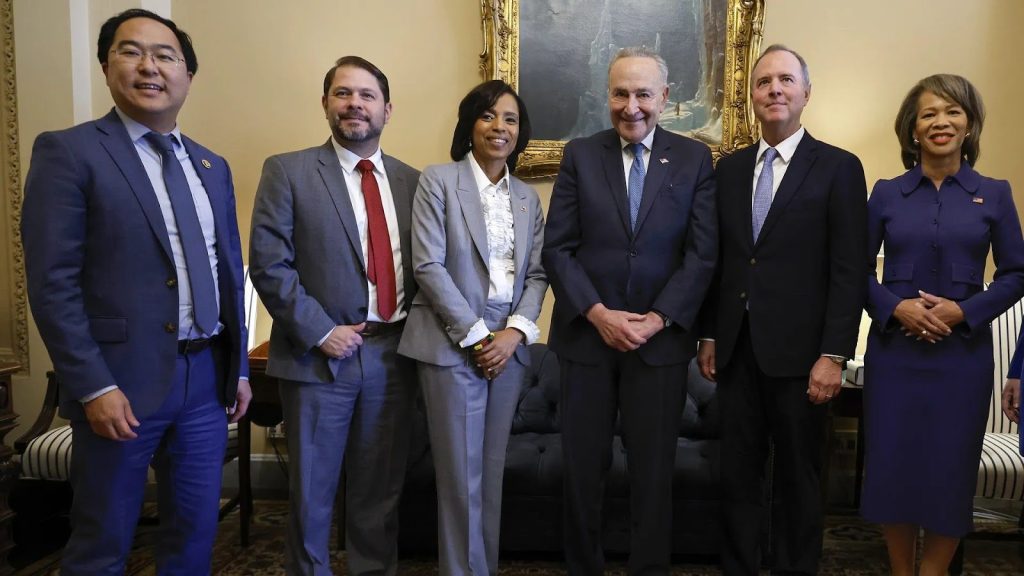
12 Senate Democrats Release Crypto Regulation Framework, End Party's Public SilenceU.S. Senate Majority Leader Charles Schumer (D-NY) meeting with newly elected Democratic Senators in his office. (Source: GettyImage)

Democratic Framework Details Key Provisions

The framework calls for closing regulatory gaps where no clear rules exist for trading and issuing digital assets, while creating pathways for issuers to provide adequate consumer disclosures.

Under their proposal, the Securities and Exchange Commission would be required to swiftly incorporate existing digital asset platforms into its regulatory framework with appropriate oversight mechanisms.

The plan also mandates that crypto platforms register with the Financial Crimes Enforcement Network (FinCEN) to prevent illicit finance activities and strengthen anti-money laundering safeguards.

Additionally, the framework ensures both the Commodity Futures Trading Commission and the SEC receive adequate staffing and funding to perform their expanded oversight duties in the digital asset space.

Eleven of the twelve senators previously voted for stablecoin legislation that passed Congress earlier this year, which means there has been some existing bipartisan cooperation on specific crypto regulations.

However, the framework specifically targets President Trump’s growing involvement in the crypto industry by proposing to block elected officials and their families from issuing, endorsing, or profiting from digital assets.

The senators also want commissioners from both parties sitting at the SEC and CFTC to create quorums for digital asset rulemaking, responding to Trump’s recent dismissals of Democratic officials at independent agencies.

“We also must ensure that digital assets are not used to finance illicit activities or to line the pockets of politicians and their families,” the statement emphasized.

Broader Context Shows Democrats Playing Catch-Up

This coordinated position emerges after significant internal Democratic divisions that became apparent during heated closed-door meetings in June, where party members clashed over crypto policy approaches.

The framework follows substantial Republican momentum on crypto legislation, including July’s major Senate draft by Banking Committee Chair Tim Scott that expanded from 35 to 182 pages in subsequent versions.

Senator Cynthia Lummis (R-WY) has earlier pushed for aggressive timelines to deliver market structure legislation to Trump’s desk before Thanksgiving, which at the time put pressure on Democratic engagement.

Meanwhile, crypto regulation has become a top congressional priority, with industry groups like Fairshake deploying $195 million in the 2024 elections to influence legislative outcomes.

The formation of a bipartisan Congressional Crypto Caucus in March 2025 showed growing institutional momentum for crypto-friendly legislation across party lines.

Yet negotiations around Senate crypto trading bills remain challenging, with Republicans uncertain about concessions needed to secure the seven Democratic votes required for passage.

The Democratic framework positions the party as seeking more restrictive approaches than Republicans, particularly regarding conflicts of interest and bipartisan oversight requirements.

Senator Elizabeth Warren (D-Mass.) continues opposing crypto legislation, arguing Republican proposals would create a “superhighway” for corruption in the Trump administration.

The framework now sets up negotiations between crypto-friendly Democrats and Republicans who must bridge policy differences on enforcement priorities, presidential conflicts, and regulatory jurisdiction.

With comprehensive crypto market structure legislation facing a more complex path than the bipartisan stablecoin bill that passed with substantial Democratic support, successful negotiations will determine whether major crypto regulation advances before 2025 ends.


Market Opportunity
PUBLIC Logo
PUBLIC Price(PUBLIC)
$0.01876
$0.01876$0.01876
-1.83%
USD
PUBLIC (PUBLIC) Live Price Chart
Disclaimer: The articles reposted on this site are sourced from public platforms and are provided for informational purposes only. They do not necessarily reflect the views of MEXC. All rights remain with the original authors. If you believe any content infringes on third-party rights, please contact service@support.mexc.com for removal. MEXC makes no guarantees regarding the accuracy, completeness, or timeliness of the content and is not responsible for any actions taken based on the information provided. The content does not constitute financial, legal, or other professional advice, nor should it be considered a recommendation or endorsement by MEXC.

You May Also Like

Mitosis Price Flashes a Massive Breakout Hope; Cup-And-Handle Pattern Signals MITO Targeting 50% Rally To $0.115305 Level

Mitosis Price Flashes a Massive Breakout Hope; Cup-And-Handle Pattern Signals MITO Targeting 50% Rally To $0.115305 Level

The analyst identified a formation of a cup-and-handle pattern on Mitosis’s chart, suggesting that MITO is preparing to see a looming price explosion.
Share
Blockchainreporter2026/01/18 09:00
Spot ETH ETFs Surge: Remarkable $48M Inflow Streak Continues

Spot ETH ETFs Surge: Remarkable $48M Inflow Streak Continues

BitcoinWorld Spot ETH ETFs Surge: Remarkable $48M Inflow Streak Continues The cryptocurrency world is buzzing with exciting news as Spot ETH ETFs continue to capture significant investor attention. For the second consecutive day, these innovative investment vehicles have seen substantial positive flows, reinforcing confidence in the Ethereum ecosystem. This consistent performance signals a growing appetite for regulated crypto exposure among traditional investors. What’s Fueling the Latest Spot ETH ETF Inflows? On September 19, U.S. Spot ETH ETFs collectively recorded a net inflow of an impressive $48 million. This marked another day of positive momentum, building on previous gains. Such figures are not just numbers; they represent tangible capital moving into the Ethereum market through accessible investment products. BlackRock’s ETHA Leads the Charge: A standout performer was BlackRock’s ETHA, which alone attracted a staggering $140 million in inflows. This substantial figure highlights the significant influence of major financial institutions in driving the adoption of crypto-backed ETFs. Institutional Confidence: The consistent inflows, particularly from prominent asset managers like BlackRock, suggest increasing institutional comfort and conviction in Ethereum’s long-term potential. Why Are Consecutive Spot ETH ETF Inflows So Significant? Two consecutive days of net inflows into Spot ETH ETFs are more than just a fleeting trend; they indicate a strengthening pattern of investor interest. This sustained positive movement suggests that initial hesitancy might be giving way to broader acceptance and strategic positioning within the digital asset space. Understanding the implications of these inflows is crucial: Market Validation: Continuous inflows serve as a strong validation for Ethereum as a legitimate and valuable asset class within traditional finance. Liquidity and Stability: Increased capital flowing into these ETFs can contribute to greater market liquidity and potentially enhance price stability for Ethereum itself, reducing volatility over time. Paving the Way: The success of Spot ETH ETFs could also pave the way for other cryptocurrency-based investment products, further integrating digital assets into mainstream financial portfolios. Are All Spot ETH ETFs Experiencing the Same Momentum? While the overall picture for Spot ETH ETFs is overwhelmingly positive, it’s important to note that individual fund performances can vary. The market is dynamic, and different funds may experience unique flow patterns based on investor preferences, fund structure, and underlying strategies. Mixed Performance: On the same day, Fidelity’s FETH saw net outflows of $53.4 million, and Grayscale’s Mini ETH recorded outflows of $11.3 million. Normal Market Fluctuations: These outflows, while notable, are a normal part of market dynamics. Investors might be rebalancing portfolios, taking profits, or shifting capital between different investment vehicles. The net positive inflow across the entire sector indicates that new money is still entering faster than it is leaving. This nuanced view helps us appreciate the complex interplay of forces shaping the market for Spot ETH ETFs. What’s Next for Spot ETH ETFs and the Ethereum Market? The sustained interest in Spot ETH ETFs suggests a potentially bright future for Ethereum’s integration into traditional financial markets. As more investors gain access to ETH through regulated products, the demand for the underlying asset could increase, influencing its price and overall market capitalization. For investors looking to navigate this evolving landscape, here are some actionable insights: Stay Informed: Keep an eye on daily inflow and outflow data, as these can provide early indicators of market sentiment. Understand Diversification: While Spot ETH ETFs offer exposure, remember the importance of a diversified investment portfolio. Monitor Regulatory Developments: The regulatory environment for cryptocurrencies is constantly evolving, which can impact the performance and availability of these investment products. Conclusion: A Promising Horizon for Ethereum The consistent positive net inflows into Spot ETH ETFs for a second straight day underscore a significant shift in how institutional and retail investors view Ethereum. This growing confidence, spearheaded by major players like BlackRock, signals a maturing market where digital assets are increasingly seen as viable components of a modern investment strategy. As the ecosystem continues to develop, these ETFs will likely play a crucial role in shaping Ethereum’s future trajectory and its broader acceptance in global finance. It’s an exciting time to watch the evolution of these groundbreaking financial instruments. Frequently Asked Questions (FAQs) Q1: What is a Spot ETH ETF? A Spot ETH ETF (Exchange-Traded Fund) is an investment product that directly holds Ethereum. It allows investors to gain exposure to Ethereum’s price movements without needing to buy, store, or manage the actual cryptocurrency themselves. Q2: Why are these recent inflows into Spot ETH ETFs important? The recent inflows signify growing institutional and retail investor confidence in Ethereum as an asset. Consistent positive flows can lead to increased market liquidity, potential price stability, and broader acceptance of cryptocurrencies in traditional financial portfolios. Q3: Which funds are leading the inflows for Spot ETH ETFs? On September 19, BlackRock’s ETHA led the group with a substantial $140 million in inflows, demonstrating strong interest from a major financial institution. Q4: Do all Spot ETH ETFs experience inflows simultaneously? No, not all Spot ETH ETFs experience inflows at the same time. While the overall sector may see net positive flows, individual funds like Fidelity’s FETH and Grayscale’s Mini ETH can experience outflows due to various factors such as rebalancing or profit-taking by investors. Q5: What does the success of Spot ETH ETFs mean for Ethereum’s price? Increased demand through Spot ETH ETFs can potentially drive up the price of Ethereum by increasing buying pressure on the underlying asset. However, numerous factors influence crypto prices, so it’s not a guaranteed outcome. If you found this article insightful, consider sharing it with your network! Your support helps us continue to provide valuable insights into the dynamic world of cryptocurrency. Spread the word and help others understand the exciting developments in Spot ETH ETFs! To learn more about the latest crypto market trends, explore our article on key developments shaping Ethereum institutional adoption. This post Spot ETH ETFs Surge: Remarkable $48M Inflow Streak Continues first appeared on BitcoinWorld.
Share
Coinstats2025/09/20 11:10
Trump imposes 10% tariffs on eight European countries over Greenland.

Trump imposes 10% tariffs on eight European countries over Greenland.

PANews reported on January 18th that, according to Jinshi News, on January 17th local time, US President Trump announced via social media that, due to the Greenland
Share
PANews2026/01/18 08:46