Multicoin co-founder: Is decentralization necessarily slower than centralization? PropAMM is breaking this prejudice.
Author: Kyle Samani , Co-founder of Multicoin
Compiled by: Azuma, Odaily Planet Daily
Editor's Note: Kyle Samani, the man most adept at promoting Solana and the former co-founder of Multicoin Capital who recently made a high-profile exit from the industry, is back!
Last night, Kyle Samani published a long Thread article on his personal X account. In the article, Kyle Samani once again used his persuasive "calling for trades" (not in a derogatory sense) rhetoric, focusing on "efficiency" as a weakness in the decentralized narrative, and explained in detail how PropAMM, which is currently being promoted in the Solana ecosystem, will catch up with or even surpass the traditional centralized model in terms of efficiency, proving that PropAMM is one of the most important innovations in the market's microstructure in recent years or even decades.
The following is the original text:
PropAMM is one of the most important innovations in market microstructure in recent years, and may even be one of the most important innovations in decades.
To help everyone understand this conclusion, let's first look at how market makers (MMs) quote prices on traditional centralized exchanges (CEXs).
Market makers typically co-locate with trading platforms. Each market maker runs its algorithm on one server and connects to another server, which in turn runs the trading platform's systems, via a network cable of uniform length (e.g., 50 meters).
Market makers and trading platforms constantly exchange large volumes of data. Whenever a market maker sends an order to the trading platform—whether it's a limit order, a canceled order, or a market order—the trading platform needs to broadcast this information to all other market makers; then the other market makers will resend their orders based on the new information; and so on, repeating indefinitely .
The following is a simple diagram.
Now let's take a look at how PropAMM works on the Solana mainnet.
The beauty of PropAMM on Solana is that the blockchain itself directly "hosts" the market maker algorithm. This means that the system no longer needs to send billions of messages back and forth between market makers and trading platforms; the market-making algorithm will run directly on the same physical machine as the trading platform.
The new diagram is shown below. (Yes, only the Solana blockchain is needed!)
There's a long-standing argument in the cryptocurrency industry that decentralized systems are inherently slower (with higher latency) than centralized systems because they require communication between nodes around the world.
However, if you look at this issue in a different way, on-chain custodial algorithms may actually have lower latency than centralized trading platforms in traditional finance.
Why is this the case? The reason lies in the fact that the latency required for PropAMM to update prices involves only the movement of electrons within the same physical silicon wafer. For example, if a previous market order causes a change in the SOL-USD price, this information is immediately visible to all PropAMMs and used to price the next market order. Everything happens within the same silicon wafer; there is no longer a need for bidirectional communication between servers.
It should be noted that PropAMM does require frequent oracle updates, but this is not a problem and does not change the overall facts I described above.
The most crucial point remains: when the trading platform—in the case above, the Solana blockchain—directly hosts the PropAMM algorithm, the market maker's pricing changes in real time within the same physical silicon wafer.
PropAMM has become the dominant mechanism for SOL-USDC spot pricing on Solana, with narrower spreads than any major centralized exchange. I expect this market structure to become the dominant model for on-chain trading this year, including spot, perpetual contracts, and even prediction markets.
The biggest challenge of PropAMM is that there is currently no way to guarantee that the taker will always achieve the best execution, because:
• All PropAMM algorithms are not publicly available (which is actually reasonable, since traditional market-making algorithms are also proprietary).
• When routing transactions between multiple PropAMMs, the results are non-deterministic.
However, this problem is solvable. I expect all relevant aggregator teams to launch solutions this year, such as Jupiter and dFlow on the spot side, and Phoenix on the contract side.
The current PropAMM is not yet fully optimized and is still subject to various limitations of the Solana blockchain itself. This year, Solana will launch a series of major upgrades that will significantly improve the performance of PropAMM, including:
1. Higher CU (computing units) limit per transaction, and larger transaction size;
2. Higher CU limit per block;
3. Alpenglow: Reduces slot time from 400ms to 100–150ms;
4. DoubleZero: Reduces global network latency;
5. Application-controlled execution;
6. Multiple concurrent leaders.
If PropAMM on the Solana mainnet already offers narrower price ranges than any centralized exchange (CEX) even without these upgrades, one can imagine how powerful they will become as these upgrades are rolled out.
Related reading: Kyle Samani's transformation from "best crypto investor of all time" to a mirror image of ten years ago.


You May Also Like
Stake.com Built The Crypto Casino Name. Bet365 Built The Sportsbook Name. ZunaBet Is Building What Comes After Both.
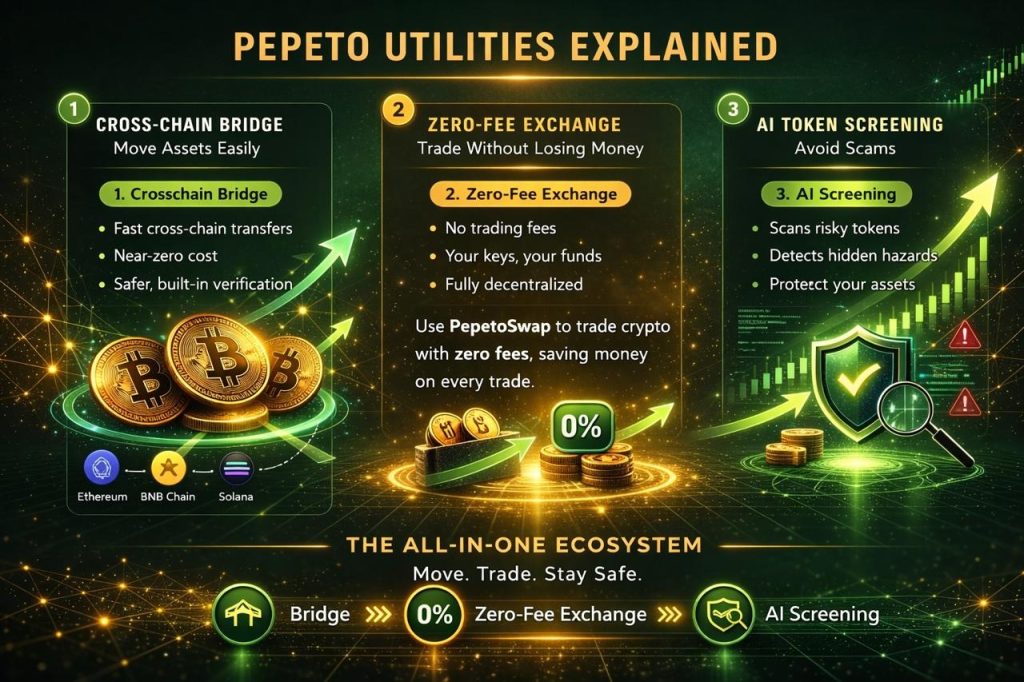
Shiba Inu Price Prediction Weakens as AI Token Sector Surges 30% to $19B While Pepeto SHIB and TAO Take Different Paths