11 Billion Transactions and 26% Exclusion: The Infrastructure Gap the CBN Wants to Close
With 11 billion payments processed and a clear-eyed view of who still sits outside the system, the CBN is laying the groundwork for inclusion at scale and opening up one of Africa’s most significant untapped markets in the process.
Nigeria’s payments infrastructure is among the most advanced in the world. But the digital rails powering that system tell only part of the story.
According to the Central Bank of Nigeria’s Fintech Policy Insight Report, released in February 2026, nearly 11 billion transactions were processed through the NIBSS Instant Payment (NIP) platform in 2024, more than double the roughly 5 billion transactions recorded in 2022. The scale places Nigeria among the most active real-time payments markets globally and underscores the strength of its financial infrastructure.
Yet even as digital payments expand rapidly, financial access remains uneven. The report notes that 26% of Nigerian adults remain financially excluded, with exclusion rising to 37% in rural areas and nearly 47% in northern Nigeria.
For policymakers, that contrast reveals the next challenge for Nigeria’s fintech ecosystem: building the infrastructure around payments that allows innovation to reach the people who need it most.
Nigeria’s payments rails are already world-class
Nigeria was an early mover in real-time payments. In 2011, the country rolled out a nationwide instant payments system years before similar infrastructure appeared in markets like the United States. Today, the NIP platform processes a growing share of Nigeria’s electronic transactions and has become the backbone of everyday financial activity.
This infrastructure has helped power the growth of Nigeria’s fintech sector, as fintech startups attracted over $215 million in venture funding in 2025, and the country continues to host one of Africa’s largest fintech ecosystems. But while payments have scaled, structural bottlenecks still limit the reach of digital financial services.
The report highlights four major constraints:
- The cost and accessibility of digital identity verification
- Gaps in system interoperability
- Infrastructure stress during peak transaction periods
- Regulatory constraints affecting inclusive lending
Each affects how effectively fintech companies can serve underserved communities.
The infrastructure problem behind financial exclusion
Digital identity remains one of the biggest barriers to financial inclusion. Fintech firms rely on identity systems such as the Bank Verification Number (BVN) and the National Identification Number (NIN) to verify customers and meet anti-money laundering requirements. While these systems exist, the report notes that integration costs and system reliability can still pose challenges for fintechs trying to scale services.
Stakeholders participating in the CBN’s fintech survey cited digital identity integration and limited credit history data as key obstacles when trying to reach excluded populations.
Interoperability presents another challenge. While Nigeria’s payments infrastructure is robust, fintechs still face fragmented connections across APIs, data-sharing systems, and credit infrastructure. Without reliable interoperability, services such as credit scoring, account aggregation, and cross-platform payments become harder to deploy at scale. The result is a system where payments work well, but the broader financial ecosystem still faces friction.
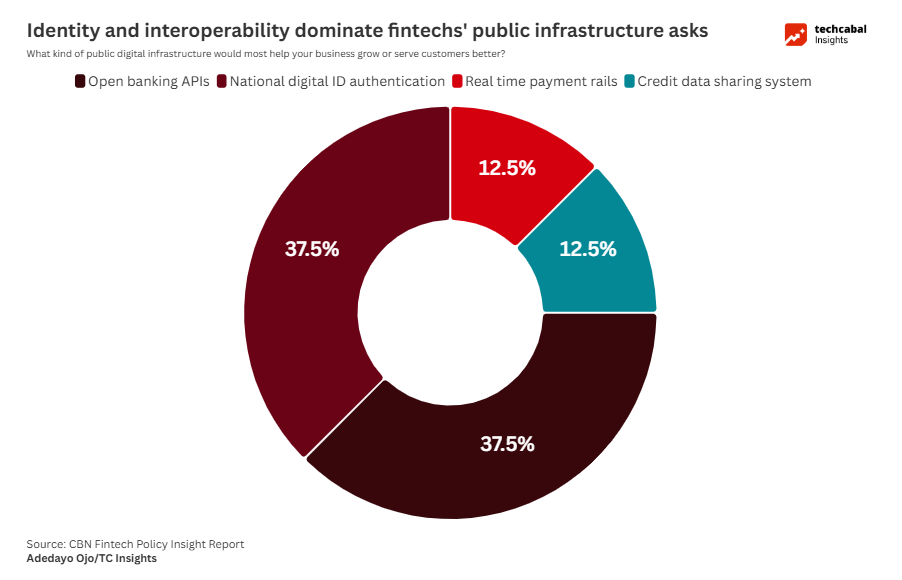
Survey responses highlight where improvements in public digital infrastructure could have the greatest impact. Open banking APIs and national digital ID authentication were each identified by 37.5% of fintech operators as the most important infrastructure enablers.
Unlocking the next phase of fintech growth
Another policy debate centres on lending. Payment Service Banks (PSBs), many backed by telecommunications companies, are currently restricted from offering credit. Some ecosystem participants believe easing these restrictions or introducing a dedicated digital banking licence could help fintech firms extend credit to underserved individuals and small businesses.
This reflects a broader shift in Nigeria’s fintech ecosystem. As payments infrastructure matures, the next frontier for innovation is moving beyond transactions toward savings, credit, and financial tools that support economic growth.


You May Also Like

Nearly All Top Bitcoin Traders on Hyperliquid Are Long Today

House Panel Urges Trump to Nominate CFTC Members Under CLARITY Act