Polygon has restored full network stability after a software bug temporarily disrupted milestone finality and forced some nodes offline, according to an official incident report published on the project’s status page. The issue began early Wednesday when a bug affecting Bor, Polygon’s block producer, and Erigon, its data access layer, caused disruptions across parts of the ecosystem. While the blockchain itself continued to produce blocks, some Remote Procedure Call (RPC) services and validators halted, forcing providers to rewind to the last finalized block and resynchronize. Polygon Executes Emergency Hard Fork to Resolve Finality Bug Polygon engineers confirmed the bug was preventing node progress under certain configurations, though restarting affected nodes resolved the issue for several validators and RPC providers. At the time, Polygonscan, the network’s block explorer, showed no block updates for more than five hours. Polygon later explained that Polygonscan’s nodes had halted after a faulty milestone produced by Heimdall, the project’s consensus engine. A company representative said that the team was working with Polygonscan to switch to functioning nodes that had not halted, stressing that block production remained live. “Checkpoint finality is working as expected within 15 minutes,” the team said in an update at 08:52 UTC, sharing an alternative link where real-time block production could be tracked. Analysis revealed the problem stemmed from Heimdall’s finality gadget, which is responsible for producing milestones every few seconds. Although checkpoints to Ethereum were still being posted every 20 minutes, milestones, which provide faster, deterministic finality, were not being processed. This left local fast finality delayed even as the main chain continued adding blocks. To address the problem, Polygon rolled out emergency updates: Bor version 2.2.11-beta2 and Heimdall version 0.3.1, the latter requiring a hard fork. The upgrade, executed at 3 p.m. UTC, deleted the faulty milestone and purged it from node databases. Polygon confirmed soon after that the hard fork was successfully completed and that both milestones and checkpoints were once again finalizing normally.Source: Polygonscan “The hard fork has been successfully completed, and milestones are now processing normally along with state sync. Checkpoints are going through, and consensus finalization has been fully restored on Polygon PoS,” the team wrote in a statement on X. Polygon Foundation co-founder and CEO Sandeep Nailwal later explained that the disruption originated from a faulty milestone proposal that pushed some Bor nodes onto divergent forks. This triggered short-term instability not accounted for in the system. He emphasized that while checkpoint finality on Ethereum had remained active throughout, local milestone finality was delayed. “Milestones are a lightweight alternative to checkpoints, enabling faster, deterministic finality for transactions, even before a checkpoint is submitted to Ethereum,” Nailwal said. “The root cause came from a faulty milestone proposal. We rolled out fixes on both Heimdall and Bor. With these fixes now live, nodes are not stuck, and consensus is finalizing normally.” Nailwal described the event as part of the growing pains of scaling Polygon’s proof-of-stake chain but said each challenge strengthens its resilience. “There will be growing pains with any ambitious upgrade. But each one makes Polygon PoS stronger on our road to GigaGas throughput,” he said, adding that more upgrades are planned to boost capacity and reliability. Polygon engineers continue to monitor the network to ensure stability and are investigating how the faulty milestone was introduced. Despite the temporary setback, the network has resumed normal operations, with blocks, milestones, and checkpoints processing in real time Polygon’s Reliability Questioned After Finality Bug, TVL Down 87% From Peak Polygon developers have deployed a hard fork to fix a bug that temporarily halted block production on its proof-of-stake chain, restoring the network after several hours of disruption. The issue, tied to transaction finality, left exchanges and DeFi protocols unable to process deposits or withdrawals as they waited for confirmation guarantees. The outage drew criticism from Polymarket traders, who argued that a blockchain hosting one of the sector’s largest prediction markets should not face such problems. “It might have gone unnoticed because no one was using it, but this has been going on for about two hours,” one trader posted, pointing to the risk of reversals during the downtime. TokenPocket, a multichain stablecoin wallet, also paused Polygon transactions after observing that no new blocks had been finalized for over an hour. The incident comes just weeks after Polygon’s Heimdall v2 upgrade, designed to cut finality times to five seconds and improve validator coordination. That update followed the July 1 Bhilai hard fork, which raised throughput to 1,000 transactions per second and integrated Ethereum’s Pectra EIPs. Despite these efforts, network reliability remains a concern, as Polygon’s total value locked has dropped from a $9.43 billion peak in 2021 to $1.2 billion today, per DeFiLlama. The chain’s native token, POL, has fallen 3.4% on the day and is down 30% year-to-date, trading at $0.27. Meanwhile, another Ethereum Layer-2, Linea, faced a separate outage earlier today when its mainnet sequencer stalled, causing a 67-minute pause in block production. While Linea has already deployed a fix, developers are questioning whether the two disruptions are linked. Linea has not disclosed the cause of its downtime. Both events highlight the fragility of scaling networks that have become essential to Ethereum’s broader ecosystemPolygon has restored full network stability after a software bug temporarily disrupted milestone finality and forced some nodes offline, according to an official incident report published on the project’s status page. The issue began early Wednesday when a bug affecting Bor, Polygon’s block producer, and Erigon, its data access layer, caused disruptions across parts of the ecosystem. While the blockchain itself continued to produce blocks, some Remote Procedure Call (RPC) services and validators halted, forcing providers to rewind to the last finalized block and resynchronize. Polygon Executes Emergency Hard Fork to Resolve Finality Bug Polygon engineers confirmed the bug was preventing node progress under certain configurations, though restarting affected nodes resolved the issue for several validators and RPC providers. At the time, Polygonscan, the network’s block explorer, showed no block updates for more than five hours. Polygon later explained that Polygonscan’s nodes had halted after a faulty milestone produced by Heimdall, the project’s consensus engine. A company representative said that the team was working with Polygonscan to switch to functioning nodes that had not halted, stressing that block production remained live. “Checkpoint finality is working as expected within 15 minutes,” the team said in an update at 08:52 UTC, sharing an alternative link where real-time block production could be tracked. Analysis revealed the problem stemmed from Heimdall’s finality gadget, which is responsible for producing milestones every few seconds. Although checkpoints to Ethereum were still being posted every 20 minutes, milestones, which provide faster, deterministic finality, were not being processed. This left local fast finality delayed even as the main chain continued adding blocks. To address the problem, Polygon rolled out emergency updates: Bor version 2.2.11-beta2 and Heimdall version 0.3.1, the latter requiring a hard fork. The upgrade, executed at 3 p.m. UTC, deleted the faulty milestone and purged it from node databases. Polygon confirmed soon after that the hard fork was successfully completed and that both milestones and checkpoints were once again finalizing normally.Source: Polygonscan “The hard fork has been successfully completed, and milestones are now processing normally along with state sync. Checkpoints are going through, and consensus finalization has been fully restored on Polygon PoS,” the team wrote in a statement on X. Polygon Foundation co-founder and CEO Sandeep Nailwal later explained that the disruption originated from a faulty milestone proposal that pushed some Bor nodes onto divergent forks. This triggered short-term instability not accounted for in the system. He emphasized that while checkpoint finality on Ethereum had remained active throughout, local milestone finality was delayed. “Milestones are a lightweight alternative to checkpoints, enabling faster, deterministic finality for transactions, even before a checkpoint is submitted to Ethereum,” Nailwal said. “The root cause came from a faulty milestone proposal. We rolled out fixes on both Heimdall and Bor. With these fixes now live, nodes are not stuck, and consensus is finalizing normally.” Nailwal described the event as part of the growing pains of scaling Polygon’s proof-of-stake chain but said each challenge strengthens its resilience. “There will be growing pains with any ambitious upgrade. But each one makes Polygon PoS stronger on our road to GigaGas throughput,” he said, adding that more upgrades are planned to boost capacity and reliability. Polygon engineers continue to monitor the network to ensure stability and are investigating how the faulty milestone was introduced. Despite the temporary setback, the network has resumed normal operations, with blocks, milestones, and checkpoints processing in real time Polygon’s Reliability Questioned After Finality Bug, TVL Down 87% From Peak Polygon developers have deployed a hard fork to fix a bug that temporarily halted block production on its proof-of-stake chain, restoring the network after several hours of disruption. The issue, tied to transaction finality, left exchanges and DeFi protocols unable to process deposits or withdrawals as they waited for confirmation guarantees. The outage drew criticism from Polymarket traders, who argued that a blockchain hosting one of the sector’s largest prediction markets should not face such problems. “It might have gone unnoticed because no one was using it, but this has been going on for about two hours,” one trader posted, pointing to the risk of reversals during the downtime. TokenPocket, a multichain stablecoin wallet, also paused Polygon transactions after observing that no new blocks had been finalized for over an hour. The incident comes just weeks after Polygon’s Heimdall v2 upgrade, designed to cut finality times to five seconds and improve validator coordination. That update followed the July 1 Bhilai hard fork, which raised throughput to 1,000 transactions per second and integrated Ethereum’s Pectra EIPs. Despite these efforts, network reliability remains a concern, as Polygon’s total value locked has dropped from a $9.43 billion peak in 2021 to $1.2 billion today, per DeFiLlama. The chain’s native token, POL, has fallen 3.4% on the day and is down 30% year-to-date, trading at $0.27. Meanwhile, another Ethereum Layer-2, Linea, faced a separate outage earlier today when its mainnet sequencer stalled, causing a 67-minute pause in block production. While Linea has already deployed a fix, developers are questioning whether the two disruptions are linked. Linea has not disclosed the cause of its downtime. Both events highlight the fragility of scaling networks that have become essential to Ethereum’s broader ecosystem

Polygon Hard Fork Fixes Bug That Knocked Nodes Offline — Network Back Online

2025/09/11 07:59

Polygon has restored full network stability after a software bug temporarily disrupted milestone finality and forced some nodes offline, according to an official incident report published on the project’s status page.

The issue began early Wednesday when a bug affecting Bor, Polygon’s block producer, and Erigon, its data access layer, caused disruptions across parts of the ecosystem.

While the blockchain itself continued to produce blocks, some Remote Procedure Call (RPC) services and validators halted, forcing providers to rewind to the last finalized block and resynchronize.

Polygon Executes Emergency Hard Fork to Resolve Finality Bug

Polygon engineers confirmed the bug was preventing node progress under certain configurations, though restarting affected nodes resolved the issue for several validators and RPC providers.

At the time, Polygonscan, the network’s block explorer, showed no block updates for more than five hours. Polygon later explained that Polygonscan’s nodes had halted after a faulty milestone produced by Heimdall, the project’s consensus engine.

A company representative said that the team was working with Polygonscan to switch to functioning nodes that had not halted, stressing that block production remained live.

“Checkpoint finality is working as expected within 15 minutes,” the team said in an update at 08:52 UTC, sharing an alternative link where real-time block production could be tracked.

Analysis revealed the problem stemmed from Heimdall’s finality gadget, which is responsible for producing milestones every few seconds.

Although checkpoints to Ethereum were still being posted every 20 minutes, milestones, which provide faster, deterministic finality, were not being processed. This left local fast finality delayed even as the main chain continued adding blocks.

To address the problem, Polygon rolled out emergency updates: Bor version 2.2.11-beta2 and Heimdall version 0.3.1, the latter requiring a hard fork. The upgrade, executed at 3 p.m. UTC, deleted the faulty milestone and purged it from node databases.

Polygon confirmed soon after that the hard fork was successfully completed and that both milestones and checkpoints were once again finalizing normally.
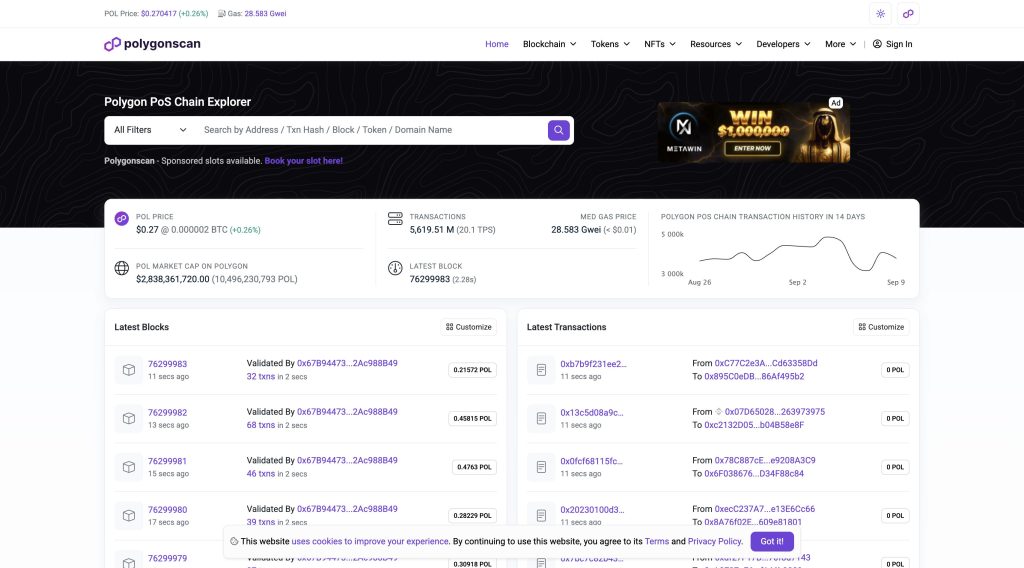
Source: Polygonscan

“The hard fork has been successfully completed, and milestones are now processing normally along with state sync. Checkpoints are going through, and consensus finalization has been fully restored on Polygon PoS,” the team wrote in a statement on X.

Polygon Foundation co-founder and CEO Sandeep Nailwal later explained that the disruption originated from a faulty milestone proposal that pushed some Bor nodes onto divergent forks. This triggered short-term instability not accounted for in the system.

He emphasized that while checkpoint finality on Ethereum had remained active throughout, local milestone finality was delayed.

“Milestones are a lightweight alternative to checkpoints, enabling faster, deterministic finality for transactions, even before a checkpoint is submitted to Ethereum,” Nailwal said. “The root cause came from a faulty milestone proposal. We rolled out fixes on both Heimdall and Bor.

With these fixes now live, nodes are not stuck, and consensus is finalizing normally.”

Nailwal described the event as part of the growing pains of scaling Polygon’s proof-of-stake chain but said each challenge strengthens its resilience. “There will be growing pains with any ambitious upgrade.

But each one makes Polygon PoS stronger on our road to GigaGas throughput,” he said, adding that more upgrades are planned to boost capacity and reliability.

Polygon engineers continue to monitor the network to ensure stability and are investigating how the faulty milestone was introduced.

Despite the temporary setback, the network has resumed normal operations, with blocks, milestones, and checkpoints processing in real time

Polygon’s Reliability Questioned After Finality Bug, TVL Down 87% From Peak

Polygon developers have deployed a hard fork to fix a bug that temporarily halted block production on its proof-of-stake chain, restoring the network after several hours of disruption.

The issue, tied to transaction finality, left exchanges and DeFi protocols unable to process deposits or withdrawals as they waited for confirmation guarantees.

The outage drew criticism from Polymarket traders, who argued that a blockchain hosting one of the sector’s largest prediction markets should not face such problems. “It might have gone unnoticed because no one was using it, but this has been going on for about two hours,” one trader posted, pointing to the risk of reversals during the downtime.

TokenPocket, a multichain stablecoin wallet, also paused Polygon transactions after observing that no new blocks had been finalized for over an hour.

The incident comes just weeks after Polygon’s Heimdall v2 upgrade, designed to cut finality times to five seconds and improve validator coordination.

That update followed the July 1 Bhilai hard fork, which raised throughput to 1,000 transactions per second and integrated Ethereum’s Pectra EIPs. Despite these efforts, network reliability remains a concern, as Polygon’s total value locked has dropped from a $9.43 billion peak in 2021 to $1.2 billion today, per DeFiLlama.

The chain’s native token, POL, has fallen 3.4% on the day and is down 30% year-to-date, trading at $0.27.

Meanwhile, another Ethereum Layer-2, Linea, faced a separate outage earlier today when its mainnet sequencer stalled, causing a 67-minute pause in block production.

While Linea has already deployed a fix, developers are questioning whether the two disruptions are linked. Linea has not disclosed the cause of its downtime.

Both events highlight the fragility of scaling networks that have become essential to Ethereum’s broader ecosystem.

Disclaimer: The articles reposted on this site are sourced from public platforms and are provided for informational purposes only. They do not necessarily reflect the views of MEXC. All rights remain with the original authors. If you believe any content infringes on third-party rights, please contact service@support.mexc.com for removal. MEXC makes no guarantees regarding the accuracy, completeness, or timeliness of the content and is not responsible for any actions taken based on the information provided. The content does not constitute financial, legal, or other professional advice, nor should it be considered a recommendation or endorsement by MEXC.

You May Also Like

USD mixed ahead of key FOMC decision – Scotiabank

USD mixed ahead of key FOMC decision – Scotiabank

The post USD mixed ahead of key FOMC decision – Scotiabank appeared on BitcoinEthereumNews.com. The US Dollar (USD) is narrowly mixed in quiet trade as investors await this week’s key event—Wednesday’s FOMC decision, Scotiabank’s Chief FX Strategists Shaun Osborne and Eric Theoret report. Markets weigh Fed cuts against sticky inflation “Stocks are churning in tight ranges while global bonds are softer as investors consider fading rate cut prospects outside of the US. European bond yields are up 4-5bps following hawkish comments from the ECB Governor Schnabel with Friday’s jump in Canadian bond yields adding to that momentum.” “The Fed is widely expected to cut rates this week, however, and give markets a little more insight into how a deeply divided policy-making body expects the key rate changes to unfold in the year ahead via updated dots and economic forecasts. More rate cuts are expected in 2026 but markets are having to balance expectations between sticky US inflation and the expected dovish shift in the Fed leadership next year.” “”The USD retains a sluggish undertone, meanwhile, and may need to find some hawkish nuggets in the Fed’s communications this week to avoid slipping further in what remains a weak period of the year for the USD overall from a seasonal point of view. The DXY is consolidating on the charts, with a tight trading range (potential bear flag pattern) developing between 98.8 (bear trigger) and 99.2 (short-term resistance).” Source: https://www.fxstreet.com/news/usd-mixed-ahead-of-key-fomc-decision-scotiabank-202512081336
Share
BitcoinEthereumNews2025/12/09 00:14
Risk back on the table as crypto ETFs bounce back

Risk back on the table as crypto ETFs bounce back

The post Risk back on the table as crypto ETFs bounce back appeared on BitcoinEthereumNews.com. This is a segment from the 0xResearch newsletter. To read full editions, subscribe. Today, we break down the BTC move over the past week, how ETFs have seen net inflows for the first time in nearly four weeks, and application and chain revenue. We also look into who President Trump’s next Federal Reserve Chair nominee might be. Indices BTC bounced off $85,000 lows, and is back up to $92,000. Over the past three weeks, BTC has increased 5%, with significant volatility throughout. In particular, BTC has been underperforming through the EU session, while outperforming in the US and APAC sessions. Over the past week, oracles, lending and Ethereum ecosystem tokens performed well, with each up just over 4%. Crypto equities performed the best, up 6.7%, primarily due to outperformance by HOOD.   The Nasdaq 100 (+1.70%) and S&P 500 (+0.78%) continue to grind up, while Gold underperforms slightly (-0.85%). In terms of worst-performing, gaming has outperformed significantly toward the downside, with -23% returns over the past week. LGCT was the worst performer, and declined in price by -75% over the past week.  Charts for The Week Odds have surged (up to 78% on Kalshi) that Kevin Hassett will be President Trump’s next Federal Reserve chair nominee, an announcement Trump recently confirmed is imminent. Hassett, a close White House ally, is favored because he aligns with the president’s demand for much lower interest rates to provide cheaper consumer loans and mortgages. Bitcoin ETF flows reversed sharply in November, posting significant net outflows after a steady run of inflows from May through October. The month saw roughly $3.46 billion in redemptions, completely erasing the $3.42 billion in new inflows seen last month and the worst outflows since February 2025 ($3.56 billion). The reversal highlights how quickly sentiment deteriorated despite months of strong accumulation.…
Share
BitcoinEthereumNews2025/12/09 00:04