Born in ’88, I remember life before constant connectivity. I love tech, I use it every day, and I push it forward in my work—but lately, convenience feels less like progress and more like control. Every app, device, and “agree to terms” chips away at our privacy, patience, and independence. We’re building a digital cage, and the scary part is how comfortable it feels inside. The question isn’t whether tech will define the next twenty years—it will. The question is whether we’ll recognize ourselves when it does.Born in ’88, I remember life before constant connectivity. I love tech, I use it every day, and I push it forward in my work—but lately, convenience feels less like progress and more like control. Every app, device, and “agree to terms” chips away at our privacy, patience, and independence. We’re building a digital cage, and the scary part is how comfortable it feels inside. The question isn’t whether tech will define the next twenty years—it will. The question is whether we’ll recognize ourselves when it does.

Convenience: The Leading Cause of Death in 2045?

I was born in '88, back when phones had cords and patience was mandatory. You wanted to talk to someone? Pick up the receiver, listen to the dial tone, carefully twist the rotary dial, and hope you didn't misdial. The pinnacle of tech back then was borrowing change for a payphone or memorizing a neighbor's number. Thrilling stuff.

I remember life before computers and cell phones—barely, but I do. A time when convenience meant knowing your neighbor, keeping a paper map in the glove box, or flipping through thick paper phone books. It was slower, imperfect, human.

Fast-forward a decade or so, and cell phones appeared. Big, brick-like miracles that somehow made life feel smaller, faster, and, honestly, slightly terrifying. Then came smartphones, apps, notifications, and the endless ping of connection. Now convenience means tapping a screen. Groceries at the door, directions recalculated in real time, answers from a glowing rectangle before you even finish the question.

And I'll be honest: I like it. I use it. I push it. My work depends on tech, and I get a kick out of new gadgets and digital tools. Almost every industry—from healthcare to grocery stores—relies on systems I helped learn to love. I'm not just a consumer; I'm part of the machine. And yet, the more I embrace it, the more surreal it all feels.
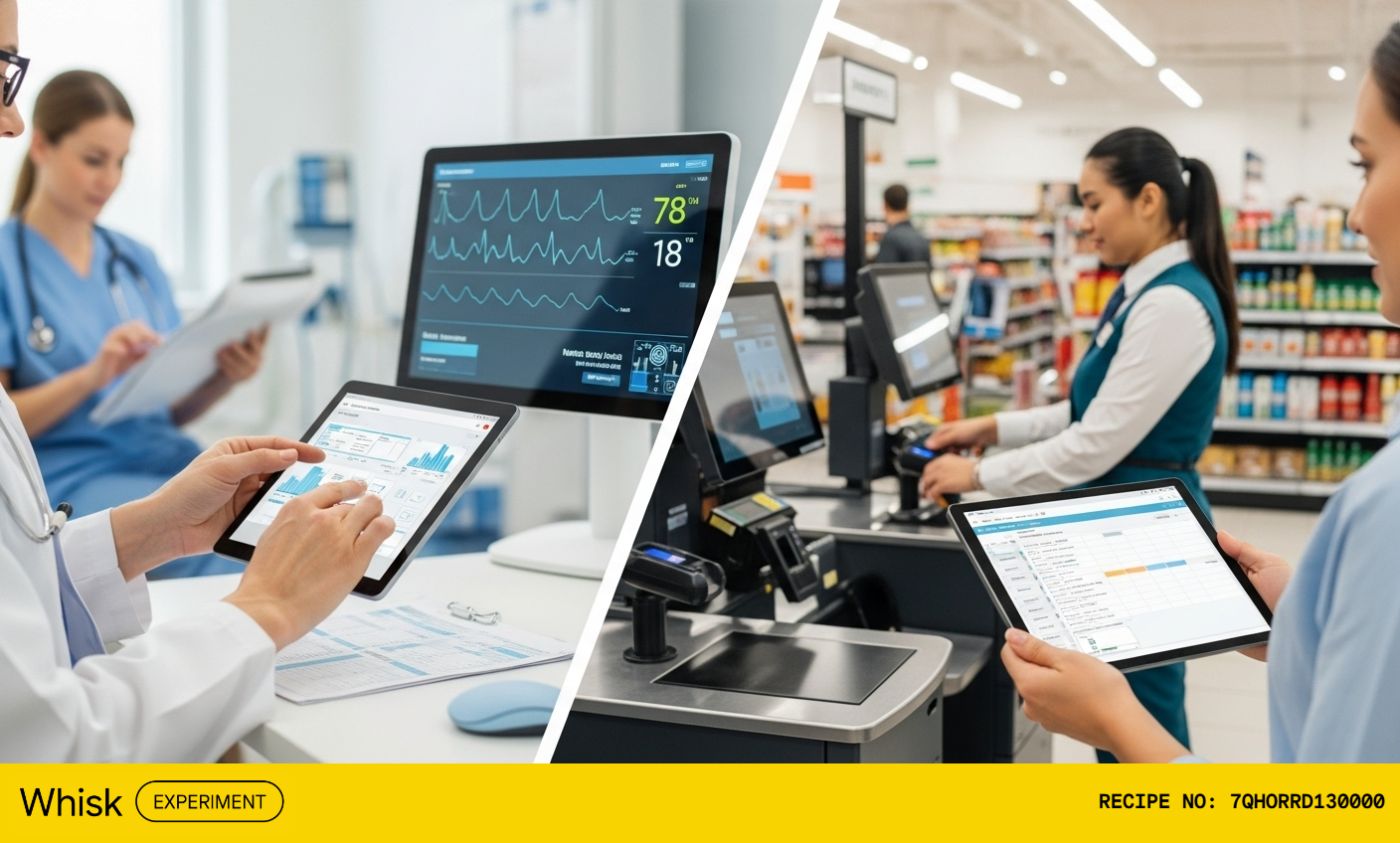
Digital systems in healthcare to grocery stores

\ \ But lately, it's started to feel different. More sinister. Like a charming but sly roommate who rearranges your furniture while you sleep. Less like innovation and more like control dressed up as progress. Every app, every device, every "agree to terms" isn't just about making life easier—it's about collecting pieces of us. Our habits, our movements, our relationships, our desires. Convenience is the bait. Data is the catch. Convenience has become the leash.

The deeper I got into cryptocurrency, decentralized finance, and governance, the more clearly I saw it. Tech isn't just neutral infrastructure. It's shaping power, shaping society, shaping what it even means to be free. And the trade we're making for comfort is bigger than most people realize.

And here's the kicker: I think I might be the exact generation historians will blame. One day, future humans will squint at the past and mutter, "Wait, what were y'all doing? Did you not see this coming?" We grew up analog, built the digital, and loved it so much we barely noticed the trade-offs: patience, privacy, independence, the occasional "just sitting and thinking" moment.

Ten, twenty years down this road, what does life look like? Maybe we won't own our devices—maybe they'll own us. Maybe we'll forget how to function without being connected. Maybe algorithms won't just recommend what we watch or buy, but quietly nudge how we think, who we trust, and what we believe. Convenience will have become dependency. Dependency will have become obedience.

That's what keeps me uneasy. Kids growing up now may never know what it's like to be unreachable. To sit in boredom long enough to create something. To solve a problem without googling it. To have privacy that isn't conditional. Those muscles—patience, resilience, curiosity—atrophy fast when every need is instantly answered.

And here I am, stuck in the contradiction. I love tech. I need it. I build with it. But I also feel the bars closing in, disguised as sleek updates and seamless integrations. Every gadget I use, every workflow I streamline, every convenience I celebrate comes with a tiny pang of guilt. It's not yet a dystopia; it's a slow creep. The hum of progress is seductive. I push tech forward, I work with it, I marvel at it—but sometimes I swear I can feel it eyeing me like, "Soon…"

We're walking into a digital cage, and the scariest part is how comfortable it feels inside. The digital cage isn't coming; it's here, one seamless integration at a time. And the humor—or maybe tragedy—is that I'm helping build it, probably while laughing at a meme about someone else trapped inside it.
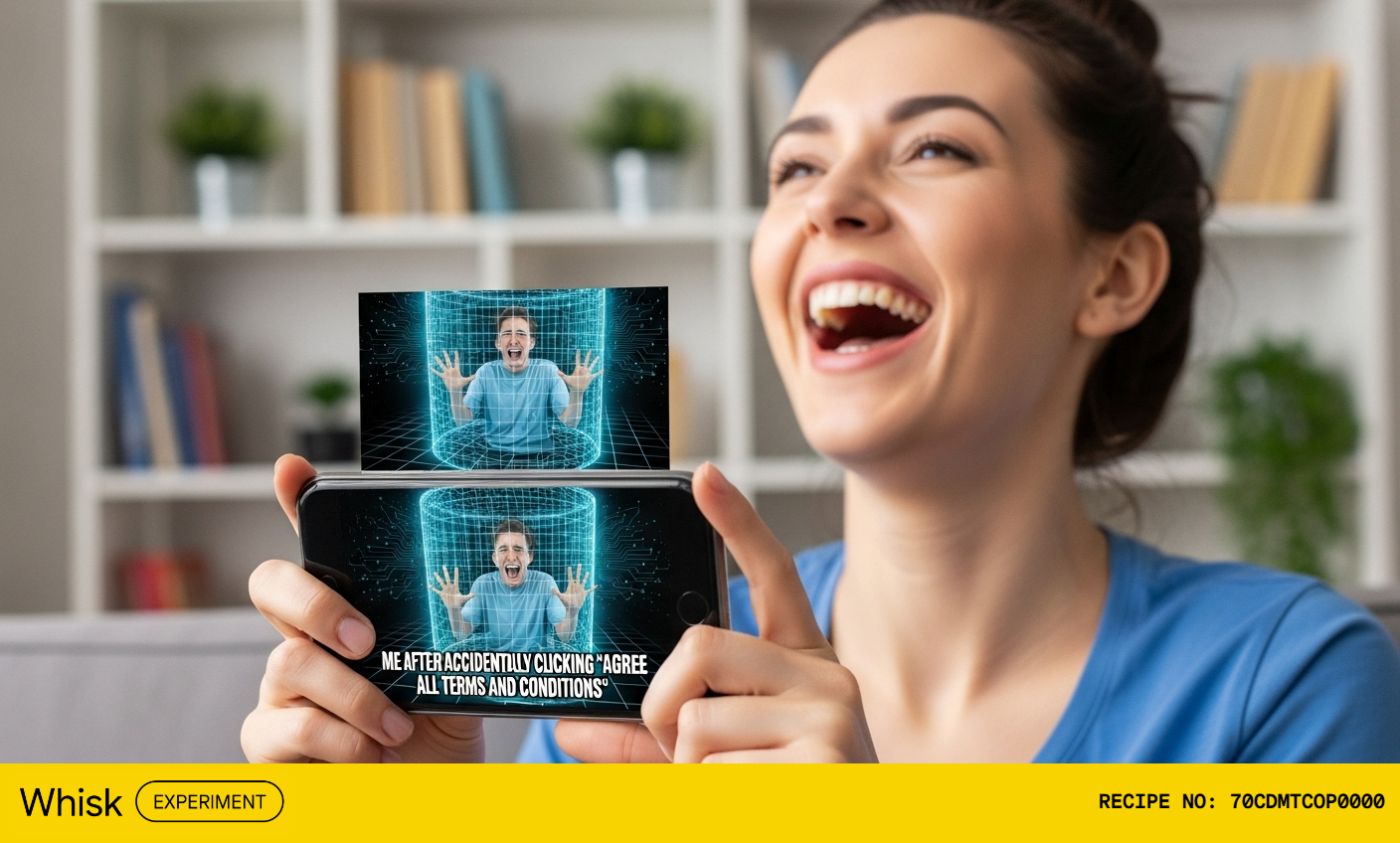
Woman laugh at a meme of someone else trapped in a digital cage

\ The future doesn't arrive all at once. It creeps in through convenience. The question isn't whether tech will define the next twenty years—it will. The question is whether we'll still recognize ourselves when it does.


Market Opportunity
Threshold Logo
Threshold Price(T)
$0.010042
$0.010042$0.010042
-0.02%
USD
Threshold (T) Live Price Chart
Disclaimer: The articles reposted on this site are sourced from public platforms and are provided for informational purposes only. They do not necessarily reflect the views of MEXC. All rights remain with the original authors. If you believe any content infringes on third-party rights, please contact service@support.mexc.com for removal. MEXC makes no guarantees regarding the accuracy, completeness, or timeliness of the content and is not responsible for any actions taken based on the information provided. The content does not constitute financial, legal, or other professional advice, nor should it be considered a recommendation or endorsement by MEXC.

You May Also Like

Digitap Raises Over $4M: A Comparison with DeepSnitch AI

Digitap Raises Over $4M: A Comparison with DeepSnitch AI

Both DeepSnitch AI and Digitap ($TAP) have been highlighted within some crypto communities for their distinct approaches. Although the two coins take a very different
Share
Crypto Ninjas2026/01/18 23:42
China Blocks Nvidia’s RTX Pro 6000D as Local Chips Rise

China Blocks Nvidia’s RTX Pro 6000D as Local Chips Rise

The post China Blocks Nvidia’s RTX Pro 6000D as Local Chips Rise appeared on BitcoinEthereumNews.com. China Blocks Nvidia’s RTX Pro 6000D as Local Chips Rise China’s internet regulator has ordered the country’s biggest technology firms, including Alibaba and ByteDance, to stop purchasing Nvidia’s RTX Pro 6000D GPUs. According to the Financial Times, the move shuts down the last major channel for mass supplies of American chips to the Chinese market. Why Beijing Halted Nvidia Purchases Chinese companies had planned to buy tens of thousands of RTX Pro 6000D accelerators and had already begun testing them in servers. But regulators intervened, halting the purchases and signaling stricter controls than earlier measures placed on Nvidia’s H20 chip. Image: Nvidia An audit compared Huawei and Cambricon processors, along with chips developed by Alibaba and Baidu, against Nvidia’s export-approved products. Regulators concluded that Chinese chips had reached performance levels comparable to the restricted U.S. models. This assessment pushed authorities to advise firms to rely more heavily on domestic processors, further tightening Nvidia’s already limited position in China. China’s Drive Toward Tech Independence The decision highlights Beijing’s focus on import substitution — developing self-sufficient chip production to reduce reliance on U.S. supplies. “The signal is now clear: all attention is focused on building a domestic ecosystem,” said a representative of a leading Chinese tech company. Nvidia had unveiled the RTX Pro 6000D in July 2025 during CEO Jensen Huang’s visit to Beijing, in an attempt to keep a foothold in China after Washington restricted exports of its most advanced chips. But momentum is shifting. Industry sources told the Financial Times that Chinese manufacturers plan to triple AI chip production next year to meet growing demand. They believe “domestic supply will now be sufficient without Nvidia.” What It Means for the Future With Huawei, Cambricon, Alibaba, and Baidu stepping up, China is positioning itself for long-term technological independence. Nvidia, meanwhile, faces…
Share
BitcoinEthereumNews2025/09/18 01:37
The Economics of Self-Isolation: A Game-Theoretic Analysis of Contagion in a Free Economy

The Economics of Self-Isolation: A Game-Theoretic Analysis of Contagion in a Free Economy

Exploring how the costs of a pandemic can lead to a self-enforcing lockdown in a networked economy, analyzing the resulting changes in network structure and the existence of stable equilibria.
Share
Hackernoon2025/09/17 23:00