Prediction market Kalshi has been charged by the attorney general of the US state of Arizona with operating an unlicensed gambling platform and allowing bettingPrediction market Kalshi has been charged by the attorney general of the US state of Arizona with operating an unlicensed gambling platform and allowing betting

Arizona AG Charges Kalshi With Illegal Gambling Over Election Betting

2026/03/18 13:15
4 min read
For feedback or concerns regarding this content, please contact us at crypto.news@mexc.com
  • The Attorney General of the US state of Arizona, Kris Mayes, has filed criminal charges against prediction market Kalshi for operating an unlicensed gambling platform and establishing betting markets on the outcomes of elections.
  • Kalshi is facing 20 counts, including charges related to creating betting markets on the outcome of the 2026 Arizona gubernatorial election and the 2028 US Presidential election.
  • The charges come just days after the CFTC announced new initial guidance for the regulation of prediction markets and a proposal that could see these platforms regulated solely by the CFTC as derivatives venues.

Attorney General of the US state of Arizona, Kris Mayes, filed criminal charges against prediction market platform Kalshi on Tuesday, alleging it has been operating an unlicensed wagering business within the state and illegally offering betting markets on the outcome of state and federal elections.

In all, Mayes charged KalshiEx LLC and Kalshi Trading LLC (the companies behind Kalshi’s platform) with 20 counts, including offences relating to establishing betting markets on the outcome of the 2026 Arizona gubernatorial (Governor) election and the 2028 US presidential election. In Arizona, there is a complete prohibition on betting on the outcome of elections.

Kalshi may brand itself as a ‘prediction market,’ but what it’s actually doing is running an illegal gambling operation and taking bets on Arizona elections, both of which violate Arizona law.
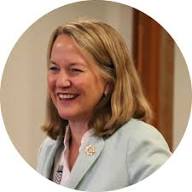
Kris Mayes, Arizona Attorney General

“No company gets to decide for itself which laws to follow,” Mayes said.

The charges come after Kalshi preemptively sued the government of Arizona on March 12, a move which Mayes has described as “an attempt to avoid accountability under Arizona law.”

Related:Kalshi and Polymarket Each Eye $20B Valuations as Prediction Markets Hit $18B Monthly Volume

Kalshi Wants to be Regulated as a Derivatives Venue, Not Gambling Platform

Arizona’s decision to file charges against Kalshi comes just days after the Commodity Futures Trading Commission (CFTC) issued updated initial guidance around prediction market regulation, which will see them treated under law as derivatives venues rather than gambling operators. On the same day, the CFTC also proposed a new rule-making process to establish a more permissive permanent framework around prediction markets.

According to CFTC Chair Michael Selig, the new framework would seek to take regulation of prediction markets out of the hands of individual states, such as Arizona, and instead grant the CFTC sole jurisdiction at the federal level.

“This begins the process of new rulemaking grounded in a rational and coherent interpretation of the Commodity Exchange Act,” Selig said in a statement. He said the new rules would also reassure “the American people that the CFTC will exercise its exclusive jurisdiction over prediction markets.”

This announcement was good news for Kalshi, as it has long sought to be regulated as a derivatives venue rather than as a gambling platform. This is an important distinction — if prediction markets are regulated as derivatives venues, they’d come under the jurisdiction of the CFTC, meaning they’d be regulated at a federal level by an increasingly friendly agency rather than by relatively hostile state-based gambling regulators.

There is still considerable lack of clarity around the regulation of prediction markets and legal battles in several US states have had conflicting rulings, further muddying the waters. 

Last year, a federal judge in Nevada ruled that Kalshi’s sports-related markets fall under the jurisdiction of the state’s gambling regulators and a judge in Massachusetts made a similar ruling. Meanwhile, in January, a federal judge in Tennessee went the other way, ruling that state-based regulators couldn’t enforce a cease and desist order against Kalshi. 

Those rulings differ from the current charges in Arizona as they were sports-based, whereas Arizona’s charges largely relate to election betting.

Related:Kalshi Faces Backlash After $50M Market on Khamenei’s Death Sparks Rule Dispute

In addition to Arizona, Kalshi has also recently commenced legal action against the governments of Utah and Iowa, a move Mayes believes is part of a strategy to try to use federal courts to avoid accountability to state-based regulators.

“Kalshi is running to federal court to try to avoid accountability,” Mayes said, adding that “Kalshi is making a habit of suing states rather than following their laws.”

The post Arizona AG Charges Kalshi With Illegal Gambling Over Election Betting appeared first on Crypto News Australia.


Disclaimer: The articles reposted on this site are sourced from public platforms and are provided for informational purposes only. They do not necessarily reflect the views of MEXC. All rights remain with the original authors. If you believe any content infringes on third-party rights, please contact crypto.news@mexc.com for removal. MEXC makes no guarantees regarding the accuracy, completeness, or timeliness of the content and is not responsible for any actions taken based on the information provided. The content does not constitute financial, legal, or other professional advice, nor should it be considered a recommendation or endorsement by MEXC.

You May Also Like

Royal Government of Bhutan Moves 973 BTC in Latest Treasury Activity

Royal Government of Bhutan Moves 973 BTC in Latest Treasury Activity

The post Royal Government of Bhutan Moves 973 BTC in Latest Treasury Activity appeared on BitcoinEthereumNews.com. The Royal Government of Bhutan transferred 973
Share
BitcoinEthereumNews2026/03/18 19:29
Bubblemaps: The top five traders in STBL token trading volume are interconnected and have made profits exceeding $10 million

Bubblemaps: The top five traders in STBL token trading volume are interconnected and have made profits exceeding $10 million

PANews reported on September 18th that blockchain analytics platform Bubblemaps published an article on the X platform claiming that Tether co-founder Reeve Collins had just launched a new token, STBL. However, the top five traders are suspiciously interconnected and have profited over $10 million. Collins launched STBL yesterday, a new stablecoin system built around three tokens: USST (stablecoin), YLD (yield token supporting USST), and STBL (governance token). An analysis of the top five traders by STBL trading volume revealed that these five profit-makers received capital injections at the same time. Tracing the source of their funds revealed a clear connection: the funds all came from the same source (injected via Tornado Cash); bots were used to borrow USDC from the Venus Protocol; and the total profit exceeded $10 million. However, there is no evidence that these traders are connected to the core team. In fact, this group of bots has a history of extracting value from other tokens, not just STBL.
Share
PANews2025/09/18 10:09
Coinbase Vs. State Regulators: Crypto Exchange Fights Legal Fragmentation

Coinbase Vs. State Regulators: Crypto Exchange Fights Legal Fragmentation

US-based crypto exchange Coinbase has made a significant appeal to the Department of Justice (DOJ) regarding a wave of lawsuits aimed at its operations. The company is urging federal action to address what it describes as an “increasingly fragmented and hostile” regulatory landscape for the crypto market. Coinbase Urges Federal Action  In a recent letter, Coinbase highlighted the steps taken by the current Administration to create a more equitable framework for digital asset regulation. This includes the introduction of stablecoin legislation and two pending bipartisan market-structure bills aimed at fostering uniformity in the oversight of cryptocurrencies.  Coinbase argues that these initiatives have begun to mitigate the adverse effects of the previous Administration’s enforcement-driven regulatory approach.  However, the company warns that certain states are perpetuating this problematic trend by adopting “expansive and flawed” interpretations of securities laws and implementing new licensing requirements that undermine the federal government’s pro-innovation stance. Related Reading: REX Shares Claims Its DOGE And XRP Spot ETFs Will Be Approved By US SEC Tomorrow They make an example with the Oregon Attorney General, who has filed a lawsuit against Coinbase, claiming that many digital assets traded on its platform qualify as alleged unregistered securities.  The letter affirms that the suit not only targets Coinbase but also encourages other states to address what the Attorney General perceives as a regulatory gap left by federal authorities.  Similarly, the New York Attorney General has initiated legal action to regulate transactions involving digital assets based on decentralized protocols as securities, further complicating the regulatory environment. Coinbase has faced cease-and-desist orders from four states, which demand the company halt its retail staking services. These orders are deemed by Coinbase as “legally unfounded and inconsistent.” Unified Framework For Digital Assets In light of these challenges, the letter to the DOJ calls for urgent federal intervention to establish broad preemption provisions. The crypto exchange argues that preemption has historically been an effective tool for addressing state interference in national markets, referencing past Congressional actions. Coinbase contends that the current patchwork of state regulations not only disrupts market efficiency but also leads to unequal access to cryptocurrency services based on geographic location. Related Reading: Citi’s Ethereum Forecast: No New All-Time High Expected, Year-End Target At $4,300 To remedy these issues, Coinbase advocates for Congress to adopt legislation that would exempt federally regulated digital assets from state blue-sky laws and clarify that state licensing requirements do not apply to crypto intermediaries.  Additionally, the company urges the SEC to expedite rulemaking and provide clearer guidance on why digital asset transactions and services, including staking, should not be classified as securities. Such clarity would help prevent states from imposing conflicting regulations based on their interpretations of securities laws. Featured image from Shutterstock, chart from TradingView.com
Share
NewsBTC2025/09/18 15:00




