

Bank of Japan Holds Firm: Strategic Pause on Interest Rates Keeps Future Hikes in Play
BitcoinWorld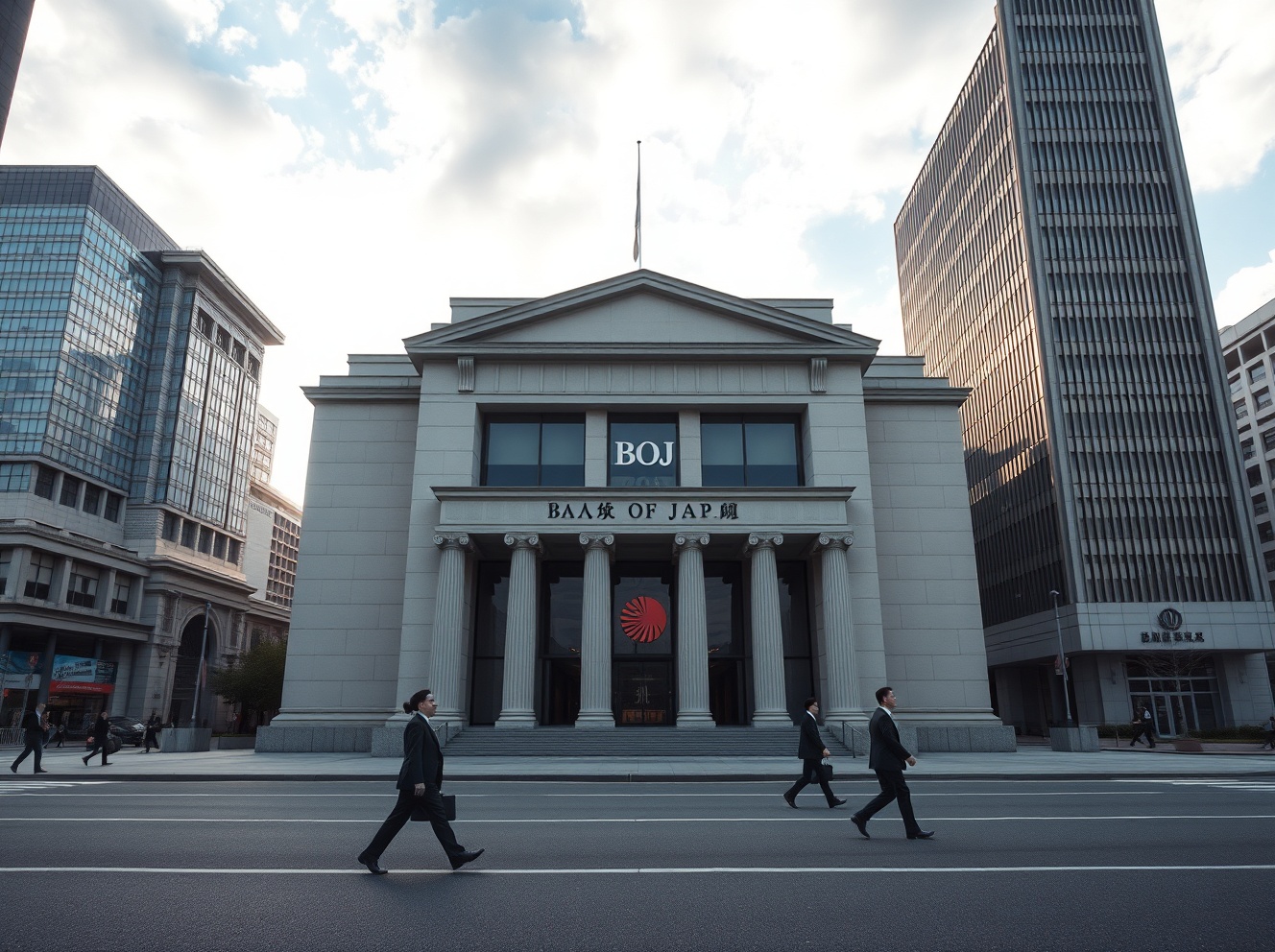
Bank of Japan Holds Firm: Strategic Pause on Interest Rates Keeps Future Hikes in Play
TOKYO, JAPAN – The Bank of Japan (BOJ) has decisively maintained its current benchmark interest rate, opting for another strategic pause in its monetary policy normalization path. This move, widely anticipated by financial markets, keeps the door firmly open for potential rate hikes later in 2025 as policymakers continue their delicate balancing act between supporting growth and containing inflationary pressures. Consequently, the Japanese yen exhibited muted volatility following the announcement, while domestic equity markets absorbed the status quo decision.
Bank of Japan Interest Rates Decision: A Detailed Analysis
The BOJ’s Policy Board voted unanimously to hold the short-term policy rate within its existing range. This marks the third consecutive meeting where officials have chosen stability over action. Governor Kazuo Ueda has consistently emphasized a data-dependent approach. Therefore, recent economic indicators provided insufficient evidence to warrant an immediate shift. The central bank’s quarterly outlook report, released concurrently, offered critical insights. It maintained the core inflation forecast for fiscal 2025 while slightly revising growth projections upward, signaling underlying economic resilience.
Market analysts had largely priced in this outcome. However, the nuanced language in the official statement garnered significant scrutiny. Officials removed a phrase referencing “accommodative financial conditions” while adding text highlighting “increasing wage growth.” This subtle linguistic shift suggests the BOJ is laying the groundwork for future policy tightening. Furthermore, the bank confirmed it will continue reducing its purchases of Japanese government bonds (JGBs) at a measured pace, a process known as quantitative tightening (QT).
The Global and Domestic Context for the Pause
Globally, the BOJ’s stance creates a stark contrast with other major central banks. The Federal Reserve and European Central Bank have largely concluded their aggressive hiking cycles. Meanwhile, Japan remains an outlier with historically low rates. This divergence continues to exert downward pressure on the yen, a key concern for Japanese importers and policymakers. Domestically, the economy shows mixed signals. Robust capital expenditure and a tight labor market support growth. Conversely, weak household spending and external demand pose persistent headwinds.
Understanding the Inflation Dynamics in Japan
Inflation remains the primary metric guiding BOJ policy. Japan’s core consumer price index (CPI), which excludes volatile fresh food prices, has remained above the BOJ’s 2% target for over two years. However, the nature of this inflation is crucial. Initially driven by high import costs, policymakers now seek confirmation of a sustainable, demand-driven price cycle fueled by wage growth.
- Services Inflation: A key watchpoint, as it reflects domestic demand and wage pressures more directly than goods prices.
- Spring Wage Negotiations (Shunto): The 2025 shunto results, due in the coming months, are pivotal. Major corporations have already signaled strong wage offers.
- Inflation Expectations: The BOJ closely surveys households and businesses to gauge whether the public believes higher prices are permanent.
The following table summarizes recent key economic indicators relevant to the BOJ’s decision:
| Indicator | Latest Figure | Trend | BOJ Relevance |
|---|---|---|---|
| Core CPI (YoY) | 2.6% | Stable above target | Primary policy anchor |
| Unemployment Rate | 2.4% | Near multi-decade low | Supports wage growth thesis |
| Q4 GDP Growth (Annualized) | +0.4% | Modest expansion | Indicates economic fragility |
| Yen/USD Exchange Rate | ~152 | Historically weak | Imports inflation, affects timing |
The Path Forward and Market Implications
The BOJ’s forward guidance suggests the next logical step is an increase in the policy rate, not a decrease. The timing, however, remains uncertain. Most economists project a move in the second or third quarter of 2025. The bank will require clear evidence that wage increases are translating into sustained domestic consumption. Additionally, global financial stability and the Fed’s policy path will be critical external factors.
For financial markets, the extended pause has specific implications. The yield on the 10-year Japanese Government Bond (JGB) is likely to remain capped near the BOJ’s reference point of 1.0%. However, volatility may increase as traders anticipate the eventual exit. The yen’s trajectory will hinge on the interest rate differential with the US. A delayed BOJ hike could prolong the currency’s weakness, affecting corporate earnings and trade balances. Conversely, Japanese bank stocks often benefit from a steeper yield curve, which higher rates would promote.
Expert Perspectives on the Policy Stance
Leading economists characterize the BOJ’s approach as “cautious normalization.” Dr. Sayuri Shirai, a former BOJ Policy Board member and now a professor at Keio University, notes, “The BOJ is navigating a complex transition. Its priority is to avoid disrupting Japan’s fragile economic recovery while preventing an unanchoring of inflation expectations. This pause reflects that precision.” Similarly, analysts from major financial institutions like Nomura and Daiwa Securities agree the bank is preparing markets for a shift, likely through incremental adjustments to its yield curve control framework before a direct rate hike.
Conclusion
The Bank of Japan’s decision to pause interest rates underscores a deliberate and measured approach to monetary policy normalization. By holding rates steady, the BOJ maintains flexibility to respond to evolving data on wages and inflation. The central bank’s clear communication keeps future hikes firmly on the table, aiming to manage market expectations without triggering undue volatility. As Japan stands at a potential turning point, the world will watch closely how the BOJ balances its dual mandate in the months ahead, with the next move on Bank of Japan interest rates poised to signal a new era for the world’s third-largest economy.
FAQs
Q1: Why did the Bank of Japan decide to pause interest rates again?
The BOJ paused to gather more conclusive evidence that wage growth is fueling sustainable, demand-driven inflation. Officials seek to ensure the economic recovery is robust enough to withstand higher borrowing costs before making a move.
Q2: What will trigger the next Bank of Japan interest rate hike?
The key trigger will be confirmation from the spring wage negotiations (Shunto) that substantial pay increases are broadly translating into stronger household spending and services inflation, creating a virtuous economic cycle.
Q3: How does the BOJ’s pause affect the Japanese yen?
The pause, which maintains a wide interest rate gap with the US, typically keeps downward pressure on the yen. A weaker yen boosts exporter profits but increases costs for imports and energy, complicating the inflation outlook.
Q4: Is Japan’s inflation problem similar to that in the US or Europe?
No, Japan’s inflation has been largely cost-push, driven by imported energy and food prices. The BOJ is waiting for signs of stronger demand-pull inflation, which has been more prevalent in Western economies.
Q5: What are the risks of the BOJ moving too slowly on interest rates?
The primary risks include the yen weakening excessively, which could destabilize financial markets and amplify imported inflation. It could also allow inflation expectations to become unanchored, making future policy adjustments more disruptive.
This post Bank of Japan Holds Firm: Strategic Pause on Interest Rates Keeps Future Hikes in Play first appeared on BitcoinWorld.


You May Also Like

MARA shares sink as $1.3B Q1 loss tests AI pivot

Pi Network Users Shocked After Website Shutdown Claims Spread




