

Ueda Speech: Decisive BoJ Governor Reveals Policy Outlook After Expected Interest Rate Hold
BitcoinWorld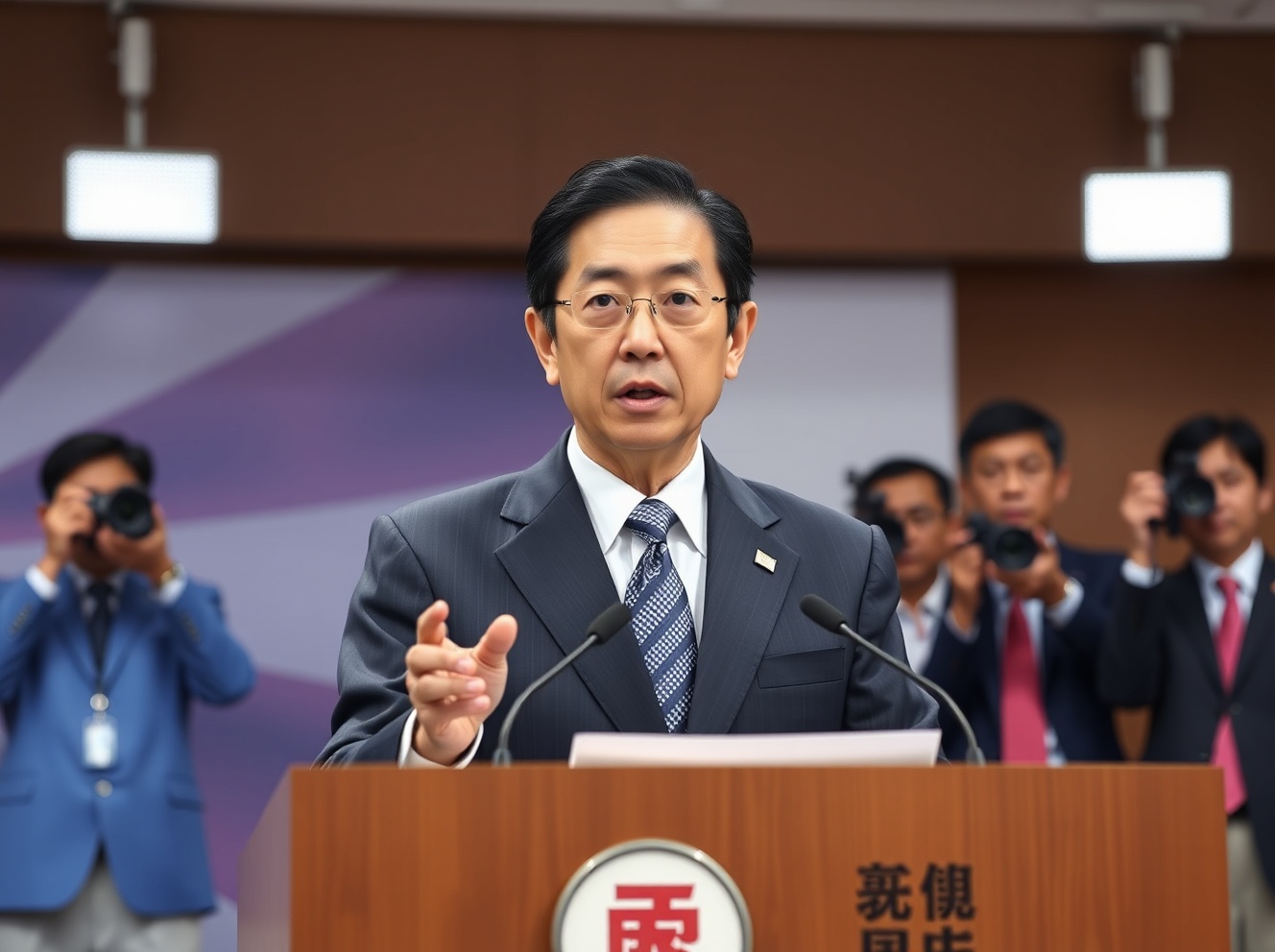
Ueda Speech: Decisive BoJ Governor Reveals Policy Outlook After Expected Interest Rate Hold
TOKYO, JAPAN – Bank of Japan Governor Kazuo Ueda delivered a crucial policy speech today, outlining the central bank’s monetary strategy following its widely anticipated decision to maintain current interest rates. The Ueda speech provides critical insights into Japan’s economic direction amid persistent inflation concerns and global financial uncertainty. Market analysts closely scrutinized his remarks for signals about future policy normalization and the bank’s assessment of wage-price dynamics.
Ueda Speech Details BoJ’s Cautious Policy Path
Governor Ueda emphasized the Bank of Japan’s commitment to supporting sustainable economic growth while carefully monitoring inflation trends. Consequently, the central bank maintained its short-term policy rate at the current level, aligning with market expectations. Furthermore, Ueda highlighted the need for continued monetary accommodation to achieve stable 2% inflation. The BoJ governor specifically noted that recent economic data shows promising signs but requires further confirmation.
Japan’s core inflation rate remains above the central bank’s target, creating complex policy challenges. However, Ueda stressed that the bank must avoid premature tightening that could undermine fragile economic recovery. The speech referenced several key indicators that influenced today’s decision:
- Consumer Price Index: Remains elevated but shows signs of moderation
- Wage Growth: Spring wage negotiations resulted in significant increases
- Economic Output: GDP shows modest expansion despite global headwinds
- Yen Volatility: Currency fluctuations impact import costs and inflation
Market reaction to the Ueda speech appeared measured, with the yen showing limited movement against major currencies. Financial institutions generally interpreted the governor’s comments as confirming a gradual approach to policy normalization. Additionally, bond markets remained stable following the announcement, suggesting investor confidence in the BoJ’s communicated path.
Interest Rate Hold Reflects Global Economic Context
The Bank of Japan’s decision to maintain interest rates occurs against a complex global backdrop. Major central banks worldwide continue grappling with inflation management while supporting economic stability. Specifically, the Federal Reserve and European Central Bank have adopted varying approaches to monetary policy in recent months. Therefore, Japan’s position reflects both domestic considerations and international financial conditions.
Ueda’s speech acknowledged these global interconnections while emphasizing Japan’s unique economic circumstances. The governor noted that imported inflation pressures have eased somewhat but remain a concern for household budgets. Moreover, he highlighted structural factors affecting Japan’s economy, including demographic challenges and productivity growth needs.
Expert Analysis of BoJ’s Strategic Position
Financial analysts emphasize that the Ueda speech provides important guidance for understanding Japan’s monetary policy trajectory. According to central bank observers, the governor’s comments suggest several key priorities for the coming months. First, the BoJ seeks to normalize policy without disrupting financial markets. Second, officials want to ensure inflation becomes driven by domestic demand rather than temporary factors. Third, the bank must manage communication carefully to prevent excessive yen volatility.
Historical context illuminates today’s policy decision. The Bank of Japan maintained ultra-loose monetary policy for decades before beginning cautious normalization in recent years. This timeline shows the central bank’s measured approach:
| Period | Policy Stance | Key Development |
|---|---|---|
| 2013-2016 | Quantitative and Qualitative Easing | Aggressive asset purchases |
| 2016-2022 | Yield Curve Control | Targeting long-term interest rates |
| 2023-2024 | Policy Adjustment Phase | Yield band widening, rate adjustments |
| 2025 | Normalization Path | Gradual moves toward neutral policy |
Economic researchers note that Japan’s situation differs significantly from other advanced economies. The country experienced deflationary pressures for years before recent inflation emerged. Consequently, the BoJ approaches policy normalization with particular caution, seeking to avoid returning to price stagnation.
Inflation Dynamics and Future Policy Signals
Governor Ueda devoted substantial attention to inflation analysis during his speech. He explained that the Bank of Japan monitors multiple inflation measures to assess underlying trends. Specifically, the bank focuses on whether price increases translate into sustainable wage growth and consumer spending. Recent data shows some positive developments in this area, particularly following spring wage negotiations.
The speech outlined several conditions that would warrant policy adjustment. First, the BoJ requires clearer evidence of sustained inflation at the 2% target. Second, officials want confirmation that wage growth supports continued price stability. Third, the bank must assess global economic conditions and their impact on Japan’s outlook. Ueda emphasized that these factors will guide future decisions rather than a predetermined timeline.
Market participants identified several key phrases in the Ueda speech that suggest future policy direction. The governor mentioned “data-dependent approach” multiple times, indicating flexibility in decision-making. Additionally, he referenced “patient monetary policy,” suggesting no imminent rate hikes. These communications aim to provide clarity while maintaining policy optionality.
Impact on Japanese Economy and Global Markets
The Bank of Japan’s policy stance significantly influences both domestic economic conditions and international financial markets. Japanese businesses closely monitor BoJ decisions for implications on borrowing costs and currency values. Meanwhile, global investors watch for signals about capital flows and yield differentials. Today’s interest rate hold and accompanying speech provide important information for these stakeholders.
Domestically, the policy continuity supports several economic sectors. Export-oriented companies benefit from relatively favorable exchange rate conditions. Meanwhile, businesses with substantial debt appreciate stable borrowing costs. However, households face continued pressure from inflation exceeding wage growth in some segments. The BoJ acknowledges these distributional effects while pursuing broader economic stability.
Internationally, Japan’s monetary policy affects global liquidity conditions and investment patterns. The yen’s role as a funding currency means BoJ decisions influence carry trade dynamics. Furthermore, Japanese government bonds remain important assets in global portfolios. Consequently, today’s announcement received attention from financial institutions worldwide.
Conclusion
Governor Kazuo Ueda’s policy speech provides crucial insights into the Bank of Japan’s thinking following its interest rate decision. The Ueda speech emphasizes cautious normalization, data-dependent decision-making, and attention to sustainable inflation. Market participants will continue analyzing the governor’s comments for signals about future policy adjustments. As Japan navigates complex economic conditions, the BoJ’s measured approach seeks to balance multiple objectives while maintaining financial stability.
FAQs
Q1: What did Governor Ueda say about future interest rate increases?
Governor Ueda indicated that future policy adjustments will depend on economic data, particularly inflation trends and wage growth. He emphasized a patient approach without precommitting to specific timing.
Q2: How did financial markets react to the Ueda speech?
Markets showed limited immediate reaction, suggesting the speech aligned with expectations. The yen remained relatively stable, and Japanese bond yields showed minimal movement following the announcement.
Q3: What inflation measures does the Bank of Japan prioritize?
The BoJ monitors multiple inflation indicators, including core CPI that excludes fresh food, and measures that exclude both food and energy. Officials particularly focus on whether inflation becomes driven by domestic demand rather than imported costs.
Q4: How does Japan’s policy differ from other major central banks?
Unlike the Federal Reserve and European Central Bank, which raised rates aggressively to combat inflation, Japan maintains more accommodative policy due to its different economic history and inflation dynamics.
Q5: What conditions would prompt the BoJ to change policy?
Governor Ueda outlined several conditions including sustained achievement of the 2% inflation target, confirmation of wage-price dynamics supporting continued inflation, and assessment of global economic impacts on Japan’s outlook.
This post Ueda Speech: Decisive BoJ Governor Reveals Policy Outlook After Expected Interest Rate Hold first appeared on BitcoinWorld.


You May Also Like

Gridmatic – AI-Powered Energy for Flexible Loads

Indian Rupee Slides as US-Iran Stalemate Pushes Oil Prices Higher




