COO Of MEXC On Why AI Agents, RWAs, And Hybrid Models Will Reshape The CEX Landscape
Two years ago, the idea of a decentralized exchange competing with Binance or Coinbase for trading volume felt like wishful thinking from crypto idealists. Today, it’s a measurable reality. And yet, centralized exchanges aren’t going anywhere. The real story isn’t a battle between two models — it’s a structural transformation of the entire trading landscape, one that touches regulation, AI, tokenized real-world assets (RWAs), and the very definition of what an exchange is.
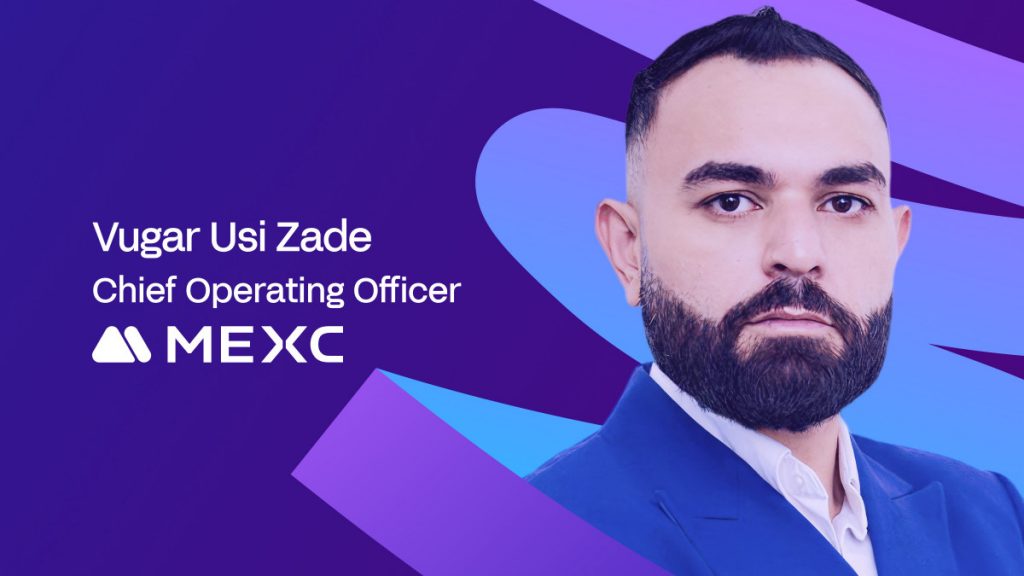
To understand how the industry’s incumbents are navigating this shift, we sat down with Vugar Usi Zade, Chief Operating Officer at MEXC, one of the world’s leading centralized crypto exchanges. The conversation covers everything from why serious capital still flows through CEXs despite the DEX boom, to how AI agents are quietly becoming a major category of exchange customer — and what it means when a piece of software, not a human, decides where to route a trillion dollars in trades.
How do you see on-chain trading evolving over the next 24 months, and how are you adapting in response?
On-chain trading has come a long way in a short time. CoinGecko’s trading activity report found that DEX spot share has gone from about 7% to 14% since early 2024, perp volume grew eightfold, and Hyperliquid worked its way into the top 10 derivatives exchanges.
However, the same report outlined that centralized platforms still handled close to $80 trillion in 2025, and the reasons for that are practical. Slippage on size, gas costs during congestion, and the complete absence of recourse when something goes wrong continue to push serious capital toward venues like ours.
As for the structural changes, the way I see it, two aspects will have the biggest impact. The first is RWA integration. Tokenized assets crossed $36 billion last year, and once users can trade government bonds, gold, and crypto perpetuals from a single interface, the line between traditional and crypto markets will begin to disappear.
The second is AI-driven execution, which is already further along than most people realize. Our own AI trading suite has had over 2.35 million users since launching in August 2025, and adoption is only picking up.
On the business model side, we have leaned into a unified multi-asset hub, kept our zero-fee structure that saved users $1.1 billion last year, and layered in institutional-grade protections through Proof of Reserves and a dedicated Safety Insurance Fund.
What are the biggest regulatory trends shaping CEX operations today, and how should exchanges balance compliance with product innovation?
Eighteen months ago, we were operating in a vacuum. Now you’ve got MiCA fully in force across the EU, the GENIUS Act in the US, and Japan reclassifying crypto under its securities laws. That is all welcome.
From my experience, the only approach that works long-term is talking to regulators before they come to you. We engage with regulators early in every market we enter. It’s more work upfront, but it means that when something new comes, we’re not caught off guard.
What practical obstacles still block broader institutional participation, and how can exchanges and regulators jointly remove them?
People have been saying institutional adoption is the next big wave for years. The reality is it’s already happening — just at institutional speed, which is slow by crypto standards. You can see it in the ETF flows alone: over $30 billion in the first year, and institutional 13F filings show professional investors now hold about a quarter of total ETF assets.
The obstacles that remain are less dramatic but just as real. Custody is actually solid now — regulated, insured, audited — so that box is checked. But insurance is the weak link. The policies are narrow and the coverage limits don’t match what large allocators need to feel comfortable.
And the thing nobody talks about enough is integration. Crypto still doesn’t plug into the same systems institutions use for equities and fixed income. Until someone solves that last mile, there’s always going to be a reason to hold back.
Which RWA use cases do you see as practical and scalable near term, and what needs to change to realize that potential?
Honestly, the most exciting part about RWAs right now is how boring the leading use cases are: Treasuries, private credit, money market funds. The market roughly doubled in a year, and you’ve got firms like BlackRock deploying real capital into it.
The reason these work is because investors already understand the product. You don’t need to explain what a Treasury is. All you need to show them is that settling it on-chain is faster, cheaper, and more accessible.
What needs to change is the plumbing between chains. Right now you’ve got tokenized assets sitting in silos that don’t connect well, and bridging capital between them is expensive enough to undermine the efficiency argument. Regulators also need to figure out a consistent way to classify these instruments across borders, because right now every jurisdiction is making up its own rules.
Which derivatives model is best positioned to capture professional volumes, and why?
The perps market did about $7.2 trillion in monthly volume at its peak in January this year. CEXs still handled about 90% of that. DEX perps have grown fast — and Hyperliquid deserves credit for what they’ve built — but professional traders still overwhelmingly route through centralized venues.
The reason is quite straightforward, in my opinion. When you’re trading size, you need deep books, fast execution, and reliable infrastructure. You also need someone on the other end if something goes wrong.
DEXs don’t have that yet. What they do have is transparency and self-custody, which matter to a growing number of traders who watched what happened to FTX.
This is all heading toward some kind of hybrid model: on-chain settlement with centralized execution quality. L2 orderbooks are already moving in that direction. The question isn’t really CEX versus DEX anymore — it’s who figures out how to combine the best of both without the tradeoffs.
How significant is geopolitical fragmentation to global liquidity? How should exchanges mitigate that risk?
It’s significant, and I’d argue most people in the industry underestimate it. Geopolitical fragmentation directly affects liquidity.
When a jurisdiction cuts off access or a sanctions designation hits, the liquidity doesn’t just show up somewhere else. Parts of it simply vanish, the market gets thinner, and everyone pays for it in wider spreads and worse execution.
The way most exchanges handle this is purely reactive: block the countries on the list, screen the wallets, file what needs filing. And that’s fine until something changes fast — which it always does. A new sanctions designation, a jurisdiction that tightens rules with almost no notice. If it takes you weeks to respond to that, you’re already in trouble.
Geographic diversification is the other big piece for us. If your whole business depends on one region’s banking relationships or one regulator’s goodwill, you’re one policy change away from serious trouble. We deliberately spread our operations across jurisdictions so that no single market can take us down.
As liquidity migrates on-chain, will centralized market-makers retain their edge over automated LPs?
Centralized market-makers aren’t going anywhere. The advantage they have is that they can read context, manage inventory across venues, and make judgment calls. An automated LP running on a bonding curve simply can’t do this. When you’re trading size and need tight spreads, that still matters enormously.
But I’d be wrong to dismiss what’s happening on-chain. DEX liquidity is deeper than it’s ever been, and for the long tail of assets that centralized platforms don’t list, automated LPs are often the only option. That’s a meaningful and growing market.
What I expect to see is market-makers operating across both worlds simultaneously — which some of them already do. They’ll route to centralized books when depth is better there, and to on-chain venues when the opportunity calls for it.
What are the main friction points for retail versus institutional customers today, and which product changes would most improve adoption at scale?
Retail and institutional users have completely different problems, which is something a lot of platforms get wrong by trying to solve both with the same product.
For retail, the friction is still onboarding. KYC takes too long, fiat on-ramps are clunky, and the moment something goes wrong, there’s nowhere to turn.
For institutions, it’s what we touched on earlier. The products and custody are there, but the integration isn’t. They need reporting that plugs into their existing systems, compliance workflows that don’t require a parallel team, and prime brokerage services that work the way they already do for every other asset class.
The product changes that would move the needle are honestly not glamorous: faster KYC, better fiat rails in more currencies, and real customer support with actual humans. On the institutional side, it’s FIX connectivity, standardized reporting, and cross-margining.
How are AI agents reshaping the crypto trading landscape, and how should exchanges position themselves to benefit?
This is something we’ve seen firsthand. Our AI trading suite hit 2.35 million users in about six months, with over 10 million interactions. During the flash crash last October, the bot processed double its normal volume while most human traders were still trying to figure out what was happening.
But what’s really interesting is the next phase, where agents operate without a human making the decisions — rebalancing, arbitrage, yield harvesting, all running autonomously across protocols and exchanges. We’re already seeing this on our own platform. Our AI suite processes over 66,000 responses a day on average, and the number of active daily users has peaked above 156,000.
For exchanges, that’s a fundamentally different kind of customer. An AI agent picks you based on API quality, execution speed, and uptime. Your UI, your brand, your referral program mean nothing to a piece of software.
We’ve been investing in that infrastructure layer because I think a meaningful share of future volume will come from systems that never touch the front end.
The post COO Of MEXC On Why AI Agents, RWAs, And Hybrid Models Will Reshape The CEX Landscape appeared first on Metaverse Post.


You May Also Like

Moomoo US Receives Regulatory Green Light to Launch Prediction Market

Trump biographer: Epstein joked about his legal troubles while orchestrating defense