Critical Alert: Lagarde’s Speech Signals ECB Vigilance on Commodity Markets and Supply Bottlenecks
BitcoinWorld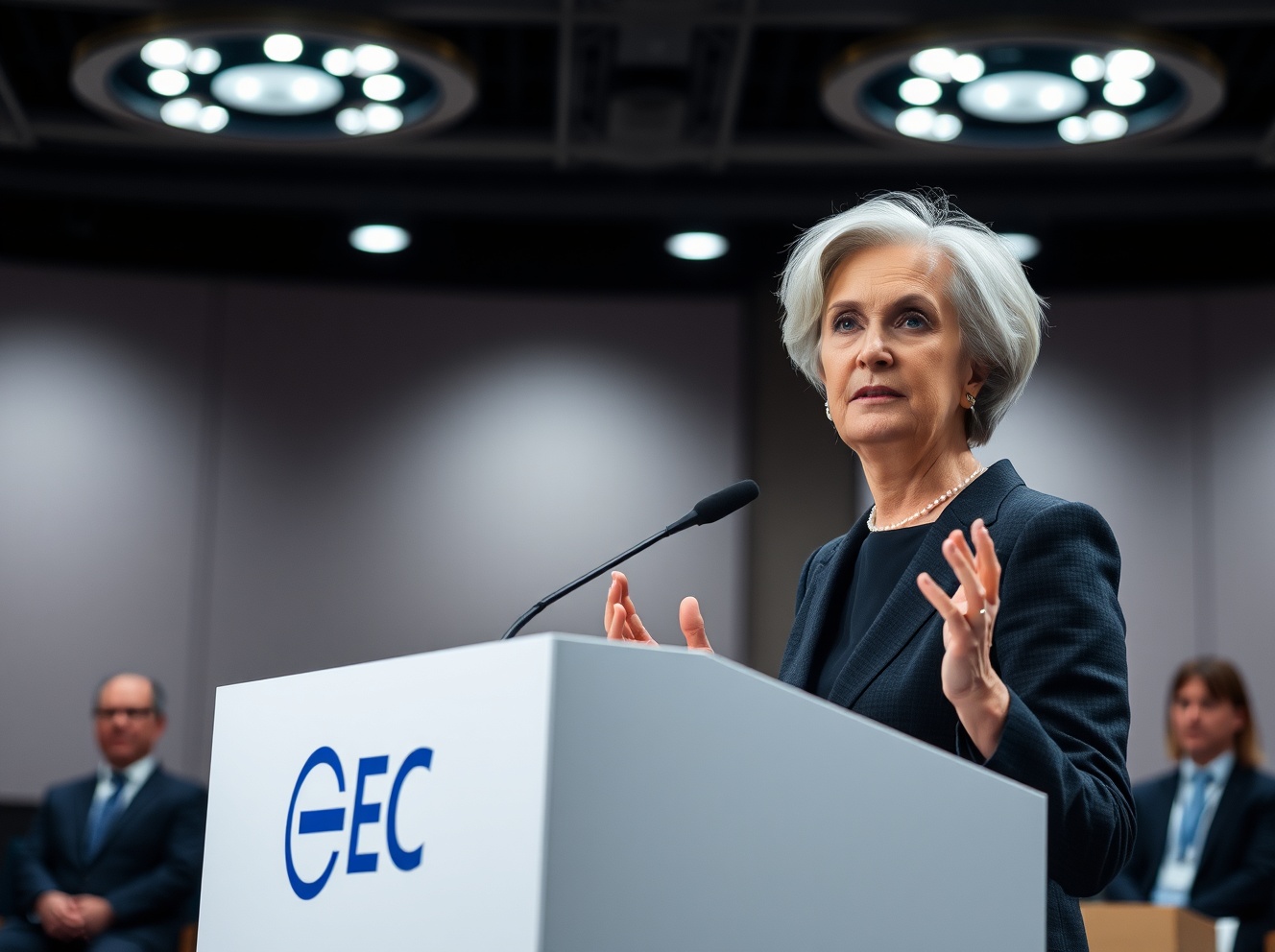
Critical Alert: Lagarde’s Speech Signals ECB Vigilance on Commodity Markets and Supply Bottlenecks
FRANKFURT, March 2025 – European Central Bank President Christine Lagarde delivered a pivotal speech today that placed commodity markets and persistent supply bottlenecks at the forefront of monetary policy considerations, signaling a critical shift in how central banks approach post-pandemic economic stability. Her remarks came during heightened market volatility and represent the ECB’s most direct acknowledgment yet of structural supply-side challenges influencing inflation trajectories across the Eurozone.
Lagarde’s Speech Analyzes Commodity Market Pressures
Christine Lagarde’s address to the European Banking Federation outlined specific concerns about energy, agricultural, and industrial metal markets. She emphasized that the ECB maintains continuous monitoring of price movements across these sectors. Furthermore, her speech highlighted how geopolitical tensions and climate-related disruptions continue to create unpredictable volatility. The ECB President noted that while some commodity prices have stabilized from 2022 peaks, underlying structural issues remain unresolved. Consequently, this creates persistent inflationary pressures that complicate monetary policy decisions. Market analysts immediately reacted to her cautious tone, with Eurozone bond yields showing increased sensitivity to her remarks about future policy paths.
Historical context reveals why Lagarde’s focus matters today. Commodity markets experienced unprecedented turbulence following the pandemic recovery, the Ukraine conflict, and subsequent energy crises. However, 2025 presents new challenges including shipping disruptions in key global trade routes and climate-induced agricultural shortages. The ECB’s attention to these factors demonstrates a broader recognition that traditional demand-side monetary tools alone cannot address current economic realities. Therefore, policymakers must now incorporate supply-side analysis into their core frameworks.
Supply Bottlenecks: The Persistent Economic Challenge
Lagarde’s speech specifically identified manufacturing and logistics bottlenecks as continuing constraints on European economic growth. She referenced data showing that delivery times, while improved from pandemic extremes, remain significantly longer than pre-2020 averages. Additionally, regional disparities within the Eurozone create uneven recovery patterns. For instance, German industrial sectors report different constraint profiles compared to Southern European service economies. This complexity requires nuanced policy responses rather than blanket solutions.
The following table illustrates key bottleneck indicators referenced in ECB analysis:
| Indicator | Pre-2020 Average | 2024 Level | Change |
|---|---|---|---|
| Global Delivery Times | 45 days | 58 days | +29% |
| Eurozone Industrial Capacity Utilization | 82.5% | 78.1% | -4.4% |
| Supplier Delivery Performance Index | 52.1 | 48.3 | -3.8 points |
These persistent issues create what Lagarde termed “friction inflation” – price increases driven not by excessive demand but by constrained supply. This phenomenon particularly affects intermediate goods and components essential for European manufacturing. Moreover, reshoring and nearshoring initiatives, while strategically important, have not yet resolved these logistical challenges. Instead, they have created new transitional bottlenecks as supply chains reconfigure.
Expert Analysis: Monetary Policy in a Supply-Constrained World
Economic experts interpret Lagarde’s speech as acknowledging fundamental shifts in inflation dynamics. Dr. Klaus Schmidt, Director of the Institute for European Economic Research, explains: “The ECB traditionally focused on demand-driven inflation through interest rate adjustments. However, supply-side constraints require different tools and greater patience. Lagarde’s emphasis suggests the ECB recognizes that overtightening could damage economic capacity without solving supply issues.” This perspective aligns with growing academic consensus that post-pandemic economies face structurally different inflation drivers.
Furthermore, the speech implicitly addressed the tension between fighting inflation and supporting economic resilience. Supply bottlenecks reduce productive capacity, meaning aggressive rate hikes might lower inflation but also permanently damage industrial capabilities. Therefore, the ECB appears to be developing a more balanced approach that considers both price stability and economic foundations. This represents a significant evolution from earlier post-pandemic policy frameworks that prioritized inflation control above other considerations.
Global Context and Comparative Central Bank Approaches
Lagarde’s remarks occur alongside similar discussions at other major central banks. The Federal Reserve has recently incorporated supply chain metrics into its decision-making process. Meanwhile, the Bank of England established a dedicated supply-side monitoring unit in late 2024. However, the ECB faces unique challenges due to the Eurozone’s diverse economic composition. Southern European nations experience different supply constraints than Northern manufacturing hubs. Consequently, a single monetary policy must account for these variations while maintaining cohesion.
International coordination has become increasingly important. Lagarde referenced ongoing discussions with other central banks and international organizations about monitoring global supply networks. These collaborations aim to develop early warning systems for emerging bottlenecks. Key focus areas include:
- Critical mineral supply chains for green energy transitions
- Agricultural commodity logistics affected by climate patterns
- Semiconductor manufacturing and distribution networks
- Pharmaceutical ingredient sourcing and production capacity
This multilateral approach reflects recognition that supply chains transcend national borders and require coordinated policy responses. No single central bank can resolve global logistical challenges independently. Therefore, information sharing and strategic alignment have become essential components of modern monetary policy frameworks.
Market Implications and Forward Guidance
Financial markets closely analyzed Lagarde’s speech for signals about future interest rate decisions. Her emphasis on supply-side vigilance suggests the ECB may maintain current rates longer than previously anticipated. Additionally, she indicated that rate cuts would require clear evidence of sustained supply chain normalization alongside inflation convergence toward targets. This represents a more cautious approach than some market participants expected, leading to immediate adjustments in interest rate futures pricing.
The speech also carried implications for European bond markets. Persistent supply bottlenecks typically increase production costs and corporate borrowing needs. However, they also constrain economic growth potential. These competing forces create complex dynamics for fixed-income investors. Lagarde’s acknowledgment of these complexities provides valuable context for market participants navigating uncertain economic conditions. Furthermore, her comments about attentive monitoring suggest the ECB stands ready to adjust policy if supply conditions deteriorate unexpectedly.
Conclusion
Christine Lagarde’s speech represents a significant development in central bank communication, directly addressing commodity markets and supply bottlenecks as core monetary policy considerations. The ECB President’s emphasis on these structural challenges reflects evolving economic realities that demand sophisticated policy responses. Moreover, her remarks provide crucial guidance for businesses, investors, and policymakers navigating persistent inflationary pressures. As global supply chains continue their complex transformation, central bank vigilance remains essential for maintaining economic stability. Ultimately, Lagarde’s speech signals that the ECB recognizes traditional monetary tools must adapt to address contemporary supply-side economic challenges.
FAQs
Q1: What specific commodity markets did Christine Lagarde mention in her speech?
Lagarde specifically referenced energy markets (including natural gas and oil), agricultural commodities, and industrial metals. She expressed particular concern about price volatility in these sectors and their transmission effects on broader inflation.
Q2: How do supply bottlenecks affect ECB monetary policy decisions?
Supply constraints create “friction inflation” that doesn’t respond to traditional demand-side tools like interest rate hikes. The ECB must now balance fighting inflation with avoiding damage to productive capacity, requiring more nuanced policy approaches and potentially longer holding periods for current rates.
Q3: What indicators does the ECB monitor for supply chain issues?
The ECB tracks delivery times, supplier performance indices, industrial capacity utilization, inventory levels, and shipping cost metrics. These indicators help distinguish between temporary disruptions and structural bottlenecks requiring policy attention.
Q4: How does the ECB’s approach compare to other central banks?
Like the Federal Reserve and Bank of England, the ECB now incorporates supply-side analysis into decision-making. However, the ECB faces unique challenges due to the Eurozone’s economic diversity, requiring policies that work across different national economies with varying bottleneck profiles.
Q5: What are the long-term implications of Lagarde’s focus on supply issues?
This shift suggests monetary policy will increasingly consider productive capacity and supply resilience alongside traditional inflation targets. It may lead to closer coordination between monetary, industrial, and trade policies, representing a significant evolution in central banking practice.
This post Critical Alert: Lagarde’s Speech Signals ECB Vigilance on Commodity Markets and Supply Bottlenecks first appeared on BitcoinWorld.


You May Also Like

Seadrill Limited (SDRL) Lifts Revenue Forecast as Contract Backlog Hits $3.1 Billion

From Telegram to Terminal: Banana Gun’s Pro Platform Hits Ethereum as User Base Surpasses One Million