Cypherpunks Write Code: Zooko Wilcox & Zcash
In the early 80s, there was a child in Texas learning to code on one of the first computers in the world. The Internet was barely an abstract idea by then, and decentralized or private money was a science fiction concept. That child, Bryce “Zooko” Wilcox, was creating colorful figures in a very basic programming language. Nobody suspected that he’d grow up to join the cypherpunks and create Zcash, a private and decentralized cryptocurrency.
He was born in May 1974 in Arizona (US) and grew up with a deep curiosity for computers and a fascination with technology. His family moved because the father got a job at Texas Instruments, and that’s how Zooko first got his hands on a home computer (a TI 99/4), sparking what would become a lifelong obsession.
Not long after, the family relocated again, this time to Colorado Springs, where Zooko's dad worked in the defense sector. Surrounded by Cold War headlines and early digital communication tools like bulletin board systems (BBS), Zooko became both politically aware and digitally connected. As a teenager, the fall of the Berlin Wall left a strong impression on him, pushing him towards ideologies of freedom.
After the popularization of the Internet in the early 90s, he found the cypherpunk mailing lists. Drawn to the community’s focus on privacy and freedom, he began using the pseudonym "Zooko" and got involved in online discussions with thinkers like Tim May and Wei Dai. He was a student of computer science at the University of Colorado around that time, and he finished his career in 1998. However, he took a leave to work at DigiCash, one of the first digital money projects.
\
DigiCash & Decentralization
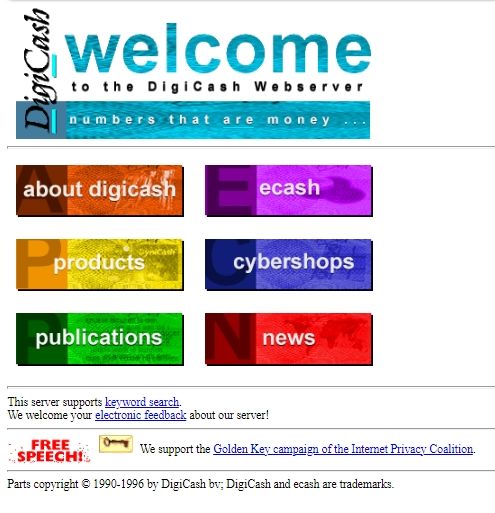
DigiCash was one of the first serious attempts at creating digital money, and it was way ahead of its time. Founded in the early 1990s by David Chaum, a cryptographer widely considered one of the original cypherpunks, the project aimed to give people the ability to pay online without revealing their identity —something that even today is still hard to do. DigiCash used clever cryptography to separate who you were from what you were buying. It was centralized, though, and still required a bank to clear transactions.
Zooko Wilcox joined DigiCash during this early wave of experimentation. It was his first hands-on experience working on private digital payments. Even back then, he was already asking big questions: how to make anonymous e-cash work, how to protect payee identity, and how to avoid bank surveillance. Old emails from the cypherpunk mailing list show him puzzling over how DigiCash’s system could still expose users if the payer and bank teamed up.
After DigiCash, Zooko kept searching for a better solution. He helped build MojoNation in the early 2000s, a decentralized file-sharing network (precursor to BitTorrent) where people could trade storage space and bandwidth for Mojo, a digital token. While it didn’t fully take off, it laid the groundwork for future projects and showed that Zooko was still chasing the same goal: private, decentralized digital money.
For him, this pursuit wasn’t a passing phase. He spent over a decade trying to make it work before Bitcoin finally proved it was possible.
Not a Cypherpunk?
Wilcox is considered an early cypherpunk by almost the entire crypto community, and, in fact, he was an active participant in the original cypherpunk lists. Funny enough, he stated several times in those lists that he wasn’t a cypherpunk: “No really, I'm not a cypherpunk, because cypherpunks appear to be overwhelmed with blind, self-destructive bloodlust since 1996 or so. I'm just here to try talking some sense into the salvageable ones.”
What are cypherpunks but privacy and freedom activists who use cryptography as their main tool, though? Over the years, Zooko likely reached this same conclusion, because it wasn’t long ago that he republished the Cypherpunk Manifesto on his personal blog —and told everyone to read it. He also called himself an ‘original cypherpunk’ in a conference, and mentioned that the main cypherpunk value was freedom.
https://www.youtube.com/watch?v=Eq39bXgK2zI&embedable=true
This is maybe why he stuck around. Zooko participated in the Bitcoin development and found a bug to fix; he bought his first Bitcoin in 2011 and published some of the first blog posts about Bitcoin. However, something was still missing because his goal had been private money, and Bitcoin, as a transparent blockchain, wasn’t doing a great job with it.
Least Authority & Zcash
In 2011, Zooko Wilcox founded Least Authority, a security firm built on the principle of minimal authority and focused on decentralized, freedom-compatible systems. The firm began auditing blockchain protocols and privacy tools by 2014, including Ethereum. Least Authority’s focus on strong cryptography and privacy aligned closely with Zooko’s long-standing goal of safe digital autonomy.
In 2013, the cryptographer Ian Miers presented his paper on the Zerocoin protocol, intended as a privacy upgrade to Bitcoin. The main developers of the first cryptocurrency didn’t want to take the risk to implement it; therefore, Miers ended up teaming with Zooko and other cryptographers. They co-founded the Zerocoin Electric Coin Company (later Electric Coin Company, ECC) to build an anonymous-by-default cryptocurrency using zero-knowledge proofs, later refined into the Zerocash protocol, which eventually became Zcash.
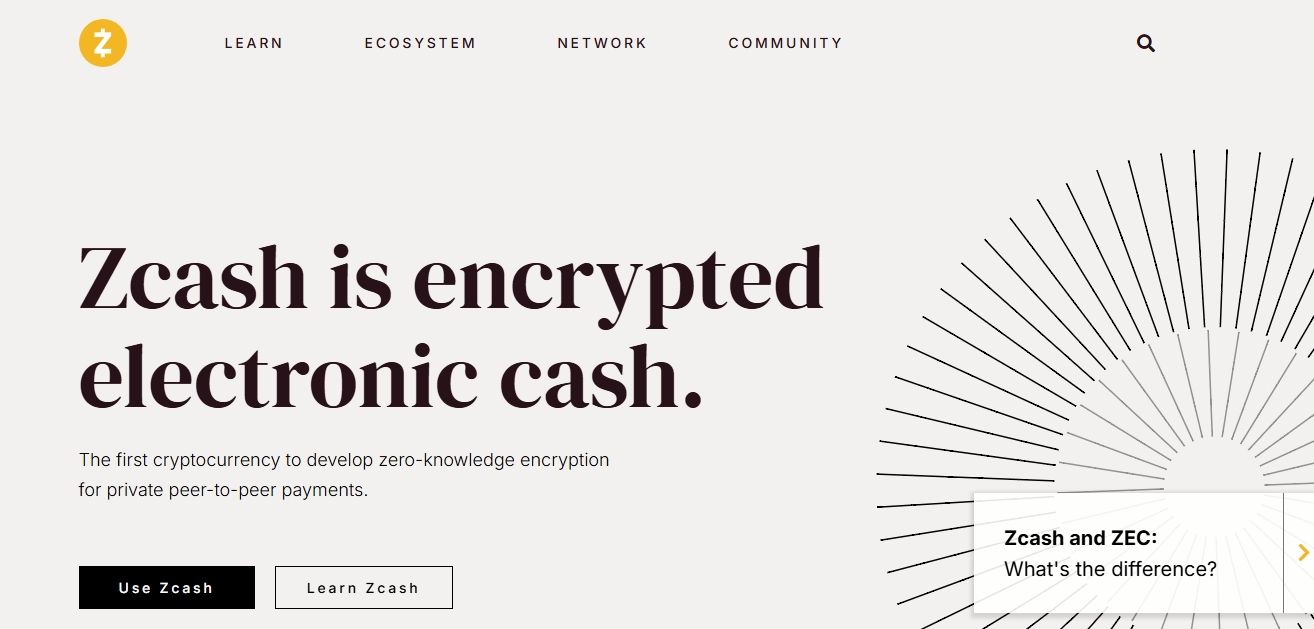
In October 2016, Zcash launched with the creation of its genesis block via a highly secure “trusted setup” ceremony. At launch, shielded transactions used zk‑SNARKs, cryptographic proofs hiding sender, recipient, and amount. Users could also opt for transparent mode or reveal details selectively for auditing or compliance.
In December 2023, Zooko stepped down as CEO of ECC but continued on the board and remains deeply engaged in the Zcash community and its future evolution. He has maintained that research, community growth, and technological innovation around Zcash remain central to his mission even after handing over leadership.
By 2025, Zcash remains one of the major privacy coins, trading in the $30–$40 range, still valued by users seeking confidential transactions despite regulatory headwinds.
\
Privacy = Decentralization, Freedom, and Security
Zooko has long argued that privacy isn't just about hiding things. It's about keeping control of your life and safety. He once explained it using the example of a business magnate. Imagine someone managing a huge financial empire. If everyone knows who they are, that person’s family could become a target for kidnapping or threats. But if they manage their business under a pseudonym, no one knows who to go after. That kind of privacy protects people from real-world danger, not just online tracking.

He also sees privacy and decentralization as deeply linked. If you don’t have privacy, someone powerful can watch what you're doing and tell you to stop, directly through unfair laws (if it’s the government) or through pressure and fear. That’s why privacy in cryptocurrency is essential. Systems like Bitcoin, which offer limited privacy, could become easy to control in the long run. Zooko believes strong privacy helps keep these systems free and decentralized.
Obyte follows a similar vision. It avoids all middlemen by design and allows private transactions using Blackbytes, its native private currency. Unlike Zcash or other privacy coins, Blackbytes aren’t built for centralized exchanges. They exist only for direct person-to-person trades, while transaction records are saved only in personal wallets and devices. That choice keeps users in control, avoids surveillance, and respects the original promise of private digital cash.
\ Read more from Cypherpunks Write Code series:
\
-
Tim May & Crypto-anarchism
-
Wei Dai & B-money
-
Nick Szabo & Smart Contracts
-
Adam Back & Hashcash
-
Eric Hughes & Remailer
-
St Jude & Community Memory
-
Julian Assange & Wikileaks
-
Hal Finney & RPOW
-
John Gilmore & EFF
-
Satoshi Nakamoto & Bitcoin
-
Gregory Maxwell & Bitcoin Core
-
David Chaum & Ecash
-
Vinay Gupta & Mattereum
-
Jim Bell & Assassination Politics
-
Peter Todd & Bitcoin Core
-
Len Sassaman & Remailers
-
Eva Galperin Against Stalkerware
-
Suelette Dreyfus & Free Speech
-
John Callas & Privacy Tools
-
Bruce Schneier Against Blockchains
-
Ian Goldberg & Netscape
-
Amir Taaki & Dark Code
\n
Featured Vector Image by Garry Killian / Freepik
Photograph of Zooko Wilcox from his X account
\n


You May Also Like
Why Is Jerome Powell Planing to Stay as Fed Governor After Chair Term Ends?

Metaplanet Stock Passes MARA to Become Third-Largest BTC Holder — Stock Slips Anyway