

Won-Dollar Exchange Rate Soars Past 1,510, Reaching Staggering 17-Year High
BitcoinWorld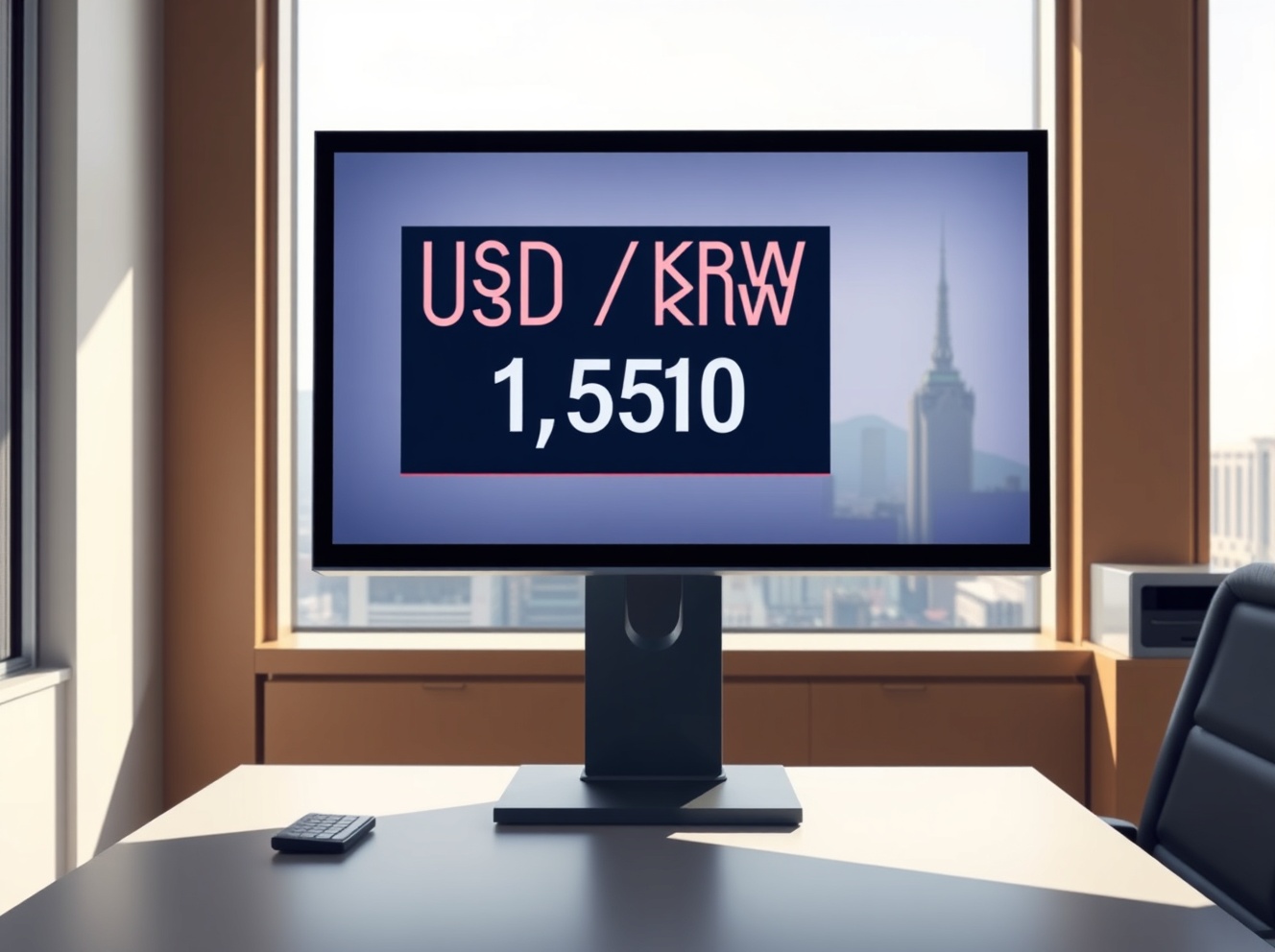
Won-Dollar Exchange Rate Soars Past 1,510, Reaching Staggering 17-Year High
The South Korean won has plunged to its weakest level in over 17 years against the U.S. dollar, with the exchange rate breaking through the psychologically significant 1,510 barrier in Seoul trading today. This dramatic movement represents the highest won-dollar rate since the global financial crisis of 2008, signaling profound shifts in international currency markets and raising immediate concerns about inflationary pressures on Asia’s fourth-largest economy.
Won-Dollar Exchange Rate Reaches Critical Threshold
Financial markets witnessed the USD/KRW pair surge past 1,510 during morning trading on Thursday, marking a decisive breach of technical resistance levels that had held for months. Consequently, this development represents the currency’s weakest position since July 2008, when global markets faced unprecedented turmoil. The Bank of Korea immediately responded by monitoring the situation closely, though officials have not yet announced any direct intervention measures.
Several key factors are driving this significant depreciation. Primarily, the widening interest rate differential between the United States and South Korea continues to exert substantial pressure. The Federal Reserve maintains a hawkish monetary policy stance, while the Bank of Korea faces conflicting pressures between controlling inflation and supporting economic growth. Additionally, global risk aversion has prompted capital outflows from emerging markets, including South Korea.
The immediate market impacts include:
- Increased import costs for energy and raw materials
- Higher dollar-denominated debt servicing for Korean corporations
- Potential boost for export-oriented industries like semiconductors and automobiles
- Mounting pressure on the Bank of Korea’s monetary policy decisions
Historical Context and Economic Implications
To understand the current situation, we must examine historical exchange rate patterns. The won-dollar rate previously approached similar levels during three major crises: the Asian Financial Crisis of 1997-1998, the Global Financial Crisis of 2008, and the COVID-19 market panic of March 2020. However, the current depreciation differs fundamentally because it occurs amid relatively stable global financial conditions rather than during an acute crisis period.
| Period | Peak Exchange Rate | Primary Driver |
|---|---|---|
| December 1997 | 1,965 | Asian Financial Crisis |
| March 2009 | 1,570 | Global Financial Crisis |
| March 2020 | 1,280 | COVID-19 Pandemic |
| Current (2025) | 1,510+ | Monetary Policy Divergence |
This sustained weakness presents complex challenges for policymakers. On one hand, a weaker won benefits major exporters like Samsung Electronics and Hyundai Motor Company by making their products more competitive internationally. On the other hand, South Korea imports nearly all its energy requirements, meaning higher fuel costs will inevitably translate into increased consumer prices across the economy.
Expert Analysis of Market Dynamics
Financial analysts point to structural factors behind the currency’s persistent decline. The United States maintains substantially higher benchmark interest rates compared to South Korea, creating powerful incentives for capital to flow toward dollar-denominated assets. Furthermore, geopolitical tensions in the region have occasionally increased risk premiums for Korean assets. Meanwhile, China’s economic slowdown continues to affect regional trade patterns and investment flows.
Market participants are closely watching several indicators. The currency’s volatility index has increased significantly in recent weeks. Additionally, forward contracts suggest traders expect further depreciation pressure in the coming months. Foreign exchange reserves data from the Bank of Korea will provide crucial insights into potential intervention capabilities. The central bank has previously demonstrated willingness to stabilize the currency during periods of excessive volatility.
Sector-Specific Impacts and Corporate Responses
Different economic sectors experience contrasting effects from the currency depreciation. Export-oriented industries generally benefit from improved price competitiveness in global markets. The technology sector, particularly semiconductor manufacturers, stands to gain substantially as most of their revenues come from overseas sales. Conversely, industries reliant on imported materials face mounting cost pressures that could squeeze profit margins.
Major Korean corporations have implemented various hedging strategies. Many companies increased their foreign exchange hedging activities throughout 2024 in anticipation of continued volatility. Some firms are accelerating plans to shift production overseas to mitigate currency risk. Meanwhile, small and medium enterprises with limited hedging capabilities face particularly severe challenges from rising import costs.
Key economic indicators to monitor include:
- Monthly trade balance figures
- Consumer price inflation data
- Foreign portfolio investment flows
- Corporate foreign debt levels
- Central bank policy meeting outcomes
Global Currency Trends and Comparative Analysis
The won’s depreciation forms part of broader Asian currency weakness against the resurgent U.S. dollar. The Japanese yen has also reached multi-decade lows, while the Chinese yuan faces sustained pressure. This regional pattern suggests systemic factors rather than Korea-specific issues. However, the won has underperformed several regional peers in recent months, indicating additional domestic considerations.
International monetary authorities are monitoring these developments carefully. The International Monetary Fund recently noted that emerging market currencies face continued pressure from global monetary policy normalization. Meanwhile, bilateral trade discussions between South Korea and the United States may address currency concerns indirectly through broader economic cooperation frameworks. The upcoming G20 finance ministers meeting will likely discuss coordinated approaches to currency stability.
Conclusion
The won-dollar exchange rate surpassing 1,510 represents a significant milestone with far-reaching economic implications. This 17-year high reflects complex interactions between monetary policies, global capital flows, and regional economic dynamics. While export sectors may benefit temporarily, broader inflationary pressures and financial stability concerns present substantial challenges for policymakers. Market participants should prepare for continued volatility as the Bank of Korea balances multiple competing priorities in its response to this dramatic currency movement.
FAQs
Q1: What does a won-dollar exchange rate of 1,510 mean for ordinary Koreans?
This exchange rate means it takes 1,510 won to purchase one U.S. dollar. For consumers, this typically translates to higher prices for imported goods including gasoline, food items, and foreign products. Travel abroad becomes more expensive, while foreign online purchases cost more in local currency terms.
Q2: Why is the Korean won depreciating against the U.S. dollar?
The primary drivers include interest rate differentials (higher U.S. rates attract capital), global risk aversion favoring safe-haven currencies like the dollar, South Korea’s trade balance fluctuations, and broader emerging market currency weakness. Structural factors like monetary policy divergence between the Fed and Bank of Korea also contribute significantly.
Q3: How does a weaker won affect South Korea’s exports and imports?
A weaker won makes Korean exports cheaper and more competitive in international markets, potentially boosting sales for companies like Samsung and Hyundai. Conversely, imports become more expensive, increasing costs for businesses that rely on foreign raw materials and for consumers purchasing imported goods.
Q4: What can the Bank of Korea do to stabilize the currency?
The central bank has several tools including direct intervention in foreign exchange markets (buying won with dollar reserves), adjusting interest rates, implementing capital flow measures, and providing forward guidance. However, sustained intervention faces practical limits due to finite foreign exchange reserves.
Q5: How does this exchange rate compare to historical levels?
The current rate above 1,510 represents the highest level since 2008 during the global financial crisis. The all-time high occurred in December 1997 during the Asian Financial Crisis when the rate approached 2,000. The average exchange rate over the past decade has been approximately 1,150 won per dollar.
This post Won-Dollar Exchange Rate Soars Past 1,510, Reaching Staggering 17-Year High first appeared on BitcoinWorld.


You May Also Like

Bitcoin’s Realized Cap Turns Positive, Signaling Fresh Capital Inflows After February Slump

Trump administration claiming a ‘win’ against Iran — here’s a report card




