

UAE Hormuz Strait: Critical Move as Emirates Reportedly Willing to Join US Military Force
BitcoinWorld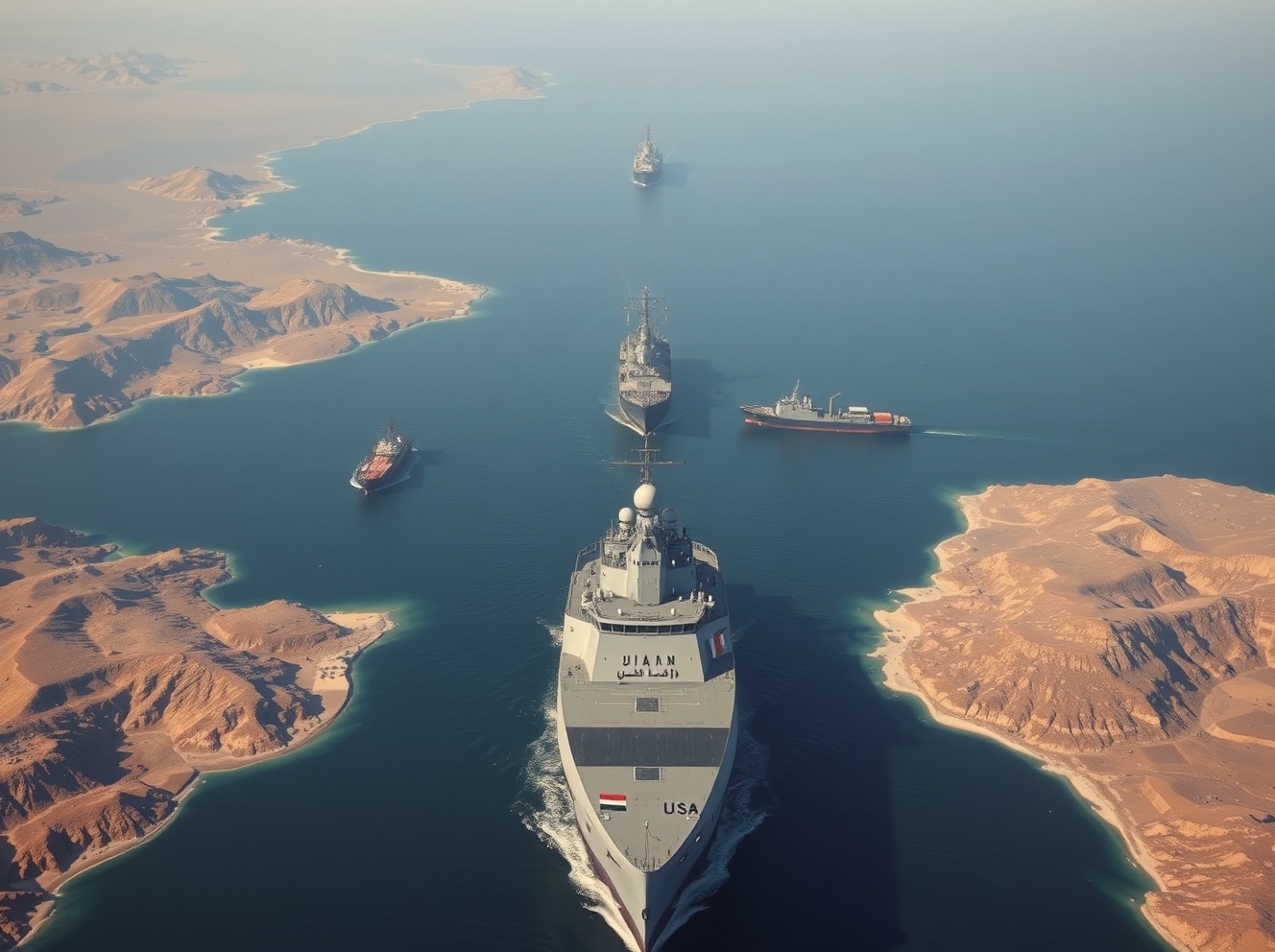
UAE Hormuz Strait: Critical Move as Emirates Reportedly Willing to Join US Military Force
ABU DHABI, UAE – March 2025 – The United Arab Emirates has reportedly signaled a willingness to join a potential United States-led military force aimed at reopening the Strait of Hormuz, according to a Wall Street Journal report. This critical development underscores the escalating tensions surrounding the world’s most important maritime oil chokepoint. The strategic waterway, a narrow passage between the Persian Gulf and the Gulf of Oman, facilitates the transit of roughly one-fifth of the global oil supply. Consequently, any disruption triggers immediate concerns for energy security and global economic stability.
UAE Hormuz Strait Decision and Regional Calculus
The reported UAE position represents a significant geopolitical shift. Traditionally, Gulf Arab states have balanced relations with Washington and Tehran. However, a direct military commitment to keep the strait open marks a clearer alignment. Analysts point to several factors behind this potential move. First, the UAE has heavily invested in economic diversification and global trade hubs like Dubai. Second, sustained threats to shipping lanes directly threaten its national economic security. Furthermore, the Emirates have recently deepened security cooperation with the US through frameworks like the Abraham Accords and joint military exercises.
This development does not occur in a vacuum. The Strait of Hormuz has been a flashpoint for decades. For instance, Iran has repeatedly threatened to close the strait in response to Western sanctions or military threats. Moreover, the region has witnessed attacks on tankers and seizures of vessels in recent years. Therefore, the potential formation of a US-led maritime coalition is a direct response to this persistent instability. The coalition’s stated goal would be freedom of navigation, a principle enshrined in international maritime law.
Expert Analysis on the Strategic Implications
“The UAE’s potential participation is a game-changer,” explains Dr. Leila Ahmed, a senior fellow at the Gulf States Institute. “It signals that regional actors are now willing to assume more operational risk to protect their economic lifelines. This moves beyond diplomatic statements to tangible security commitments.” Ahmed notes that the UAE possesses a modern, capable navy experienced in Gulf patrols. Its involvement would provide crucial local knowledge and legitimacy to any international force. Conversely, such a move could provoke a stronger reaction from Iran, potentially escalating a cycle of regional confrontation.
Global Oil Shipping and Economic Impact
The economic stakes of the Strait of Hormuz are immense. The table below illustrates the volume of oil transiting the chokepoint:
| Metric | Volume | Global Share |
|---|---|---|
| Oil Flow (Pre-disruption) | ~20.5 million barrels per day | ~21% |
| Liquefied Natural Gas (LNG) Flow | ~20% of global LNG trade | ~20% |
| Primary Destinations | Asia (76%), Europe (9%) | N/A |
A closure or severe disruption would have immediate global consequences. Oil prices would spike dramatically, fueling inflation worldwide. Key impacts would include:
- Supply Shock: Physical shortages would strain global inventories.
- Price Volatility: Markets would react with extreme uncertainty.
- Alternative Routes: Shipping would need costly, longer detours.
- Recession Risk: High energy costs could slow economic growth.
Energy analysts stress that even the threat of force can move markets. Therefore, the WSJ report itself influences trader behavior and risk assessments.
Historical Context and Legal Framework
The legal right to transit the Strait of Hormuz is governed by the United Nations Convention on the Law of the Sea (UNCLOS). This treaty designates the strait as an international waterway subject to “transit passage” rights. These rights allow ships and aircraft to pass through continuously and expeditiously. Iran, however, is not a party to UNCLOS. It has historically claimed greater control over the passage. Past incidents include the 1980s “Tanker War” during the Iran-Iraq conflict. More recently, the 2019 attacks on tankers and the 2021 seizure of a South Korean vessel highlighted ongoing risks.
International responses have included the formation of the International Maritime Security Construct (IMSC) in 2019. This US-led coalition increased naval patrols. The reported plan for a dedicated force to reopen the strait suggests a more robust and proactive posture. It implies preparation for a scenario where navigation is actively blocked, rather than just threatened. This represents a significant escalation in planning and declared intent.
Military and Diplomatic Considerations
From a military standpoint, reopening a blocked strait is a complex operation. Potential obstacles include sea mines, swarming small boats, or anti-ship missiles from the Iranian coast. A coalition would need mine-clearing capabilities, air defense cover, and rules of engagement for confronting Iranian forces. The UAE’s participation would offer strategic basing and overflight access. Diplomatically, the move requires careful coordination with other regional and global powers. Key partners would include:
- Other Gulf Cooperation Council (GCC) states like Saudi Arabia and Bahrain.
- European allies with energy security interests.
- Asian nations like Japan, China, and India, the largest oil importers.
Balancing this coalition-building with de-escalation efforts presents a major challenge for diplomats.
Conclusion
The reported willingness of the UAE to join a US force for the Strait of Hormuz underscores the waterway’s paramount importance to global energy flows. This development reflects a hardening regional stance towards maritime threats and a prioritization of economic security. While the immediate trigger remains unclear, the long-standing pattern of tension guarantees the strait’s status as a global strategic priority. The situation demands close monitoring by markets and policymakers alike, as actions in this narrow channel resonate on a worldwide scale. The ultimate goal for all stakeholders remains ensuring the free flow of commerce through this vital Hormuz artery without triggering a broader conflict.
FAQs
Q1: Why is the Strait of Hormuz so important?
The Strait of Hormuz is a narrow chokepoint at the mouth of the Persian Gulf. It is the world’s most important oil transit lane, with about 21% of global oil consumption passing through it daily. Closure would cause a massive global energy shock.
Q2: What would a US-led force actually do?
Such a force would likely be a multinational naval coalition. Its mission would be to ensure freedom of navigation, deter attacks on shipping, and if necessary, conduct military operations to clear a blockade and reopen the sea lane for commercial traffic.
Q3: Has the Strait of Hormuz been closed before?
It has never been fully closed in modern times. However, it has been severely threatened during conflicts, notably the 1980-88 Iran-Iraq “Tanker War,” which resulted in attacks on hundreds of ships and significantly disrupted traffic and insurance costs.
Q4: How would a closure affect oil prices?
Analysts predict an immediate and dramatic spike in oil prices, potentially exceeding previous record highs. The increase would be driven by panic, physical supply shortages, and the much higher cost of rerouting tankers around the Arabian Peninsula.
Q5: What are Iran’s motivations for threatening the strait?
Iran views the strait as a strategic lever. Threats to close it are typically a response to international pressure, such as economic sanctions or perceived military threats. It is a way for Iran to signal its ability to inflict severe economic pain on the global community.
This post UAE Hormuz Strait: Critical Move as Emirates Reportedly Willing to Join US Military Force first appeared on BitcoinWorld.


You May Also Like

'Groundbreaking': Barry Silbert Reacts to Approval of ETF with XRP Exposure

Uniswap Foundation’s $85.8M Treasury Reveals Strategic Strength Ahead of Crucial Governance Overhaul



