The post Altcoins Poised to Rally with Polymarket’s Growth appeared on BitcoinEthereumNews.com. Polymarket has made headlines this week, with multiple developments surrounding the prediction platform. It is gaining legitimacy with ICE exploring a $9 billion deal and Wall Street taking notice. Against these backdrops, the network’s effect plays out across multiple chains and protocols that power its decentralized prediction markets. Sponsored Sponsored Altcoin Stacks Powering Polymarket’s Breakout Moment BeInCrypto recently reported that Polymarket could host the biggest airdrop in the industry. This, coupled with headlines about a prospective ICE investment, positions select altcoins to benefit from the platform’s growing valuation. 1. UMA: The Silent Backbone of Prediction Markets UMA is important to Polymarket, but no one is paying attention. While all eyes are on Polymarket’s explosive growth, UMA remains the quiet infrastructure layer that makes decentralized predictions possible. Polymarket uses UMA’s Optimistic Oracle (OO) to verify market outcomes transparently. This decentralized data verification mechanism allows proposers and disputers to determine the truth on-chain, without relying on any central authority. “Polymarket supports UMA as a resolution source for markets displayed on the Polymarket.com interface. Polymarket, at its core, is oracle agonistic, but the UMA integration provides another option for market creators,” the platform shared in a recent blog. Under the hood, UMA’s oracle ensures that every prediction, whether on elections, markets, or sports, can be settled securely and trustlessly. The UMA-CTF adapter deployed on Polygon connects Polymarket’s conditional token framework (CTF) to UMA’s oracle, making every market resolution verifiable. Despite this essential role, investors largely overlook UMA, focusing on Polymarket’s front-end success. If sentiment shifts toward recognizing the oracle’s importance, UMA could see significant upside as demand for on-chain data verification grows. Sponsored Sponsored UMA Price Performance. Source: BeInCrypto 2. Polygon (MATIC): The Chain Powering Polymarket’s Scalability Polymarket runs entirely on Polygon’s Proof-of-Stake network, benefiting from its low-cost, high-speed infrastructure. The platform’s recent… The post Altcoins Poised to Rally with Polymarket’s Growth appeared on BitcoinEthereumNews.com. Polymarket has made headlines this week, with multiple developments surrounding the prediction platform. It is gaining legitimacy with ICE exploring a $9 billion deal and Wall Street taking notice. Against these backdrops, the network’s effect plays out across multiple chains and protocols that power its decentralized prediction markets. Sponsored Sponsored Altcoin Stacks Powering Polymarket’s Breakout Moment BeInCrypto recently reported that Polymarket could host the biggest airdrop in the industry. This, coupled with headlines about a prospective ICE investment, positions select altcoins to benefit from the platform’s growing valuation. 1. UMA: The Silent Backbone of Prediction Markets UMA is important to Polymarket, but no one is paying attention. While all eyes are on Polymarket’s explosive growth, UMA remains the quiet infrastructure layer that makes decentralized predictions possible. Polymarket uses UMA’s Optimistic Oracle (OO) to verify market outcomes transparently. This decentralized data verification mechanism allows proposers and disputers to determine the truth on-chain, without relying on any central authority. “Polymarket supports UMA as a resolution source for markets displayed on the Polymarket.com interface. Polymarket, at its core, is oracle agonistic, but the UMA integration provides another option for market creators,” the platform shared in a recent blog. Under the hood, UMA’s oracle ensures that every prediction, whether on elections, markets, or sports, can be settled securely and trustlessly. The UMA-CTF adapter deployed on Polygon connects Polymarket’s conditional token framework (CTF) to UMA’s oracle, making every market resolution verifiable. Despite this essential role, investors largely overlook UMA, focusing on Polymarket’s front-end success. If sentiment shifts toward recognizing the oracle’s importance, UMA could see significant upside as demand for on-chain data verification grows. Sponsored Sponsored UMA Price Performance. Source: BeInCrypto 2. Polygon (MATIC): The Chain Powering Polymarket’s Scalability Polymarket runs entirely on Polygon’s Proof-of-Stake network, benefiting from its low-cost, high-speed infrastructure. The platform’s recent…

Altcoins Poised to Rally with Polymarket’s Growth

Polymarket has made headlines this week, with multiple developments surrounding the prediction platform. It is gaining legitimacy with ICE exploring a $9 billion deal and Wall Street taking notice.

Against these backdrops, the network’s effect plays out across multiple chains and protocols that power its decentralized prediction markets.

Sponsored

Sponsored

Altcoin Stacks Powering Polymarket’s Breakout Moment

BeInCrypto recently reported that Polymarket could host the biggest airdrop in the industry. This, coupled with headlines about a prospective ICE investment, positions select altcoins to benefit from the platform’s growing valuation.

1. UMA: The Silent Backbone of Prediction Markets

UMA is important to Polymarket, but no one is paying attention. While all eyes are on Polymarket’s explosive growth, UMA remains the quiet infrastructure layer that makes decentralized predictions possible.

Polymarket uses UMA’s Optimistic Oracle (OO) to verify market outcomes transparently. This decentralized data verification mechanism allows proposers and disputers to determine the truth on-chain, without relying on any central authority.

Under the hood, UMA’s oracle ensures that every prediction, whether on elections, markets, or sports, can be settled securely and trustlessly.

The UMA-CTF adapter deployed on Polygon connects Polymarket’s conditional token framework (CTF) to UMA’s oracle, making every market resolution verifiable.

Despite this essential role, investors largely overlook UMA, focusing on Polymarket’s front-end success. If sentiment shifts toward recognizing the oracle’s importance, UMA could see significant upside as demand for on-chain data verification grows.

Sponsored

Sponsored

UMA Price Performance. Source: BeInCrypto

2. Polygon (MATIC): The Chain Powering Polymarket’s Scalability

Polymarket runs entirely on Polygon’s Proof-of-Stake network, benefiting from its low-cost, high-speed infrastructure. The platform’s recent Polygon integration with X (Twitter) exposed over 600 million users to on-chain prediction markets, and by extension, to the Polygon ecosystem itself.

Polygon’s upcoming upgrades (PIPs 60 and 43) promise to boost throughput to 1,000 TPS and reduce finality to around 5 seconds, directly improving user experience for prediction markets.

Sponsored

Sponsored

According to Polygon Labs, these upgrades will enhance transaction capacity for apps like Polymarket, RWAs, and payments, solidifying Polygon as the go-to chain for consumer-scale crypto use cases.

3. Ethereum (ETH): The Settlement Layer Behind It All

Indeed, Ethereum is critical to Polymarket’s story, serving as the foundational layer that made its existence possible.

Polymarket’s reliance on the Ethereum Virtual Machine (EVM) ensures access to the industry’s deepest pool of developer talent, tooling, and security infrastructure.

Sponsored

Sponsored

The integration of USDC on Ethereum also facilitates seamless settlement for prediction markets.

As Ethereum’s Layer-2 ecosystem expands, including rollups like Katana, apps like Polymarket gain even more scalability options.

Stark predicts that this symbiotic relationship between Ethereum and its L2s will soon make building on EVM “the obvious choice” for future breakout applications.

Polymarket’s valuation surge is not just a win for its investors, including CEO Shayne Coplan; it validates the entire Ethereum-Polygon-UMA stack.

While the spotlight shines on the front-end platform, the deeper value may lie in the protocols powering its trustless logic and scalability.

As prediction markets go mainstream, these three altcoins could quietly become the biggest beneficiaries of Polymarket’s rise.

Source: https://beincrypto.com/altcoins-benefit-polymarkets-soaring-valuation/
Market Opportunity
Effect AI Logo
Effect AI Price(EFFECT)
$0.003888
$0.003888$0.003888
-1.91%
USD
Effect AI (EFFECT) Live Price Chart
Disclaimer: The articles reposted on this site are sourced from public platforms and are provided for informational purposes only. They do not necessarily reflect the views of MEXC. All rights remain with the original authors. If you believe any content infringes on third-party rights, please contact service@support.mexc.com for removal. MEXC makes no guarantees regarding the accuracy, completeness, or timeliness of the content and is not responsible for any actions taken based on the information provided. The content does not constitute financial, legal, or other professional advice, nor should it be considered a recommendation or endorsement by MEXC.

You May Also Like

Pippin (PIPPIN) Price Prediction 2026–2030: Can PIPPIN Hit $0.70 Soon?

Pippin (PIPPIN) Price Prediction 2026–2030: Can PIPPIN Hit $0.70 Soon?

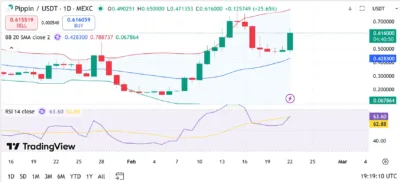
PIPPIN has surged sharply on the daily timeframe, printing a powerful bullish candle with over 25% gains. RSI is holding above 60, signaling strengthening momentum
Share
Coinstats2026/02/23 04:29
Will Cardano Reach $10 by 2030? Analysts Break Down ADA’s Growth Cycles

Will Cardano Reach $10 by 2030? Analysts Break Down ADA’s Growth Cycles

The post Will Cardano Reach $10 by 2030? Analysts Break Down ADA’s Growth Cycles appeared first on Coinpedia Fintech News Cardano (ADA) is trading at $0.9024 with a market cap of $32.91 billion. Experts say ADA has the potential to climb much higher, with some placing long-term targets as high as $10. The token continues to benefit from stronger visibility, rising liquidity, and increasing inflows from both institutional and retail markets. Can Cardano Hit $10 …
Share
CoinPedia2025/09/18 17:19
Crypto whale loses $6M to sneaky phishing scheme targeting staked Ethereum

Crypto whale loses $6M to sneaky phishing scheme targeting staked Ethereum

The post Crypto whale loses $6M to sneaky phishing scheme targeting staked Ethereum appeared on BitcoinEthereumNews.com. A crypto whale lost more than $6 million in staked Ethereum (stETH) and Aave-wrapped Bitcoin (aEthWBTC) after approving malicious signatures in a phishing scheme on Sept. 18, according to blockchain security firm Scam Sniffer. According to the firm, the attackers disguised their move as a routine wallet confirmation through “Permit” signatures, which tricked the victim into authorizing fund transfers without triggering obvious red flags. Yu Xian, founder of blockchain security company SlowMist, noted that the victim did not recognize the danger because the transaction required no gas fees. He wrote: “From the victim’s perspective, he just clicked a few times to confirm the wallet’s pop-up signature requests, didn’t spend a single penny of gas, and $6.28 million was gone.” How Permit exploits work Permit approvals were originally designed to simplify token transfers. Instead of submitting an on-chain approval and paying fees, a user can sign an off-chain message authorizing a spender. That efficiency, however, has created a new attack surface for malicious players. Once a user signs such a permit, attackers can combine two functions—Permit and TransferFrom—to drain assets directly. Because the authorization takes place off-chain, wallet dashboards show no unusual activity until the funds move. As a result, the assets are gone when the approval executes on-chain, and tokens are redirected to the attacker’s wallet. This loophole has made permit exploits increasingly attractive for malicious actors, who can siphon millions without needing complex hacks or high-cost gas wars. Phishing losses The latest theft highlights a wider trend of escalating phishing campaigns. Scam Sniffer reported that in August alone, attackers stole $12.17 million from more than 15,200 victims. That figure represented a 72% jump in losses compared with July. According to the firm, the most significant share of August’s damages came from three large accounts that accounted for nearly half…
Share
BitcoinEthereumNews2025/09/19 02:31