

Best Crypto To Buy Now: Investors Turn to Tapzi and Hedera For November 2025

The cryptocurrency market entered October’s final trading day with a mix of controversy and optimism. Sam Bankman-Fried’s legal team has reignited debate by claiming that FTX, once the world’s second-largest exchange, was “never bankrupt.” Meanwhile, Hedera Hashgraph has gained significant traction following strong inflows into its newly launched ETF.
In addition to this, Tapzi, a decentralized Web3 gaming platform, remains a subject of interest as one of the best crypto to buy now and an innovative project in the GameFi space. All these changes introduce a new aspect to the dynamic crypto environment, indicating a multifaceted combination of recovery, innovation, and investor sentiment.
Tapzi: Web3 Gaming Reinvented with Skill-to-Earn Mechanics
Tapzi is disrupting the fast-paced landscape of blockchain gaming. Tapzi is a Skill-to-Earn game developed on the BNB Smart Chain, which contrasts with GameFi based on luck or inflation. Games such as Chess, Checkers, Rock-Paper-Scissors, and Tic Tac Toe are played in real time in PvP matches. Rewards are obtained by winners based on the stakes of the opponents, hence transparency and sustainability.
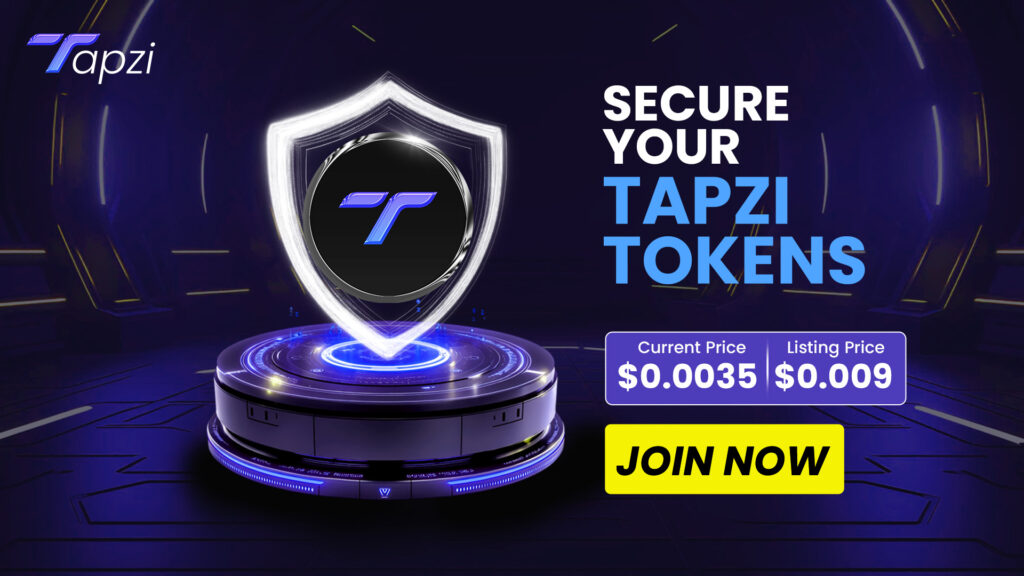
Unlike traditional GameFi projects that rely on random rewards or excessive token printing, Tapzi offers a fair, player-funded ecosystem. The token economy revolves around a fixed supply of 5 billion $TAPZI tokens, with transparent vesting 25% released at TGE and the remaining 75% over three months. Every prize pool in the Tapzi ecosystem is player-generated, which eliminates treasury drain and keeps gameplay fully transparent through smart contracts.
Moreover, Tapzi’s onboarding process is frictionless. Players can start instantly through a mobile or web interface, without downloads or gas fees. This gasless gameplay experience lowers the entry barrier for newcomers. A free-to-play mode also helps onboard casual players, transforming them into long-term competitors over time.
To developers, Tapzi is also a launchpad for skill-based games, and it offers SDKs, staking modules, and a player base. It enables independent developers to release new games into the ecosystem and make it a self-sustaining hub of innovation.
The Tapzi presale is moving at a steady pace, having cleared 67.8 percent, and tokens are to be offered at a pleasant price of $0.0035 each. The token will initially be traded at $0.01 at launch, which will provide early investors with a 3x upside potential. The project’s initial market value is $20 million, with the fully diluted value (FDV) of $50 million.
Tapzi’s Skill-to-Earn Model Could Redefine GameFi
What is of specific importance to investors is the timing and design of Tapzi. The Web3 gaming sector, estimated at approximately $25 billion in 2024, is projected to reach 124.7 billion by 2032, with an average annual growth of more than 19% CAGR. Tapzi is entering this high-growth environment with a product that solves the main industry vulnerabilities: unsustainable tokenomics, bot abuse, and onboarding complexity.
With over 1.5 billion mobile gamers globally, Tapzi’s mission to bridge traditional gaming with decentralized competition could unlock massive adoption. The platform targets both Tier 1 markets (U.S., U.K., EU, Japan, Singapore, South Korea, and UAE) and gamer-heavy Tier 2 regions (Brazil, India, Turkey, Vietnam, and the Philippines).
To investors, the design of Tapzi guarantees stability in the long run. This is because its economy is self-sustaining, implying that match pools fund its rewards and not token emissions. When the number of players increases, it results in an increase in the token demand, which consequently increases the amount of prizes and the ecosystem. This compounding growth dynamic is what makes Tapzi not another GameFi token but a genuine gaming economy that has quantifiable network effects.

Sam Bankman-Fried Sparks Controversy with “FTX Was Never Bankrupt” Claim
While Tapzi and Hedera show innovation and momentum, the FTX saga continues to dominate crypto headlines. Sam Bankman-Fried’s team has released a report claiming that FTX was never insolvent, even when it filed for bankruptcy in November 2022. According to the figures shared, FTX had $136 billion in holdings and an $8 billion liquidity gap at the time.
They allege that most customer assets “never left the exchange” and that the liquidity issue was temporary. The team also stated that nearly 98% of creditors have been repaid up to 120%, suggesting FTX’s assets far exceeded liabilities. After repaying debts and legal fees, they claim the estate still holds $8 billion in surplus.
However, the crypto community has not responded kindly. Many traders and analysts accused SBF’s team of spreading misinformation and attempting to rewrite history. The general sentiment remains skeptical, with calls continuing to prevent any potential pardon. Despite the controversy, the case highlights ongoing tension between crypto’s legal oversight and the accountability of high-profile founders.
Hedera Hashgraph ETF Draws Institutional Attention
In a more positive development, Hedera Hashgraph (HBAR) is showing robust momentum as institutional interest surges. According to X user Altcoin Buzz, the newly launched HBAR Spot ETF recorded over $30 million in inflows in a single day, a strong signal that institutions are beginning to view Hedera as a serious contender in blockchain infrastructure.
Analyst CryptoPulse observed that HBAR has been particularly resilient. The token has bounced back on previous doldrums and is holding a solid support line at around $0.16. The analyst pointed out that should HBAR maintains this level until November, it may be setting the stage for a strong upward movement.

Source
Currently, Hedera (HBAR) is trading at $0.1971, with a 24-hour growth of 3.51% and a weekly growth of 17.18%. Its market capitalization is currently at $8.34 billion, which is backed by a total circulating supply of 42 billion HBAR and high on-chain activity.
The growing ETF inflows suggest a shift toward institutional-grade blockchain adoption. Hedera’s efficiency, predictable fees, and carbon-negative network design make it an attractive choice for enterprise-level integrations. Consequently, analysts expect HBAR to maintain its position as a long-term contender in the Layer-1 space.
Conclusion: Best Crypto To Buy Now
This week’s crypto developments capture the sector’s broad spectrum from controversy to innovation. Sam Bankman-Fried’s claims have reopened the wounds of one of crypto’s darkest moments, reminding investors that trust remains hard-earned in this industry. In contrast, Hedera’s ETF success showcases a renewed wave of institutional confidence.
However, the story of Tapzi coming into existence could be the most thrilling one. It integrates the transparency of blockchain with the universal accessibility of gaming, forming a platform that values skill, fairness, and sustainability. With the Web3 gaming market projected to reach a valuation of $125 billion in 2032, Tapzi and its Skill-to-Earn economy could be a major driving force behind the next generation of decentralized entertainment. For investors seeking exposure to innovative projects with real-world adoption potential, Tapzi and Hedera stand out as two of the best cryptos to buy now heading into November.
Join Tapzi’s $500,000 community giveaway and compete across nine prize categories to earn $TAPZI tokens—sign up today and become an early adopter!
Media Links:
Website: https://tapzi.io/
Whitepaper: https://docs.tapzi.io/
X Handle:https://x.com/Official_Tapz


You May Also Like

KyberSwap Hacker Moves $3.7M in ETH to Tornado Cash: Alarming Money Laundering Escalation

Solana Price Prediction: Triangle Tightens as Bulls Eye $90 While Bears Target $80 Sweep




