The post Bridging The Industrial Talent And Technology Gap. Why AI In Supply Chains Is Stalling, And It’s Not The Technology. appeared on BitcoinEthereumNews.com. The industrial sector is undergoing its most significant transformation in decades. Supply chains are becoming increasingly digitized by AI, machine learning, predictive analytics, and automation. These technologies promise speed, precision, and cost savings. Yet, for all the investment pouring into digital tools, one critical enabler is lagging behind: human capability. That disconnect between innovation and execution has become more than a growing pain — it’s now a strategic risk. As asset-intensive enterprises look to optimize inventories, reduce tail spend, and modernize procurement, their success increasingly depends on their people as much as their platforms. Team working on MRO inventory optimization with ai software tools istock photo Recently, I spoke with Jon Neff, Founder and CEO of SKL’D, who’s on the front lines of workforce solutions and development in industrial settings. SKL’D works to identify and build solutions that combine emerging talent pipelines with digital infrastructure within the industrial supply chain, helping companies stay on time, on budget, and ahead of the competition. This approach has positioned SKL’D as a staffing leader in manufacturing – placing people in positions across the industry, including both traditional and advanced manufacturing roles. Together, we explored how to bridge this widening gap between technology and talent, and what leaders must do now to ensure their digital transformations don’t outpace their human readiness. The Talent-Technology Gap, A Growing Concern. The Problem: Digital Acceleration Without Human Readiness. Over the last five years, industrial companies have rapidly accelerated investment in digital transformation. From AI-based inventory optimization tools to predictive maintenance platforms, the focus has been on adopting technologies that promise to modernize operations and accelerate ROI. However, most companies now face the same hard truth: they lack the internal talent required to implement, interpret, and scale these tools. According to McKinsey’s 2023 Global Manufacturing Pulse, while over 90… The post Bridging The Industrial Talent And Technology Gap. Why AI In Supply Chains Is Stalling, And It’s Not The Technology. appeared on BitcoinEthereumNews.com. The industrial sector is undergoing its most significant transformation in decades. Supply chains are becoming increasingly digitized by AI, machine learning, predictive analytics, and automation. These technologies promise speed, precision, and cost savings. Yet, for all the investment pouring into digital tools, one critical enabler is lagging behind: human capability. That disconnect between innovation and execution has become more than a growing pain — it’s now a strategic risk. As asset-intensive enterprises look to optimize inventories, reduce tail spend, and modernize procurement, their success increasingly depends on their people as much as their platforms. Team working on MRO inventory optimization with ai software tools istock photo Recently, I spoke with Jon Neff, Founder and CEO of SKL’D, who’s on the front lines of workforce solutions and development in industrial settings. SKL’D works to identify and build solutions that combine emerging talent pipelines with digital infrastructure within the industrial supply chain, helping companies stay on time, on budget, and ahead of the competition. This approach has positioned SKL’D as a staffing leader in manufacturing – placing people in positions across the industry, including both traditional and advanced manufacturing roles. Together, we explored how to bridge this widening gap between technology and talent, and what leaders must do now to ensure their digital transformations don’t outpace their human readiness. The Talent-Technology Gap, A Growing Concern. The Problem: Digital Acceleration Without Human Readiness. Over the last five years, industrial companies have rapidly accelerated investment in digital transformation. From AI-based inventory optimization tools to predictive maintenance platforms, the focus has been on adopting technologies that promise to modernize operations and accelerate ROI. However, most companies now face the same hard truth: they lack the internal talent required to implement, interpret, and scale these tools. According to McKinsey’s 2023 Global Manufacturing Pulse, while over 90…

Bridging The Industrial Talent And Technology Gap. Why AI In Supply Chains Is Stalling, And It’s Not The Technology.

The industrial sector is undergoing its most significant transformation in decades. Supply chains are becoming increasingly digitized by AI, machine learning, predictive analytics, and automation. These technologies promise speed, precision, and cost savings. Yet, for all the investment pouring into digital tools, one critical enabler is lagging behind: human capability.

That disconnect between innovation and execution has become more than a growing pain — it’s now a strategic risk. As asset-intensive enterprises look to optimize inventories, reduce tail spend, and modernize procurement, their success increasingly depends on their people as much as their platforms.

Team working on MRO inventory optimization with ai software tools

istock photo

Recently, I spoke with Jon Neff, Founder and CEO of SKL’D, who’s on the front lines of workforce solutions and development in industrial settings. SKL’D works to identify and build solutions that combine emerging talent pipelines with digital infrastructure within the industrial supply chain, helping companies stay on time, on budget, and ahead of the competition. This approach has positioned SKL’D as a staffing leader in manufacturing – placing people in positions across the industry, including both traditional and advanced manufacturing roles.

Together, we explored how to bridge this widening gap between technology and talent, and what leaders must do now to ensure their digital transformations don’t outpace their human readiness.

The Talent-Technology Gap, A Growing Concern. The Problem: Digital Acceleration Without Human Readiness.

Over the last five years, industrial companies have rapidly accelerated investment in digital transformation. From AI-based inventory optimization tools to predictive maintenance platforms, the focus has been on adopting technologies that promise to modernize operations and accelerate ROI.

However, most companies now face the same hard truth: they lack the internal talent required to implement, interpret, and scale these tools.

According to McKinsey’s 2023 Global Manufacturing Pulse, while over 90 percent of industrial companies cite digital as “critical” to their future competitiveness, fewer than 30 percent say their workforce is prepared to support these efforts. Deloitte’s 2024 Industry 4.0 Readiness Study echoes the concern, showing that skills gaps, especially in data analytics, AI operations, and cross-functional supply chain fluency, are the top cited barrier to transformation.

This skills shortage is particularly acute in areas like MRO inventory optimization, predictive stocking, and AI-based procurement, domains that require a unique blend of operational know-how, data interpretation, and change management.

The Cost of the Gap.

The consequences of the talent-tech gap are both operational and financial:

  • Underutilized systems: Tools are purchased and deployed but sit idle or only partially used.
  • Inconsistent application: Different sites or business units apply tools differently, reducing scalability.
  • Slowed transformation: Projects stall as organizations struggle to staff critical roles.
  • Declining ROI: The return on technology investments drops significantly when adoption is low or failed.

I’ve seen this firsthand. One global manufacturer, for example, deployed advanced analytics software to manage spare parts stocking. But due to a lack of trained staff, the models were never calibrated correctly and savings projections failed to materialize.

Across the industry, similar stories emerge: platforms designed to cut inventory costs go underused, dashboards fail to influence decision-making, and predictive systems are ignored because users lack trust in their outputs. The net result is a costly digital stall.

Technology as an Enabler, Not a Replacement. The False Choice: People or Platforms.

There’s a misconception that digital transformation means fewer people. But that’s not what the most successful organizations are doing. They’re empowering people with better tools, not replacing them.

As Rick McDonald, now retired but former Chief Supply Chain Officer at The Clorox Company, put it succinctly:

“Technology is only as good as the people it empowers.”

That couldn’t be more true in industrial supply chains, where frontline knowledge, context, and experience remain irreplaceable. Neff sees this with both the traditional and advanced manufacturing roles SKL’D fills for its clients. AI can identify reorder points, but only experienced inventory planners understand how seasonal demand or supplier volatility affects actual stocking decisions. Predictive models can suggest vendor shifts, but seasoned sourcing professionals weigh in with geopolitical risk and performance history. The human element provides the context that algorithms alone can’t replicate.

“The solution lies in an integrated approach to workforce and technological development,” Neff said. “Human capital and digital infrastructure in the industrial supply chain must evolve in parallel. This convergence is essential for modern industrial competitiveness.”

Human-AI Collaboration in Practice.

Successful digital transformation in industrial settings hinges on coevolution: technology that improves through human input, and people who learn faster with better data.

At Verusen, we’ve seen how transformation accelerates when humans and AI work hand in hand. One global process manufacturer used our MRO supply chain intelligence platform to reduce excess inventory, but results only took off once their maintenance and category teams provided input on asset criticality, redundancy planning, and supplier lead times. The human layer added nuance to the data, creating a smarter feedback loop.

This collaborative model shows that when people and platforms work together, the potential of AI is amplified rather than diminished. Frontline adoption becomes easier, and the technology becomes more accurate and context-aware.

A New Workforce Strategy for the Digital Era. A Parallel Evolution: Talent + Tools.

The next frontier isn’t just technology adoption, but workforce transformation in parallel. This means moving beyond outdated training models and building a flexible, dynamic learning ecosystem inside enterprises.

As Neff shared during our conversation, “We can’t expect people to thrive with 20th-century training in 21st-century systems.”

Key elements of a modern workforce strategy:

  • Cross-functional integration: Create teams that unite procurement, operations, analytics, and IT.
  • Hands-on learning: Allow teams to apply new tools to solve real supply chain challenges.
  • Stackable certifications: Modular microcredentials that align with real operational outcomes.

This is where partnerships with organizations like SKL’D matter. Their boots-on-the-ground training programs are designed with operational leaders, not just academic curricula.

Scaling Talent with Data-Driven Learning

Enterprises must use data to manage internal skill development.

This includes:

  • Digital readiness assessments at the plant and team level
  • Capability dashboards to track adoption and skill acquisition
  • Feedback loops between workforce performance and system outcomes

When talent development becomes data-driven, it stops being an HR exercise and becomes a performance lever.

Success depends on collaboration between employers, training providers, and solution partners. Programs that align talent pipelines with evolving operational needs already demonstrate measurable impact. But more is required, and Neff has positioned SKL’D uniquely in the market to facilitate cross-sector coordination, flexible training models, and a shared commitment to preparing workers for the demands of a data-driven supply chain.

The C-Suite’s Role in Bridging the Gap

Talent Strategy Belongs in the Boardroom

For most companies, workforce development has traditionally been considered a function of HR. Workforce development can no longer be treated as a back-office initiative. It’s now a strategic pillar of competitiveness.

Industrial leaders must:

  • Appoint executive owners for workforce transformation (e.g., Chief Digital and Talent Officer)
  • Build balanced KPIs that track both system performance and human capability development
  • Align budget priorities to include both software and skill development
  • Engage in ecosystem collaboration with training providers, industry bodies, and technology vendors

It’s important for companies to build resilient teams that can scale, pivot, or grow in step with increased demand. Neff specifically noted:

  • Flexible workforce models that scale with production or seasonal needs
  • Pre-vetted talent pipelines to reduce time-to-hire and improve placement success
  • Labor market insights to anticipate hiring trends before gaps emerge
  • Training and upskilling to help workers grow into new roles as needs evolve

From Talent-as-a-Service to Shared Learning Networks

Emerging models such as Talent-as-a-Service (TaaS), where companies lease high-skill teams for specific transformation projects, are also becoming more attractive, especially for mid-market firms with limited internal capacity.

Similarly, shared learning networks, where companies pool training resources and develop sector-wide standards, offer scalable solutions. These can be formal (through trade associations) or informal (via partnerships with vendors and peer companies).

Technology Alone Isn’t the Transformation

The leaders of the next industrial era will not just be the ones who deploy AI, they will be the ones who balance the use of technology with the critical role played by highly trained workers.

Without a strong talent foundation, even the most sophisticated technology will fail. But for those who align their workforce and digital strategy, the returns are transformative: faster execution, smarter decisions, and lasting resilience.

At Verusen, we’ve seen this first-hand. From tail spend management to inventory optimization, the message is clear:

Technology is only as powerful as the people it empowers.

Sources / References
Note: Listed for attribution and Forbes-style credibility, not linked in-line.

  • McKinsey & Company. “The State of AI in Manufacturing,” Global Manufacturing Pulse Survey, 2023.
  • Deloitte Insights. “Digital Transformation in Industry 4.0,” 2024 Study on Industrial Workforce Readiness.
  • Rick McDonald, quoted in Verusen Supply Chain Leaders Roundtable, 2023.
  • Verusen. “Use Case | CPG Manufacturer Unlocked $59M in Optimization Opportunities”, 2024.
  • SKL’D Training Consortium. “Developing Industrial Talent Pipelines for the Digital Era,” 2024.

Source: https://www.forbes.com/sites/paulnoble/2025/10/21/bridging-the-industrial-talent-and-technology-gap-why-ai-in-supply-chains-is-stalling-and-its-not-the-technology/

Market Opportunity
Talent Protocol Logo
Talent Protocol Price(TALENT)
$0.002289
$0.002289$0.002289
-3.37%
USD
Talent Protocol (TALENT) Live Price Chart
Disclaimer: The articles reposted on this site are sourced from public platforms and are provided for informational purposes only. They do not necessarily reflect the views of MEXC. All rights remain with the original authors. If you believe any content infringes on third-party rights, please contact service@support.mexc.com for removal. MEXC makes no guarantees regarding the accuracy, completeness, or timeliness of the content and is not responsible for any actions taken based on the information provided. The content does not constitute financial, legal, or other professional advice, nor should it be considered a recommendation or endorsement by MEXC.

You May Also Like

U.S. Coinbase Premium Turns Negative Amid Asian Buying Surge

U.S. Coinbase Premium Turns Negative Amid Asian Buying Surge

U.S. institutional demand falls as Asian markets buy Bitcoin dips, causing negative Coinbase premium.
Share
CoinLive2025/12/23 14:20
Crucial ETH Unstaking Period: Vitalik Buterin’s Unwavering Defense for Network Security

Crucial ETH Unstaking Period: Vitalik Buterin’s Unwavering Defense for Network Security

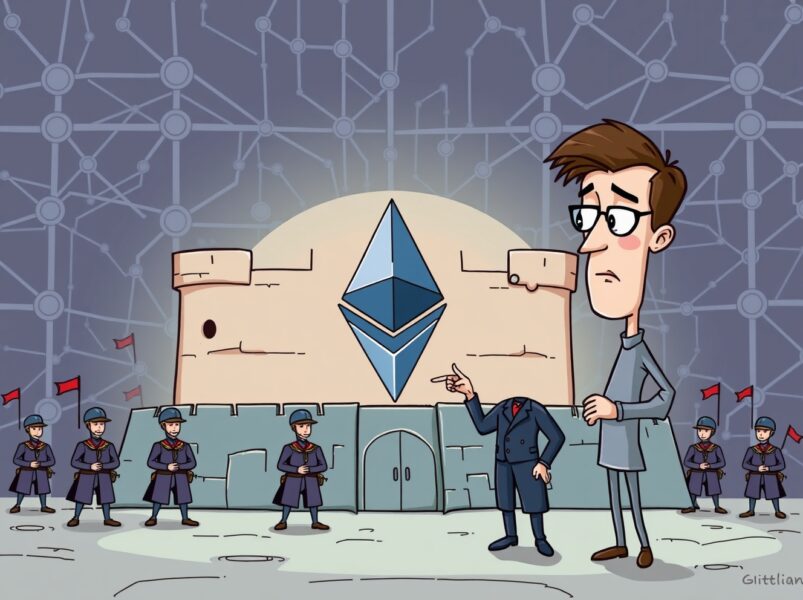
BitcoinWorld Crucial ETH Unstaking Period: Vitalik Buterin’s Unwavering Defense for Network Security Ever wondered why withdrawing your staked Ethereum (ETH) isn’t an instant process? It’s a question that often sparks debate within the crypto community. Ethereum founder Vitalik Buterin recently stepped forward to defend the network’s approximately 45-day ETH unstaking period, asserting its crucial role in safeguarding the network’s integrity. This lengthy waiting time, while sometimes seen as an inconvenience, is a deliberate design choice with profound implications for security. Why is the ETH Unstaking Period a Vital Security Measure? Vitalik Buterin’s defense comes amidst comparisons to other networks, like Solana, which boast significantly shorter unstaking times. He drew a compelling parallel to military operations, explaining that an army cannot function effectively if its soldiers can simply abandon their posts at a moment’s notice. Similarly, a blockchain network requires a stable and committed validator set to maintain its security. The current ETH unstaking period isn’t merely an arbitrary delay. It acts as a critical buffer, providing the network with sufficient time to detect and respond to potential malicious activities. If validators could instantly exit, it would open doors for sophisticated attacks, jeopardizing the entire system. Currently, Ethereum boasts over one million active validators, collectively staking approximately 35.6 million ETH, representing about 30% of the total supply. This massive commitment underpins the network’s robust security model, and the unstaking period helps preserve this stability. Network Security: Ethereum’s Paramount Concern A shorter ETH unstaking period might seem appealing for liquidity, but it introduces significant risks. Imagine a scenario where a large number of validators, potentially colluding, could quickly withdraw their stake after committing a malicious act. Without a substantial delay, the network would have limited time to penalize them or mitigate the damage. This “exit queue” mechanism is designed to prevent sudden validator exodus, which could lead to: Reduced decentralization: A rapid drop in active validators could concentrate power among fewer participants. Increased vulnerability to attacks: A smaller, less stable validator set is easier to compromise. Network instability: Frequent and unpredictable changes in validator numbers can lead to performance issues and consensus failures. Therefore, the extended period is not a bug; it’s a feature. It’s a calculated trade-off between immediate liquidity for stakers and the foundational security of the entire Ethereum ecosystem. Ethereum vs. Solana: Different Approaches to Unstaking When discussing the ETH unstaking period, many point to networks like Solana, which offers a much quicker two-day unstaking process. While this might seem like an advantage for stakers seeking rapid access to their funds, it reflects fundamental differences in network architecture and security philosophies. Solana’s design prioritizes speed and immediate liquidity, often relying on different consensus mechanisms and validator economics to manage security risks. Ethereum, on the other hand, with its proof-of-stake evolution from proof-of-work, has adopted a more cautious approach to ensure its transition and long-term stability are uncompromised. Each network makes design choices based on its unique goals and threat models. Ethereum’s substantial value and its role as a foundational layer for countless dApps necessitate an extremely robust security posture, making the current unstaking duration a deliberate and necessary component. What Does the ETH Unstaking Period Mean for Stakers? For individuals and institutions staking ETH, understanding the ETH unstaking period is crucial for managing expectations and investment strategies. It means that while staking offers attractive rewards, it also comes with a commitment to the network’s long-term health. Here are key considerations for stakers: Liquidity Planning: Stakers should view their staked ETH as a longer-term commitment, not immediately liquid capital. Risk Management: The delay inherently reduces the ability to react quickly to market volatility with staked assets. Network Contribution: By participating, stakers contribute directly to the security and decentralization of Ethereum, reinforcing its value proposition. While the current waiting period may not be “optimal” in every sense, as Buterin acknowledged, simply shortening it without addressing the underlying security implications would be a dangerous gamble for the network’s reliability. In conclusion, Vitalik Buterin’s defense of the lengthy ETH unstaking period underscores a fundamental principle: network security cannot be compromised for the sake of convenience. It is a vital mechanism that protects Ethereum’s integrity, ensuring its stability and trustworthiness as a leading blockchain platform. This deliberate design choice, while requiring patience from stakers, ultimately fortifies the entire ecosystem against potential threats, paving the way for a more secure and reliable decentralized future. Frequently Asked Questions (FAQs) Q1: What is the main reason for Ethereum’s long unstaking period? A1: The primary reason is network security. A lengthy ETH unstaking period prevents malicious actors from quickly withdrawing their stake after an attack, giving the network time to detect and penalize them, thus maintaining stability and integrity. Q2: How long is the current ETH unstaking period? A2: The current ETH unstaking period is approximately 45 days. This duration can fluctuate based on network conditions and the number of validators in the exit queue. Q3: How does Ethereum’s unstaking period compare to other blockchains? A3: Ethereum’s unstaking period is notably longer than some other networks, such as Solana, which has a two-day period. This difference reflects varying network architectures and security priorities. Q4: Does the unstaking period affect ETH stakers? A4: Yes, it means stakers need to plan their liquidity carefully, as their staked ETH is not immediately accessible. It encourages a longer-term commitment to the network, aligning staker interests with Ethereum’s stability. Q5: Could the ETH unstaking period be shortened in the future? A5: While Vitalik Buterin acknowledged the current period might not be “optimal,” any significant shortening would likely require extensive research and network upgrades to ensure security isn’t compromised. For now, the focus remains on maintaining robust network defenses. Found this article insightful? Share it with your friends and fellow crypto enthusiasts on social media to spread awareness about the critical role of the ETH unstaking period in Ethereum’s security! To learn more about the latest Ethereum trends, explore our article on key developments shaping Ethereum’s institutional adoption. This post Crucial ETH Unstaking Period: Vitalik Buterin’s Unwavering Defense for Network Security first appeared on BitcoinWorld.
Share
Coinstats2025/09/18 15:30
USD/JPY jumps to near 148.30 as Fed Powell’s caution on rate cuts boosts US Dollar

USD/JPY jumps to near 148.30 as Fed Powell’s caution on rate cuts boosts US Dollar

The post USD/JPY jumps to near 148.30 as Fed Powell’s caution on rate cuts boosts US Dollar appeared on BitcoinEthereumNews.com. USD/JPY climbs to near 148.30 as Fed’s Powell didn’t endorse aggressive dovish stance. Fed’s Powell warns of slowing job demand and upside inflation risks. Japan’s Jibun Bank Manufacturing PMI declines at a faster pace in September. The USD/JPY pair trades 0.45% higher to near 148.30 during the European trading session on Wednesday. The pair gains sharply as the US Dollar (USD) outperforms a majority of its peers, following comments from Federal Reserve (Fed) Chair Jerome Powell that the central bank needs to be cautious on further interest rate cuts. During the press time, the US Dollar Index (DXY), which tracks the Greenback’s value against six major currencies, rises almost 0.4% to near 97.60. The USD Index resumes its upside journey after a two-day corrective move. On Tuesday, Fed’s Powell stated at the Greater Providence Chamber of Commerce that the upside inflation risks and labor market concerns have posed a challenging situation for the central bank, which is prompting officials to exercise caution on further monetary policy easing. Powell also stated that the current interest rate range is “well positioned to respond to potential economic developments”. Fed Powell’s comments were similar to statements from Federal Open Market Committee (FOMC) members St. Louis Fed President Alberto Musalem, Atlanta Fed President Raphael Bostic, and Cleveland Fed President Beth Hammack who stated on Monday that the central bank needs to cautious over unwinding monetary policy restrictiveness further, citing persistent inflation risks. Going forward, investors will focus on the US Durable Goods Orders and Personal Consumption Expenditure Price Index (PCE) data for August, which will be released on Thursday and Friday, respectively. In Japan, the manufacturing business activity has declined again in September. Preliminary Jibun Bank Manufacturing PMI data came in lower at 48.4 against 49.7 in August. Economists had anticipated the Manufacturing PMI to…
Share
BitcoinEthereumNews2025/09/25 01:31