Cloudflare CEO Matthew Prince announced the launch of NET Dollar, a U.S. dollar-backed stablecoin designed for AI agent micropayments on Thursday. The connectivity cloud company plans to deploy NET Dollar as the payment backbone for autonomous AI systems that book flights, order groceries, and manage calendars without human intervention. “For decades, the business model of the Internet ran on ad platforms and bank transfers,” Prince stated, adding that “The Internet’s next business model will be powered by pay-per-use, fractional payments, and microtransactions.” The stablecoin will leverage Cloudflare’s global network to process payments at internet speed, targeting fundamental limitations in current financial systems designed for human-initiated transactions. AI Agents Drive New Payment Infrastructure Requirements NET Dollar emerges as AI agents increasingly require payment systems capable of handling millions of automated transactions without human oversight. Traditional payment rails, such as wire transfers and credit cards, cannot accommodate the instant settlements and micropayments that autonomous systems demand. The company’s stablecoin will allow global payments across different currencies and time zones, facilitate instant programmatic transactions for time-sensitive purchases, and provide compensation for content creators and API developers. Personal AI agents could automatically purchase the cheapest available flight tickets or buy items the moment they go on sale, while business agents might pay suppliers immediately upon delivery confirmation. Cloudflare is simultaneously contributing to open standards, including the Agent Payments Protocol and x402, which simplify payment processing across the internet infrastructure. The x402 protocol, developed with Coinbase, converts the HTTP “402 Payment Required” error code into a functional payment system, allowing machines to purchase data and services directly. Amazon Web Services is already exploring x402 integration for cloud computing payments, potentially transforming the $1.9 trillion cloud market expected by 2030.x402 Playground / Source: Cloudflare Regulatory Framework Shapes Stablecoin Infrastructure Development The NET Dollar announcement comes amid unprecedented regulatory clarity for stablecoins, with the U.S. GENIUS Act providing comprehensive federal guidelines that have reshaped industry strategy. The U.S. Commodity Futures Trading Commission has launched an initiative allowing stablecoins to serve as tokenized collateral in derivatives markets, with CFTC acting chair Caroline Pham calling it the “killer app” for modernizing financial infrastructure. European markets are simultaneously positioning themselves for competition, with nine major euro banks backing a MiCA-regulated stablecoin set to launch in the second half of 2026, seeking to challenge U.S. dollar dominance. Meanwhile, the regulatory momentum has allowed tech giants to embrace stablecoin integration, with Google adding stablecoin support to its new AI payment framework through partnerships with Coinbase and the Ethereum Foundation. Google’s James Tromans called stablecoins “probably one of the most important payment upgrades since the SWIFT network,” with a network effect that has triggered a growing consensus among tech giants regarding the role of programmable money in autonomous systems. Within the same interval, the broader stablecoin market has expanded from $4 billion in 2020 to over $280 billion today, with bots already accounting for 70% of stablecoin transfer volume, according to industry data. In fact, recent industry projections from Citigroup have shown that the stablecoin sector could reach over $2 trillion in market capitalization by 2030. Major stablecoin issuers now rank 17th globally in U.S. Treasury holdings, surpassing countries such as South Korea and Germany in their influence on government debt markets. Additionally, Cloudflare is not the first to implement an AI-powered payment system. Circle co-founder Sean Neville recently launched Catena Labs with $18 million in funding to create the first fully regulated AI-native financial institution, positioning stablecoins as essential infrastructure for autonomous economic activity. While stablecoins are growing and being adopted across various verticals, banking industry groups are pushing back against the growth, warning that regulatory gaps could trigger $6.6 trillion in deposit outflows from traditional banks. However, Coinbase research suggests that most stablecoin activity occurs internationally, does not pose a threat to banks, and could instead strengthen dollar dominance without materially impacting domestic banking depositsCloudflare CEO Matthew Prince announced the launch of NET Dollar, a U.S. dollar-backed stablecoin designed for AI agent micropayments on Thursday. The connectivity cloud company plans to deploy NET Dollar as the payment backbone for autonomous AI systems that book flights, order groceries, and manage calendars without human intervention. “For decades, the business model of the Internet ran on ad platforms and bank transfers,” Prince stated, adding that “The Internet’s next business model will be powered by pay-per-use, fractional payments, and microtransactions.” The stablecoin will leverage Cloudflare’s global network to process payments at internet speed, targeting fundamental limitations in current financial systems designed for human-initiated transactions. AI Agents Drive New Payment Infrastructure Requirements NET Dollar emerges as AI agents increasingly require payment systems capable of handling millions of automated transactions without human oversight. Traditional payment rails, such as wire transfers and credit cards, cannot accommodate the instant settlements and micropayments that autonomous systems demand. The company’s stablecoin will allow global payments across different currencies and time zones, facilitate instant programmatic transactions for time-sensitive purchases, and provide compensation for content creators and API developers. Personal AI agents could automatically purchase the cheapest available flight tickets or buy items the moment they go on sale, while business agents might pay suppliers immediately upon delivery confirmation. Cloudflare is simultaneously contributing to open standards, including the Agent Payments Protocol and x402, which simplify payment processing across the internet infrastructure. The x402 protocol, developed with Coinbase, converts the HTTP “402 Payment Required” error code into a functional payment system, allowing machines to purchase data and services directly. Amazon Web Services is already exploring x402 integration for cloud computing payments, potentially transforming the $1.9 trillion cloud market expected by 2030.x402 Playground / Source: Cloudflare Regulatory Framework Shapes Stablecoin Infrastructure Development The NET Dollar announcement comes amid unprecedented regulatory clarity for stablecoins, with the U.S. GENIUS Act providing comprehensive federal guidelines that have reshaped industry strategy. The U.S. Commodity Futures Trading Commission has launched an initiative allowing stablecoins to serve as tokenized collateral in derivatives markets, with CFTC acting chair Caroline Pham calling it the “killer app” for modernizing financial infrastructure. European markets are simultaneously positioning themselves for competition, with nine major euro banks backing a MiCA-regulated stablecoin set to launch in the second half of 2026, seeking to challenge U.S. dollar dominance. Meanwhile, the regulatory momentum has allowed tech giants to embrace stablecoin integration, with Google adding stablecoin support to its new AI payment framework through partnerships with Coinbase and the Ethereum Foundation. Google’s James Tromans called stablecoins “probably one of the most important payment upgrades since the SWIFT network,” with a network effect that has triggered a growing consensus among tech giants regarding the role of programmable money in autonomous systems. Within the same interval, the broader stablecoin market has expanded from $4 billion in 2020 to over $280 billion today, with bots already accounting for 70% of stablecoin transfer volume, according to industry data. In fact, recent industry projections from Citigroup have shown that the stablecoin sector could reach over $2 trillion in market capitalization by 2030. Major stablecoin issuers now rank 17th globally in U.S. Treasury holdings, surpassing countries such as South Korea and Germany in their influence on government debt markets. Additionally, Cloudflare is not the first to implement an AI-powered payment system. Circle co-founder Sean Neville recently launched Catena Labs with $18 million in funding to create the first fully regulated AI-native financial institution, positioning stablecoins as essential infrastructure for autonomous economic activity. While stablecoins are growing and being adopted across various verticals, banking industry groups are pushing back against the growth, warning that regulatory gaps could trigger $6.6 trillion in deposit outflows from traditional banks. However, Coinbase research suggests that most stablecoin activity occurs internationally, does not pose a threat to banks, and could instead strengthen dollar dominance without materially impacting domestic banking deposits

Cloudflare CEO Announces NET Dollar Stablecoin for AI Agent Micropayments

Cloudflare CEO Matthew Prince announced the launch of NET Dollar, a U.S. dollar-backed stablecoin designed for AI agent micropayments on Thursday.

The connectivity cloud company plans to deploy NET Dollar as the payment backbone for autonomous AI systems that book flights, order groceries, and manage calendars without human intervention.

“For decades, the business model of the Internet ran on ad platforms and bank transfers,” Prince stated, adding that “The Internet’s next business model will be powered by pay-per-use, fractional payments, and microtransactions.”

The stablecoin will leverage Cloudflare’s global network to process payments at internet speed, targeting fundamental limitations in current financial systems designed for human-initiated transactions.

AI Agents Drive New Payment Infrastructure Requirements

NET Dollar emerges as AI agents increasingly require payment systems capable of handling millions of automated transactions without human oversight.

Traditional payment rails, such as wire transfers and credit cards, cannot accommodate the instant settlements and micropayments that autonomous systems demand.

The company’s stablecoin will allow global payments across different currencies and time zones, facilitate instant programmatic transactions for time-sensitive purchases, and provide compensation for content creators and API developers.

Personal AI agents could automatically purchase the cheapest available flight tickets or buy items the moment they go on sale, while business agents might pay suppliers immediately upon delivery confirmation.

Cloudflare is simultaneously contributing to open standards, including the Agent Payments Protocol and x402, which simplify payment processing across the internet infrastructure.

The x402 protocol, developed with Coinbase, converts the HTTP “402 Payment Required” error code into a functional payment system, allowing machines to purchase data and services directly.

Amazon Web Services is already exploring x402 integration for cloud computing payments, potentially transforming the $1.9 trillion cloud market expected by 2030.
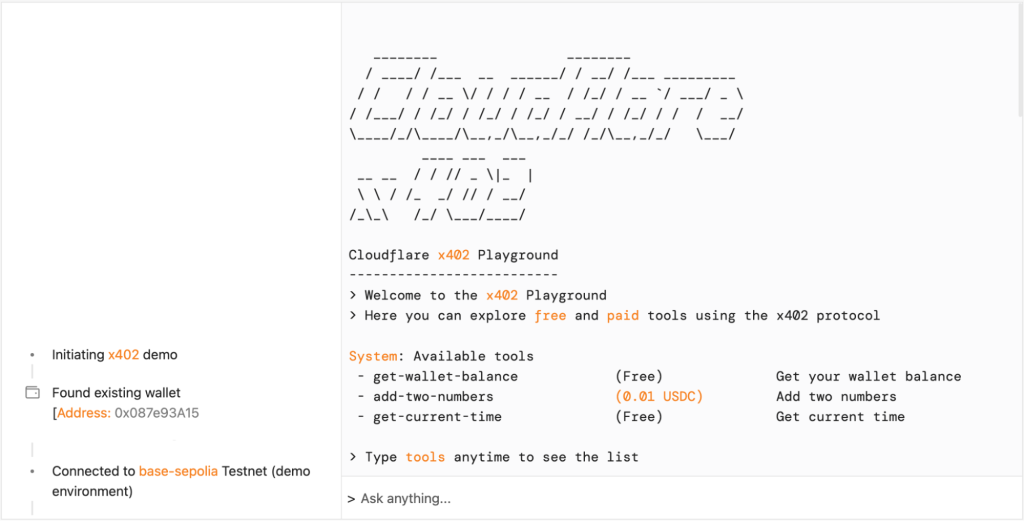
Cloudflare CEO Announces NET Dollar Stablecoin for AI Agent Micropaymentsx402 Playground / Source: Cloudflare

Regulatory Framework Shapes Stablecoin Infrastructure Development

The NET Dollar announcement comes amid unprecedented regulatory clarity for stablecoins, with the U.S. GENIUS Act providing comprehensive federal guidelines that have reshaped industry strategy.

The U.S. Commodity Futures Trading Commission has launched an initiative allowing stablecoins to serve as tokenized collateral in derivatives markets, with CFTC acting chair Caroline Pham calling it the “killer app” for modernizing financial infrastructure.

European markets are simultaneously positioning themselves for competition, with nine major euro banks backing a MiCA-regulated stablecoin set to launch in the second half of 2026, seeking to challenge U.S. dollar dominance.

Meanwhile, the regulatory momentum has allowed tech giants to embrace stablecoin integration, with Google adding stablecoin support to its new AI payment framework through partnerships with Coinbase and the Ethereum Foundation.

Google’s James Tromans called stablecoins “probably one of the most important payment upgrades since the SWIFT network,” with a network effect that has triggered a growing consensus among tech giants regarding the role of programmable money in autonomous systems.

Within the same interval, the broader stablecoin market has expanded from $4 billion in 2020 to over $280 billion today, with bots already accounting for 70% of stablecoin transfer volume, according to industry data.

In fact, recent industry projections from Citigroup have shown that the stablecoin sector could reach over $2 trillion in market capitalization by 2030.

Major stablecoin issuers now rank 17th globally in U.S. Treasury holdings, surpassing countries such as South Korea and Germany in their influence on government debt markets.

Additionally, Cloudflare is not the first to implement an AI-powered payment system. Circle co-founder Sean Neville recently launched Catena Labs with $18 million in funding to create the first fully regulated AI-native financial institution, positioning stablecoins as essential infrastructure for autonomous economic activity.

While stablecoins are growing and being adopted across various verticals, banking industry groups are pushing back against the growth, warning that regulatory gaps could trigger $6.6 trillion in deposit outflows from traditional banks.

However, Coinbase research suggests that most stablecoin activity occurs internationally, does not pose a threat to banks, and could instead strengthen dollar dominance without materially impacting domestic banking deposits.

Market Opportunity
Sleepless AI Logo
Sleepless AI Price(AI)
$0.03816
$0.03816$0.03816
-0.39%
USD
Sleepless AI (AI) Live Price Chart
Disclaimer: The articles reposted on this site are sourced from public platforms and are provided for informational purposes only. They do not necessarily reflect the views of MEXC. All rights remain with the original authors. If you believe any content infringes on third-party rights, please contact service@support.mexc.com for removal. MEXC makes no guarantees regarding the accuracy, completeness, or timeliness of the content and is not responsible for any actions taken based on the information provided. The content does not constitute financial, legal, or other professional advice, nor should it be considered a recommendation or endorsement by MEXC.

You May Also Like

‘Love Island Games’ Season 2 Release Schedule—When Do New Episodes Come Out?

‘Love Island Games’ Season 2 Release Schedule—When Do New Episodes Come Out?

The post ‘Love Island Games’ Season 2 Release Schedule—When Do New Episodes Come Out? appeared on BitcoinEthereumNews.com. LOVE ISLAND GAMES — Episode 201 — Pictured: Ariana Madix — (Photo by: Ben Symons/PEACOCK via Getty Images) Ben Symons/PEACOCK via Getty Images We’ve got a text! It’s time for another season of Love Island Games. With fan-favorites returning in hopes of winning the $250,000 cash prize, read on to learn more about Love Island Games Season 2, including the release schedule so you don’t miss a second of drama. Love Island Games is a spinoff in the Love Island franchise that first premiered in 2023. The show follows a similar format to the original series, but with one major twist: all contestants are returning Islanders from previous seasons of Love Island from around the world, including the USA, UK, Australia and more. Another big difference is that games take on much more importance in Love Island Games than the mothership version, with the results “determining advantages, risks, and even who stays and who goes,” according to Peacock. Vanderpump Rules star Ariana Madix is taking over hosting duties for Love Island Games Season 2, replacing Love Island UK star Maya Jama who hosted the first season. Iain Stirling returns as the show’s narrator, while UK alum Maura Higgins will continue to host the Saturday show Love Island: Aftersun. ForbesWho’s In The ‘Love Island Games’ Season 2 Cast? Meet The IslandersBy Monica Mercuri Jack Fowler and Justine Ndiba were named the first-ever winners of Love Island Games in 2023. Justine had previously won Love Island USA Season 2 with Caleb Corprew, while Jack was a contestant on Love Island UK Season 4. In March 2024, Fowler announced on his Instagram story that he and Justine decided to remain “just friends.” The Season 2 premiere revealed the first couples of the season: Andrea Carmona and Charlie Georgios, Andreina Santos-Marte and Tyrique Hyde,…
Share
BitcoinEthereumNews2025/09/18 04:50
IP Hits $11.75, HYPE Climbs to $55, BlockDAG Surpasses Both with $407M Presale Surge!

IP Hits $11.75, HYPE Climbs to $55, BlockDAG Surpasses Both with $407M Presale Surge!

The post IP Hits $11.75, HYPE Climbs to $55, BlockDAG Surpasses Both with $407M Presale Surge! appeared on BitcoinEthereumNews.com. Crypto News 17 September 2025 | 18:00 Discover why BlockDAG’s upcoming Awakening Testnet launch makes it the best crypto to buy today as Story (IP) price jumps to $11.75 and Hyperliquid hits new highs. Recent crypto market numbers show strength but also some limits. The Story (IP) price jump has been sharp, fueled by big buybacks and speculation, yet critics point out that revenue still lags far behind its valuation. The Hyperliquid (HYPE) price looks solid around the mid-$50s after a new all-time high, but questions remain about sustainability once the hype around USDH proposals cools down. So the obvious question is: why chase coins that are either stretched thin or at risk of retracing when you could back a network that’s already proving itself on the ground? That’s where BlockDAG comes in. While other chains are stuck dealing with validator congestion or outages, BlockDAG’s upcoming Awakening Testnet will be stress-testing its EVM-compatible smart chain with real miners before listing. For anyone looking for the best crypto coin to buy, the choice between waiting on fixes or joining live progress feels like an easy one. BlockDAG: Smart Chain Running Before Launch Ethereum continues to wrestle with gas congestion, and Solana is still known for network freezes, yet BlockDAG is already showing a different picture. Its upcoming Awakening Testnet, set to launch on September 25, isn’t just a demo; it’s a live rollout where the chain’s base protocols are being stress-tested with miners connected globally. EVM compatibility is active, account abstraction is built in, and tools like updated vesting contracts and Stratum integration are already functional. Instead of waiting for fixes like other networks, BlockDAG is proving its infrastructure in real time. What makes this even more important is that the technology is operational before the coin even hits exchanges. That…
Share
BitcoinEthereumNews2025/09/18 00:32
Gemini Exchange Launches BNB Trading and Custody Services

Gemini Exchange Launches BNB Trading and Custody Services

The post Gemini Exchange Launches BNB Trading and Custody Services appeared on BitcoinEthereumNews.com. TLDR: Gemini becomes latest major U.S. exchange to offer
Share
BitcoinEthereumNews2025/12/26 16:43