The post Coinbase’s Bitcoin loans could hit $100B target by 2030 appeared on BitcoinEthereumNews.com. Coinbase has surpassed $1 billion in on-chain Bitcoin-backed loan originations eight months after launching the product in January 2025, and CEO Brian Armstrong has set a $100 billion lifetime originations target.. The run rate implied by the first eight months is roughly $125 million per month, which frames the pace required to reach the new objective. The loans post Bitcoin collateral on the chain via Coinbase-wrapped Bitcoin, cbBTC, which is then routed to a Morpho market on Base. Utilization sets a variable interest rate every block, and USDC is delivered to a borrower’s Coinbase account. Liquidation occurs if the loan-to-value ratio reaches 86 percent, repayment has no fixed schedule, and Coinbase lists a 4.38 percent liquidation penalty in customer materials. According to Coinbase documentation, borrowers must maintain over-collateralization at all times, with U.S. availability that excludes New York for now. Per Coinbase, cbBTC is backed 1:1 by Bitcoin under custody with public proof-of-reserves and canonical addresses published. Scale on the back end matters because origination capacity depends on dollar liquidity and throughput. Total deposits rose into the low teens in billions over the summer, and Morpho posts show Coinbase-connected collateral passing $1 billion with several hundred million in active loans during mid-year. According to DefiLlama, daily transactions and active addresses remain elevated with a double-digit-billion bridged TVL, which supports reliable liquidation execution and faster recycling of collateral into fresh originations. Macro credit context has turned favorable for asset-backed structures. Decentralized lending outstanding reached $26.47 billion in the second quarter of 2025, up 42 percent quarter over quarter, while combined DeFi, CeFi, and tokenized credit climbed further. Outside crypto, private credit managers continue to add asset-based finance capacity. KKR closed a $6.5 billion raise for asset-based finance this year, illustrating broader demand for secured credit instruments that can coexist with on-chain… The post Coinbase’s Bitcoin loans could hit $100B target by 2030 appeared on BitcoinEthereumNews.com. Coinbase has surpassed $1 billion in on-chain Bitcoin-backed loan originations eight months after launching the product in January 2025, and CEO Brian Armstrong has set a $100 billion lifetime originations target.. The run rate implied by the first eight months is roughly $125 million per month, which frames the pace required to reach the new objective. The loans post Bitcoin collateral on the chain via Coinbase-wrapped Bitcoin, cbBTC, which is then routed to a Morpho market on Base. Utilization sets a variable interest rate every block, and USDC is delivered to a borrower’s Coinbase account. Liquidation occurs if the loan-to-value ratio reaches 86 percent, repayment has no fixed schedule, and Coinbase lists a 4.38 percent liquidation penalty in customer materials. According to Coinbase documentation, borrowers must maintain over-collateralization at all times, with U.S. availability that excludes New York for now. Per Coinbase, cbBTC is backed 1:1 by Bitcoin under custody with public proof-of-reserves and canonical addresses published. Scale on the back end matters because origination capacity depends on dollar liquidity and throughput. Total deposits rose into the low teens in billions over the summer, and Morpho posts show Coinbase-connected collateral passing $1 billion with several hundred million in active loans during mid-year. According to DefiLlama, daily transactions and active addresses remain elevated with a double-digit-billion bridged TVL, which supports reliable liquidation execution and faster recycling of collateral into fresh originations. Macro credit context has turned favorable for asset-backed structures. Decentralized lending outstanding reached $26.47 billion in the second quarter of 2025, up 42 percent quarter over quarter, while combined DeFi, CeFi, and tokenized credit climbed further. Outside crypto, private credit managers continue to add asset-based finance capacity. KKR closed a $6.5 billion raise for asset-based finance this year, illustrating broader demand for secured credit instruments that can coexist with on-chain…

Coinbase’s Bitcoin loans could hit $100B target by 2030

Coinbase has surpassed $1 billion in on-chain Bitcoin-backed loan originations eight months after launching the product in January 2025, and CEO Brian Armstrong has set a $100 billion lifetime originations target..

The run rate implied by the first eight months is roughly $125 million per month, which frames the pace required to reach the new objective.

The loans post Bitcoin collateral on the chain via Coinbase-wrapped Bitcoin, cbBTC, which is then routed to a Morpho market on Base. Utilization sets a variable interest rate every block, and USDC is delivered to a borrower’s Coinbase account.

Liquidation occurs if the loan-to-value ratio reaches 86 percent, repayment has no fixed schedule, and Coinbase lists a 4.38 percent liquidation penalty in customer materials.

According to Coinbase documentation, borrowers must maintain over-collateralization at all times, with U.S. availability that excludes New York for now.

Per Coinbase, cbBTC is backed 1:1 by Bitcoin under custody with public proof-of-reserves and canonical addresses published.

Scale on the back end matters because origination capacity depends on dollar liquidity and throughput. Total deposits rose into the low teens in billions over the summer, and Morpho posts show Coinbase-connected collateral passing $1 billion with several hundred million in active loans during mid-year.

According to DefiLlama, daily transactions and active addresses remain elevated with a double-digit-billion bridged TVL, which supports reliable liquidation execution and faster recycling of collateral into fresh originations.

Macro credit context has turned favorable for asset-backed structures. Decentralized lending outstanding reached $26.47 billion in the second quarter of 2025, up 42 percent quarter over quarter, while combined DeFi, CeFi, and tokenized credit climbed further. Outside crypto, private credit managers continue to add asset-based finance capacity.

KKR closed a $6.5 billion raise for asset-based finance this year, illustrating broader demand for secured credit instruments that can coexist with on-chain collateral rails.

Forward math sets expectations for Coinbase’s $100 billion target.

If originations average $125 million per month from the initial period, the goal requires compounding rather than linear extension. CryptoSlate calculations show that reaching $100 billion by 2030 would require about 7.7 percent compounded monthly growth from today’s base, while an arrival in 2029 would require roughly 9.6 percent per month.

Hitting the milestone by 2027 would require about 21.2 percent per month, which would depend on a larger dollar supply in Morpho markets on Base and higher per-loan tickets as Coinbase moves up-market.

The number of lifetime loans needed falls materially as the average ticket size rises, which ties the path to capacity on both the collateral and USDC sides of the book.

Target yearMonths to targetRequired m/m growthImplied CAGR
2027~24~21.2%~900%
2029~50~9.6%~212%
2030~62~7.7%~144%

Risk is concentrated in the collateral price path and liquidity at the moment of utilization spikes. The liquidation rule at 86 percent LTV implies distinct drawdown thresholds as starting leverage rises.

A cohort that enters at conservative ratios has larger buffers, while higher LTV borrowers face tighter bands during rapid price moves and gas price spikes.

According to Coinbase documentation, liquidation applies automatically on chain, and penalties apply at execution, which can amplify realized losses for borrowers who delay deleveraging in a drawdown.

Start LTVBTC drawdown to reach 86% LTV
30%~65%
35%~59%
40%~53.5%
50%~41.9%

Rate sensitivity is a second lever.

Because Morpho markets set borrowing costs at the block level based on utilization, a sudden increase in USDC demand can lift the effective rate, which matters for larger tickets and multi-month balances where borrowers expect stability.

According to Morpho, governance and incentive changes have been used to grow USDC supply and rebalance utilization, which is a practical prerequisite for raising single-loan limits toward the levels sought by high-net-worth users.

The distribution model aligns traditional account primitives with permissionless settlement. Borrowers initiate and manage positions with familiar security and reporting, while actual lending, collateralization, and liquidations occur in an open market on Base.

Per Morpho, this front-end and back-end split, sometimes called the DeFi mullet, has supported partner-led inflows without requiring users to operate new wallets or navigate complex pool selection.

The larger market backdrop still carries lessons from 2022, when maturity mismatches and collateral concentration stressed centralized lenders. Structural differences apply here, including on-chain collateral handling and programmatic liquidation, yet dollar liquidity during stress events remains a central variable.

Tracking Base activity, bridged TVL, and Morpho market utilization provides real-time context for origination capacity and liquidation execution costs in both calm and stressed conditions.

The mechanics to support that shift are live today, and the next phase turns on how quickly dollar liquidity and borrower mix can scale on chain.

Mentioned in this article

Source: https://cryptoslate.com/coinbases-bitcoin-loans-could-hit-100b-target-by-2030/

Disclaimer: The articles reposted on this site are sourced from public platforms and are provided for informational purposes only. They do not necessarily reflect the views of MEXC. All rights remain with the original authors. If you believe any content infringes on third-party rights, please contact service@support.mexc.com for removal. MEXC makes no guarantees regarding the accuracy, completeness, or timeliness of the content and is not responsible for any actions taken based on the information provided. The content does not constitute financial, legal, or other professional advice, nor should it be considered a recommendation or endorsement by MEXC.

You May Also Like

The Stunning ASEAN Winner Emerges As Manufacturing Shifts Accelerate

The Stunning ASEAN Winner Emerges As Manufacturing Shifts Accelerate

The post The Stunning ASEAN Winner Emerges As Manufacturing Shifts Accelerate appeared on BitcoinEthereumNews.com. Vietnam US Tariffs: The Stunning ASEAN Winner
Share
BitcoinEthereumNews2026/02/24 08:20
MySQL Single Leader Replication with Node.js and Docker

MySQL Single Leader Replication with Node.js and Docker

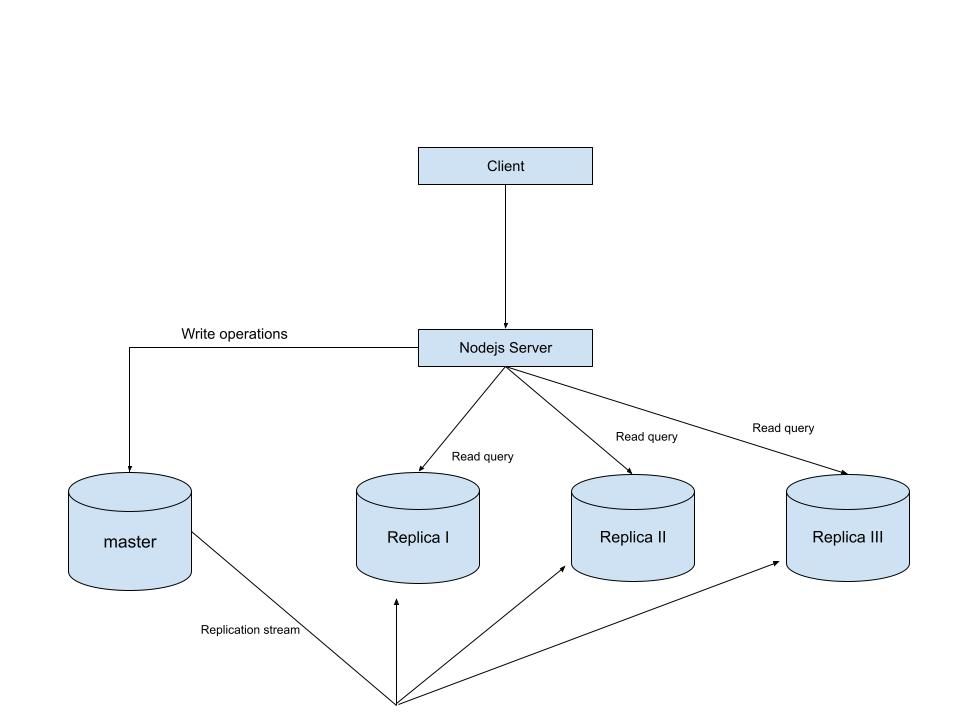
Modern applications demand high availability and the ability to scale reads without compromising performance. One of the most common strategies to achieve this is Replication. In this setup, we configured a single database to act as the leader (master) and handle all write operations, while three replicas handle read operations. In this article, we’ll walk through how to set up MySQL single-leader replication on your local machine using Docker. Once the replication is working, we’ll connect it to a Node.js application using Sequelize ORM, so that reads are routed to the replica and writes go to the master. By the end, you’ll have a working environment where you can see replication in real time Prerequisites knowledge of database replication Background knowledge of docker and docker compose Background knowledge of Nodejs and how to run a NodeJS server An Overview of what we are building Setup Setup our database servers on docker compose in the root of our project directory, create a file named docker-compose.yml with the following content to setup our mysql primary and replica databases. \ \ name: "learn-replica" volumes: mysqlMasterDatabase: mysqlSlaveDatabase: mysqlSlaveDatabaseII: mysqlSlaveDatabaseIII: networks: mysql-replication-network: services: mysql-master: image: mysql:latest container_name: mysql-master command: --server-id=1 --log-bin=ON environment: MYSQL_ROOT_PASSWORD: master MYSQL_DATABASE: replicaDb ports: - "3306:3306" volumes: - mysqlMasterDatabase:/var/lib/mysql networks: - mysql-replication-network mysql-slave: image: mysql:latest container_name: mysql-slave command: --server-id=2 --log-bin=ON environment: MYSQL_ROOT_PASSWORD: slave MYSQL_DATABASE: replicaDb MYSQL_ROOT_HOST: "%" ports: - "3307:3306" volumes: - mysqlSlaveDatabase:/var/lib/mysql depends_on: - mysql-master networks: - mysql-replication-network mysql-slaveII: image: mysql:latest container_name: mysql-slaveII command: --server-id=2 --log-bin=ON environment: MYSQL_ROOT_PASSWORD: slave MYSQL_DATABASE: replicaDb MYSQL_ROOT_HOST: "%" ports: - "3308:3306" volumes: - mysqlSlaveDatabaseII:/var/lib/mysql depends_on: - mysql-master networks: - mysql-replication-network mysql-slaveIII: image: mysql:latest container_name: mysql-slaveIII command: --server-id=3 --log-bin=ON environment: MYSQL_ROOT_PASSWORD: slave MYSQL_DATABASE: replicaDb MYSQL_ROOT_HOST: "%" ports: - "3309:3306" volumes: - mysqlSlaveDatabaseIII:/var/lib/mysql depends_on: - mysql-master networks: - mysql-replication-network In this setup, I’m creating a master database container called mysql-master and 3 replica containers called mysql-slave, mysql-slaveII and mysql-slaveIII. I won’t go too deep into the docker-compose.yml file since it’s just a basic setup, but I do want to walk you through the command line instructions used in all four services because that’s where things get interesting.
command: --server-id=1 --log-bin=ON The --server-id option gives each MySQL server in your replication setup its own name tag. Each one has to be unique and without it, replication won’t work at all. Another cool option not included here is binlog_format=ROW. This tells MySQL how to keep track of changes before passing them along to the replicas. By default, MySQL already uses row-based replication, but you can explicitly set it to ROW to be sure or switch it to STATEMENT if you’d rather log the actual SQL statements instead of row-by-row changes. \ Run our containers on docker Now, in the terminal, we can run the following command to spin up our database containers: docker-compose up -d \ Setting Up Our Master (Primary) Server To configure our master server, we would have to first access the running instance on docker using the following command docker exec -it mysql-master bash This command opens an interactive Bash shell inside the running Docker container named mysql-master, allowing us to run commands directly inside that container. \ Now that we’re inside the container, we can access the MySQL server and start running commands. type: mysql -uroot -p This will log you into MySQL as the root user. You’ll be prompted to enter the password you set in your docker-compose.yml file. \ Next, we need to create a special user that our replicas will use to connect to the master server and pull data. Inside the MySQL prompt, run the following commands: \ CREATE USER 'repl_user'@'%' IDENTIFIED BY 'replication_pass'; GRANT REPLICATION SLAVE ON . TO 'repl_user'@'%'; FLUSH PRIVILEGES; Here’s what’s happening: CREATE USER makes a new MySQL user called repl_user with the password replication_pass. GRANT REPLICATION SLAVE gives this user permission to act as a replication client. FLUSH PRIVILEGES tells MySQL to reload the user permissions so they take effect immediately. \ Time to Configure the Replica (Secondary) Servers a. First, let’s access the replica containers the same way we did with the master. Run this command in your terminal for each of the replica containers: \ docker exec -it <replica_container_name> bash mysql -uroot -p <replica_container_name> should be replace with the name of the replica container you are trying to setup b. Now it’s time to tell our replica where to get its data from. While inside the replica’s MySQL shell, run the following command to configure replication using the master’s details: CHANGE REPLICATION SOURCE TO SOURCE_HOST='mysql-master', SOURCE_USER='repl_user', SOURCE_PASSWORD='replication_pass', GET_SOURCE_PUBLIC_KEY=1; With the replication settings in place, let’s fire up the replica and get it syncing with the master. Still inside the MySQL shell on the replica, run: START REPLICA; This starts the replication process. To make sure everything is working, check the replica’s status with:
SHOW REPLICA STATUS\G; Look for Replica_IO_Running and Replica_SQL_Running — if both say Yes, congratulations! 🎉 Your replica is now successfully connected to the master and replicating data in real time.
Testing Our Replication Setup from the Node.js App Now that our replication is successfully set up, we can configure our Node.js server to observe the real-time effect of data being replicated from the master server to the replica server whenever we write to it. We start by installing the following dependencies:
npm i express mysql2 sequelize \ Now create a folder called src in the root directory and add the following files inside that folder connection.js, index.js and model.js. Our current directory should look like this We can now set up our connections to our master and replica server in the connection.js file as shown below
const Sequelize = require("sequelize"); const sequelize = new Sequelize({ dialect: "mysql", replication: { write: { host: "127.0.0.1", username: "root", password: "master", database: "replicaDb", }, read: [ { host: "127.0.0.1", username: "root", password: "slave", database: "replicaDb", port: 3307 }, { host: "127.0.0.1", username: "root", password: "slave", database: "replicaDb", port: 3308 }, { host: "127.0.0.1", username: "root", password: "slave", database: "replicaDb", port: 3309 }, ], }, }); async function connectdb() { try { await sequelize.authenticate(); } catch (error) { console.error("❌ unable to connect to the follower database", error); } } connectdb(); module.exports = { sequelize, }; \ We can now create a User table in the model.js file
const {DataTypes} = require("sequelize"); const { sequelize } = require("./connection"); const User = sequelize.define("User", { name: { type: DataTypes.STRING, allowNull: false, }, email: { type: DataTypes.STRING, unique: true, allowNull: false, }, }); module.exports = User \ and finally in our index.js file we can start our server and listen for connections on port 3000. from the code sample below, all inserts or updates will be routed by sequelize to the master server. while all read queries will be routed to the read replicas.
const express = require("express"); const { sequelize } = require("./connection"); const User = require("./model"); const app = express(); app.use(express.json()); async function main() { await sequelize.sync({ alter: true }); app.get("/", (req, res) => { res.status(200).json({ message: "first step to setting server up", }); }); app.post("/user", async (req, res) => { const { email, name } = req.body; let newUser = await User.build({ name, email, }); // This INSERT will go to the write (master) connection newUser = newUser.save({ returning: false }); res.status(201).json({ message: "User successfully created", }); }); app.get("/user", async (req, res) => { // This SELECT query will go to one of the read replicas const users = await User.findAll(); res.status(200).json(users); }); app.listen(3000, () => { console.log("server has connected"); }); } main(); When you make a POST request to the /users endpoint, take a moment to check both the master and replica servers to observe how data is replicated in real time. Right now, we are relying on Sequelize to automatically route requests, which works for development but isn’t robust enough for a production environment. In particular, if the master node goes down, Sequelize cannot automatically redirect requests to a newly elected leader. In the next part of this series, we’ll explore strategies to handle these challenges
Share
Hackernoon2025/09/18 14:44
Robinhood: Investors Are Looking Beyond BTC

Robinhood: Investors Are Looking Beyond BTC

The post Robinhood: Investors Are Looking Beyond BTC appeared on BitcoinEthereumNews.com. Investors Diversifying Beyond BTC and ETH Robinhood’s crypto division
Share
BitcoinEthereumNews2026/02/24 08:32