The post Foreign investors pull $10B from Asian stocks as tech rally stalls appeared on BitcoinEthereumNews.com. Foreign investors yanked more than $10 billion out of major Asian stock markets during the first week of November. The sudden shift came as worries grew about sky-high tech stock prices and whether the recent market run could keep going. Foreign fund managers offloaded $10.18 billion in stocks across seven Asian countries for the week ending November 7, LSEG data shows. That’s a complete turnaround from October, when these same investors bought $2.28 billion worth of shares. The selling hit Taiwan, South Korea, India, Thailand, Indonesia, Vietnam, and the Philippines. South Korea took the biggest beating. Foreign investors dumped about $5.05 billion in Korean stocks last week, wiping out the $4.21 billion they’d pumped in during the month before. Taiwan came in second for outflows. Foreign investors sold $3.86 billion worth of Taiwanese shares. That’s actually worse than October, when they’d already pulled $3.21 billion out of the market. Jason Lui from BNP Paribas, who handles equity strategy for Asia-Pacific, broke down what’s happening. “Foreign outflows in Korea and Taiwan equities are primarily driven by the weakness in leading AI-related companies, which is consistent with the global headwinds across other markets such as Japan and the US,” Lui said, as mentioned in a Reuters report. Tech stocks get hammered Tech stocks across the region took a hit. The MSCI index that tracks Asian tech companies outside Japan fell 4.23% last week. This comes after the same index had jumped 62.5% in the six months through October. A global tech index dropped 4.38% in the same period. Some experts think the selloff might be overdone. Mark Haefele, chief investment officer at UBS Global Wealth Management, says the underlying business fundamentals are still strong.  “Renewed worries over elevated tech valuations have triggered volatility, but solid fundamentals suggest current levels are justified,” Haefele… The post Foreign investors pull $10B from Asian stocks as tech rally stalls appeared on BitcoinEthereumNews.com. Foreign investors yanked more than $10 billion out of major Asian stock markets during the first week of November. The sudden shift came as worries grew about sky-high tech stock prices and whether the recent market run could keep going. Foreign fund managers offloaded $10.18 billion in stocks across seven Asian countries for the week ending November 7, LSEG data shows. That’s a complete turnaround from October, when these same investors bought $2.28 billion worth of shares. The selling hit Taiwan, South Korea, India, Thailand, Indonesia, Vietnam, and the Philippines. South Korea took the biggest beating. Foreign investors dumped about $5.05 billion in Korean stocks last week, wiping out the $4.21 billion they’d pumped in during the month before. Taiwan came in second for outflows. Foreign investors sold $3.86 billion worth of Taiwanese shares. That’s actually worse than October, when they’d already pulled $3.21 billion out of the market. Jason Lui from BNP Paribas, who handles equity strategy for Asia-Pacific, broke down what’s happening. “Foreign outflows in Korea and Taiwan equities are primarily driven by the weakness in leading AI-related companies, which is consistent with the global headwinds across other markets such as Japan and the US,” Lui said, as mentioned in a Reuters report. Tech stocks get hammered Tech stocks across the region took a hit. The MSCI index that tracks Asian tech companies outside Japan fell 4.23% last week. This comes after the same index had jumped 62.5% in the six months through October. A global tech index dropped 4.38% in the same period. Some experts think the selloff might be overdone. Mark Haefele, chief investment officer at UBS Global Wealth Management, says the underlying business fundamentals are still strong.  “Renewed worries over elevated tech valuations have triggered volatility, but solid fundamentals suggest current levels are justified,” Haefele…

Foreign investors pull $10B from Asian stocks as tech rally stalls

Foreign investors yanked more than $10 billion out of major Asian stock markets during the first week of November. The sudden shift came as worries grew about sky-high tech stock prices and whether the recent market run could keep going.

Foreign fund managers offloaded $10.18 billion in stocks across seven Asian countries for the week ending November 7, LSEG data shows. That’s a complete turnaround from October, when these same investors bought $2.28 billion worth of shares. The selling hit Taiwan, South Korea, India, Thailand, Indonesia, Vietnam, and the Philippines.

South Korea took the biggest beating. Foreign investors dumped about $5.05 billion in Korean stocks last week, wiping out the $4.21 billion they’d pumped in during the month before.

Taiwan came in second for outflows. Foreign investors sold $3.86 billion worth of Taiwanese shares. That’s actually worse than October, when they’d already pulled $3.21 billion out of the market.

Jason Lui from BNP Paribas, who handles equity strategy for Asia-Pacific, broke down what’s happening. “Foreign outflows in Korea and Taiwan equities are primarily driven by the weakness in leading AI-related companies, which is consistent with the global headwinds across other markets such as Japan and the US,” Lui said, as mentioned in a Reuters report.

Tech stocks get hammered

Tech stocks across the region took a hit. The MSCI index that tracks Asian tech companies outside Japan fell 4.23% last week. This comes after the same index had jumped 62.5% in the six months through October. A global tech index dropped 4.38% in the same period.

Some experts think the selloff might be overdone. Mark Haefele, chief investment officer at UBS Global Wealth Management, says the underlying business fundamentals are still strong.

 “Renewed worries over elevated tech valuations have triggered volatility, but solid fundamentals suggest current levels are justified,” Haefele said. “We forecast an earnings growth of 15% for global tech this year, followed by a solid 12.5% increase in 2026.”

According to a Cryptopolitan report Asian tech stocks may have better value than US AI rivals.

LSEG data puts the price-to-earnings ratio for the MSCI Asia Pacific index (excluding Japan) at 15.81 as of late October. That’s the highest it’s been since June 2021.

India sees money walk out the door

India wasn’t spared either. Foreign investors pulled $1.42 billion last week after putting $1.66 billion into the country in October.

HSBC’s Friday report points out that India has become the most underweighted market in global emerging market portfolios. Just one out of four funds HSBC tracks holds more Indian stocks than their benchmark suggests they should.

But HSBC sees a silver lining. “We see India as a good AI hedge and provides diversification for those who feel uncomfortable with the AI rally. India will be an outsized beneficiary of any additional money coming into the EM region,” the report said.

The smaller Southeast Asian markets went in different directions. Vietnam saw $95 million leave while Thailand lost $40 million. But Indonesia and the Philippines managed to pull in $207 million and $77 million, respectively.

The change in money flows shows foreign investors are getting nervous about tech stock valuations and questioning whether the rally that’s powered gains all year can continue.

Want your project in front of crypto’s top minds? Feature it in our next industry report, where data meets impact.

Source: https://www.cryptopolitan.com/foreign-investors-pull-billions-from-asia/
Market Opportunity
Moonveil Logo
Moonveil Price(MORE)
$0.0006558
$0.0006558$0.0006558
-0.34%
USD
Moonveil (MORE) Live Price Chart
Disclaimer: The articles reposted on this site are sourced from public platforms and are provided for informational purposes only. They do not necessarily reflect the views of MEXC. All rights remain with the original authors. If you believe any content infringes on third-party rights, please contact service@support.mexc.com for removal. MEXC makes no guarantees regarding the accuracy, completeness, or timeliness of the content and is not responsible for any actions taken based on the information provided. The content does not constitute financial, legal, or other professional advice, nor should it be considered a recommendation or endorsement by MEXC.

You May Also Like

Pippin (PIPPIN) Price Prediction 2026–2030: Can PIPPIN Hit $0.70 Soon?

Pippin (PIPPIN) Price Prediction 2026–2030: Can PIPPIN Hit $0.70 Soon?

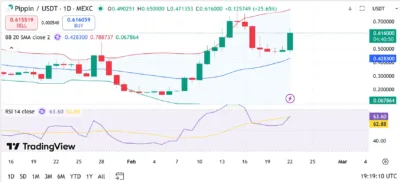
PIPPIN has surged sharply on the daily timeframe, printing a powerful bullish candle with over 25% gains. RSI is holding above 60, signaling strengthening momentum
Share
Coinstats2026/02/23 04:29
Will Cardano Reach $10 by 2030? Analysts Break Down ADA’s Growth Cycles

Will Cardano Reach $10 by 2030? Analysts Break Down ADA’s Growth Cycles

The post Will Cardano Reach $10 by 2030? Analysts Break Down ADA’s Growth Cycles appeared first on Coinpedia Fintech News Cardano (ADA) is trading at $0.9024 with a market cap of $32.91 billion. Experts say ADA has the potential to climb much higher, with some placing long-term targets as high as $10. The token continues to benefit from stronger visibility, rising liquidity, and increasing inflows from both institutional and retail markets. Can Cardano Hit $10 …
Share
CoinPedia2025/09/18 17:19
Crypto whale loses $6M to sneaky phishing scheme targeting staked Ethereum

Crypto whale loses $6M to sneaky phishing scheme targeting staked Ethereum

The post Crypto whale loses $6M to sneaky phishing scheme targeting staked Ethereum appeared on BitcoinEthereumNews.com. A crypto whale lost more than $6 million in staked Ethereum (stETH) and Aave-wrapped Bitcoin (aEthWBTC) after approving malicious signatures in a phishing scheme on Sept. 18, according to blockchain security firm Scam Sniffer. According to the firm, the attackers disguised their move as a routine wallet confirmation through “Permit” signatures, which tricked the victim into authorizing fund transfers without triggering obvious red flags. Yu Xian, founder of blockchain security company SlowMist, noted that the victim did not recognize the danger because the transaction required no gas fees. He wrote: “From the victim’s perspective, he just clicked a few times to confirm the wallet’s pop-up signature requests, didn’t spend a single penny of gas, and $6.28 million was gone.” How Permit exploits work Permit approvals were originally designed to simplify token transfers. Instead of submitting an on-chain approval and paying fees, a user can sign an off-chain message authorizing a spender. That efficiency, however, has created a new attack surface for malicious players. Once a user signs such a permit, attackers can combine two functions—Permit and TransferFrom—to drain assets directly. Because the authorization takes place off-chain, wallet dashboards show no unusual activity until the funds move. As a result, the assets are gone when the approval executes on-chain, and tokens are redirected to the attacker’s wallet. This loophole has made permit exploits increasingly attractive for malicious actors, who can siphon millions without needing complex hacks or high-cost gas wars. Phishing losses The latest theft highlights a wider trend of escalating phishing campaigns. Scam Sniffer reported that in August alone, attackers stole $12.17 million from more than 15,200 victims. That figure represented a 72% jump in losses compared with July. According to the firm, the most significant share of August’s damages came from three large accounts that accounted for nearly half…
Share
BitcoinEthereumNews2025/09/19 02:31