The post France and Germany Move Toward National Bitcoin Reserves appeared on BitcoinEthereumNews.com. For decades, Europe’s wealth was measured in gold and bonds. Now, two of its largest economies are preparing to add something new to their strategic vaults. This week, news has emerged that political leaders in Germany and France have each introduced proposals to establish a national Bitcoin reserve in a move that could redefine the architecture of state reserves. This marks the first serious attempt by major European countries to treat BTC as a sovereign asset. France and Germany’s Bitcoin reserves France’s initiative came first and with remarkable detail. On Oct. 28, Éric Ciotti, President of the Union de la Droite Républicaine (UDR), outlined an ambitious plan for the country to accumulate up to 420,000 BTC over seven to eight years, roughly 2% of Bitcoin’s fixed supply. A day later, Germany’s Alternative für Deutschland (AfD) reportedly introduced a motion suggesting that Berlin explore a national Bitcoin strategy as a hedge against inflation and geopolitical instability. Together, these initiatives signal something unprecedented and the start of a European Bitcoin reserve race. This could reshape the continent’s monetary identity and challenge the dominance of gold in national asset allocation. Bitcoin reserve proposal details Germany’s motion draws directly from central bank reserve principles. It suggests that Bitcoin’s decentralized issuance and predictable supply make it a natural complement to gold, particularly as European economies grapple with persistent inflation and a weakening euro. Moreover, Bitcoin characteristics reflect broader themes of monetary sovereignty and technological progress, positioning the asset as a long-term reserve capable of insulating national balance sheets from systemic shocks. While the motion does not specify a purchase size, analysts suggest it could be in the billions of euros, particularly if benchmarked against US reserve discussions and El Salvador’s precedent. On the other hand, France’s approach is more ambitious and institutional. Ciotti’s UDR party proposes creating… The post France and Germany Move Toward National Bitcoin Reserves appeared on BitcoinEthereumNews.com. For decades, Europe’s wealth was measured in gold and bonds. Now, two of its largest economies are preparing to add something new to their strategic vaults. This week, news has emerged that political leaders in Germany and France have each introduced proposals to establish a national Bitcoin reserve in a move that could redefine the architecture of state reserves. This marks the first serious attempt by major European countries to treat BTC as a sovereign asset. France and Germany’s Bitcoin reserves France’s initiative came first and with remarkable detail. On Oct. 28, Éric Ciotti, President of the Union de la Droite Républicaine (UDR), outlined an ambitious plan for the country to accumulate up to 420,000 BTC over seven to eight years, roughly 2% of Bitcoin’s fixed supply. A day later, Germany’s Alternative für Deutschland (AfD) reportedly introduced a motion suggesting that Berlin explore a national Bitcoin strategy as a hedge against inflation and geopolitical instability. Together, these initiatives signal something unprecedented and the start of a European Bitcoin reserve race. This could reshape the continent’s monetary identity and challenge the dominance of gold in national asset allocation. Bitcoin reserve proposal details Germany’s motion draws directly from central bank reserve principles. It suggests that Bitcoin’s decentralized issuance and predictable supply make it a natural complement to gold, particularly as European economies grapple with persistent inflation and a weakening euro. Moreover, Bitcoin characteristics reflect broader themes of monetary sovereignty and technological progress, positioning the asset as a long-term reserve capable of insulating national balance sheets from systemic shocks. While the motion does not specify a purchase size, analysts suggest it could be in the billions of euros, particularly if benchmarked against US reserve discussions and El Salvador’s precedent. On the other hand, France’s approach is more ambitious and institutional. Ciotti’s UDR party proposes creating…

France and Germany Move Toward National Bitcoin Reserves

For decades, Europe’s wealth was measured in gold and bonds. Now, two of its largest economies are preparing to add something new to their strategic vaults.

This week, news has emerged that political leaders in Germany and France have each introduced proposals to establish a national Bitcoin reserve in a move that could redefine the architecture of state reserves.

This marks the first serious attempt by major European countries to treat BTC as a sovereign asset.

France and Germany’s Bitcoin reserves

France’s initiative came first and with remarkable detail.

On Oct. 28, Éric Ciotti, President of the Union de la Droite Républicaine (UDR), outlined an ambitious plan for the country to accumulate up to 420,000 BTC over seven to eight years, roughly 2% of Bitcoin’s fixed supply.

A day later, Germany’s Alternative für Deutschland (AfD) reportedly introduced a motion suggesting that Berlin explore a national Bitcoin strategy as a hedge against inflation and geopolitical instability.

Together, these initiatives signal something unprecedented and the start of a European Bitcoin reserve race. This could reshape the continent’s monetary identity and challenge the dominance of gold in national asset allocation.

Bitcoin reserve proposal details

Germany’s motion draws directly from central bank reserve principles.

It suggests that Bitcoin’s decentralized issuance and predictable supply make it a natural complement to gold, particularly as European economies grapple with persistent inflation and a weakening euro.

Moreover, Bitcoin characteristics reflect broader themes of monetary sovereignty and technological progress, positioning the asset as a long-term reserve capable of insulating national balance sheets from systemic shocks.

While the motion does not specify a purchase size, analysts suggest it could be in the billions of euros, particularly if benchmarked against US reserve discussions and El Salvador’s precedent.

On the other hand, France’s approach is more ambitious and institutional.

Ciotti’s UDR party proposes creating a Bitcoin Strategic Reserve under the Finance Ministry’s oversight.

The plan would see France accumulate 420,000 BTC between 2025 and 2032 through a gradual, dollar-cost-averaged acquisition strategy. The approach is designed to reduce volatility risk while strengthening national sovereignty.

Under the plan, funding for the accumulation would be sourced through four main channels:

  • Public mining operations using surplus nuclear and hydroelectric power,
  • Retention of judicially seized Bitcoins rather than liquidating them,
  • Allocation of a quarter of daily inflows from Livret A and LDDS savings accounts — amounting to roughly €15 million per day in Bitcoin purchases,
  • And the option for citizens to pay taxes in Bitcoin, creating organic on-chain inflows.

The bill aims to build a national “digital gold” reserve. This diversified, non-correlated hedge would be intended to reduce France’s dependence on the dollar while modernizing its asset composition.

The text links Bitcoin accumulation to a broader doctrine of monetary sovereignty. It explicitly positions BTC as a counterweight to dollar-based global finance and an accelerator of France’s financial independence within the European Union.

Why do these countries want a Bitcoin reserve?

The timing is not coincidental. Both Germany and France are facing heightened fiscal pressures, energy dependencies, and currency volatility within the eurozone.

For their policymakers, Bitcoin offers a symbolic and potentially practical tool for financial autonomy in an era of geopolitical uncertainty.

For AfD, the initiative aligns with its broader nationalist message of reducing reliance on the European Central Bank and asserting control over domestic reserves. For France, the framing is more pragmatic and focuses on integrating Bitcoin into state holdings as part of the digital transformation of finance.

The dual proposals also highlight a deeper philosophical divide inside Europe.

On one hand, technocratic policymakers in Brussels continue to view cryptocurrencies through the lens of regulation and risk.

On the other hand, an emerging group of lawmakers sees them as the foundation of digital sovereignty, capable of insulating nations from both US monetary dominance and euro-area structural weaknesses.

Anna, a crypto analyst with Sovereign Stash, described the developments as a natural evolution of the market:

The strategic logic of Bitcoin reserves

For much of the past century, gold served as the ultimate hedge against inflation and currency devaluation. Central banks held it for profit and as symbolic insurance of their proof of solvency and independence. Bitcoin now occupies a similar narrative space.

Unlike fiat reserves, BTC cannot be debased or seized by foreign powers, and its finite supply makes it a potential inflation hedge for states managing ballooning debt.

Moreover, its on-chain verifiability offers a transparency advantage that traditional reserve assets lack.

If France were to follow through on its plan to acquire 420,000 BTC, it would instantly become the largest sovereign holder of Bitcoin, surpassing all corporate treasuries and even the US government’s seized holdings. At current prices, that allocation would be worth more than $25 billion or roughly equivalent to 15% of France’s gold reserves.

Such accumulation could also influence Bitcoin’s macro-liquidity profile. Even a 1–2% allocation by G20 nations could absorb millions of BTC from circulation, tightening supply and potentially catalyzing a long-term price revaluation.

Yet the strategic benefits come with familiar risks of market volatility, custody security, and the political optics of holding a digital asset often associated with retail speculation.

Even so, a Deutsche Bank report forecasts that Bitcoin will coexist with gold on central-bank balance sheets by 2030, citing declining volatility and the growing acceptance of BTC as a legitimate, non-sovereign reserve asset.

Mentioned in this article

Source: https://cryptoslate.com/is-the-eu-bitcoin-race-starting-france-targets-420k-btc-as-germany-weighs-reserves/

Market Opportunity
Movement Logo
Movement Price(MOVE)
$0,02284
$0,02284$0,02284
-0,52%
USD
Movement (MOVE) Live Price Chart
Disclaimer: The articles reposted on this site are sourced from public platforms and are provided for informational purposes only. They do not necessarily reflect the views of MEXC. All rights remain with the original authors. If you believe any content infringes on third-party rights, please contact service@support.mexc.com for removal. MEXC makes no guarantees regarding the accuracy, completeness, or timeliness of the content and is not responsible for any actions taken based on the information provided. The content does not constitute financial, legal, or other professional advice, nor should it be considered a recommendation or endorsement by MEXC.

You May Also Like

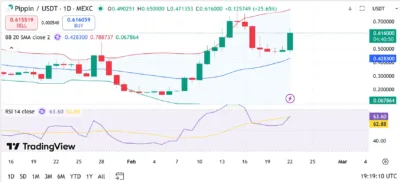
Pippin (PIPPIN) Price Prediction 2026–2030: Can PIPPIN Hit $0.70 Soon?

Pippin (PIPPIN) Price Prediction 2026–2030: Can PIPPIN Hit $0.70 Soon?

PIPPIN has surged sharply on the daily timeframe, printing a powerful bullish candle with over 25% gains. RSI is holding above 60, signaling strengthening momentum
Share
Coinstats2026/02/23 04:29
Will Cardano Reach $10 by 2030? Analysts Break Down ADA’s Growth Cycles

Will Cardano Reach $10 by 2030? Analysts Break Down ADA’s Growth Cycles

The post Will Cardano Reach $10 by 2030? Analysts Break Down ADA’s Growth Cycles appeared first on Coinpedia Fintech News Cardano (ADA) is trading at $0.9024 with a market cap of $32.91 billion. Experts say ADA has the potential to climb much higher, with some placing long-term targets as high as $10. The token continues to benefit from stronger visibility, rising liquidity, and increasing inflows from both institutional and retail markets. Can Cardano Hit $10 …
Share
CoinPedia2025/09/18 17:19
Crypto whale loses $6M to sneaky phishing scheme targeting staked Ethereum

Crypto whale loses $6M to sneaky phishing scheme targeting staked Ethereum

The post Crypto whale loses $6M to sneaky phishing scheme targeting staked Ethereum appeared on BitcoinEthereumNews.com. A crypto whale lost more than $6 million in staked Ethereum (stETH) and Aave-wrapped Bitcoin (aEthWBTC) after approving malicious signatures in a phishing scheme on Sept. 18, according to blockchain security firm Scam Sniffer. According to the firm, the attackers disguised their move as a routine wallet confirmation through “Permit” signatures, which tricked the victim into authorizing fund transfers without triggering obvious red flags. Yu Xian, founder of blockchain security company SlowMist, noted that the victim did not recognize the danger because the transaction required no gas fees. He wrote: “From the victim’s perspective, he just clicked a few times to confirm the wallet’s pop-up signature requests, didn’t spend a single penny of gas, and $6.28 million was gone.” How Permit exploits work Permit approvals were originally designed to simplify token transfers. Instead of submitting an on-chain approval and paying fees, a user can sign an off-chain message authorizing a spender. That efficiency, however, has created a new attack surface for malicious players. Once a user signs such a permit, attackers can combine two functions—Permit and TransferFrom—to drain assets directly. Because the authorization takes place off-chain, wallet dashboards show no unusual activity until the funds move. As a result, the assets are gone when the approval executes on-chain, and tokens are redirected to the attacker’s wallet. This loophole has made permit exploits increasingly attractive for malicious actors, who can siphon millions without needing complex hacks or high-cost gas wars. Phishing losses The latest theft highlights a wider trend of escalating phishing campaigns. Scam Sniffer reported that in August alone, attackers stole $12.17 million from more than 15,200 victims. That figure represented a 72% jump in losses compared with July. According to the firm, the most significant share of August’s damages came from three large accounts that accounted for nearly half…
Share
BitcoinEthereumNews2025/09/19 02:31