The post Hong Kong’s SFC reviews digital asset treasuries as investor losses mount appeared on BitcoinEthereumNews.com. Chairman Kelvin Wong warns of inflated DAT share prices. Boyaa Interactive and Ourgame International among affected firms. India and Australia also move to curb crypto-heavy listings. Hong Kong’s Securities and Futures Commission (SFC) has intensified its scrutiny of listed firms with digital asset treasuries (DATs) after findings suggested retail investors may have lost billions trading these stocks. The regulator is concerned that share prices of some companies may be trading well above the value of their crypto holdings, raising questions about investor protection and market transparency. The move comes amid growing global unease over corporate exposure to digital assets, with regulators in Hong Kong, India, and Australia tightening oversight of firms integrating crypto into their balance sheets. SFC flags risk of inflated share valuations SFC chairman Kelvin Wong Tin-yau said the regulator is closely monitoring how listed firms manage their crypto assets, as some share prices may not reflect the true value of their holdings. Wong pointed to examples from the United States where companies with digital asset exposure saw valuations soar to more than double the cost of their crypto portfolios. Findings from Singapore-based 10X Research earlier this month indicated that retail investors may have collectively lost around $17 billion trading digital asset treasury firms. Many of these losses stemmed from investors purchasing shares at a premium far above the company’s net asset value. Some of Hong Kong’s most active DAT firms, including Boyaa Interactive and Ourgame International, have seen their stock performance weaken amid the crypto market’s volatility. The SFC’s growing concern reflects a broader effort to assess whether such firms pose risks to financial stability, particularly when share prices are driven more by speculative demand than by operational performance. Regulators move against rebranding attempts Authorities in Hong Kong have already taken measures against companies attempting to rebrand… The post Hong Kong’s SFC reviews digital asset treasuries as investor losses mount appeared on BitcoinEthereumNews.com. Chairman Kelvin Wong warns of inflated DAT share prices. Boyaa Interactive and Ourgame International among affected firms. India and Australia also move to curb crypto-heavy listings. Hong Kong’s Securities and Futures Commission (SFC) has intensified its scrutiny of listed firms with digital asset treasuries (DATs) after findings suggested retail investors may have lost billions trading these stocks. The regulator is concerned that share prices of some companies may be trading well above the value of their crypto holdings, raising questions about investor protection and market transparency. The move comes amid growing global unease over corporate exposure to digital assets, with regulators in Hong Kong, India, and Australia tightening oversight of firms integrating crypto into their balance sheets. SFC flags risk of inflated share valuations SFC chairman Kelvin Wong Tin-yau said the regulator is closely monitoring how listed firms manage their crypto assets, as some share prices may not reflect the true value of their holdings. Wong pointed to examples from the United States where companies with digital asset exposure saw valuations soar to more than double the cost of their crypto portfolios. Findings from Singapore-based 10X Research earlier this month indicated that retail investors may have collectively lost around $17 billion trading digital asset treasury firms. Many of these losses stemmed from investors purchasing shares at a premium far above the company’s net asset value. Some of Hong Kong’s most active DAT firms, including Boyaa Interactive and Ourgame International, have seen their stock performance weaken amid the crypto market’s volatility. The SFC’s growing concern reflects a broader effort to assess whether such firms pose risks to financial stability, particularly when share prices are driven more by speculative demand than by operational performance. Regulators move against rebranding attempts Authorities in Hong Kong have already taken measures against companies attempting to rebrand…

Hong Kong’s SFC reviews digital asset treasuries as investor losses mount

  • Chairman Kelvin Wong warns of inflated DAT share prices.
  • Boyaa Interactive and Ourgame International among affected firms.
  • India and Australia also move to curb crypto-heavy listings.

Hong Kong’s Securities and Futures Commission (SFC) has intensified its scrutiny of listed firms with digital asset treasuries (DATs) after findings suggested retail investors may have lost billions trading these stocks.

The regulator is concerned that share prices of some companies may be trading well above the value of their crypto holdings, raising questions about investor protection and market transparency.

The move comes amid growing global unease over corporate exposure to digital assets, with regulators in Hong Kong, India, and Australia tightening oversight of firms integrating crypto into their balance sheets.

SFC flags risk of inflated share valuations

SFC chairman Kelvin Wong Tin-yau said the regulator is closely monitoring how listed firms manage their crypto assets, as some share prices may not reflect the true value of their holdings.

Wong pointed to examples from the United States where companies with digital asset exposure saw valuations soar to more than double the cost of their crypto portfolios.

Findings from Singapore-based 10X Research earlier this month indicated that retail investors may have collectively lost around $17 billion trading digital asset treasury firms.

Many of these losses stemmed from investors purchasing shares at a premium far above the company’s net asset value.

Some of Hong Kong’s most active DAT firms, including Boyaa Interactive and Ourgame International, have seen their stock performance weaken amid the crypto market’s volatility.

The SFC’s growing concern reflects a broader effort to assess whether such firms pose risks to financial stability, particularly when share prices are driven more by speculative demand than by operational performance.

Regulators move against rebranding attempts

Authorities in Hong Kong have already taken measures against companies attempting to rebrand themselves as crypto-holding entities without substantial business operations.

The SFC cited listing rules that limit firms from maintaining excessive liquid assets, including cryptocurrencies, on their balance sheets without demonstrating a clear operational rationale.

Wong stated that investors should “fully understand the underlying risks of DAT,” adding that the commission plans to expand its public education campaigns to help retail traders understand how digital asset treasuries function and the market volatility they may face.

Once its review is complete, the SFC will determine whether specific guidelines are required for DATs, as Hong Kong currently lacks a framework governing listed companies investing directly in cryptocurrencies.

Global caution spreads across markets

Regulatory caution is not limited to Hong Kong. Earlier this month, similar developments emerged in India and Australia, where exchanges raised concerns about listed firms shifting large portions of their capital into crypto holdings.

In Australia, the Australian Securities Exchange (ASX) restricts listed firms from holding more than 50% of their assets in cash or cash-like instruments, a rule that complicates attempts to build crypto-heavy balance sheets.

In India, the Bombay Stock Exchange recently rejected a listing proposal from Jetking Infotrain due to its plans to allocate funds toward digital assets.

Across jurisdictions, regulators are increasingly aligning on the need for clearer oversight of corporate crypto exposure.

Industry concerns over unsustainable models

Experts within the crypto industry have expressed concern that many DAT companies operate without robust governance structures or defined risk controls.

Without clear strategies for managing asset volatility or liquidity shocks, retail investors could face sharp losses during market downturns.

While digital asset treasuries offer firms a new way to diversify holdings, regulators argue that such moves must be backed by sound business fundamentals rather than speculative enthusiasm.

The SFC’s review marks an important step in defining how listed companies can responsibly integrate crypto into their financial strategies without endangering shareholders.

Source: https://coinjournal.net/news/hong-kongs-sfc-reviews-digital-asset-treasuries-as-investor-losses-mount/

Market Opportunity
Movement Logo
Movement Price(MOVE)
$0.02153
$0.02153$0.02153
-2.22%
USD
Movement (MOVE) Live Price Chart
Disclaimer: The articles reposted on this site are sourced from public platforms and are provided for informational purposes only. They do not necessarily reflect the views of MEXC. All rights remain with the original authors. If you believe any content infringes on third-party rights, please contact service@support.mexc.com for removal. MEXC makes no guarantees regarding the accuracy, completeness, or timeliness of the content and is not responsible for any actions taken based on the information provided. The content does not constitute financial, legal, or other professional advice, nor should it be considered a recommendation or endorsement by MEXC.

You May Also Like

The Stunning ASEAN Winner Emerges As Manufacturing Shifts Accelerate

The Stunning ASEAN Winner Emerges As Manufacturing Shifts Accelerate

The post The Stunning ASEAN Winner Emerges As Manufacturing Shifts Accelerate appeared on BitcoinEthereumNews.com. Vietnam US Tariffs: The Stunning ASEAN Winner
Share
BitcoinEthereumNews2026/02/24 08:20
MySQL Single Leader Replication with Node.js and Docker

MySQL Single Leader Replication with Node.js and Docker

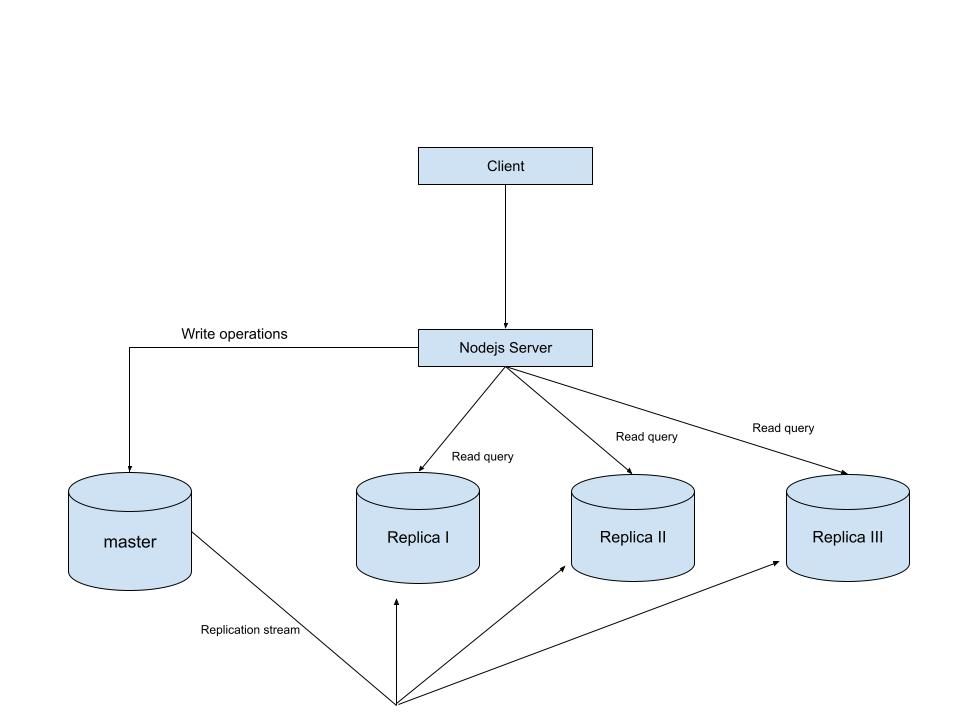
Modern applications demand high availability and the ability to scale reads without compromising performance. One of the most common strategies to achieve this is Replication. In this setup, we configured a single database to act as the leader (master) and handle all write operations, while three replicas handle read operations. In this article, we’ll walk through how to set up MySQL single-leader replication on your local machine using Docker. Once the replication is working, we’ll connect it to a Node.js application using Sequelize ORM, so that reads are routed to the replica and writes go to the master. By the end, you’ll have a working environment where you can see replication in real time Prerequisites knowledge of database replication Background knowledge of docker and docker compose Background knowledge of Nodejs and how to run a NodeJS server An Overview of what we are building Setup Setup our database servers on docker compose in the root of our project directory, create a file named docker-compose.yml with the following content to setup our mysql primary and replica databases. \ \ name: "learn-replica" volumes: mysqlMasterDatabase: mysqlSlaveDatabase: mysqlSlaveDatabaseII: mysqlSlaveDatabaseIII: networks: mysql-replication-network: services: mysql-master: image: mysql:latest container_name: mysql-master command: --server-id=1 --log-bin=ON environment: MYSQL_ROOT_PASSWORD: master MYSQL_DATABASE: replicaDb ports: - "3306:3306" volumes: - mysqlMasterDatabase:/var/lib/mysql networks: - mysql-replication-network mysql-slave: image: mysql:latest container_name: mysql-slave command: --server-id=2 --log-bin=ON environment: MYSQL_ROOT_PASSWORD: slave MYSQL_DATABASE: replicaDb MYSQL_ROOT_HOST: "%" ports: - "3307:3306" volumes: - mysqlSlaveDatabase:/var/lib/mysql depends_on: - mysql-master networks: - mysql-replication-network mysql-slaveII: image: mysql:latest container_name: mysql-slaveII command: --server-id=2 --log-bin=ON environment: MYSQL_ROOT_PASSWORD: slave MYSQL_DATABASE: replicaDb MYSQL_ROOT_HOST: "%" ports: - "3308:3306" volumes: - mysqlSlaveDatabaseII:/var/lib/mysql depends_on: - mysql-master networks: - mysql-replication-network mysql-slaveIII: image: mysql:latest container_name: mysql-slaveIII command: --server-id=3 --log-bin=ON environment: MYSQL_ROOT_PASSWORD: slave MYSQL_DATABASE: replicaDb MYSQL_ROOT_HOST: "%" ports: - "3309:3306" volumes: - mysqlSlaveDatabaseIII:/var/lib/mysql depends_on: - mysql-master networks: - mysql-replication-network In this setup, I’m creating a master database container called mysql-master and 3 replica containers called mysql-slave, mysql-slaveII and mysql-slaveIII. I won’t go too deep into the docker-compose.yml file since it’s just a basic setup, but I do want to walk you through the command line instructions used in all four services because that’s where things get interesting.
command: --server-id=1 --log-bin=ON The --server-id option gives each MySQL server in your replication setup its own name tag. Each one has to be unique and without it, replication won’t work at all. Another cool option not included here is binlog_format=ROW. This tells MySQL how to keep track of changes before passing them along to the replicas. By default, MySQL already uses row-based replication, but you can explicitly set it to ROW to be sure or switch it to STATEMENT if you’d rather log the actual SQL statements instead of row-by-row changes. \ Run our containers on docker Now, in the terminal, we can run the following command to spin up our database containers: docker-compose up -d \ Setting Up Our Master (Primary) Server To configure our master server, we would have to first access the running instance on docker using the following command docker exec -it mysql-master bash This command opens an interactive Bash shell inside the running Docker container named mysql-master, allowing us to run commands directly inside that container. \ Now that we’re inside the container, we can access the MySQL server and start running commands. type: mysql -uroot -p This will log you into MySQL as the root user. You’ll be prompted to enter the password you set in your docker-compose.yml file. \ Next, we need to create a special user that our replicas will use to connect to the master server and pull data. Inside the MySQL prompt, run the following commands: \ CREATE USER 'repl_user'@'%' IDENTIFIED BY 'replication_pass'; GRANT REPLICATION SLAVE ON . TO 'repl_user'@'%'; FLUSH PRIVILEGES; Here’s what’s happening: CREATE USER makes a new MySQL user called repl_user with the password replication_pass. GRANT REPLICATION SLAVE gives this user permission to act as a replication client. FLUSH PRIVILEGES tells MySQL to reload the user permissions so they take effect immediately. \ Time to Configure the Replica (Secondary) Servers a. First, let’s access the replica containers the same way we did with the master. Run this command in your terminal for each of the replica containers: \ docker exec -it <replica_container_name> bash mysql -uroot -p <replica_container_name> should be replace with the name of the replica container you are trying to setup b. Now it’s time to tell our replica where to get its data from. While inside the replica’s MySQL shell, run the following command to configure replication using the master’s details: CHANGE REPLICATION SOURCE TO SOURCE_HOST='mysql-master', SOURCE_USER='repl_user', SOURCE_PASSWORD='replication_pass', GET_SOURCE_PUBLIC_KEY=1; With the replication settings in place, let’s fire up the replica and get it syncing with the master. Still inside the MySQL shell on the replica, run: START REPLICA; This starts the replication process. To make sure everything is working, check the replica’s status with:
SHOW REPLICA STATUS\G; Look for Replica_IO_Running and Replica_SQL_Running — if both say Yes, congratulations! 🎉 Your replica is now successfully connected to the master and replicating data in real time.
Testing Our Replication Setup from the Node.js App Now that our replication is successfully set up, we can configure our Node.js server to observe the real-time effect of data being replicated from the master server to the replica server whenever we write to it. We start by installing the following dependencies:
npm i express mysql2 sequelize \ Now create a folder called src in the root directory and add the following files inside that folder connection.js, index.js and model.js. Our current directory should look like this We can now set up our connections to our master and replica server in the connection.js file as shown below
const Sequelize = require("sequelize"); const sequelize = new Sequelize({ dialect: "mysql", replication: { write: { host: "127.0.0.1", username: "root", password: "master", database: "replicaDb", }, read: [ { host: "127.0.0.1", username: "root", password: "slave", database: "replicaDb", port: 3307 }, { host: "127.0.0.1", username: "root", password: "slave", database: "replicaDb", port: 3308 }, { host: "127.0.0.1", username: "root", password: "slave", database: "replicaDb", port: 3309 }, ], }, }); async function connectdb() { try { await sequelize.authenticate(); } catch (error) { console.error("❌ unable to connect to the follower database", error); } } connectdb(); module.exports = { sequelize, }; \ We can now create a User table in the model.js file
const {DataTypes} = require("sequelize"); const { sequelize } = require("./connection"); const User = sequelize.define("User", { name: { type: DataTypes.STRING, allowNull: false, }, email: { type: DataTypes.STRING, unique: true, allowNull: false, }, }); module.exports = User \ and finally in our index.js file we can start our server and listen for connections on port 3000. from the code sample below, all inserts or updates will be routed by sequelize to the master server. while all read queries will be routed to the read replicas.
const express = require("express"); const { sequelize } = require("./connection"); const User = require("./model"); const app = express(); app.use(express.json()); async function main() { await sequelize.sync({ alter: true }); app.get("/", (req, res) => { res.status(200).json({ message: "first step to setting server up", }); }); app.post("/user", async (req, res) => { const { email, name } = req.body; let newUser = await User.build({ name, email, }); // This INSERT will go to the write (master) connection newUser = newUser.save({ returning: false }); res.status(201).json({ message: "User successfully created", }); }); app.get("/user", async (req, res) => { // This SELECT query will go to one of the read replicas const users = await User.findAll(); res.status(200).json(users); }); app.listen(3000, () => { console.log("server has connected"); }); } main(); When you make a POST request to the /users endpoint, take a moment to check both the master and replica servers to observe how data is replicated in real time. Right now, we are relying on Sequelize to automatically route requests, which works for development but isn’t robust enough for a production environment. In particular, if the master node goes down, Sequelize cannot automatically redirect requests to a newly elected leader. In the next part of this series, we’ll explore strategies to handle these challenges
Share
Hackernoon2025/09/18 14:44
Robinhood: Investors Are Looking Beyond BTC

Robinhood: Investors Are Looking Beyond BTC

The post Robinhood: Investors Are Looking Beyond BTC appeared on BitcoinEthereumNews.com. Investors Diversifying Beyond BTC and ETH Robinhood’s crypto division
Share
BitcoinEthereumNews2026/02/24 08:32