Original author: Geek Original translation: Luffy, Foresight News I wouldn't be surprised if we've reached the end of the InfoFi era, or are approaching it. Since the rise of InfoFi, many people have made considerable profits from it, some have accumulated 5 figures, and some have even made 6 figures. But now, there are some signals that deserve our high attention. Threshold rule changes Strictly speaking, I don’t think this upgrade of Kaito is a completely bad thing. It may effectively prevent a large number of accounts from using AI to generate low-quality content to “brush up” the volume, while improving the quality of the content. However, after the upgrade, not only small accounts were affected, but many large accounts were also not spared. This led to a large number of users who relied on Kaito to choose to leave, because after the upgrade, they had almost no chance of making money through the platform. In response to this, some project owners have chosen to remove the threshold to attract small trumpeters to join. This just shows that in most cases, the small trumpet group is crucial. My opinion is that Kaito seems confused about the direction of this upgrade, and many project parties clearly don’t like this “threshold restriction.” However, it is undeniable that Kaito has performed quite well in the past few months. The token distribution plan is poor For content creators (yappers), today’s typical 0.5%-1% token distribution ratio is far from enough, as these tokens are often valued very low when they are launched. In the early days, some accounts could earn 4-5 figures through 1-2 months of promotional activities; but now, even if they participate in 3-6 months of activities, they can only earn 3-4 figures, which makes many people feel discouraged. Even top accounts, even if they produce high-quality content, find it difficult to earn substantial four-digit income. Why is this bad news for creators who rely on InfoFi? Before InfoFi's rise, many creators earned a healthy income by promoting their content as brand ambassadors or influencers. However, the compensation offered by projects on Kaito now simply cannot compare to external partnerships. Given this fact, it's no surprise that more and more creators are choosing to leave the InfoFi platform. Capital Launchpad’s dominance is evident On July 22, Kaito's "Capital Launchpad" was officially launched. The first project to be launched was Espresso, and more projects subsequently joined. This is undoubtedly a great product for Kaito, but I do have a few concerns: None of the projects that went through Kaito’s initial coin offering have yet been listed on the public market; None of these projects have announced a launch date; Most projects have overvalued valuations and token unlocking plans that are not investor-friendly. My additional perspective: Kaito was originally built as a platform specifically for InfoFi, and later decided to add additional platform features (such as Launchpad), which is a great initiative in itself. However, recently, more and more projects have chosen to join the "Capital Launchpad" rather than participate in the "Creator Leaderboard." For an InfoFi platform, this trend is clearly not optimistic. However, this is just an obvious phenomenon that I have observed, and it seems that not many people question it. Project owners prefer to work directly with KOLs rather than through the Kaito platform. It is clear that the project parties are no longer so keen to participate in InfoFi cooperation. Recently, Zachxbt published a Google Sheet listing a number of accounts that received compensation from a project. I mention this not because I’m surprised, but because the amounts paid are quite substantial, especially compared to the projects on Kaito’s “Creator Leaderboard.” I believe this has made many people realize that there are many ways to make money besides InfoFi. Since human nature is to "find ways to make more money," I believe this poses direct competition to Kaito.Original author: Geek Original translation: Luffy, Foresight News I wouldn't be surprised if we've reached the end of the InfoFi era, or are approaching it. Since the rise of InfoFi, many people have made considerable profits from it, some have accumulated 5 figures, and some have even made 6 figures. But now, there are some signals that deserve our high attention. Threshold rule changes Strictly speaking, I don’t think this upgrade of Kaito is a completely bad thing. It may effectively prevent a large number of accounts from using AI to generate low-quality content to “brush up” the volume, while improving the quality of the content. However, after the upgrade, not only small accounts were affected, but many large accounts were also not spared. This led to a large number of users who relied on Kaito to choose to leave, because after the upgrade, they had almost no chance of making money through the platform. In response to this, some project owners have chosen to remove the threshold to attract small trumpeters to join. This just shows that in most cases, the small trumpet group is crucial. My opinion is that Kaito seems confused about the direction of this upgrade, and many project parties clearly don’t like this “threshold restriction.” However, it is undeniable that Kaito has performed quite well in the past few months. The token distribution plan is poor For content creators (yappers), today’s typical 0.5%-1% token distribution ratio is far from enough, as these tokens are often valued very low when they are launched. In the early days, some accounts could earn 4-5 figures through 1-2 months of promotional activities; but now, even if they participate in 3-6 months of activities, they can only earn 3-4 figures, which makes many people feel discouraged. Even top accounts, even if they produce high-quality content, find it difficult to earn substantial four-digit income. Why is this bad news for creators who rely on InfoFi? Before InfoFi's rise, many creators earned a healthy income by promoting their content as brand ambassadors or influencers. However, the compensation offered by projects on Kaito now simply cannot compare to external partnerships. Given this fact, it's no surprise that more and more creators are choosing to leave the InfoFi platform. Capital Launchpad’s dominance is evident On July 22, Kaito's "Capital Launchpad" was officially launched. The first project to be launched was Espresso, and more projects subsequently joined. This is undoubtedly a great product for Kaito, but I do have a few concerns: None of the projects that went through Kaito’s initial coin offering have yet been listed on the public market; None of these projects have announced a launch date; Most projects have overvalued valuations and token unlocking plans that are not investor-friendly. My additional perspective: Kaito was originally built as a platform specifically for InfoFi, and later decided to add additional platform features (such as Launchpad), which is a great initiative in itself. However, recently, more and more projects have chosen to join the "Capital Launchpad" rather than participate in the "Creator Leaderboard." For an InfoFi platform, this trend is clearly not optimistic. However, this is just an obvious phenomenon that I have observed, and it seems that not many people question it. Project owners prefer to work directly with KOLs rather than through the Kaito platform. It is clear that the project parties are no longer so keen to participate in InfoFi cooperation. Recently, Zachxbt published a Google Sheet listing a number of accounts that received compensation from a project. I mention this not because I’m surprised, but because the amounts paid are quite substantial, especially compared to the projects on Kaito’s “Creator Leaderboard.” I believe this has made many people realize that there are many ways to make money besides InfoFi. Since human nature is to "find ways to make more money," I believe this poses direct competition to Kaito.

InfoFi faces a cold reception: regulatory upgrades, shrinking revenue, and platform transformation dilemmas

2025/09/09 08:00

Original author: Geek

Original translation: Luffy, Foresight News

I wouldn't be surprised if we've reached the end of the InfoFi era, or are approaching it.

Since the rise of InfoFi, many people have made considerable profits from it, some have accumulated 5 figures, and some have even made 6 figures. But now, there are some signals that deserve our high attention.

Threshold rule changes

Strictly speaking, I don’t think this upgrade of Kaito is a completely bad thing. It may effectively prevent a large number of accounts from using AI to generate low-quality content to “brush up” the volume, while improving the quality of the content.

However, after the upgrade, not only small accounts were affected, but many large accounts were also not spared. This led to a large number of users who relied on Kaito to choose to leave, because after the upgrade, they had almost no chance of making money through the platform.
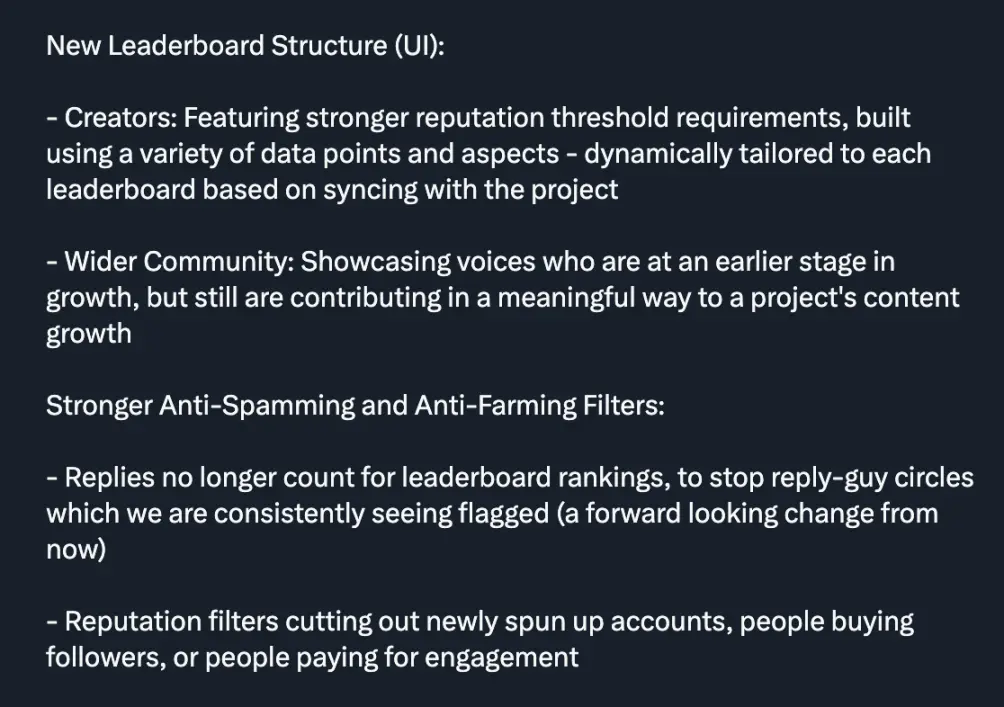
In response to this, some project owners have chosen to remove the threshold to attract small trumpeters to join. This just shows that in most cases, the small trumpet group is crucial.

My opinion is that Kaito seems confused about the direction of this upgrade, and many project parties clearly don’t like this “threshold restriction.” However, it is undeniable that Kaito has performed quite well in the past few months.

The token distribution plan is poor

For content creators (yappers), today’s typical 0.5%-1% token distribution ratio is far from enough, as these tokens are often valued very low when they are launched.

In the early days, some accounts could earn 4-5 figures through 1-2 months of promotional activities; but now, even if they participate in 3-6 months of activities, they can only earn 3-4 figures, which makes many people feel discouraged.

Even top accounts, even if they produce high-quality content, find it difficult to earn substantial four-digit income.

Why is this bad news for creators who rely on InfoFi? Before InfoFi's rise, many creators earned a healthy income by promoting their content as brand ambassadors or influencers. However, the compensation offered by projects on Kaito now simply cannot compare to external partnerships. Given this fact, it's no surprise that more and more creators are choosing to leave the InfoFi platform.

Capital Launchpad’s dominance is evident

On July 22, Kaito's "Capital Launchpad" was officially launched. The first project to be launched was Espresso, and more projects subsequently joined.
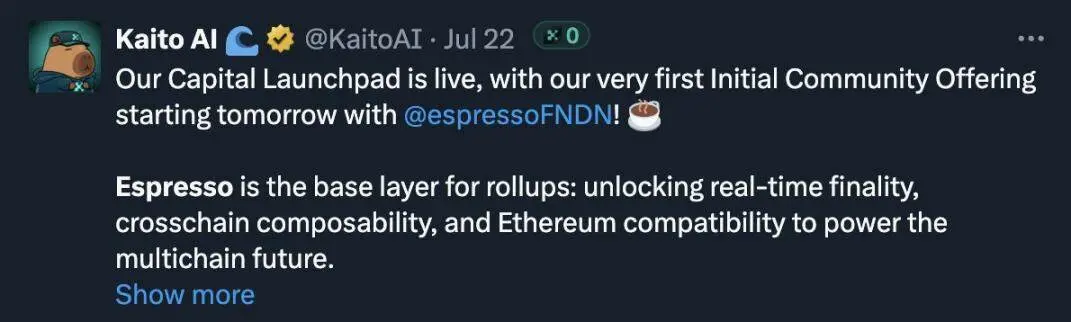
This is undoubtedly a great product for Kaito, but I do have a few concerns:

  • None of the projects that went through Kaito’s initial coin offering have yet been listed on the public market;
  • None of these projects have announced a launch date;
  • Most projects have overvalued valuations and token unlocking plans that are not investor-friendly.

My additional perspective: Kaito was originally built as a platform specifically for InfoFi, and later decided to add additional platform features (such as Launchpad), which is a great initiative in itself. However, recently, more and more projects have chosen to join the "Capital Launchpad" rather than participate in the "Creator Leaderboard." For an InfoFi platform, this trend is clearly not optimistic.

However, this is just an obvious phenomenon that I have observed, and it seems that not many people question it.

Project owners prefer to work directly with KOLs rather than through the Kaito platform.

It is clear that the project parties are no longer so keen to participate in InfoFi cooperation.

Recently, Zachxbt published a Google Sheet listing a number of accounts that received compensation from a project. I mention this not because I’m surprised, but because the amounts paid are quite substantial, especially compared to the projects on Kaito’s “Creator Leaderboard.”
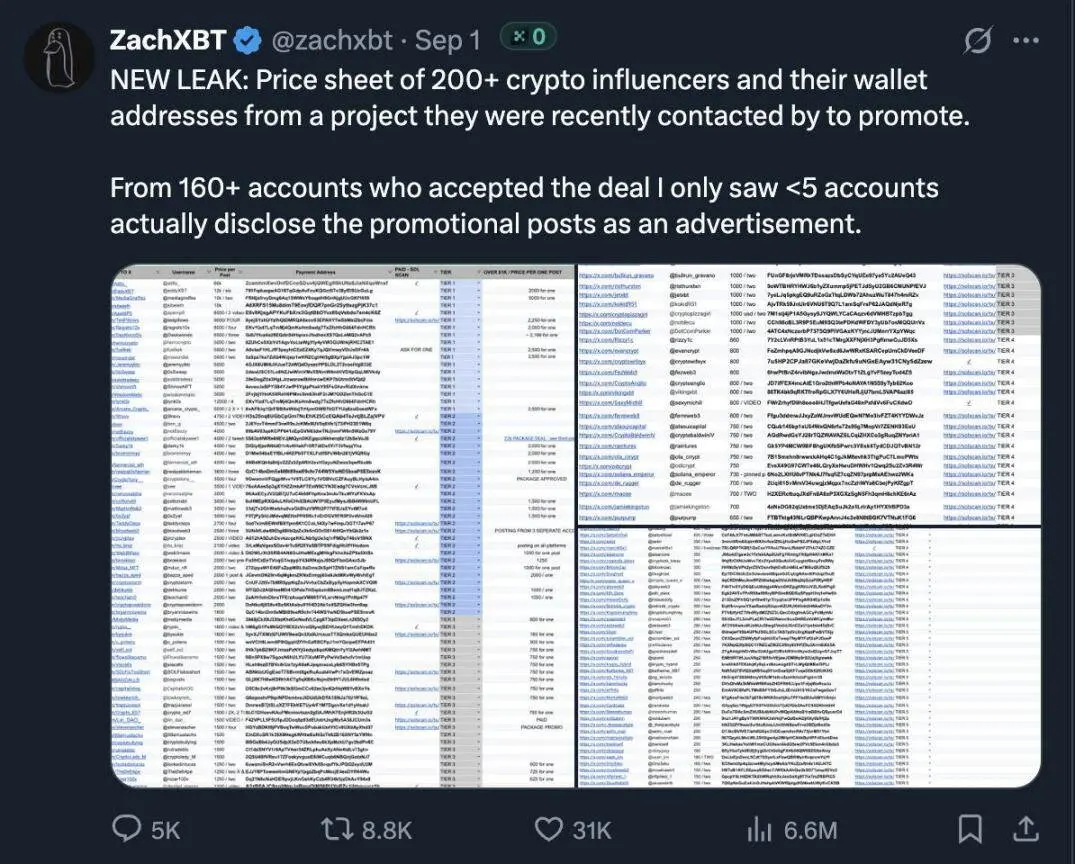
I believe this has made many people realize that there are many ways to make money besides InfoFi. Since human nature is to "find ways to make more money," I believe this poses direct competition to Kaito.

Market Opportunity
MemeCore Logo
MemeCore Price(M)
$1.48994
$1.48994$1.48994
+10.36%
USD
MemeCore (M) Live Price Chart
Disclaimer: The articles reposted on this site are sourced from public platforms and are provided for informational purposes only. They do not necessarily reflect the views of MEXC. All rights remain with the original authors. If you believe any content infringes on third-party rights, please contact service@support.mexc.com for removal. MEXC makes no guarantees regarding the accuracy, completeness, or timeliness of the content and is not responsible for any actions taken based on the information provided. The content does not constitute financial, legal, or other professional advice, nor should it be considered a recommendation or endorsement by MEXC.

You May Also Like

How to earn from cloud mining: IeByte’s upgraded auto-cloud mining platform unlocks genuine passive earnings

How to earn from cloud mining: IeByte’s upgraded auto-cloud mining platform unlocks genuine passive earnings

The post How to earn from cloud mining: IeByte’s upgraded auto-cloud mining platform unlocks genuine passive earnings appeared on BitcoinEthereumNews.com. contributor Posted: September 17, 2025 As digital assets continue to reshape global finance, cloud mining has become one of the most effective ways for investors to generate stable passive income. Addressing the growing demand for simplicity, security, and profitability, IeByte has officially upgraded its fully automated cloud mining platform, empowering both beginners and experienced investors to earn Bitcoin, Dogecoin, and other mainstream cryptocurrencies without the need for hardware or technical expertise. Why cloud mining in 2025? Traditional crypto mining requires expensive hardware, high electricity costs, and constant maintenance. In 2025, with blockchain networks becoming more competitive, these barriers have grown even higher. Cloud mining solves this by allowing users to lease professional mining power remotely, eliminating the upfront costs and complexity. IeByte stands at the forefront of this transformation, offering investors a transparent and seamless path to daily earnings. IeByte’s upgraded auto-cloud mining platform With its latest upgrade, IeByte introduces: Full Automation: Mining contracts can be activated in just one click, with all processes handled by IeByte’s servers. Enhanced Security: Bank-grade encryption, cold wallets, and real-time monitoring protect every transaction. Scalable Options: From starter packages to high-level investment contracts, investors can choose the plan that matches their goals. Global Reach: Already trusted by users in over 100 countries. Mining contracts for 2025 IeByte offers a wide range of contracts tailored for every investor level. From entry-level plans with daily returns to premium high-yield packages, the platform ensures maximum accessibility. Contract Type Duration Price Daily Reward Total Earnings (Principal + Profit) Starter Contract 1 Day $200 $6 $200 + $6 + $10 bonus Bronze Basic Contract 2 Days $500 $13.5 $500 + $27 Bronze Basic Contract 3 Days $1,200 $36 $1,200 + $108 Silver Advanced Contract 1 Day $5,000 $175 $5,000 + $175 Silver Advanced Contract 2 Days $8,000 $320 $8,000 + $640 Silver…
Share
BitcoinEthereumNews2025/09/17 23:48
Euro posts modest gains above 1.1700 as ECB signals pause

Euro posts modest gains above 1.1700 as ECB signals pause

The post Euro posts modest gains above 1.1700 as ECB signals pause appeared on BitcoinEthereumNews.com. The EUR/USD pair posts modest gains around 1.1710 during
Share
BitcoinEthereumNews2025/12/22 08:43
BitMine: Currently holds over 2% of the ETH token supply, with total assets of $11.4 billion

BitMine: Currently holds over 2% of the ETH token supply, with total assets of $11.4 billion

PANews reported on September 22nd that Ethereum treasury company BitMine announced that it now holds over 2% of the total Ethereum token supply. BitMine's cryptocurrency, cash holdings, and "moonshots" total $11.4 billion, including 2.416 million ETH, $345 million in unsecured cash, and other cryptocurrency assets. As of 4:00 PM ET on September 21, the company's cryptocurrency holdings included: 2,416,054 ETH, 192 BTC; a $175 million stake in Eightco Holdings (NASDAQ: ORBS) (the "Moonshots Investment"); and $345 million in unencumbered cash. BitMine's cryptocurrency holdings rank among the largest treasury holdings in Ethereum and the second-largest globally, behind Strategy Inc (MSTR).
Share
PANews2025/09/22 19:15