Behind the scenes, JPMorgan’s blockchain arm is working on a radical idea: converting carbon offsets into digital assets. The move could bring Wall Street-level efficiency to a market still burdened by manual processes and unreliable record-keeping. On July 2nd, Bloomberg…Behind the scenes, JPMorgan’s blockchain arm is working on a radical idea: converting carbon offsets into digital assets. The move could bring Wall Street-level efficiency to a market still burdened by manual processes and unreliable record-keeping. On July 2nd, Bloomberg…

JPMorgan’s Kinexys tests carbon credit tokenization

2025/07/02 21:37
2 min read
For feedback or concerns regarding this content, please contact us at crypto.news@mexc.com

Behind the scenes, JPMorgan’s blockchain arm is working on a radical idea: converting carbon offsets into digital assets. The move could bring Wall Street-level efficiency to a market still burdened by manual processes and unreliable record-keeping.

On July 2nd, Bloomberg reported that JPMorgan’s blockchain unit, Kinexys, is partnering with S&P Global Commodity Insights, EcoRegistry, and the International Carbon Registry to pilot a tokenization system for carbon credits.

The trial converts registry-held carbon credits into blockchain tokens, testing whether distributed ledgers can clean up the market’s paper trail. The goal is to eliminate double-counting and fraud, long-standing issues that have plagued carbon trading.

The initiative comes as JPMorgan deepens its presence in the voluntary carbon market, where verification gaps and a lack of transparency have hindered growth. If successful, the pilot could inject accountability and scalability into a market projected to exceed $2 trillion by 2030.

Betting big on blockchain for carbon credits

JPMorgan’s carbon credit tokenization pilot is part of a broader strategy to position the bank as a key player in the evolving climate finance space.

The voluntary carbon market, while promising, has been held back by inconsistent standards, opaque pricing, and persistent concerns over credit legitimacy. Kinexys aims to address these challenges directly, using blockchain to offer institutional investors a more transparent and verifiable method of trading emissions offsets.

The bank’s recent actions reflect its long-term commitment. Just weeks before announcing the Kinexys pilot, JPMorgan signed a 13-year deal with Canadian carbon capture firm CO₂80, securing 450,000 metric tons of CO₂ removal at under $200 per ton.

The agreement, which benefits from U.S. tax incentives, shows JPMorgan’s willingness to take long-duration positions in carbon removal projects—a sharp contrast to the speculative, short-term trading that has defined much of the market.

Now, with tokenization, JPMorgan is targeting the infrastructure side of carbon markets, potentially enabling companies to integrate offsets into their sustainability strategies without the usual administrative friction.

Blockchain’s role here is not hypothetical. In May, Kinexys successfully demonstrated a separate test: a cross-chain settlement of tokenized U.S. Treasuries in collaboration with Ondo Finance and Chainlink.

That trial demonstrated that JPMorgan’s blockchain infrastructure can handle institutional-grade transactions across private and public chains. The same architecture could now be applied to carbon credits, ensuring each tokenized offset has a clear, auditable history—a critical feature for buyers wary of greenwashing.

Market Opportunity
Movement Logo
Movement Price(MOVE)
$0.02082
$0.02082$0.02082
+1.46%
USD
Movement (MOVE) Live Price Chart
Disclaimer: The articles reposted on this site are sourced from public platforms and are provided for informational purposes only. They do not necessarily reflect the views of MEXC. All rights remain with the original authors. If you believe any content infringes on third-party rights, please contact crypto.news@mexc.com for removal. MEXC makes no guarantees regarding the accuracy, completeness, or timeliness of the content and is not responsible for any actions taken based on the information provided. The content does not constitute financial, legal, or other professional advice, nor should it be considered a recommendation or endorsement by MEXC.

You May Also Like

CEO Sandeep Nailwal Shared Highlights About RWA on Polygon

CEO Sandeep Nailwal Shared Highlights About RWA on Polygon

The post CEO Sandeep Nailwal Shared Highlights About RWA on Polygon appeared on BitcoinEthereumNews.com. Polygon CEO Sandeep Nailwal highlighted Polygon’s lead in global bonds, Spiko US T-Bill, and Spiko Euro T-Bill. Polygon published an X post to share that its roadmap to GigaGas was still scaling. Sentiments around POL price were last seen to be bearish. Polygon CEO Sandeep Nailwal shared key pointers from the Dune and RWA.xyz report. These pertain to highlights about RWA on Polygon. Simultaneously, Polygon underlined its roadmap towards GigaGas. Sentiments around POL price were last seen fumbling under bearish emotions. Polygon CEO Sandeep Nailwal on Polygon RWA CEO Sandeep Nailwal highlighted three key points from the Dune and RWA.xyz report. The Chief Executive of Polygon maintained that Polygon PoS was hosting RWA TVL worth $1.13 billion across 269 assets plus 2,900 holders. Nailwal confirmed from the report that RWA was happening on Polygon. The Dune and https://t.co/W6WSFlHoQF report on RWA is out and it shows that RWA is happening on Polygon. Here are a few highlights: – Leading in Global Bonds: Polygon holds 62% share of tokenized global bonds (driven by Spiko’s euro MMF and Cashlink euro issues) – Spiko U.S.… — Sandeep | CEO, Polygon Foundation (※,※) (@sandeepnailwal) September 17, 2025 The X post published by Polygon CEO Sandeep Nailwal underlined that the ecosystem was leading in global bonds by holding a 62% share of tokenized global bonds. He further highlighted that Polygon was leading with Spiko US T-Bill at approximately 29% share of TVL along with Ethereum, adding that the ecosystem had more than 50% share in the number of holders. Finally, Sandeep highlighted from the report that there was a strong adoption for Spiko Euro T-Bill with 38% share of TVL. He added that 68% of returns were on Polygon across all the chains. Polygon Roadmap to GigaGas In a different update from Polygon, the community…
Share
BitcoinEthereumNews2025/09/18 01:10
Velo protocol Integrates SumPlus to Power AI-Driven Finance
Velo protocol Integrates SumPlus to Power AI-Driven Finance

Velo Protocol and SumPlus working together to enable AI-driven finance and allow autonomous agents to execute secure on-chain transactions across DeFi space.
Share
Blockchainreporter2026/03/20 05:00
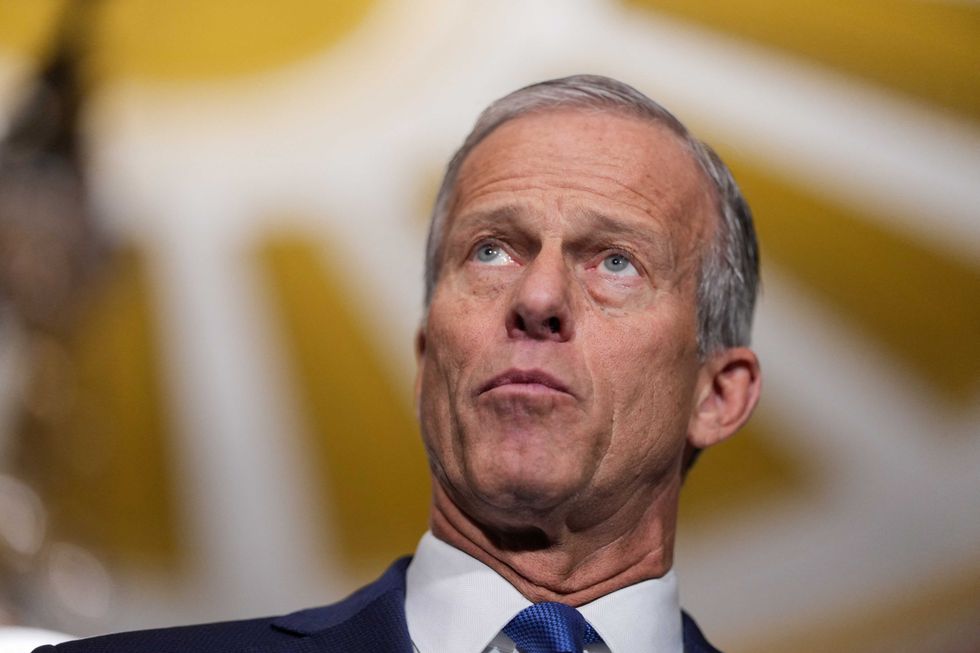
Seething House Republicans turn knives on John Thune with crude message

Seething House Republicans turn knives on John Thune with crude message

House conservatives are training their fire on a new target: their own Senate majority leader.Fed up with John Thune's (R-SD) refusal to nuke the filibuster and
Share
Rawstory2026/03/20 05:42