BitcoinWorld North Korean Hackers’ Alarming $19.5M Crypto Theft Shakes Lykke Exchange The cryptocurrency world often buzzes with innovation, but it also faces persistent threats. A recent development has sent ripples through the industry: North Korean hackers are now officially linked to a substantial $19.5 million crypto theft from the UK-based Lykke exchange. This incident underscores the ongoing challenges in securing digital assets against sophisticated cybercriminals. What Happened with the Lykke Exchange Theft? In a significant cybersecurity breach, the notorious North Korean group, Lazarus, has been identified as the perpetrator behind a $19.5 million crypto theft targeting the UK exchange Lykke. The attack occurred in June 2024, leading to the loss of a considerable sum in both Bitcoin (BTC) and Ethereum (ETH). The UK’s Office of Financial Sanctions Implementation (OFSI) confirmed this link, highlighting the persistent threat posed by these state-sponsored actors. Targeted Attack: Lykke exchange fell victim to a highly coordinated cyberattack. Significant Loss: Approximately $19.5 million in BTC and ETH was stolen. Official Confirmation: The UK’s OFSI officially attributed the attack to the Lazarus Group. This incident unfortunately had severe consequences for Lykke. The exchange faced liquidation in March, a direct aftermath of the devastating cyberattack, as reported by The Daily Hodl. It serves as a stark reminder of how a single security breach can unravel an entire operation. How Do North Korean Hackers Launder Stolen Crypto? Following the theft, the stolen Bitcoin and Ethereum embarked on a complex journey through various laundering channels. Understanding these methods is crucial for authorities trying to track and recover funds. The Lazarus Group, like other sophisticated cybercriminals, employs a multi-layered approach to obscure the origins of their illicit gains. Key laundering methods identified in this case include: Thorchain: A decentralized cross-chain liquidity protocol that allows swapping assets without a central intermediary, making transactions harder to trace. No-KYC Exchanges: Platforms that do not require users to undergo ‘Know Your Customer’ verification, providing anonymity to the criminals. OTC Desks: Over-the-counter desks in regions like China, Cambodia, and Russia facilitate large, private transactions, often bypassing traditional regulatory scrutiny. These methods allow North Korean hackers to convert stolen digital assets into fiat currency or other untraceable assets, funding their illicit activities, including weapons programs. Protecting Your Assets from Cyber Threats The Lykke incident involving North Korean hackers serves as a critical warning for both cryptocurrency exchanges and individual users. While exchanges must invest heavily in robust security infrastructure, users also play a vital role in safeguarding their digital wealth. Implementing strong security practices is no longer optional; it is essential. For exchanges, this means: Multi-layered Security: Implementing advanced encryption, multi-factor authentication, and cold storage solutions. Regular Audits: Conducting frequent security audits and penetration testing to identify vulnerabilities. Incident Response Plans: Having clear, actionable plans for responding to and mitigating cyberattacks. For individual crypto holders, consider these actionable insights: Use Hardware Wallets: Store significant amounts of crypto offline in hardware wallets. Enable 2FA: Always use two-factor authentication on all exchange accounts. Be Skeptical: Be wary of phishing attempts and suspicious links. Strong Passwords: Use unique, complex passwords for each platform. The persistent threat from groups like the Lazarus Group highlights the need for continuous vigilance and adaptation in the face of evolving cybercrime tactics. The crypto community must unite to enhance security protocols and share intelligence to counter these sophisticated threats effectively. This collective effort is crucial for the long-term integrity and trust in the digital asset space. FAQs Q1: Who are the Lazarus Group?A1: The Lazarus Group is a state-sponsored cybercrime organization believed to be operated by North Korea. They are notorious for high-profile cyberattacks, particularly targeting financial institutions and cryptocurrency exchanges globally. Q2: How much was stolen from Lykke exchange?A2: Approximately $19.5 million in cryptocurrency, specifically Bitcoin (BTC) and Ethereum (ETH), was stolen from the Lykke exchange. Q3: What happened to Lykke exchange after the attack?A3: Lykke exchange was unfortunately liquidated in March, following the devastating impact of the June 2024 cyberattack attributed to North Korean hackers. Q4: How do hackers like Lazarus Group launder stolen crypto?A4: They use various methods including decentralized exchanges like Thorchain, no-KYC (Know Your Customer) exchanges to maintain anonymity, and over-the-counter (OTC) desks in countries like China, Cambodia, and Russia to convert crypto into fiat currency. Q5: What can users do to protect their crypto from such attacks?A5: Users should use hardware wallets for cold storage, enable two-factor authentication (2FA), use strong, unique passwords, and be highly vigilant against phishing attempts and suspicious links. If you found this article insightful, please consider sharing it with your network on social media. Spreading awareness about these threats helps protect our community. To learn more about the latest crypto market trends, explore our article on key developments shaping Bitcoin price action. This post North Korean Hackers’ Alarming $19.5M Crypto Theft Shakes Lykke Exchange first appeared on BitcoinWorld and is written by Editorial TeamBitcoinWorld North Korean Hackers’ Alarming $19.5M Crypto Theft Shakes Lykke Exchange The cryptocurrency world often buzzes with innovation, but it also faces persistent threats. A recent development has sent ripples through the industry: North Korean hackers are now officially linked to a substantial $19.5 million crypto theft from the UK-based Lykke exchange. This incident underscores the ongoing challenges in securing digital assets against sophisticated cybercriminals. What Happened with the Lykke Exchange Theft? In a significant cybersecurity breach, the notorious North Korean group, Lazarus, has been identified as the perpetrator behind a $19.5 million crypto theft targeting the UK exchange Lykke. The attack occurred in June 2024, leading to the loss of a considerable sum in both Bitcoin (BTC) and Ethereum (ETH). The UK’s Office of Financial Sanctions Implementation (OFSI) confirmed this link, highlighting the persistent threat posed by these state-sponsored actors. Targeted Attack: Lykke exchange fell victim to a highly coordinated cyberattack. Significant Loss: Approximately $19.5 million in BTC and ETH was stolen. Official Confirmation: The UK’s OFSI officially attributed the attack to the Lazarus Group. This incident unfortunately had severe consequences for Lykke. The exchange faced liquidation in March, a direct aftermath of the devastating cyberattack, as reported by The Daily Hodl. It serves as a stark reminder of how a single security breach can unravel an entire operation. How Do North Korean Hackers Launder Stolen Crypto? Following the theft, the stolen Bitcoin and Ethereum embarked on a complex journey through various laundering channels. Understanding these methods is crucial for authorities trying to track and recover funds. The Lazarus Group, like other sophisticated cybercriminals, employs a multi-layered approach to obscure the origins of their illicit gains. Key laundering methods identified in this case include: Thorchain: A decentralized cross-chain liquidity protocol that allows swapping assets without a central intermediary, making transactions harder to trace. No-KYC Exchanges: Platforms that do not require users to undergo ‘Know Your Customer’ verification, providing anonymity to the criminals. OTC Desks: Over-the-counter desks in regions like China, Cambodia, and Russia facilitate large, private transactions, often bypassing traditional regulatory scrutiny. These methods allow North Korean hackers to convert stolen digital assets into fiat currency or other untraceable assets, funding their illicit activities, including weapons programs. Protecting Your Assets from Cyber Threats The Lykke incident involving North Korean hackers serves as a critical warning for both cryptocurrency exchanges and individual users. While exchanges must invest heavily in robust security infrastructure, users also play a vital role in safeguarding their digital wealth. Implementing strong security practices is no longer optional; it is essential. For exchanges, this means: Multi-layered Security: Implementing advanced encryption, multi-factor authentication, and cold storage solutions. Regular Audits: Conducting frequent security audits and penetration testing to identify vulnerabilities. Incident Response Plans: Having clear, actionable plans for responding to and mitigating cyberattacks. For individual crypto holders, consider these actionable insights: Use Hardware Wallets: Store significant amounts of crypto offline in hardware wallets. Enable 2FA: Always use two-factor authentication on all exchange accounts. Be Skeptical: Be wary of phishing attempts and suspicious links. Strong Passwords: Use unique, complex passwords for each platform. The persistent threat from groups like the Lazarus Group highlights the need for continuous vigilance and adaptation in the face of evolving cybercrime tactics. The crypto community must unite to enhance security protocols and share intelligence to counter these sophisticated threats effectively. This collective effort is crucial for the long-term integrity and trust in the digital asset space. FAQs Q1: Who are the Lazarus Group?A1: The Lazarus Group is a state-sponsored cybercrime organization believed to be operated by North Korea. They are notorious for high-profile cyberattacks, particularly targeting financial institutions and cryptocurrency exchanges globally. Q2: How much was stolen from Lykke exchange?A2: Approximately $19.5 million in cryptocurrency, specifically Bitcoin (BTC) and Ethereum (ETH), was stolen from the Lykke exchange. Q3: What happened to Lykke exchange after the attack?A3: Lykke exchange was unfortunately liquidated in March, following the devastating impact of the June 2024 cyberattack attributed to North Korean hackers. Q4: How do hackers like Lazarus Group launder stolen crypto?A4: They use various methods including decentralized exchanges like Thorchain, no-KYC (Know Your Customer) exchanges to maintain anonymity, and over-the-counter (OTC) desks in countries like China, Cambodia, and Russia to convert crypto into fiat currency. Q5: What can users do to protect their crypto from such attacks?A5: Users should use hardware wallets for cold storage, enable two-factor authentication (2FA), use strong, unique passwords, and be highly vigilant against phishing attempts and suspicious links. If you found this article insightful, please consider sharing it with your network on social media. Spreading awareness about these threats helps protect our community. To learn more about the latest crypto market trends, explore our article on key developments shaping Bitcoin price action. This post North Korean Hackers’ Alarming $19.5M Crypto Theft Shakes Lykke Exchange first appeared on BitcoinWorld and is written by Editorial Team

North Korean Hackers’ Alarming $19.5M Crypto Theft Shakes Lykke Exchange

2025/08/20 03:15

BitcoinWorld

North Korean Hackers’ Alarming $19.5M Crypto Theft Shakes Lykke Exchange

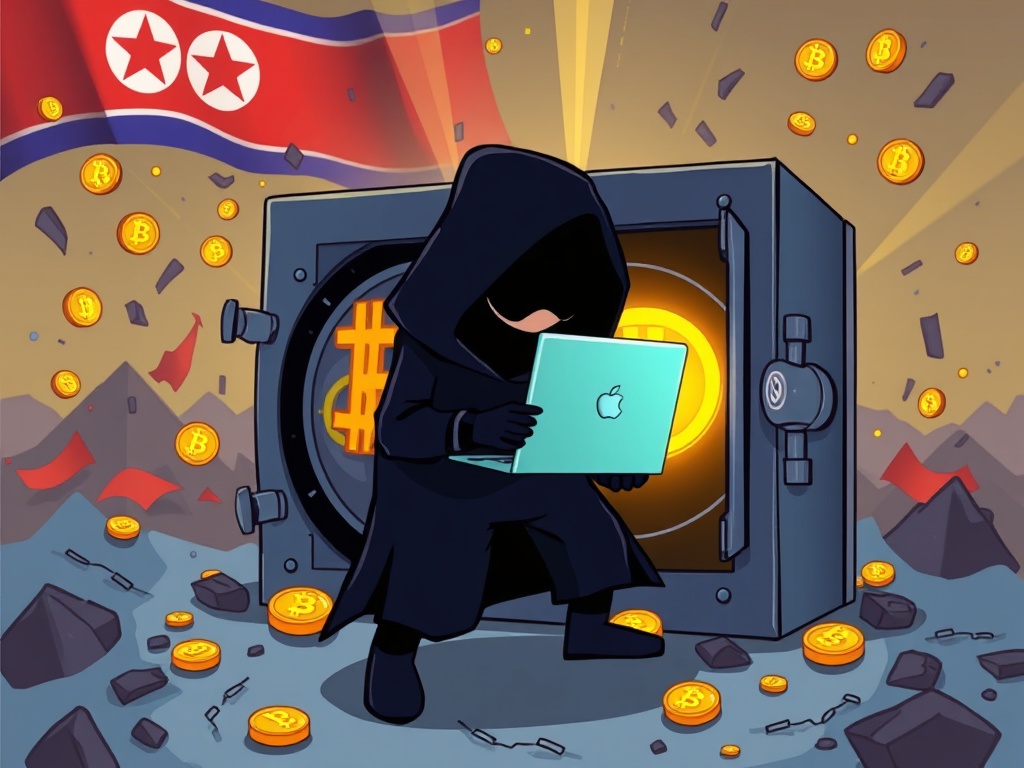
The cryptocurrency world often buzzes with innovation, but it also faces persistent threats. A recent development has sent ripples through the industry: North Korean hackers are now officially linked to a substantial $19.5 million crypto theft from the UK-based Lykke exchange. This incident underscores the ongoing challenges in securing digital assets against sophisticated cybercriminals.

What Happened with the Lykke Exchange Theft?

In a significant cybersecurity breach, the notorious North Korean group, Lazarus, has been identified as the perpetrator behind a $19.5 million crypto theft targeting the UK exchange Lykke. The attack occurred in June 2024, leading to the loss of a considerable sum in both Bitcoin (BTC) and Ethereum (ETH). The UK’s Office of Financial Sanctions Implementation (OFSI) confirmed this link, highlighting the persistent threat posed by these state-sponsored actors.

  • Targeted Attack: Lykke exchange fell victim to a highly coordinated cyberattack.
  • Significant Loss: Approximately $19.5 million in BTC and ETH was stolen.
  • Official Confirmation: The UK’s OFSI officially attributed the attack to the Lazarus Group.

This incident unfortunately had severe consequences for Lykke. The exchange faced liquidation in March, a direct aftermath of the devastating cyberattack, as reported by The Daily Hodl. It serves as a stark reminder of how a single security breach can unravel an entire operation.

How Do North Korean Hackers Launder Stolen Crypto?

Following the theft, the stolen Bitcoin and Ethereum embarked on a complex journey through various laundering channels. Understanding these methods is crucial for authorities trying to track and recover funds. The Lazarus Group, like other sophisticated cybercriminals, employs a multi-layered approach to obscure the origins of their illicit gains.

Key laundering methods identified in this case include:

  • Thorchain: A decentralized cross-chain liquidity protocol that allows swapping assets without a central intermediary, making transactions harder to trace.
  • No-KYC Exchanges: Platforms that do not require users to undergo ‘Know Your Customer’ verification, providing anonymity to the criminals.
  • OTC Desks: Over-the-counter desks in regions like China, Cambodia, and Russia facilitate large, private transactions, often bypassing traditional regulatory scrutiny.

These methods allow North Korean hackers to convert stolen digital assets into fiat currency or other untraceable assets, funding their illicit activities, including weapons programs.

Protecting Your Assets from Cyber Threats

The Lykke incident involving North Korean hackers serves as a critical warning for both cryptocurrency exchanges and individual users. While exchanges must invest heavily in robust security infrastructure, users also play a vital role in safeguarding their digital wealth. Implementing strong security practices is no longer optional; it is essential.

For exchanges, this means:

  • Multi-layered Security: Implementing advanced encryption, multi-factor authentication, and cold storage solutions.
  • Regular Audits: Conducting frequent security audits and penetration testing to identify vulnerabilities.
  • Incident Response Plans: Having clear, actionable plans for responding to and mitigating cyberattacks.

For individual crypto holders, consider these actionable insights:

  • Use Hardware Wallets: Store significant amounts of crypto offline in hardware wallets.
  • Enable 2FA: Always use two-factor authentication on all exchange accounts.
  • Be Skeptical: Be wary of phishing attempts and suspicious links.
  • Strong Passwords: Use unique, complex passwords for each platform.

The persistent threat from groups like the Lazarus Group highlights the need for continuous vigilance and adaptation in the face of evolving cybercrime tactics. The crypto community must unite to enhance security protocols and share intelligence to counter these sophisticated threats effectively. This collective effort is crucial for the long-term integrity and trust in the digital asset space.

FAQs

Q1: Who are the Lazarus Group?
A1: The Lazarus Group is a state-sponsored cybercrime organization believed to be operated by North Korea. They are notorious for high-profile cyberattacks, particularly targeting financial institutions and cryptocurrency exchanges globally.

Q2: How much was stolen from Lykke exchange?
A2: Approximately $19.5 million in cryptocurrency, specifically Bitcoin (BTC) and Ethereum (ETH), was stolen from the Lykke exchange.

Q3: What happened to Lykke exchange after the attack?
A3: Lykke exchange was unfortunately liquidated in March, following the devastating impact of the June 2024 cyberattack attributed to North Korean hackers.

Q4: How do hackers like Lazarus Group launder stolen crypto?
A4: They use various methods including decentralized exchanges like Thorchain, no-KYC (Know Your Customer) exchanges to maintain anonymity, and over-the-counter (OTC) desks in countries like China, Cambodia, and Russia to convert crypto into fiat currency.

Q5: What can users do to protect their crypto from such attacks?
A5: Users should use hardware wallets for cold storage, enable two-factor authentication (2FA), use strong, unique passwords, and be highly vigilant against phishing attempts and suspicious links.

If you found this article insightful, please consider sharing it with your network on social media. Spreading awareness about these threats helps protect our community.

To learn more about the latest crypto market trends, explore our article on key developments shaping Bitcoin price action.

This post North Korean Hackers’ Alarming $19.5M Crypto Theft Shakes Lykke Exchange first appeared on BitcoinWorld and is written by Editorial Team

Disclaimer: The articles reposted on this site are sourced from public platforms and are provided for informational purposes only. They do not necessarily reflect the views of MEXC. All rights remain with the original authors. If you believe any content infringes on third-party rights, please contact service@support.mexc.com for removal. MEXC makes no guarantees regarding the accuracy, completeness, or timeliness of the content and is not responsible for any actions taken based on the information provided. The content does not constitute financial, legal, or other professional advice, nor should it be considered a recommendation or endorsement by MEXC.

You May Also Like

Solana Price Stalls as Validator and Address Counts Collapse

Solana Price Stalls as Validator and Address Counts Collapse

The post Solana Price Stalls as Validator and Address Counts Collapse  appeared on BitcoinEthereumNews.com. Since mid-November, the Solana price has been resonating within a narrow consolidation of $145 and $125. Solana’s validator count collapsed from 2,500 to ~800 over two years, raising questions about economic sustainability. The number of active addresses on the Solana network recorded a sharp decline from 9.08 million in January 2025 to 3.75 million now, indicating a drop in user participation. On Tuesday, the crypto market witnessed a notable spike in buying pressure, leading major assets like Bitcoin, Ethereum, and Solana to a fresh recovery. However, the Solana price faced renewed selling at $145, evidenced by a long-wick rejection in the daily candle. The headwinds can be linked to networks facing scrutiny following a notable decline in active validators and active addresses.  Validator Exodus Exposes Economic Pressure on Solana Operators The layer-1 blockchain Solana has witnessed a sharp decline in the number of its validators from 2,500 in early 2023 to around 800 in late 2025, according to Solanacompass data. The collapse has caused an ecosystem divide between opposing camps. One side lauds the trend, arguing that the exodus comprises nearly exclusively unreal identities and poor-quality nodes that were gaming rewards without providing real hardware and uptime. In their view, narrowing the list down to a smaller number of committed validators strengthened the network rather than cooled it down. Infrastructure providers that work directly with node operators have a different story to tell. Teams like Layer 33, which is a collective of 25 independent Solana validators, say, “We personally know the teams shutting down. It is not mostly Sybils.” These operators cited increasing server costs, thin staking yields because of commission cuts, and increasing complexity of keeping nodes profitable as reasons for shutting down. Both sides agree on one thing: raw validator numbers don’t tell us much in and of…
Share
BitcoinEthereumNews2025/12/10 12:05
Surges to $94K One Day Ahead of Expected Fed Rate Cut

Surges to $94K One Day Ahead of Expected Fed Rate Cut

The post Surges to $94K One Day Ahead of Expected Fed Rate Cut appeared on BitcoinEthereumNews.com. What started as a slow U.S. morning on crypto markets has taken a quick turn, with bitcoin BTC$92,531.15 re-taking the $94,000 level. Hovering just above $90,000 earlier in the day, the largest crypto surged back to $94,000 minutes after 16:00 UTC, gaining more than $3,000 in less than an hour and up 4% over the past 24 hours. Ethereum’s ether ETH$3,125.08 jumped 5% during the same period, while native tokens of ADA$0.4648 and Chainlink LINK$14.25 climbed even more. The action went down while silver climbed to fresh record highs above $60 per ounce. While broader equity markets remained flat, crypto stocks followed bitcoin’s advance. Digital asset investment firm Galaxy (GLXY) and bitcoin miner CleanSpark (CLSK) led with gains of more than 10%, while Coinbase (COIN), Strategy (MSTR) and BitMine (BMNR) were up 4%-6%. While there was no single obvious catalyst for the quick move higher, BTC for weeks has been mostly selling off alongside the open of U.S. markets. Today’s change of pattern could point to seller exhaustion. Vetle Lunde, lead analyst at K33 Research, pointed to “deeply defensive” positioning on crypto derivatives markets with investors concerned about further weakness, and crowded positioning possibly contributing to the quick snapback. Further signs of bear market capitulation also emerged on Tuesday with Standard Chartered bull Geoff Kendrick slashing his outlook for the price of bitcoin for the next several years. The Coinbase bitcoin premium, which shows the BTC spot price difference on U.S.-centric exchange Coinbase and offshore exchange Binance, has also turned positive over the past few days, signaling U.S. investor demand making a comeback. Looking deeper into market structure, BTC’s daily price gain outpaced the rise in open interest on the derivatives market, suggesting that spot demand is fueling the rally instead of leverage. The Federal Reserve is expected to lower…
Share
BitcoinEthereumNews2025/12/10 11:51