The Financial Supervisory Service (FSS), South Korea’s integrated financial regulator, has recommended asset management firms “not to excessively include” crypto stocks like Coinbase and Strategy in their ETFs portfolios. The regulator has issued verbal guidance to domestic firms, restricting the proportion of crypto companies in ETFs, Herald reported . The directive indicates that the 2017 administrative guidance related to virtual currencies is still valid and must be followed. Additionally, the FSS administrative guidance comprises provisions restricting financial institutions from “holding, purchasing, acquiring collateral, and investing in virtual assets.” “Recently, there has been a trend of deregulation related to virtual assets in the U.S. and Korea, but there have been no specific laws or guidelines established yet,” an FSS official noted. “This means that existing guidelines should be followed until the new system is complete.” South Korea’s Existing Digital Asset Guidelines Since 2017, Korean regulators have prohibited corporate transactions in virtual assets . The government’s decision at that time was driven by concerns over money laundering, given that corporate trading was seen as posing higher risks compared to individual trading. On December 13, 2017, the Korean government announced emergency measures in response to the increasingly speculative domestic cryptocurrency market. Domestic-Listed ETFs Hold Over 10% of ‘Coin Theme’ Stock: FSS The FSS guidance is interpreted as considering the recent rapid increase in ‘coin theme’ stocks, including coin exchanges and mining companies, being included in ETF markets. Among domestic listed ETFs, there are many products with a virtual asset-related stock proportion exceeding 10%, the report noted. For instance, the Korea Investment Trust Management’s ‘ACE US Stock Bestseller ETF’ holds Coinbase with a proportion of 14.59%. Similarly, ‘KoACT US Nasdaq Growth Company Active ETF’ also holds 7.44% of Coinbase, 6.04% of MicroStrategy, adding a total of 13.48% with the relevant stocks. According to industry insiders, these are passive ETFs that are structured to directly track an index. Besides, it is difficult to exclude passive ETFs. “If stocks are arbitrarily excluded without changing the index, the gap rate could skyrocket,” one industry insider noted. “I understand the regulatory tone, but it is not easy to respond immediately.” The local market has also argued that it isn’t fair to apply regulatory standards only to domestic ETFs, as they are already making indirect investments through ETFs of US-listed crypto investment companies. “Restricting only domestic ETFs will not stop the flow of funds, and in reality, many investors are already bypassing the market with U.S. ETFs,” another source noted. “It is questionable whether the regulations will be effective in reality.”The Financial Supervisory Service (FSS), South Korea’s integrated financial regulator, has recommended asset management firms “not to excessively include” crypto stocks like Coinbase and Strategy in their ETFs portfolios. The regulator has issued verbal guidance to domestic firms, restricting the proportion of crypto companies in ETFs, Herald reported . The directive indicates that the 2017 administrative guidance related to virtual currencies is still valid and must be followed. Additionally, the FSS administrative guidance comprises provisions restricting financial institutions from “holding, purchasing, acquiring collateral, and investing in virtual assets.” “Recently, there has been a trend of deregulation related to virtual assets in the U.S. and Korea, but there have been no specific laws or guidelines established yet,” an FSS official noted. “This means that existing guidelines should be followed until the new system is complete.” South Korea’s Existing Digital Asset Guidelines Since 2017, Korean regulators have prohibited corporate transactions in virtual assets . The government’s decision at that time was driven by concerns over money laundering, given that corporate trading was seen as posing higher risks compared to individual trading. On December 13, 2017, the Korean government announced emergency measures in response to the increasingly speculative domestic cryptocurrency market. Domestic-Listed ETFs Hold Over 10% of ‘Coin Theme’ Stock: FSS The FSS guidance is interpreted as considering the recent rapid increase in ‘coin theme’ stocks, including coin exchanges and mining companies, being included in ETF markets. Among domestic listed ETFs, there are many products with a virtual asset-related stock proportion exceeding 10%, the report noted. For instance, the Korea Investment Trust Management’s ‘ACE US Stock Bestseller ETF’ holds Coinbase with a proportion of 14.59%. Similarly, ‘KoACT US Nasdaq Growth Company Active ETF’ also holds 7.44% of Coinbase, 6.04% of MicroStrategy, adding a total of 13.48% with the relevant stocks. According to industry insiders, these are passive ETFs that are structured to directly track an index. Besides, it is difficult to exclude passive ETFs. “If stocks are arbitrarily excluded without changing the index, the gap rate could skyrocket,” one industry insider noted. “I understand the regulatory tone, but it is not easy to respond immediately.” The local market has also argued that it isn’t fair to apply regulatory standards only to domestic ETFs, as they are already making indirect investments through ETFs of US-listed crypto investment companies. “Restricting only domestic ETFs will not stop the flow of funds, and in reality, many investors are already bypassing the market with U.S. ETFs,” another source noted. “It is questionable whether the regulations will be effective in reality.”

South Korea Restricts Firms From Including Coinbase, Strategy in ETF Portfolios

2025/07/23 13:18
3 min read
For feedback or concerns regarding this content, please contact us at crypto.news@mexc.com

The Financial Supervisory Service (FSS), South Korea’s integrated financial regulator, has recommended asset management firms “not to excessively include” crypto stocks like Coinbase and Strategy in their ETFs portfolios.

The regulator has issued verbal guidance to domestic firms, restricting the proportion of crypto companies in ETFs, Herald reported.

The directive indicates that the 2017 administrative guidance related to virtual currencies is still valid and must be followed.

Additionally, the FSS administrative guidance comprises provisions restricting financial institutions from “holding, purchasing, acquiring collateral, and investing in virtual assets.”

“Recently, there has been a trend of deregulation related to virtual assets in the U.S. and Korea, but there have been no specific laws or guidelines established yet,” an FSS official noted. “This means that existing guidelines should be followed until the new system is complete.”

South Korea’s Existing Digital Asset Guidelines

Since 2017, Korean regulators have prohibited corporate transactions in virtual assets. The government’s decision at that time was driven by concerns over money laundering, given that corporate trading was seen as posing higher risks compared to individual trading.

On December 13, 2017, the Korean government announced emergency measures in response to the increasingly speculative domestic cryptocurrency market.

Domestic-Listed ETFs Hold Over 10% of ‘Coin Theme’ Stock: FSS

The FSS guidance is interpreted as considering the recent rapid increase in ‘coin theme’ stocks, including coin exchanges and mining companies, being included in ETF markets.

Among domestic listed ETFs, there are many products with a virtual asset-related stock proportion exceeding 10%, the report noted. For instance, the Korea Investment Trust Management’s ‘ACE US Stock Bestseller ETF’ holds Coinbase with a proportion of 14.59%.

Similarly, ‘KoACT US Nasdaq Growth Company Active ETF’ also holds 7.44% of Coinbase, 6.04% of MicroStrategy, adding a total of 13.48% with the relevant stocks.

According to industry insiders, these are passive ETFs that are structured to directly track an index. Besides, it is difficult to exclude passive ETFs.

“If stocks are arbitrarily excluded without changing the index, the gap rate could skyrocket,” one industry insider noted. “I understand the regulatory tone, but it is not easy to respond immediately.”

The local market has also argued that it isn’t fair to apply regulatory standards only to domestic ETFs, as they are already making indirect investments through ETFs of US-listed crypto investment companies.

“Restricting only domestic ETFs will not stop the flow of funds, and in reality, many investors are already bypassing the market with U.S. ETFs,” another source noted. “It is questionable whether the regulations will be effective in reality.”

Market Opportunity
LETSTOP Logo
LETSTOP Price(STOP)
$0.01153
$0.01153$0.01153
-3.02%
USD
LETSTOP (STOP) Live Price Chart
Disclaimer: The articles reposted on this site are sourced from public platforms and are provided for informational purposes only. They do not necessarily reflect the views of MEXC. All rights remain with the original authors. If you believe any content infringes on third-party rights, please contact crypto.news@mexc.com for removal. MEXC makes no guarantees regarding the accuracy, completeness, or timeliness of the content and is not responsible for any actions taken based on the information provided. The content does not constitute financial, legal, or other professional advice, nor should it be considered a recommendation or endorsement by MEXC.

You May Also Like

CEO Sandeep Nailwal Shared Highlights About RWA on Polygon

CEO Sandeep Nailwal Shared Highlights About RWA on Polygon

The post CEO Sandeep Nailwal Shared Highlights About RWA on Polygon appeared on BitcoinEthereumNews.com. Polygon CEO Sandeep Nailwal highlighted Polygon’s lead in global bonds, Spiko US T-Bill, and Spiko Euro T-Bill. Polygon published an X post to share that its roadmap to GigaGas was still scaling. Sentiments around POL price were last seen to be bearish. Polygon CEO Sandeep Nailwal shared key pointers from the Dune and RWA.xyz report. These pertain to highlights about RWA on Polygon. Simultaneously, Polygon underlined its roadmap towards GigaGas. Sentiments around POL price were last seen fumbling under bearish emotions. Polygon CEO Sandeep Nailwal on Polygon RWA CEO Sandeep Nailwal highlighted three key points from the Dune and RWA.xyz report. The Chief Executive of Polygon maintained that Polygon PoS was hosting RWA TVL worth $1.13 billion across 269 assets plus 2,900 holders. Nailwal confirmed from the report that RWA was happening on Polygon. The Dune and https://t.co/W6WSFlHoQF report on RWA is out and it shows that RWA is happening on Polygon. Here are a few highlights: – Leading in Global Bonds: Polygon holds 62% share of tokenized global bonds (driven by Spiko’s euro MMF and Cashlink euro issues) – Spiko U.S.… — Sandeep | CEO, Polygon Foundation (※,※) (@sandeepnailwal) September 17, 2025 The X post published by Polygon CEO Sandeep Nailwal underlined that the ecosystem was leading in global bonds by holding a 62% share of tokenized global bonds. He further highlighted that Polygon was leading with Spiko US T-Bill at approximately 29% share of TVL along with Ethereum, adding that the ecosystem had more than 50% share in the number of holders. Finally, Sandeep highlighted from the report that there was a strong adoption for Spiko Euro T-Bill with 38% share of TVL. He added that 68% of returns were on Polygon across all the chains. Polygon Roadmap to GigaGas In a different update from Polygon, the community…
Share
BitcoinEthereumNews2025/09/18 01:10
Velo protocol Integrates SumPlus to Power AI-Driven Finance
Velo protocol Integrates SumPlus to Power AI-Driven Finance

Velo Protocol and SumPlus working together to enable AI-driven finance and allow autonomous agents to execute secure on-chain transactions across DeFi space.
Share
Blockchainreporter2026/03/20 05:00
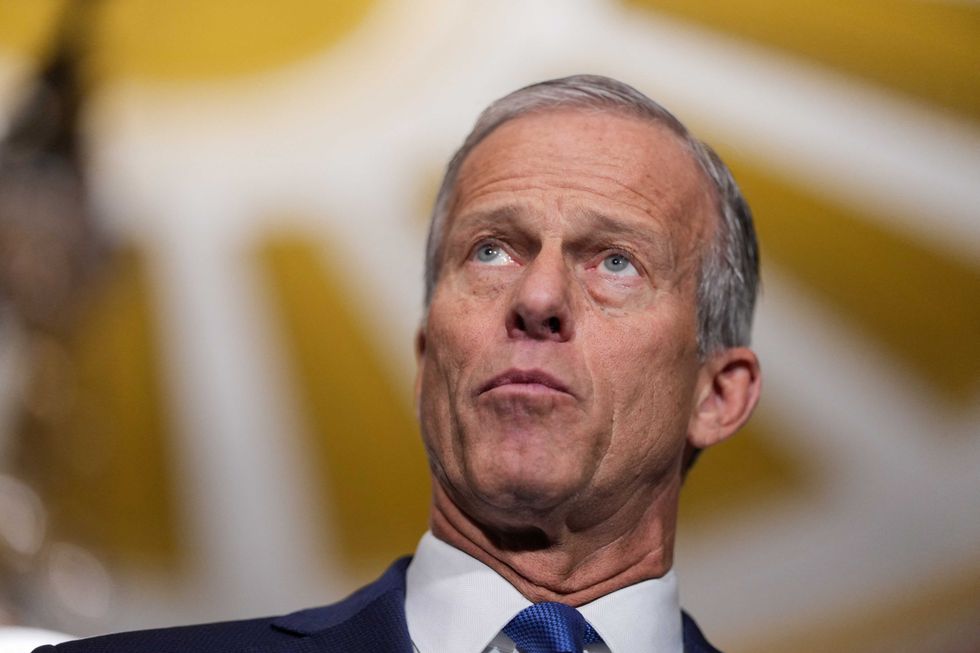
Seething House Republicans turn knives on John Thune with crude message

Seething House Republicans turn knives on John Thune with crude message

House conservatives are training their fire on a new target: their own Senate majority leader.Fed up with John Thune's (R-SD) refusal to nuke the filibuster and
Share
Rawstory2026/03/20 05:42