

Top Trending Crypto Updates: Arbitrum Targets Breakout, MYX Retreats, BlockDAG Rockets Past $410M

The crypto market in 2025 has pushed people to carefully judge which projects can last. Some rely on chart setups, while others grow through wide adoption. A few manage to show both.
Arbitrum (ARB) is flashing signals of a possible breakout. MYX Finance (MYX) shows cooling momentum after a sharp rise. BlockDAG (BDAG), however, has crossed $410 million in presale, making it the largest raise of the decade.
Those searching for the best opportunities weigh lasting use cases against short-term price action. Liquidity is tight, so trust and real progress matter more than hype. This sets apart projects such as BlockDAG from coins still tied to speculation, like Arbitrum and MYX Finance. For many, these conditions point to BlockDAG as the top trending crypto with true staying power.
Arbitrum Points Toward Breakout With Liquidity Depth
Arbitrum has traded most of 2025 inside a narrow band. This compression builds a setup where breakouts grab attention. Analysts tracking Arbitrum (ARB) highlight a falling wedge, a pattern often linked with upward reversals. If ARB pushes above $0.55, the chart suggests possible runs toward $1.50 and even $2.00.
The foundation behind this setup is stronger liquidity. Stablecoin transfers on Arbitrum now top $9 billion, proving it is a major hub for capital. This adds weight to forecasts pointing higher. Platforms such as Fluid Finance also boost appeal by offering double-digit yields on deposits, which keeps activity rising.

For those seeking exposure, Arbitrum offers a path into Ethereum scaling. Yet, it remains linked to Ethereum cycles. That makes it more suitable for traders looking at near-term setups rather than those aiming for long-term conviction.
MYX Slows After Rapid 2025 Gains
MYX Finance was one of 2025’s biggest movers. From under $0.05 in June to above $19 by September, it delivered one of the sharpest rallies of the year. But the current MYX Finance (MYX) outlook shows a cooling phase. After sliding to $11.44, the coin now trades around $9.53. The key question is whether support can hold.
Its base remains strong. Total Value Locked surged from $7.4 million to $58 million by September. MYX Finance also brings a chain-abstracted wallet and cross-chain derivatives trading, which boost appeal. If momentum returns, price targets of $20 to $26 before year-end remain possible.

Still, those entering now must note the risks after such a steep rise. The future of MYX depends on steady adoption and whether the market keeps its footing.
BlockDAG’s $410M+ Presale and Expanding Reach
BlockDAG proves that steady execution builds trust in crypto. Unlike projects that rise and fall on hype, it has delivered progress step by step. The presale price is set at $0.0013 in Batch 30, and more than 26.5 billion coins have already been sold. Total funds raised now exceed $410 million, making this the biggest crypto presale of the decade. Such a scale clearly separates BlockDAG from coins like Arbitrum and MYX.
The returns highlight its strength. From Batch 1 through Batch 30, early buyers have already seen gains of 2900%. This track record shows lasting value rather than short-term excitement. Its dual-consensus approach, combining Proof-of-Work with Proof-of-Engagement, supports both security and scalability. That balance gives BlockDAG a technical edge in a crowded market.
Adoption numbers are equally strong. Over 312,000 holders are now part of the network, with about 1,000 new sign-ups every single day. On the hardware side, 20,000+ X-Series miners have been shipped to more than 130 countries, while weekly production capacity has reached 2,000 units. Mobile engagement is also surging, with over 3 million users mining through the X1 miner app.

The community mirrors this growth. More than 325,000 people are active across social platforms, and the Medium blog draws over 1,000 readers daily. These signs of engagement reflect steady and reliable trust. With this level of reach, BlockDAG is viewed by many as the top trending crypto of the moment.
Final Thoughts
Arbitrum’s wedge setup and MYX’s pullback both show the mix of hope and caution in 2025. Traders eye Arbitrum (ARB) for breakout levels, while MYX Finance (MYX) faces the challenge of holding gains after its big run.
BlockDAG, though, is backed by clear results. With $410 million+ raised, 26.5 billion+ coins sold, and a presale price still at $0.0013 in Batch 30, its credibility is built on action, not promises. Add in 312,000+ holders and 3 million+ app users, and the case grows stronger.
For anyone asking what the top trending crypto is today, BlockDAG stands out as the clear answer. It combines measurable results, growing adoption, and a record-setting presale that continues to strengthen its position.

Presale: https://purchase.blockdag.network
Website: https://blockdag.network
Telegram: https://t.me/blockDAGnetworkOfficial
Discord: https://discord.gg/Q7BxghMVyu
This publication is sponsored. Coindoo does not endorse or assume responsibility for the content, accuracy, quality, advertising, products, or any other materials on this page. Readers are encouraged to conduct their own research before engaging in any cryptocurrency-related actions. Coindoo will not be liable, directly or indirectly, for any damages or losses resulting from the use of or reliance on any content, goods, or services mentioned. Always do your own research.
The post Top Trending Crypto Updates: Arbitrum Targets Breakout, MYX Retreats, BlockDAG Rockets Past $410M appeared first on Coindoo.
You May Also Like

The Stunning ASEAN Winner Emerges As Manufacturing Shifts Accelerate
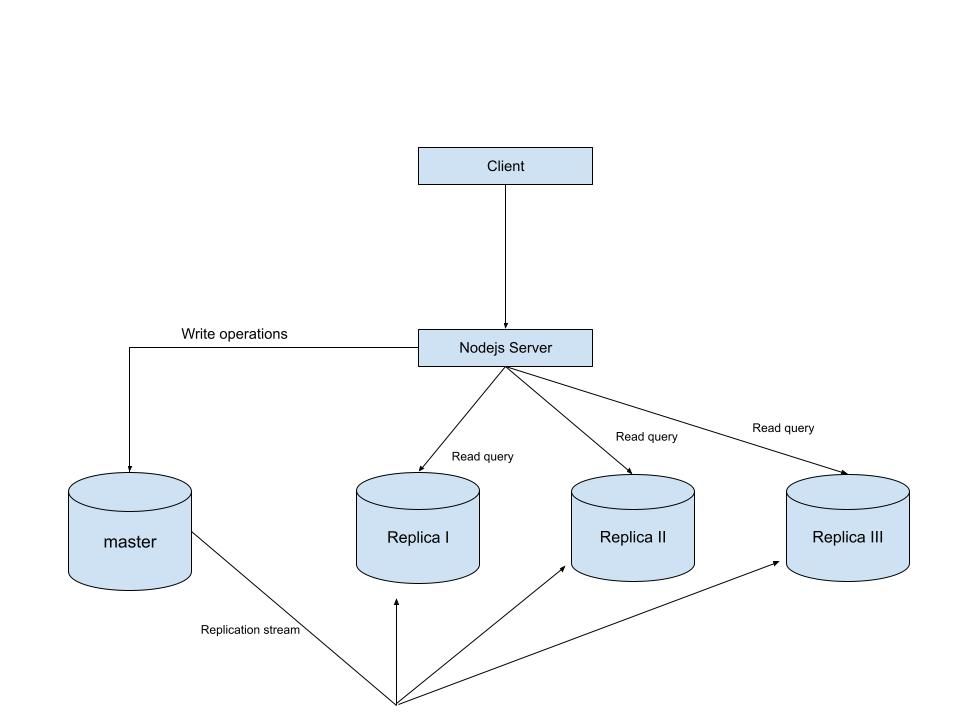
MySQL Single Leader Replication with Node.js and Docker
command: --server-id=1 --log-bin=ON The --server-id option gives each MySQL server in your replication setup its own name tag. Each one has to be unique and without it, replication won’t work at all. Another cool option not included here is binlog_format=ROW. This tells MySQL how to keep track of changes before passing them along to the replicas. By default, MySQL already uses row-based replication, but you can explicitly set it to ROW to be sure or switch it to STATEMENT if you’d rather log the actual SQL statements instead of row-by-row changes. \ Run our containers on docker Now, in the terminal, we can run the following command to spin up our database containers: docker-compose up -d \ Setting Up Our Master (Primary) Server To configure our master server, we would have to first access the running instance on docker using the following command docker exec -it mysql-master bash This command opens an interactive Bash shell inside the running Docker container named mysql-master, allowing us to run commands directly inside that container. \ Now that we’re inside the container, we can access the MySQL server and start running commands. type: mysql -uroot -p This will log you into MySQL as the root user. You’ll be prompted to enter the password you set in your docker-compose.yml file. \ Next, we need to create a special user that our replicas will use to connect to the master server and pull data. Inside the MySQL prompt, run the following commands: \ CREATE USER 'repl_user'@'%' IDENTIFIED BY 'replication_pass'; GRANT REPLICATION SLAVE ON . TO 'repl_user'@'%'; FLUSH PRIVILEGES; Here’s what’s happening: CREATE USER makes a new MySQL user called repl_user with the password replication_pass. GRANT REPLICATION SLAVE gives this user permission to act as a replication client. FLUSH PRIVILEGES tells MySQL to reload the user permissions so they take effect immediately. \ Time to Configure the Replica (Secondary) Servers a. First, let’s access the replica containers the same way we did with the master. Run this command in your terminal for each of the replica containers: \ docker exec -it <replica_container_name> bash mysql -uroot -p <replica_container_name> should be replace with the name of the replica container you are trying to setup b. Now it’s time to tell our replica where to get its data from. While inside the replica’s MySQL shell, run the following command to configure replication using the master’s details: CHANGE REPLICATION SOURCE TO SOURCE_HOST='mysql-master', SOURCE_USER='repl_user', SOURCE_PASSWORD='replication_pass', GET_SOURCE_PUBLIC_KEY=1; With the replication settings in place, let’s fire up the replica and get it syncing with the master. Still inside the MySQL shell on the replica, run: START REPLICA; This starts the replication process. To make sure everything is working, check the replica’s status with:
SHOW REPLICA STATUS\G; Look for Replica_IO_Running and Replica_SQL_Running — if both say Yes, congratulations! 🎉 Your replica is now successfully connected to the master and replicating data in real time.
Testing Our Replication Setup from the Node.js App Now that our replication is successfully set up, we can configure our Node.js server to observe the real-time effect of data being replicated from the master server to the replica server whenever we write to it. We start by installing the following dependencies:
npm i express mysql2 sequelize \ Now create a folder called src in the root directory and add the following files inside that folder connection.js, index.js and model.js. Our current directory should look like this We can now set up our connections to our master and replica server in the connection.js file as shown below
const Sequelize = require("sequelize"); const sequelize = new Sequelize({ dialect: "mysql", replication: { write: { host: "127.0.0.1", username: "root", password: "master", database: "replicaDb", }, read: [ { host: "127.0.0.1", username: "root", password: "slave", database: "replicaDb", port: 3307 }, { host: "127.0.0.1", username: "root", password: "slave", database: "replicaDb", port: 3308 }, { host: "127.0.0.1", username: "root", password: "slave", database: "replicaDb", port: 3309 }, ], }, }); async function connectdb() { try { await sequelize.authenticate(); } catch (error) { console.error("❌ unable to connect to the follower database", error); } } connectdb(); module.exports = { sequelize, }; \ We can now create a User table in the model.js file
const {DataTypes} = require("sequelize"); const { sequelize } = require("./connection"); const User = sequelize.define("User", { name: { type: DataTypes.STRING, allowNull: false, }, email: { type: DataTypes.STRING, unique: true, allowNull: false, }, }); module.exports = User \ and finally in our index.js file we can start our server and listen for connections on port 3000. from the code sample below, all inserts or updates will be routed by sequelize to the master server. while all read queries will be routed to the read replicas.
const express = require("express"); const { sequelize } = require("./connection"); const User = require("./model"); const app = express(); app.use(express.json()); async function main() { await sequelize.sync({ alter: true }); app.get("/", (req, res) => { res.status(200).json({ message: "first step to setting server up", }); }); app.post("/user", async (req, res) => { const { email, name } = req.body; let newUser = await User.build({ name, email, }); // This INSERT will go to the write (master) connection newUser = newUser.save({ returning: false }); res.status(201).json({ message: "User successfully created", }); }); app.get("/user", async (req, res) => { // This SELECT query will go to one of the read replicas const users = await User.findAll(); res.status(200).json(users); }); app.listen(3000, () => { console.log("server has connected"); }); } main(); When you make a POST request to the /users endpoint, take a moment to check both the master and replica servers to observe how data is replicated in real time. Right now, we are relying on Sequelize to automatically route requests, which works for development but isn’t robust enough for a production environment. In particular, if the master node goes down, Sequelize cannot automatically redirect requests to a newly elected leader. In the next part of this series, we’ll explore strategies to handle these challenges
